Explore this guide
Our guides combine current planning research with practical knowledge from arranging safaris, Kilimanjaro climbs and Zanzibar holidays.
Introduction
Planning a Tanzania safari is a once-in-a-lifetime experience, but many first-time visitors make avoidable mistakes that affect their budget, comfort, and overall safari experience. Tanzania offers some of Africa's most incredible wildlife destinations, including Serengeti National Park, Ngorongoro Crater, Tarangire National Park, and Lake Manyara National Park, but choosing the right itinerary, season, accommodation, and safari style requires careful planning.
A successful Tanzania safari is not only about seeing wildlife. It is about creating the right balance between travel time, game drives, accommodation comfort, budget, and personal interests. Many travelers spend significant time researching destinations but overlook important details such as choosing the wrong safari duration, booking based only on price, or misunderstanding seasonal conditions.
Based on practical experience helping travelers plan private Tanzania safaris, we have identified the most common planning mistakes visitors make before arriving in Tanzania. Understanding these mistakes early can help you save money, avoid disappointment, and create a safari experience that matches your expectations.
Below are the 15 biggest Tanzania safari planning mistakes and how to avoid them.
Quick Overview: 15 Biggest Tanzania Safari Planning Mistakes
| No.Safari Planning MistakeWhy It Matters | ||
| 1 | Choosing a safari based only on the cheapest price | Low prices may mean compromises on guides, vehicles, accommodation, or park time |
| 2 | Planning too short a safari itinerary | Limited days can reduce wildlife opportunities and create rushed travel |
| 3 | Visiting the wrong parks for your interests | Each Tanzania destination offers a different wildlife experience |
| 4 | Ignoring the best time to visit Tanzania | Seasons affect wildlife movement, weather, prices, and crowds |
| 5 | Trying to see too many parks in a short time | Excessive driving can reduce your actual safari experience |
| 6 | Not choosing the right safari style | Private, shared, luxury, mid-range, and budget safaris offer different experiences |
| 7 | Booking accommodation without checking location | Lodge location affects travel time and daily game drive opportunities |
| 8 | Choosing a safari company based only on online price | Experience, safety standards, guides, and service quality matter |
| 9 | Underestimating the Tanzania safari cost | Extra expenses can affect your overall travel budget |
| 10 | Not considering a private safari for your needs | Private vehicles offer flexibility and a more personalized experience |
| 11 | Packing incorrectly for safari conditions | The wrong clothing and equipment can affect comfort |
| 12 | Ignoring travel insurance and medical preparation | Unexpected situations can become expensive without proper coverage |
| 13 | Having unrealistic wildlife expectations | Wildlife sightings are natural experiences, not guaranteed events |
| 14 | Forgetting arrival and departure logistics | Poor planning can create unnecessary stress before and after safari |
| 15 | Not working with a local Tanzania safari specialist | Local knowledge can improve itinerary design and overall experience |
Mistake #1: Choosing a Tanzania Safari Based Only on the Cheapest Price
One of the biggest Tanzania safari planning mistakes first-time visitors make is choosing a safari company only because it offers the lowest price. While everyone wants good value for money, the cheapest safari option is not always the best choice. A safari is a complex experience involving transportation, park fees, accommodation, meals, guides, and safety standards. Cutting costs in the wrong areas can significantly affect the quality of your trip.
Many travelers compare different Tanzania safari packages and focus only on the final price without checking what is included. Two safari companies may advertise similar itineraries, but the actual experience can be very different. One package may include a professional private guide, a comfortable 4x4 safari vehicle, well-located accommodation, and flexible game drives, while another may reduce costs by using basic accommodation, older vehicles, rushed schedules, or less experienced guides.
Why This Is a Common Mistake
Online safari prices can sometimes look confusing because different companies package their trips differently. A cheaper quote may exclude important elements such as:
- Better-located safari lodges or camps
- Quality meals and accommodation standards
- Airport transfers
- Private vehicle options
- Additional activities
- Flexible departure dates
- Experienced driver-guides
For example, a 5-day Tanzania safari visiting Serengeti and Ngorongoro may appear cheaper with one operator, but the difference could come from staying outside park areas, spending fewer hours on game drives, or using shared transportation instead of a private safari vehicle.
What Can Happen If You Choose Only by Price?
Selecting the cheapest Tanzania safari without proper research can lead to several challenges:
1. Limited Wildlife Experience
Your safari vehicle and guide have a major impact on your wildlife experience. An experienced private guide understands animal behaviour, knows productive wildlife areas, and can adjust the route depending on recent sightings.
A lower-cost safari may sometimes involve less experienced guides who simply follow common routes without providing deeper insights about Tanzania's wildlife and ecosystems.
2. More Time Driving and Less Time Exploring
A poorly planned itinerary can turn your safari into a transportation trip rather than a wildlife adventure.
For example, choosing accommodation far from the Serengeti entrance may mean spending valuable morning hours driving before reaching the best wildlife areas. On safari, early morning hours are often among the most rewarding because many animals are active.
3. Lower Comfort During Long Safari Days
Safari days can involve several hours inside a vehicle, especially when traveling between destinations such as Tarangire, Serengeti, and Ngorongoro. A reliable safari vehicle with comfortable seating, charging options, and good visibility can make a significant difference.
How to Avoid This Mistake
Instead of asking only:
"What is the cheapest Tanzania safari cost?"
ask:
"What experience am I receiving for the price I pay?"
Before booking, compare:
| What to CheckWhy It Matters | |
| Safari company experience | Experienced operators understand routes, seasons, and logistics |
| Type of safari vehicle | A good 4x4 improves comfort and wildlife viewing |
| Guide experience | Knowledgeable guides add value through wildlife knowledge and local insights |
| Accommodation location | Staying strategically reduces unnecessary driving |
| Park coverage | More time inside parks usually means better exploration |
| What is included | Avoid unexpected costs during your trip |
Expert Tip
When comparing Tanzania safari packages, don't compare prices alone—compare the value behind the price. A slightly higher investment in a well-planned private Tanzania safari can often provide a more comfortable, flexible, and rewarding experience than choosing the cheapest available option.
A good safari company should be transparent about what is included, explain why certain parks or lodges are recommended, and help you design a Tanzania safari itinerary that matches your interests, whether you are traveling as a couple, family, solo traveler, or photographer.
At Kilipori Safaris, our approach is to focus on creating meaningful safari experiences rather than competing only on price. Every itinerary is designed around the traveler's expectations, preferred comfort level, available time, and budget, ensuring that the safari provides genuine value from arrival to departure.
Mistake #2: Planning a Tanzania Safari That Is Too Short
One of the most common Tanzania safari planning mistakes is underestimating how much time is needed to properly experience the country's incredible wildlife destinations. Many first-time visitors try to fit a safari into only one or two days because they want to reduce costs or combine their trip with other destinations such as Zanzibar or Kilimanjaro. While short safaris are possible, they often create a rushed experience with limited time for wildlife viewing.
Tanzania is one of Africa's most diverse safari destinations, with national parks spread across large distances. The famous northern safari circuit, which includes Tarangire National Park, Serengeti National Park, Ngorongoro Crater, and Lake Manyara National Park, requires careful planning because travel between destinations can take several hours.
A well-designed Tanzania safari itinerary should balance driving time, game drives, relaxation, and the opportunity to explore each destination properly.
Why This Is a Common Mistake
Many travelers underestimate the size of Tanzania when planning their trip. On a map, parks may appear close together, but actual road distances, park entrances, wildlife areas, and road conditions can make travel longer than expected.
For example:
- Traveling from Arusha to Serengeti can take most of the day by road.
- Moving from Tarangire to Serengeti involves a significant transfer.
- Exploring Ngorongoro Crater requires proper timing because access is controlled and the crater floor has limited hours.
Trying to include too many destinations in a short itinerary often means spending more time driving between parks than enjoying the safari itself.
What Can Happen If Your Safari Is Too Short?
1. Less Time for Wildlife Viewing
Wildlife encounters are unpredictable. Even in famous destinations like Serengeti and Ngorongoro, animals move naturally depending on weather, food availability, and daily conditions.
A longer safari gives your guide more opportunities to explore different areas and increase your chances of experiencing diverse wildlife moments.
For example, a 5–7 day Tanzania safari allows time to explore multiple ecosystems, while a 2-day safari may focus only on nearby parks with limited flexibility.
2. The Safari Becomes Rushed
A safari should not feel like a checklist where you simply drive through parks to say you visited them.
Rushing between destinations can mean:
- Leaving early before enjoying your accommodation
- Spending fewer hours on game drives
- Missing beautiful landscapes and photography opportunities
- Having little time to relax after long travel days
The best Tanzania safaris allow travelers to enjoy the journey, not just the final destination.
3. Higher Cost Per Experience
Many travelers assume a shorter safari is always cheaper, but this is not always true.
Short itineraries often have fixed costs such as:
- Safari vehicle
- Private guide
- Park fees
- Transfers
When these costs are spread over fewer days, the daily cost can actually become higher compared to a longer safari.
How to Avoid This Mistake
Choose your safari duration based on your priorities, not only your available budget.
Here is a general guide:
| Safari DurationBest ForPossible Experience | ||
| 2–3 Days | Travelers with limited time | Nearby parks such as Tarangire and Ngorongoro |
| 4–5 Days | First-time visitors | A balanced introduction to Tanzania wildlife |
| 6–7 Days | Most travelers | Serengeti, Ngorongoro, Tarangire, and relaxed game drives |
| 8+ Days | Wildlife enthusiasts, photographers, families | Deeper exploration with more flexibility |
Expert Tip
For most first-time visitors, a 5–7 day private Tanzania safari provides one of the best balances between cost, comfort, and wildlife experience.
Instead of adding many parks, focus on spending enough time in the right places. For example, two quality days in Serengeti can often be more rewarding than quickly visiting several destinations with limited game-viewing time.
A professional safari planner can help create a Tanzania safari itinerary based on your travel style:
- Couples may prefer a slower pace with comfortable lodges and romantic settings.
- Families may need shorter driving periods and child-friendly accommodations.
- Photographers often benefit from longer stays in wildlife-rich areas.
- Solo travelers may prioritize flexible schedules and meaningful experiences.
At Kilipori Safaris, we design private Tanzania safaris around realistic travel times, seasonal conditions, and each traveler's goals. Our focus is not simply covering more destinations, but creating a journey where every safari day adds value to your experience.
Mistake #3: Choosing the Wrong National Parks for Your Interests
One of the biggest Tanzania safari planning mistakes is assuming that all national parks offer the same experience. Tanzania has some of the most famous wildlife destinations in Africa, but each park has its own unique landscape, wildlife patterns, atmosphere, and travel style.
Many first-time visitors choose parks simply because they recognize the names Serengeti, Ngorongoro, or Tarangire without understanding what makes each destination different. The best Tanzania safari itinerary is not necessarily the one that visits the most famous places—it is the one that matches your personal interests.
A couple looking for a romantic safari, a family traveling with children, a wildlife photographer, and a first-time visitor may all need completely different park combinations.
Why This Is a Common Mistake
Online research often focuses heavily on famous destinations, which can create the impression that every safari must follow the same route. While places like the Serengeti and Ngorongoro Crater are exceptional, Tanzania has several safari areas that provide different experiences.
For example:
- Serengeti National Park is famous for vast landscapes, large predator populations, and the Great Migration.
- Ngorongoro Crater offers a unique wildlife viewing experience inside a natural volcanic enclosure with a high concentration of animals.
- Tarangire National Park is known for large elephant herds, ancient baobab trees, and beautiful scenery.
- Lake Manyara National Park offers diverse habitats, birdlife, and opportunities to see different landscapes within a smaller area.
Choosing parks without understanding their differences can result in an itinerary that does not match your expectations.
What Can Happen If You Choose the Wrong Parks?
1. You May Miss the Experiences You Actually Want
Different travelers have different safari goals.
For example:
If your dream is photography:
You may benefit from spending more time in Serengeti, where open plains, predators, and dramatic landscapes provide excellent photography opportunities.
If you want elephants and scenic landscapes:
Tarangire can be a rewarding choice, especially during periods when wildlife gathers around water sources.
If you are visiting Tanzania for the first time:
A combination of Serengeti, Ngorongoro, and Tarangire often provides a well-rounded introduction to Tanzania's wildlife.
2. You May Spend Money on Places That Do Not Match Your Interests
A safari is a significant investment, and every destination included in your itinerary should have a purpose.
For example, travelers interested mainly in big cats may prefer spending additional time in Serengeti rather than adding too many shorter park visits.
Similarly, families with young children may prefer fewer destinations with shorter driving distances instead of changing locations every night.
3. Your Expectations May Not Match Reality
Some travelers arrive expecting every park to offer the same wildlife density and scenery they have seen in documentaries.
However, Tanzania's wildlife areas are natural environments. Each park has different ecosystems, seasons, and animal movements.
Understanding these differences helps create realistic expectations and a more enjoyable safari.
How to Avoid This Mistake
Before choosing your Tanzania safari itinerary, ask yourself:
What is my main safari goal?
| Your PriorityRecommended Areas | |
| First Tanzania safari experience | Serengeti, Ngorongoro, Tarangire |
| Great Migration experience | Serengeti (timing depends on season and migration location) |
| Big Five wildlife search | Serengeti and Ngorongoro |
| Elephant photography | Tarangire National Park |
| Birdwatching | Lake Manyara, Tarangire, Serengeti |
| Luxury romantic safari | Serengeti and Ngorongoro with premium lodges |
| Family safari | Fewer parks with comfortable pacing |
| Wildlife photography | Longer stays in wildlife-rich areas |
Expert Tip
Do not build your Tanzania safari by simply copying another traveler's itinerary. The best safari plan depends on when you travel, your interests, your budget, and your preferred pace.
A knowledgeable private guide and local safari company can help you choose the right combination of parks instead of adding destinations just to make the itinerary look impressive.
For example, a carefully planned 5-day Tanzania private safari focusing on Tarangire, Serengeti, and Ngorongoro may provide a better experience than a rushed 7-day itinerary that tries to include too many locations.
At Kilipori Safaris, we help travelers create personalized Tanzania safari itineraries based on what they truly want to experience—whether that is wildlife photography, the Big Five, family adventure, honeymoon travel, or a first unforgettable introduction to Tanzania.
Mistake #4: Ignoring the Best Time to Visit Tanzania
One of the biggest Tanzania safari planning mistakes is choosing travel dates without understanding how seasons affect the safari experience. Tanzania is a year-round safari destination, but the landscape, wildlife behaviour, weather conditions, accommodation prices, and visitor numbers change throughout the year.
Many first-time visitors assume there is only one "best time" to visit Tanzania. In reality, the ideal time depends on what you want to experience. A traveler interested in the Great Migration, a couple looking for a quieter romantic safari, and a photographer searching for dramatic landscapes may all prefer different seasons.
Understanding Tanzania's safari seasons helps you choose the right time based on your expectations rather than simply following popular travel advice.
Tanzania Safari Seasons Explained
Tanzania mainly has two broad safari seasons:
Dry Season (June to October)
The dry season is often considered one of the most popular times for a Tanzania safari.
During this period:
- Wildlife tends to gather around remaining water sources.
- Vegetation becomes thinner, improving visibility.
- Roads are generally easier to navigate.
- Days are usually sunny with comfortable temperatures.
- It is a popular period for first-time safari visitors.
The months of July, August, and September are especially popular because many travelers combine safari with beach holidays in Zanzibar or other East African destinations.
However, the dry season also comes with:
- Higher demand for safari lodges and camps.
- Higher prices in many popular areas.
- More vehicles around famous wildlife sightings.
Green Season (November to May)
The green season is often misunderstood by travelers who assume it is not a good time for safari. In reality, this period offers some unique advantages.
During the green season:
- Tanzania's landscapes become lush and beautiful.
- Birdlife is excellent.
- Newborn animals can often be seen.
- Photography conditions can be outstanding.
- Many lodges offer better availability.
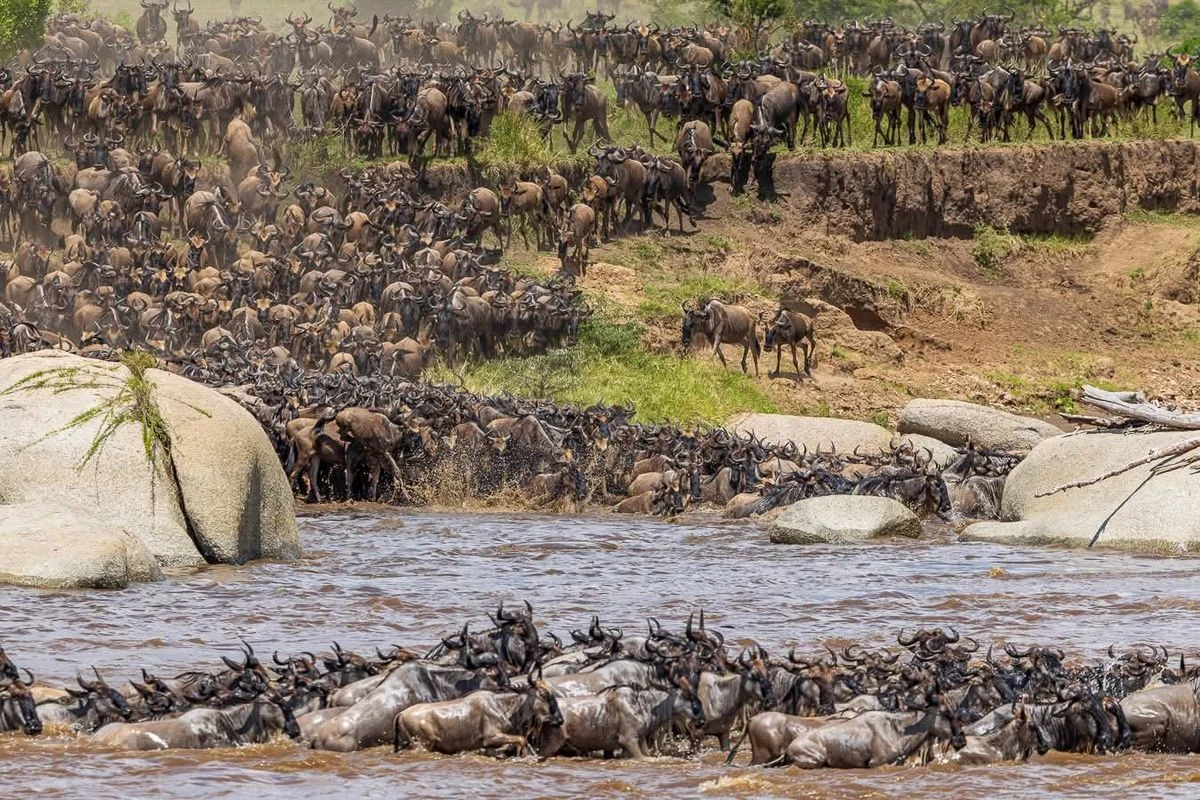
The months of January to March are particularly important for visitors interested in the Ndutu calving season, when thousands of wildebeest give birth in the southern Serengeti and Ngorongoro Conservation Area ecosystem.
Possible considerations include:
- Some areas may receive rainfall.
- Afternoon showers can occur.
- Wildlife may be more spread out because water is available throughout the landscape.
Why Choosing the Wrong Season Can Affect Your Experience
1. Missing Your Main Safari Goal
Many travelers plan their trip around a specific experience without researching timing.
For example:
- Wanting to witness the Great Migration without checking where the herds are during their travel month.
- Expecting river crossings when visiting the Serengeti outside the relevant period.
- Planning photography without considering lighting, landscapes, and animal behaviour.
The Great Migration is a natural movement influenced by rainfall and environmental conditions, so exact timing can vary each year.
2. Paying More Than Necessary
Traveling during peak periods can significantly affect your Tanzania safari cost.
Popular months often have:
- Higher lodge rates.
- Less availability.
- Increased demand for private vehicles and guides.
Traveling during shoulder seasons can sometimes provide excellent experiences with fewer crowds and more flexible options.
3. Having Unrealistic Weather Expectations
Tanzania's weather is generally favourable for safari, but conditions vary.
Even during the dry season, mornings in some areas can be cool, especially around Ngorongoro Highlands. During the green season, rainfall does not necessarily mean continuous rain all day.
Many safari days still include excellent wildlife viewing.
How to Avoid This Mistake
Before booking your safari, consider:
| Your PriorityRecommended Timing | |
| First Tanzania safari | June–October or January–March |
| Great Migration interest | Depends on the month and migration location |
| Newborn animals | January–March |
| Bird photography | November–April |
| Lower crowds | March–May and November |
| Best weather conditions | June–October |
| Budget-conscious travel | Shoulder seasons |
Expert Tip
The "best time" for a Tanzania safari is not only about weather—it is about matching the season with your personal goals.
A well-planned safari considers:
- Where animals are likely to be during your travel dates.
- Which parks offer the best experience at that time.
- Your budget.
- Your preferred accommodation style.
- Whether you prefer fewer crowds or peak wildlife viewing opportunities.
For example, a couple celebrating a honeymoon may prefer a quieter green-season safari with beautiful scenery, while a wildlife photographer may choose dates based on specific animal behaviour and locations.
At Kilipori Safaris, we help travelers plan their Tanzania safaris around realistic seasonal conditions, wildlife patterns, and personal interests. Our goal is to create an itinerary that fits when you travel and what you hope to experience, rather than simply recommending one season for everyone.
Mistake #5: Trying to Visit Too Many Parks in a Short Time
One of the biggest Tanzania safari planning mistakes is trying to include too many national parks in a limited number of days. Many first-time visitors look at a map of Tanzania and assume that adding more destinations will automatically create a better safari experience. However, a safari is not about collecting park names—it is about having enough time to enjoy wildlife, landscapes, and meaningful moments in each location.
Tanzania is a large country, and the distances between major safari destinations can be greater than many travelers expect. A route that looks simple on a map may involve several hours of driving because safari vehicles travel through real roads, park areas, and conservation zones.
A well-designed Tanzania safari itinerary should prioritize quality over quantity. Spending more time in fewer places often creates a more rewarding experience than rushing through many destinations.
Why This Is a Common Mistake
First-time visitors often want to see everything:
- Serengeti National Park
- Ngorongoro Crater
- Tarangire National Park
- Lake Manyara National Park
- Arusha National Park
- Lake Natron
- Southern Tanzania parks
While Tanzania has many incredible destinations, trying to include all of them in one short trip can make the safari exhausting rather than enjoyable.
For example, a traveler with only five days may attempt to visit four or five destinations. The result could be:
- Changing accommodation almost every night.
- Spending long hours driving between parks.
- Having limited time for actual game drives.
- Missing opportunities to relax and enjoy the surroundings.
What Can Happen When Your Itinerary Is Too Ambitious?
1. Too Much Time Inside the Vehicle
Safari vehicles are comfortable and designed for long-distance travel, but spending excessive hours driving between parks reduces the time available for wildlife exploration.
For example:
A journey from Arusha to Serengeti can take most of the day by road. Although the drive offers beautiful scenery and cultural experiences, it may mean fewer hours available for exploring wildlife areas that day.
A better approach is to plan realistic travel days and allow enough time for game drives.
2. Less Opportunity for Special Wildlife Encounters
Wildlife sightings are unpredictable. Even in famous parks like Serengeti and Ngorongoro, animals do not appear according to a schedule.
A longer stay gives your guide more opportunities to:
- Explore different areas.
- Follow recent wildlife information.
- Spend more time observing animal behaviour.
- Return to productive areas at different times of day.
For wildlife photographers, this extra time can make a significant difference.
3. The Safari Feels Like a Race
A safari should be an experience, not a checklist.
Constantly packing bags, checking out, and moving to another location can reduce the enjoyment of the journey.
Some of the most memorable safari moments often happen during slower experiences:
- Watching elephants at sunset.
- Enjoying a quiet morning game drive.
- Taking time to photograph landscapes.
- Learning about wildlife from your guide.
How to Avoid This Mistake
Instead of asking:
"How many parks can I visit?"
ask:
"Which parks will give me the best experience during my available time?"
A balanced Tanzania safari itinerary may look like this:
| Safari DurationRecommended Focus | |
| 2–3 Days | Tarangire and Ngorongoro for a short wildlife experience |
| 4–5 Days | Tarangire, Serengeti, and Ngorongoro highlights |
| 6–7 Days | More time in Serengeti with relaxed exploration |
| 8–10 Days | Northern circuit plus additional destinations or slower travel pace |
Example: Quality vs Quantity
Rushed Itinerary:
5 Days:
- Tarangire
- Lake Manyara
- Serengeti
- Ngorongoro
- Arusha
This may involve frequent transfers and limited time in each location.
Better Balanced Itinerary:
5 Days:
- Tarangire National Park
- Serengeti National Park
- Ngorongoro Crater
This allows more meaningful wildlife experiences and less unnecessary driving.
Expert Tip
When planning your Tanzania safari, remember that fewer parks with more time often create better memories than visiting many destinations briefly.
The right itinerary depends on:
- Your travel dates.
- Wildlife interests.
- Budget.
- Travel companions.
- Preferred pace.
Families with children may benefit from fewer hotel changes, while photographers and wildlife enthusiasts may prefer longer stays in key locations such as Serengeti.
A knowledgeable private guide can help you decide where to spend your limited safari days instead of simply adding more destinations.
At Kilipori Safaris, we focus on designing realistic Tanzania safari itineraries that balance wildlife opportunities, travel time, and comfort. Our goal is to help travelers experience Tanzania deeply—not just drive through it.
Mistake #6: Choosing the Wrong Safari Style for Your Travel Needs
One of the biggest Tanzania safari planning mistakes is booking the wrong type of safari experience for your travel style. Many travelers focus mainly on the destination and overlook an equally important decision: how they want to experience Tanzania.
A safari can be private or shared, luxury or budget, fast-paced or relaxed. The right choice depends on your budget, comfort expectations, who you are traveling with, and the type of experience you want to have.
A honeymoon couple, a family with children, a solo traveler, and a group of friends may all visit the same national parks but require completely different safari arrangements.
Choosing the wrong safari style can affect your comfort, flexibility, privacy, and overall enjoyment.
Why This Is a Common Mistake
Many first-time visitors assume that all safaris are similar because they follow the same routes and visit the same parks. However, the difference between safari styles can be significant.
For example:
A private Tanzania safari usually provides:
- Your own safari vehicle.
- A dedicated private guide.
- Flexible departure times.
- More freedom during game drives.
- The ability to adjust the itinerary based on your interests.
A shared safari may offer:
- Lower costs.
- A fixed schedule.
- Shared experiences with other travelers.
- Less flexibility during game drives.
Neither option is automatically better—the best choice depends on what you value most.
Private vs Shared Tanzania Safari
| FeaturePrivate SafariShared Safari | ||
| Vehicle | Exclusive vehicle for your group | Shared with other travelers |
| Flexibility | High flexibility with timing and stops | Fixed schedule |
| Guide Attention | Personalized experience | Shared attention |
| Photography | More freedom for positioning and timing | Limited flexibility |
| Family Friendly | Usually better for families | Depends on group arrangement |
| Cost | Higher investment | More budget-friendly |
| Best For | Couples, families, photographers, personalized trips | Budget-conscious travelers |
What Can Happen If You Choose the Wrong Safari Style?
1. You May Feel Restricted During Your Safari
Wildlife viewing is not predictable. Sometimes you may want to spend extra time watching elephants, lions, or a special wildlife interaction.
On a private safari, your guide can usually adjust the timing according to your interests.
In a shared vehicle, the group may need to follow a planned schedule because everyone has different preferences.
2. Your Travel Companions May Affect Your Experience
A safari is an intimate experience, and the people you share it with can influence your enjoyment.
For example:
A couple celebrating a honeymoon may prefer privacy and flexibility.
A family traveling with young children may need breaks, shorter drives, and customized timing.
A photographer may want extra time at wildlife sightings.
A solo traveler may enjoy meeting others but should understand the limitations of a shared itinerary.
3. You May Spend Money on Features You Do Not Need
Choosing luxury does not always mean choosing the best safari for you.
Some travelers spend more on accommodation but overlook important factors such as:
- Guide quality.
- Park location.
- Safari vehicle condition.
- Time spent inside wildlife areas.
A well-balanced mid-range private safari can sometimes provide a better overall experience than a luxury itinerary with poor planning.
How to Avoid This Mistake
Before booking, consider these questions:
Who am I traveling with?
- Couples: A private safari offers privacy, flexibility, and a more romantic pace.
- Families: Private vehicles allow easier adjustments for children.
- Solo travelers: Shared safaris can reduce costs while offering social interaction.
- Photographers: Private safaris provide more control over timing and locations.
What is my comfort preference?
| Safari StyleBest For | |
| Budget Safari | Travelers prioritizing affordability |
| Mid-range Safari | Travelers wanting comfort and value |
| Luxury Safari | Travelers seeking premium accommodation and services |
| Private Safari | Travelers wanting flexibility and personalized experiences |
Expert Tip
Do not choose a safari style based only on price. Think about how you want to spend your days in Tanzania.
A safari involves many hours together with your guide and vehicle, so having the right setup can make a major difference. For many first-time visitors, a private Tanzania safari provides the best balance of flexibility, comfort, and personalization because the journey can be adapted around your interests.
At Kilipori Safaris, we help travelers choose the safari style that matches their expectations, whether they are looking for a comfortable family adventure, a romantic couple's escape, a photography-focused journey, or a value-focused wildlife experience. The goal is to create a safari that feels personally designed—not a one-size-fits-all trip.
Mistake #7: Choosing Safari Accommodation Without Checking the Location
One of the biggest Tanzania safari planning mistakes is selecting a safari lodge or camp based only on photos, reviews, or price without considering its location. Accommodation is not just a place to sleep after a game drive—it plays an important role in determining how much time you spend exploring wildlife areas and how comfortable your overall safari experience will be.
Many first-time visitors do not realize that two lodges located near the same national park can offer completely different experiences depending on their distance from park gates, wildlife areas, and daily safari routes.
A beautiful lodge in the wrong location can result in longer drives, fewer hours inside the park, and less flexibility during game drives.
Why This Is a Common Mistake
When planning a Tanzania safari, travelers often focus on:
- Room design.
- Swimming pools.
- Food reviews.
- Luxury features.
- Online photographs.
While these factors are important, location is equally valuable.
For example, staying near the right area of Serengeti can make a major difference because the park is enormous. The Serengeti covers approximately 30,000 square kilometres, and wildlife movements vary depending on the season.
A lodge in the central Serengeti may be ideal for year-round wildlife viewing, while a camp in another area may be better during specific migration periods.
What Can Happen If You Choose Accommodation Based Only on Appearance?
1. Longer Driving Times Every Day
A lodge located far from wildlife areas may require long transfers before and after game drives.
This can mean:
- Leaving earlier in the morning.
- Returning later in the evening.
- Spending less time observing wildlife.
- More time on roads instead of enjoying the park.
For families and older travelers, unnecessary driving can also make the safari more tiring.
2. Missing the Best Wildlife Viewing Hours
The early morning and late afternoon are often considered some of the most rewarding times for game drives because many animals are more active during cooler hours.
If your accommodation is far from the main wildlife areas, you may lose valuable time reaching locations where animals are active.
A strategically located lodge allows you to maximize your time in nature.
3. Paying for Luxury That Does Not Improve Your Safari
A luxury lodge can provide excellent comfort, but if its location creates daily logistical challenges, the overall experience may not meet expectations.
A slightly simpler accommodation in a better location can sometimes provide a more memorable safari because you spend more time where the wildlife experience happens.
How to Choose the Right Safari Accommodation
When comparing safari lodges and camps, consider:
| FactorWhy It Matters | |
| Distance from park areas | Reduces unnecessary travel time |
| Location within the ecosystem | Important for seasonal wildlife movements |
| Accommodation style | Should match your comfort expectations |
| Meal arrangements | Important during long safari days |
| Reviews about service | Shows consistency and guest experience |
| Accessibility | Important for families and travelers with special needs |
Accommodation Types Explained
| Accommodation TypeBest For | |
| Luxury Safari Lodge | Travelers wanting premium comfort, facilities, and service |
| Mid-range Lodge | Travelers seeking comfort with good value |
| Safari Camp | Travelers wanting a closer-to-nature experience |
| Tented Camp | Those who want an authentic safari atmosphere |
| Budget Campsite | Travelers prioritizing affordability |
Example: Serengeti Accommodation Planning
The Serengeti is not one small park—it is a vast ecosystem with different regions.
Depending on your travel dates and interests:
- Central Serengeti (Seronera area): Often preferred for year-round wildlife viewing and predator sightings.
- Northern Serengeti: Popular during certain Great Migration periods, especially when herds move toward the northern areas.
- Southern Serengeti / Ndutu: Important during the calving season when wildebeest give birth.
Choosing accommodation based on location rather than only comfort can significantly improve your safari experience.
Expert Tip
When reviewing safari accommodation, always ask:
"How does this location improve my safari experience?"
A good safari planner does not simply recommend the most expensive lodge. They choose accommodation that supports your itinerary, travel season, budget, and wildlife goals.
For example, a photographer may prioritize staying closer to productive wildlife areas, while a family may value shorter transfer times and comfortable facilities.
At Kilipori Safaris, accommodation recommendations are based on more than appearance. We consider location, seasonal wildlife patterns, travel pace, and your personal expectations to help create a Tanzania safari itinerary where your time is spent experiencing wildlife—not unnecessarily driving between places.
Mistake #8: Choosing a Safari Company Based Only on Online Price
One of the biggest Tanzania safari planning mistakes is selecting a safari company only because it offers the lowest quotation. While comparing prices is an important part of planning your Tanzania safari, the cheapest option does not always provide the best value or the safest experience.
A safari company is responsible for many important parts of your journey, including itinerary planning, transportation, accommodation coordination, park arrangements, and the quality of your safari guide. The company you choose can significantly influence how smoothly your entire experience runs.
For many travelers, a Tanzania safari is a once-in-a-lifetime journey. Choosing the right operator is not only about saving money—it is about making sure your investment delivers comfort, reliability, and memorable experiences.
Why This Is a Common Mistake
The internet makes it easy to compare hundreds of Tanzania safari companies within minutes. Many travelers receive several quotations and naturally choose the lowest price without investigating what is included.
However, safari prices can differ because of many factors, such as:
- Experience of the safari company.
- Quality of safari vehicles.
- Knowledge and professionalism of guides.
- Accommodation standards.
- Route planning.
- Level of customer support.
- Safety and operational standards.
Two companies may advertise a similar 5-day Tanzania safari itinerary, but the actual experience can be very different.
What Can Happen If You Choose Only Based on Price?
1. Poor Itinerary Planning
An experienced Tanzania safari company understands that a good itinerary is not simply a list of famous parks.
Professional planning considers:
- Travel distances.
- Seasonal wildlife movements.
- Accommodation locations.
- Time available for game drives.
- Your interests and travel style.
A poorly planned itinerary may look attractive online but create unnecessary long drives or rushed experiences.
2. Lower Quality Safari Vehicles
Your safari vehicle is where you will spend many hours during your trip. Vehicle quality affects:
- Comfort during long drives.
- Visibility during wildlife viewing.
- Reliability on different road conditions.
- Overall enjoyment.
A professional safari operator should use well-maintained 4x4 safari vehicles designed for wildlife viewing, usually with features such as:
- Large windows.
- Roof opening for photography and viewing.
- Comfortable seating.
- Charging options.
- Communication equipment.
3. Less Experienced Guides
Your guide is one of the most important parts of your safari.
A great guide does more than drive. They help you understand:
- Animal behaviour.
- Local ecosystems.
- Conservation.
- Tanzania's culture.
- Wildlife tracking.
An experienced private guide can often transform a simple game drive into a deeper learning experience.
4. Poor Communication Before Your Trip
Planning an international safari requires trust and clear communication.
A reliable safari company should provide:
- Clear answers to questions.
- Transparent inclusions and exclusions.
- Realistic expectations.
- Assistance with planning.
- Support before and during your journey.
Slow communication or unclear information before booking can sometimes indicate problems later.
How to Choose the Right Tanzania Safari Company
Before booking, consider these factors:
| What to CheckWhy It Matters | |
| Experience operating Tanzania safaris | Shows knowledge of local routes and logistics |
| Verified traveler reviews | Helps understand previous guest experiences |
| Clear itinerary details | Prevents misunderstandings |
| Professional guides | Improves wildlife and cultural experience |
| Transparent pricing | Helps avoid hidden costs |
| Safety standards | Protects your comfort and wellbeing |
| Local knowledge | Creates better recommendations |
Questions to Ask Before Booking
Before choosing a safari company, ask:
About the itinerary:
- How many hours will we spend on game drives?
- Which parks are included and why?
- Are travel times realistic?
About the vehicle:
- Will the safari be private or shared?
- What type of vehicle will be used?
- Is there enough space for photography?
About the guide:
- Are guides experienced and knowledgeable?
- Do they speak my preferred language?
About costs:
- What is included in the safari price?
- Are park fees, meals, and transfers included?
Expert Tip
The best Tanzania safari company is not necessarily the one with the lowest price—it is the one that provides the best balance between experience, service, safety, and value.
When comparing safari quotations, look beyond the final number. A slightly higher investment with a knowledgeable local operator can often provide better planning, smoother logistics, and a more rewarding safari experience.
At Kilipori Safaris, we believe successful safaris begin long before travelers arrive in Tanzania. Every journey starts with understanding the traveler's expectations, selecting the right destinations, and creating a realistic itinerary designed around comfort, wildlife opportunities, and personal interests.
Mistake #9: Underestimating the Real Cost of a Tanzania Safari
One of the biggest Tanzania safari planning mistakes is creating a budget based only on the advertised safari package price. Many first-time visitors search for the cheapest Tanzania safari cost without considering the additional expenses that come before, during, and after the safari.
A Tanzania safari is a significant travel investment, and understanding the full cost in advance helps you choose an itinerary that matches your budget without unexpected surprises.
The total cost of a safari is influenced by many factors, including the number of days, travel season, type of accommodation, safari style, park fees, transportation, and the level of personalization you choose.
Why This Is a Common Mistake
Many travelers compare safari prices online and see packages advertised at different rates. However, not all safari prices include the same services.
One company may offer a lower price because it excludes certain elements, while another may include more comprehensive services.
Before comparing Tanzania safari costs, it is important to understand what is included.
A typical safari package may include:
- Safari vehicle.
- Professional driver-guide.
- Park entrance fees.
- Accommodation.
- Meals during safari.
- Drinking water.
- Airport transfers.
- Government taxes and fees.
However, additional expenses may include:
- International flights.
- Tanzania visa fees.
- Travel insurance.
- Vaccinations or medical preparation.
- Tips for guides and lodge staff.
- Alcoholic drinks.
- Laundry services.
- Optional activities.
- Personal shopping.
- Zanzibar extension.
What Can Happen If You Underestimate Your Budget?
1. You May Choose an Itinerary That Does Not Match Your Reality
A common mistake is planning an expensive safari experience without considering the complete travel budget.
For example, a traveler may choose a luxury Serengeti safari but later realize that flights, accommodation upgrades, and additional expenses make the total trip much higher than expected.
A better approach is to decide your overall travel budget first, then design a safari itinerary that provides the best experience within that range.
2. You May Cut Important Elements at the Last Minute
When travelers underestimate costs, they often reduce parts of the trip that affect the overall experience, such as:
- Reducing safari days.
- Choosing inconvenient accommodation locations.
- Removing important destinations.
- Selecting a rushed itinerary.
Planning realistically from the beginning helps protect the experiences that matter most.
3. Unexpected Expenses Can Create Stress
A safari should be an enjoyable adventure. Unexpected costs can create unnecessary worry during your holiday.
Knowing your expected expenses before departure allows you to focus on wildlife viewing, photography, relaxation, and enjoying Tanzania.
What Determines Tanzania Safari Cost?
| FactorHow It Affects Price | |
| Safari duration | More days increase vehicle, guide, accommodation, and park costs |
| Travel season | Peak seasons usually have higher accommodation demand |
| Accommodation style | Luxury lodges cost more than mid-range camps |
| Safari type | Private safaris offer more flexibility but usually cost more |
| Number of travelers | Costs may be shared among larger groups |
| Park selection | Different parks have different fees and logistics |
| Transportation | Road safari vs domestic flights affects the budget |
Tanzania Safari Cost by Travel Style
| Safari StyleBest ForGeneral Expectation | ||
| Budget Safari | Travelers prioritizing affordability | Basic accommodation and practical travel arrangements |
| Mid-range Safari | Most first-time visitors | Comfortable lodges, good service, balanced experience |
| Luxury Safari | Travelers seeking premium comfort | High-end lodges, exclusive experiences, additional services |
| Private Safari | Couples, families, photographers | Flexible schedules and personalized experiences |
How to Avoid This Mistake
Before booking your Tanzania safari, create a realistic budget that includes:
Before Arrival:
✓ International flights
✓ Tanzania visa
✓ Travel insurance
✓ Vaccinations and health preparation
During Safari:
✓ Safari package cost
✓ Tips
✓ Drinks and personal expenses
✓ Optional activities
After Safari:
✓ Zanzibar extension (if planned)
✓ Additional accommodation
✓ Return travel costs
Expert Tip
Do not judge a Tanzania safari only by the lowest price. Instead, focus on value per safari day.
A well-planned 6-day private Tanzania safari with carefully selected parks and accommodation may provide a better experience than a cheaper itinerary that spends too much time driving or uses inconvenient locations.
When discussing your safari budget with a local specialist, be open about your expectations and priorities. A good safari planner can help you adjust the itinerary, accommodation, and activities to create the best possible experience within your budget.
At Kilipori Safaris, we believe transparent planning is the foundation of a successful safari. We help travelers understand what influences Tanzania safari costs and create personalized itineraries that balance comfort, wildlife experiences, and value.
Mistake #10: Not Considering a Private Tanzania Safari When It Fits Your Needs
One of the biggest Tanzania safari planning mistakes is assuming that a shared safari is always the best option simply because it costs less. While shared safaris can be a good choice for some travelers, many visitors—especially couples, families, photographers, and travelers celebrating special occasions—benefit greatly from the flexibility and personalization of a private Tanzania safari.
A private safari does not simply mean having a vehicle to yourself. It means having a journey designed around your interests, your pace, and your expectations. In Tanzania, where wildlife encounters are unpredictable and every traveler has different priorities, flexibility can make a significant difference.
Why This Is a Common Mistake
Many first-time visitors compare safari prices online and immediately choose shared tours because they appear more affordable. However, they may not consider how the safari experience changes when traveling with people they do not know.
A safari day involves many decisions:
- When to start the morning game drive.
- How long to stay at a wildlife sighting.
- Which areas to explore.
- When to stop for photography.
- How much time to spend learning from the guide.
On a shared safari, these decisions must usually accommodate the entire group.
A private safari allows the experience to be shaped around your interests.
What Are the Advantages of a Private Tanzania Safari?
1. Flexible Game Drives
Wildlife viewing is not a fixed schedule. Sometimes a guide may discover an exciting sighting, such as lions resting after a hunt, elephants interacting near a water source, or a rare bird species.
With a private vehicle, you have more freedom to decide how much time to spend observing the moment.
This is especially valuable for:
- Wildlife photographers.
- Birdwatchers.
- First-time safari travelers.
- Families with children.
2. A More Personalized Guide Experience
Your safari guide plays a major role in your experience.
On a private safari, the guide can focus entirely on your interests.
For example:
A family may want more explanations about animals and nature.
A photographer may want advice on positioning, lighting, and timing.
A couple may prefer a slower pace with more quiet moments.
A private guide can adjust the experience accordingly.
3. Better Comfort and Privacy
Long safari days involve spending many hours in the vehicle. Having your own space can make the journey more comfortable.
Benefits include:
- Choosing your preferred departure times.
- More freedom during breaks.
- More personal space.
- A quieter experience.
- Easier planning around your preferences.
For honeymooners or families, this privacy can significantly improve the overall experience.
Private vs Shared Safari: Which One Is Right for You?
| Traveler TypeRecommended OptionWhy | ||
| Honeymoon couples | Private Safari | More privacy and romantic flexibility |
| Families | Private Safari | Easier schedules and child-friendly pacing |
| Wildlife photographers | Private Safari | More control over sightings and timing |
| First-time visitors | Private Safari | More guidance and personalized learning |
| Solo travelers on a budget | Shared Safari | Lower cost and social experience |
| Budget-focused travelers | Shared Safari | More affordable option |
When a Shared Safari May Be the Better Choice
A private safari is not always necessary for every traveler.
A shared safari can be a good option if:
- Your budget is limited.
- You enjoy meeting other travelers.
- You are comfortable following a group schedule.
- Your priorities are mainly visiting the parks at a lower cost.
The important thing is choosing the safari style that matches your expectations.
How to Avoid This Mistake
Before booking, ask yourself:
- Do I want flexibility during game drives?
- Am I traveling with children?
- Is photography important to me?
- Is this a honeymoon or special celebration?
- Do I prefer a personalized experience?
- Am I comfortable sharing my vehicle with other travelers?
Your answers will help determine whether a private safari is worth the additional investment.
Expert Tip
For many first-time visitors to Tanzania, a private safari provides excellent value because the experience is not only about reaching the national parks—it is about how you experience them.
A skilled guide, flexible schedule, and personalized route can turn ordinary moments into unforgettable memories.
For example, spending extra time watching a herd of elephants in Tarangire, waiting patiently for predators in Serengeti, or adjusting the route based on current wildlife activity is much easier when your safari is designed around your group.
At Kilipori Safaris, we specialize in creating private Tanzania safaris that match each traveler's goals, whether it is a romantic couple's journey, a family adventure, a photography expedition, or a first introduction to Tanzania's incredible wildlife. Our focus is creating meaningful safari experiences with the right balance of flexibility, comfort, and expert local guidance.
Mistake #11: Packing the Wrong Items for a Tanzania Safari
One of the biggest Tanzania safari planning mistakes is packing without considering the actual conditions you will experience during your journey. Many first-time visitors either bring too much unnecessary luggage or forget important items that can make their safari more comfortable.
A Tanzania safari is different from a typical holiday. You may experience cool mornings, warm afternoons, dusty roads, changing weather conditions, long game drives, and limited access to shops while inside national parks. Packing correctly helps you stay comfortable and prepared throughout your adventure.
The goal is not to pack everything you own—it is to bring practical items that support your safari experience.
Why This Is a Common Mistake
Many travelers imagine Africa as hot throughout the year and pack only lightweight summer clothing. While Tanzania can be warm, safari conditions vary depending on:
- Season of travel.
- Destination.
- Altitude.
- Time of day.
- Type of activity.
For example, areas around the Ngorongoro Highlands can feel cold in the early morning because of the higher elevation, while afternoons in the Serengeti can be warm.
A good safari packing list should consider these differences.
What Can Happen If You Pack Incorrectly?
1. You May Be Uncomfortable During Game Drives
Morning game drives often start early when temperatures are cooler.
Without suitable clothing, you may experience:
- Cold mornings in open safari vehicles.
- Discomfort during long drives.
- Difficulty enjoying early wildlife viewing.
A lightweight jacket or warm layer is often one of the most useful safari items.
2. You May Miss Important Photography Opportunities
Tanzania is one of the world's best wildlife photography destinations. However, photography requires preparation.
Common mistakes include:
- Forgetting extra batteries.
- Not carrying enough memory cards.
- Leaving camera protection behind.
- Not bringing binoculars.
Dust, sunlight, and long days outside require practical preparation.
3. You May Carry Too Much Luggage
Many travelers overpack because they are unsure what they need.
Large suitcases can become inconvenient because:
- Safari vehicles have limited storage space.
- Some domestic flights have luggage restrictions.
- Moving between lodges becomes harder.
Soft-sided bags are usually more practical for safari travel.
Tanzania Safari Packing List
Essential Documents
✓ Passport
✓ Tanzania visa documents
✓ Travel insurance information
✓ Flight details
✓ Accommodation information
✓ Emergency contacts
Safari Clothing
✓ Neutral-coloured lightweight clothing
✓ Long-sleeved shirts
✓ Comfortable trousers
✓ Warm jacket or fleece
✓ Comfortable walking shoes
✓ Hat or cap
✓ Sunglasses
✓ Light rain jacket (depending on season)
Wildlife Viewing & Photography
✓ Binoculars
✓ Camera equipment
✓ Extra batteries
✓ Memory cards
✓ Power bank
✓ Phone charger
✓ Dust protection for equipment
Health & Personal Items
✓ Personal medication
✓ Sunscreen
✓ Insect repellent
✓ Personal toiletries
✓ Hand sanitizer
✓ Small first-aid supplies
What Not to Overpack
Many safari travelers bring items they rarely use.
Usually unnecessary:
- Too many formal clothes.
- Heavy shoes.
- Large amounts of unnecessary electronics.
- Excessive luggage.
Most safari lodges provide comfortable casual environments, and laundry services may be available depending on the accommodation.
How to Avoid This Mistake
Before packing, consider:
Where am I going?
Different areas have different conditions:
| DestinationPacking Consideration | |
| Serengeti | Sun protection, comfortable clothing, camera equipment |
| Ngorongoro Crater | Warm layers for cool mornings |
| Tarangire | Lightweight clothing, sun protection |
| Lake Manyara | Comfortable outdoor clothing and rain preparation |
When am I traveling?
| SeasonPacking Focus | |
| Dry Season | Sun protection, warm morning layers |
| Green Season | Light rain jacket, waterproof protection |
Expert Tip
Pack for comfort, not fashion. A safari is about spending time outdoors, observing wildlife, and enjoying Tanzania's landscapes.
The most valuable items are often simple ones:
- Comfortable clothing.
- Good binoculars.
- Sun protection.
- A camera or phone with enough storage.
- A warm layer for early mornings.
A well-prepared traveler can focus more on the experience and less on small inconveniences.
At Kilipori Safaris, we provide travelers with practical preparation guidance before departure, including what to pack, what to expect during game drives, and how to prepare for Tanzania's different environments. Proper preparation helps ensure that every safari day is comfortable, enjoyable, and memorable.
Mistake #12: Ignoring Travel Insurance and Important Health Preparations
One of the biggest Tanzania safari planning mistakes is treating travel insurance and health preparation as optional. Many travelers spend months planning their itinerary, choosing lodges, and researching wildlife destinations, but overlook the practical steps that protect their investment and wellbeing.
A Tanzania safari is an adventure that takes you into remote areas where access to medical facilities, transportation, and emergency services may be limited compared to major cities. While most travelers enjoy safe and trouble-free journeys, preparing properly helps you handle unexpected situations with confidence.
Good preparation does not mean expecting problems—it means being ready so that small issues do not become major disruptions.
Why This Is a Common Mistake
First-time visitors often focus mainly on:
- Which parks to visit.
- Where to stay.
- What animals they want to see.
- How much the safari costs.
However, international travel involves factors beyond the safari itinerary, including:
- Flight delays.
- Lost luggage.
- Medical emergencies.
- Trip cancellations.
- Unexpected changes.
Travel insurance and health preparation are important parts of responsible Tanzania safari planning.
What Can Happen If You Travel Without Proper Preparation?
1. Unexpected Medical Costs
A safari often takes place far from large urban hospitals. In case of illness or injury, medical support or evacuation may involve additional costs.
A suitable travel insurance policy can provide coverage for situations such as:
- Emergency medical treatment.
- Hospital expenses.
- Medical evacuation.
- Trip interruption.
Always check the details of your policy to understand what is covered.
2. Travel Disruptions Can Become Expensive
International travel involves many moving parts.
Unexpected situations may include:
- Delayed flights.
- Missed connections.
- Lost baggage.
- Changes to travel plans.
Without insurance, travelers may need to cover these additional costs themselves.
3. Health Preparation May Be Incomplete
Tanzania is a tropical destination, and visitors should discuss travel health requirements with qualified medical professionals before travelling.
Preparation may include:
- Reviewing vaccination recommendations.
- Discussing malaria prevention options.
- Carrying personal medications.
- Preparing a basic travel health kit.
Health requirements can vary depending on your country of origin, travel history, and personal circumstances.
Tanzania Safari Health Preparation Checklist
Before travelling, consider:
✓ Check passport validity
✓ Review Tanzania visa requirements
✓ Consult a travel health professional if needed
✓ Carry prescribed medications
✓ Pack personal medical supplies
✓ Bring insect repellent
✓ Carry sunscreen and sun protection
✓ Drink safe bottled or treated water
✓ Keep important documents accessible
Common Health Questions First-Time Safari Travelers Ask
"Is Tanzania safe for a safari?"
Tanzania welcomes travelers from around the world, and millions of visitors enjoy safaris every year. Like any international destination, travelers should follow normal safety practices and listen to guidance from their safari operator and accommodation providers.
"Do I need vaccinations for Tanzania?"
Health recommendations depend on your personal situation and travel route. Travelers should check current requirements and consult qualified health professionals before departure.
"Should I worry about malaria during safari?"
Malaria risk varies by location and individual circumstances. Travelers should seek professional medical advice before their trip and take appropriate precautions.
How to Avoid This Mistake
A few weeks before departure, create a preparation checklist that includes:
Travel Documents
- Passport.
- Visa requirements.
- Flight confirmations.
- Insurance documents.
- Safari booking information.
Health Preparation
- Medical advice.
- Personal medication.
- Travel health items.
Emergency Planning
- Emergency contacts.
- Safari company contact details.
- Copies of important documents.
Expert Tip
Travel insurance is not an unnecessary extra cost—it is part of responsible Tanzania safari planning.
A safari is a valuable experience, and protecting your investment allows you to travel with greater peace of mind. The best preparation combines proper insurance, realistic expectations, and guidance from a reliable local safari company.
At Kilipori Safaris, we help travelers prepare beyond the itinerary itself by providing practical information before arrival, including travel documents, packing guidance, safari expectations, and important planning considerations. A successful safari begins with good preparation long before you step into the vehicle.
Mistake #13: Having Unrealistic Expectations About Wildlife Sightings
One of the biggest Tanzania safari planning mistakes is expecting wildlife encounters to happen exactly like they appear in documentaries. Many first-time visitors arrive with images of lions hunting immediately in front of their vehicle, elephants walking beside their lodge, or every animal appearing on demand.
Tanzania offers some of the world's best wildlife experiences, but it is important to remember that a safari takes place in a natural environment. Animals move freely, follow seasonal patterns, and behave according to nature—not according to a schedule.
Understanding this reality helps travelers appreciate the true beauty of a safari and enjoy every wildlife encounter, whether it is a famous Big Five sighting or a smaller moment that was completely unexpected.
Why This Is a Common Mistake
Modern travel content, documentaries, and social media often show the most dramatic safari moments:
- Lions making a successful hunt.
- Leopards resting in perfect positions.
- Large herds crossing rivers.
- Close-up wildlife photography.
While these experiences can happen in Tanzania, they represent special moments rather than guaranteed daily events.
A safari is about searching, observing, and understanding wildlife—not simply visiting a zoo where animals appear at fixed locations.
What Can Happen If Your Expectations Are Unrealistic?
1. You May Feel Disappointed Even After an Excellent Safari
Tanzania is home to incredible wildlife populations, including:
- Lions.
- Elephants.
- Giraffes.
- Zebras.
- Wildebeest.
- Buffalo.
- Leopards.
- Many bird species.
However, seeing every animal on a personal wish list depends on many natural factors.
For example, leopards are often more difficult to spot because they are solitary and well-camouflaged, while elephants and giraffes are usually easier to encounter in many parks.
A successful safari should be measured by the overall experience, not only by checking animals off a list.
2. You May Underestimate the Importance of Your Guide
An experienced safari guide plays a major role in helping you discover wildlife.
A professional guide understands:
- Animal behaviour.
- Tracks and signs.
- Bird calls.
- Recent wildlife movements.
- Different habitats.
Two vehicles may travel through the same park, but the quality of observation and interpretation can create completely different experiences.
3. You May Miss the Beauty Beyond the Big Five
Many travelers focus only on the Big Five:
- Lion.
- Leopard.
- Elephant.
- Buffalo.
- Rhinoceros.
While these animals are incredible, Tanzania's wildlife experience includes much more:
- Cheetahs moving across open plains.
- Hippos in rivers and pools.
- Colorful bird species.
- Ancient baobab trees.
- Beautiful landscapes.
- Predator-prey interactions.
- Local cultural experiences.
A great safari is about the complete ecosystem.
How to Avoid This Mistake
Set Realistic Wildlife Expectations
Before your trip, understand that:
✓ Wildlife sightings are never guaranteed.
✓ Every game drive is different.
✓ Patience is part of the experience.
✓ Different parks offer different wildlife opportunities.
✓ The guide's knowledge improves your chances of meaningful sightings.
How to Increase Your Wildlife Experience
Although sightings cannot be guaranteed, good planning can improve your opportunities.
Consider:
| FactorWhy It Matters | |
| Choosing the right parks | Different areas support different wildlife |
| Traveling during suitable seasons | Animal movements change throughout the year |
| Spending enough days on safari | More time creates more opportunities |
| Having an experienced guide | Local knowledge improves wildlife searching |
| Starting early game drives | Many animals are active during cooler hours |
Expert Tip
The best safari memories are often not the moments travelers expected.
A quiet encounter with a herd of elephants in Tarangire, watching a lion family in the Serengeti, seeing thousands of wildebeest moving across the plains, or learning how animals interact within their ecosystem can become the highlights of your journey.
Approach a Tanzania safari with curiosity rather than a checklist. The goal is not only to see animals—it is to experience the wild environment where they live.
At Kilipori Safaris, we help travelers understand what makes each safari unique, from choosing the right destinations and seasons to setting realistic expectations. Our experienced guides focus on creating meaningful wildlife experiences while respecting the natural behaviour of Tanzania's incredible animals.
Mistake #14: Forgetting to Plan Arrival and Departure Logistics
One of the biggest Tanzania safari planning mistakes is focusing only on the safari days and forgetting about the travel logistics before and after the adventure. Many first-time visitors carefully plan their Serengeti game drives and Ngorongoro Crater visits but overlook important details such as airport transfers, arrival times, overnight stays, and connections.
A well-planned Tanzania safari begins before you enter the national parks and continues after your final game drive. Good logistics reduce stress, prevent unnecessary costs, and help you start and finish your journey comfortably.
Why This Is a Common Mistake
International travelers often arrive in Tanzania after long flights with multiple connections. Depending on your arrival time, it may not always be practical to begin a safari immediately.
Most northern Tanzania safaris start from Arusha, which is the main gateway for destinations such as:
- Serengeti National Park.
- Ngorongoro Crater.
- Tarangire National Park.
- Lake Manyara National Park.
However, reaching Arusha requires considering:
- Which airport you arrive at.
- Your international flight schedule.
- Transfer time.
- Rest requirements after a long journey.
What Can Happen If You Ignore Arrival Planning?
1. You May Start Your Safari Exhausted
Many travelers underestimate the impact of international travel.
Arriving late at night and immediately starting a long safari drive the next morning can make the first day tiring.
A comfortable plan may include:
- Arrival day in Arusha.
- Rest at a nearby hotel.
- Safari briefing with your guide.
- Starting the journey refreshed the following morning.
This is especially important for families, older travelers, or visitors traveling long distances.
2. You May Lose Safari Time Due to Poor Connections
Flight schedules can affect your itinerary.
For example:
- Arriving late may require an additional overnight stay.
- Delayed flights may affect planned transfers.
- Domestic flight connections may require careful timing.
A professional safari planner considers these possibilities when designing your itinerary.
3. Your Departure Day May Become Stressful
The final day of your safari also requires planning.
Travelers sometimes schedule international flights too soon after returning from remote parks.
For example, a road journey from Serengeti back to Arusha can take many hours. Building enough time between your safari ending and your international departure helps avoid unnecessary stress.
How to Plan Your Tanzania Safari Arrival and Departure
Arrival Planning
Consider:
✓ International arrival airport
✓ Arrival time
✓ Airport transfer arrangements
✓ Overnight accommodation
✓ Safari starting point
✓ Time needed for rest
Departure Planning
Consider:
✓ Final safari location
✓ Transfer duration
✓ Flight departure time
✓ Possible overnight stay
✓ Buffer time for unexpected delays
Common Arrival Options for Tanzania Safaris
| Arrival OptionBest For | |
| Kilimanjaro International Airport (JRO) | Most northern Tanzania safari itineraries |
| Arusha Airport | Domestic connections and some regional flights |
| Julius Nyerere International Airport (DAR) | Travelers combining safari with Zanzibar or southern Tanzania |
| Zanzibar Airport (ZNZ) | Beach extensions after safari |
Expert Tip
Do not treat your arrival and departure days as wasted days—they are part of your Tanzania safari experience.
A well-planned itinerary may include:
Day 0: Arrival in Tanzania, airport transfer, overnight in Arusha
Day 1: Begin safari refreshed and ready for wildlife exploration
This approach allows you to enjoy the journey from the beginning instead of feeling rushed.
For international visitors, especially first-time travelers, small logistical decisions can make a major difference in comfort and confidence.
At Kilipori Safaris, we help travelers plan the complete journey—not only the days inside the parks. From airport transfers and arrival arrangements to safari routes and final departure planning, we create a smooth experience from the moment you land in Tanzania until you leave.
Mistake #15: Not Working With a Local Tanzania Safari Specialist
One of the biggest Tanzania safari planning mistakes is trying to organize every detail alone without using the knowledge of a local safari specialist. While online research is valuable and can help you understand Tanzania's destinations, planning a safari involves many details that are difficult to understand from outside the country.
A Tanzania safari is not simply a holiday where you book a hotel and visit attractions. It is a carefully coordinated journey involving park regulations, seasonal wildlife movements, road conditions, accommodation locations, guide expertise, and daily logistics.
Working with a knowledgeable local safari company can help you avoid costly mistakes, create a realistic itinerary, and experience Tanzania in a way that matches your expectations.
Why This Is a Common Mistake
Today, travelers have access to thousands of online resources, travel blogs, videos, and booking platforms. While these resources are helpful, they often provide general information rather than advice based on your specific situation.
A safari plan that works perfectly for one traveler may not be ideal for another.
For example:
- A honeymoon couple may want privacy and romantic accommodation.
- A family may need shorter driving distances and flexible schedules.
- A wildlife photographer may need longer time in specific areas.
- A first-time visitor may need a balanced introduction to Tanzania.
Local expertise helps transform general information into a safari plan designed around your needs.
What Can Happen If You Plan Without Local Expertise?
1. You May Choose an Inefficient Itinerary
A common mistake is creating a route based only on famous destinations without understanding the practical details.
A local safari specialist considers:
- Real driving times.
- Best park combinations.
- Seasonal wildlife patterns.
- Accommodation locations.
- Road conditions.
- Travel pace.
This helps ensure your safari days are spent experiencing Tanzania rather than dealing with unnecessary transfers.
2. You May Miss Better Experiences
Many special safari experiences depend on timing and local knowledge.
Examples include:
- Knowing which Serengeti area is most suitable during your travel month.
- Understanding when Tarangire offers excellent elephant viewing.
- Choosing the right accommodation location.
- Adding cultural or nature experiences that match your interests.
Local knowledge can help you discover options that are not always obvious from online searches.
3. You May Have Less Support During Your Journey
Traveling internationally can sometimes involve unexpected situations.
Having a reliable local safari company means you have someone who understands:
- Local conditions.
- Safari logistics.
- Accommodation coordination.
- Emergency procedures.
- Changes during travel.
This provides confidence, especially for first-time Tanzania safari visitors.
How to Choose a Reliable Tanzania Safari Specialist
Before booking, look for:
| What to CheckWhy It Matters | |
| Tanzania-based operation | Local knowledge and easier communication |
| Clear itineraries | Helps understand what you are booking |
| Experienced guides | Improves wildlife and cultural experience |
| Transparent pricing | Avoids unexpected costs |
| Genuine traveler reviews | Shows previous guest experiences |
| Personalized planning | Ensures the safari matches your goals |
Why Local Knowledge Matters in Tanzania
Tanzania's safari destinations are diverse, and conditions change throughout the year.
A local specialist understands details such as:
- Which parks work best together.
- How long transfers actually take.
- Which areas suit different seasons.
- How to balance budget and comfort.
- How to create realistic daily schedules.
This knowledge helps turn a standard safari package into a carefully planned journey.
Expert Tip
The best Tanzania safari is not necessarily the one with the most destinations or the highest price. It is the one that is thoughtfully designed around your interests, available time, and expectations.
Before booking, communicate your priorities clearly:
- What animals do you hope to see?
- Are you traveling as a couple, family, or solo traveler?
- What is your comfort level?
- What is your approximate budget?
- Are photography or cultural experiences important?
A good safari specialist listens first, then recommends the right solution.
At Kilipori Safaris, we believe successful safari planning starts with understanding each traveler's story. As a Tanzania-based safari company, we combine local knowledge with personalized planning to create private Tanzania safari experiences designed around wildlife interests, comfort preferences, and realistic expectations.
End of the 15 Biggest Tanzania Safari Planning Mistakes
By avoiding these common mistakes, travelers can make better decisions about their itinerary, budget, timing, accommodation, and safari style. Tanzania offers extraordinary wildlife experiences, but the quality of the journey depends heavily on the choices made before arrival.
A carefully planned safari allows you to spend less time worrying about logistics and more time enjoying the moments that make Tanzania unforgettable.
Tanzania Safari Planning Comparison Tables
After understanding the most common Tanzania safari planning mistakes, the next step is choosing the right safari style, travel season, budget level, and itinerary length. These decisions have a major impact on your comfort, wildlife experience, and overall Tanzania safari cost.
The following comparisons will help you make informed decisions before booking your adventure.
Private vs Shared Tanzania Safari: Which Is Better?
Choosing between a private and shared safari depends on your budget, travel style, and how much flexibility you want during your journey.
A private Tanzania safari provides a more personalized experience, while a shared safari can be a practical option for travelers looking for a lower-cost way to explore Tanzania's national parks.
| FeaturePrivate Tanzania SafariShared Tanzania Safari | ||
| Vehicle | Your own safari vehicle and guide | Shared vehicle with other travelers |
| Flexibility | High flexibility with departure times, stops, and route adjustments | Fixed schedule based on the group |
| Guide Attention | Full attention from your private guide | Guide attention shared among guests |
| Game Drives | More freedom to spend time at wildlife sightings | Timing may depend on group preferences |
| Photography | Better flexibility for photographers | Limited positioning and timing options |
| Comfort | More privacy and personal space | Less personal space |
| Family Travel | Ideal for families with children | May be challenging with young children |
| Couples & Honeymoon | More romantic and private | Less intimate |
| Cost | Higher investment | More affordable |
| Best For | Couples, families, photographers, personalized trips | Budget-conscious travelers and solo adventurers |
Expert Recommendation
For first-time visitors, families, honeymooners, and travelers who want a more relaxed experience, a private Tanzania safari is often the preferred choice because it allows the itinerary to adapt around your interests.
Shared safaris can still provide excellent value, especially for travelers who prioritize affordability and enjoy meeting other visitors.
Luxury vs Mid-Range vs Budget Tanzania Safari
One of the biggest factors affecting Tanzania safari cost is the accommodation and service level you choose.
A higher price does not automatically mean a better safari. The best choice depends on your expectations, comfort level, and priorities.
| CategoryBudget SafariMid-Range SafariLuxury Safari | |||
| Accommodation | Basic campsites or simple lodges | Comfortable lodges and quality tented camps | Premium lodges, luxury camps, exclusive properties |
| Comfort Level | Practical and simple | Comfortable with good facilities | High-end comfort and personalized service |
| Safari Vehicle | Standard safari vehicle | Well-maintained 4x4 safari vehicle | Premium vehicle options and enhanced services |
| Meals | Simple meals | Quality meals included | Fine dining-style experiences |
| Location Options | May be outside prime areas | Often good strategic locations | Premium locations near key wildlife areas |
| Flexibility | Limited compared to private options | Good flexibility | Maximum personalization |
| Best For | Travelers prioritizing affordability | Most first-time safari visitors | Travelers seeking exceptional comfort |
| Typical Traveler | Backpackers, value-focused travelers | Couples, families, general visitors | Honeymooners, luxury travelers, special occasions |
Expert Recommendation
For many first-time visitors planning a Tanzania safari, the mid-range category offers an excellent balance between comfort, wildlife experience, and cost.
A well-planned mid-range private safari can often provide a more rewarding experience than a luxury safari with poor route planning.
Dry Season vs Green Season Tanzania Safari
There is no single best time for every traveler. The ideal season depends on your priorities, such as wildlife viewing, photography, budget, and crowd preferences.
| FactorDry Season (June–October)Green Season (November–May) | ||
| Wildlife Viewing | Excellent due to concentrated wildlife around water sources | Excellent with different seasonal experiences |
| Landscape | Dry landscapes with open visibility | Green, dramatic scenery |
| Wildlife Photography | Great visibility and clear conditions | Excellent colours, newborn animals, dramatic skies |
| Great Migration | Popular months vary depending on location | Includes calving season in early months |
| Birdwatching | Good | Excellent with migratory species |
| Crowds | Higher, especially July–September | Generally fewer visitors |
| Accommodation Prices | Often higher | More availability and possible lower rates |
| Weather | Mostly dry with cooler mornings | Some rainfall possible |
| Best For | First-time visitors, classic safari experience | Photographers, bird lovers, travelers seeking quieter parks |
Expert Recommendation
The best Tanzania safari season depends on what you want to experience.
- For a classic first safari: June–October is popular.
- For newborn animals and photography: January–March can be exceptional.
- For fewer crowds and greener landscapes: consider shoulder seasons.
3-Day vs 5-Day vs 7-Day Tanzania Safari
Safari duration is one of the most important planning decisions. More days do not simply mean more parks—they allow a more relaxed pace and deeper exploration.
| Safari LengthBest ForPossible ExperienceConsiderations | |||
| 3 Days | Travelers with limited time | Tarangire, Ngorongoro, or nearby highlights | Limited flexibility |
| 5 Days | First-time visitors | Balanced northern circuit experience | Good combination of cost and experience |
| 7 Days | Wildlife enthusiasts and relaxed travelers | More time in Serengeti plus major highlights | Better wildlife opportunities |
| 8–10+ Days | Photographers, families, deep explorers | Multiple regions and slower travel | Higher budget required |
Expert Recommendation
For many international visitors, a 5–7 day Tanzania safari itinerary provides the best balance.
It allows enough time to experience iconic destinations while avoiding the rushed feeling that comes with trying to cover too much in a short period.
Key Planning Takeaway
The best Tanzania safari is not determined by price, number of parks, or length alone. It is created by matching:
- Your travel style.
- Your budget.
- Your preferred comfort level.
- Your travel season.
- Your wildlife interests.
- Your available time.
A carefully planned itinerary will always provide more value than simply choosing the longest or cheapest option.
Tanzania Safari Planning Checklist: Everything to Prepare Before Your Trip
A successful Tanzania safari begins long before you arrive in Tanzania. Proper preparation helps you avoid last-minute stress, unnecessary expenses, and travel complications.
Whether you are planning a private Tanzania safari, a family adventure, honeymoon safari, or your first wildlife experience in Africa, this checklist will help you prepare with confidence.
1. Travel Documents Checklist
Before traveling to Tanzania, make sure you have:
✓ Valid passport
✓ Tanzania visa requirements checked
✓ International flight confirmations
✓ Safari booking confirmation
✓ Accommodation details
✓ Travel insurance documents
✓ Emergency contact information
✓ Digital copies of important documents
2. Health and Safety Preparation
Before departure, prepare:
✓ Personal medications
✓ Travel health advice (if required)
✓ Small first-aid kit
✓ Insect repellent
✓ Sunscreen
✓ Sun protection (hat and sunglasses)
✓ Hydration plan for safari days
3. Tanzania Safari Packing List
Clothing
✓ Lightweight neutral-coloured clothing
✓ Long-sleeved shirts
✓ Comfortable trousers
✓ Warm jacket or fleece for early mornings
✓ Comfortable walking shoes
✓ Hat or cap
✓ Sunglasses
✓ Light rain jacket (depending on season)
Safari Equipment
✓ Binoculars
✓ Camera equipment
✓ Extra camera batteries
✓ Memory cards
✓ Power bank
✓ Phone charger
✓ Small day bag
✓ Dust protection for electronics
4. Money and Payment Preparation
Prepare:
✓ International payment cards
✓ Some local currency or cash for personal expenses
✓ Budget for tips
✓ Budget for drinks and optional activities
✓ Emergency funds
5. Safari Details to Confirm
Before departure, confirm:
✓ Safari itinerary
✓ Daily destinations
✓ Accommodation details
✓ Airport pickup arrangements
✓ Safari vehicle information
✓ Guide contact details
✓ Departure times
6. Wildlife Photography Preparation
For better photography experiences:
✓ Charge camera batteries
✓ Carry enough storage space
✓ Pack binoculars
✓ Protect equipment from dust
✓ Prepare camera settings
✓ Bring extra charging options
7. Final Departure Checklist
Before flying to Tanzania:
✓ Confirm international flights
✓ Confirm visa requirements
✓ Review travel insurance
✓ Check weather conditions
✓ Review safari itinerary
✓ Pack essential items in hand luggage
✓ Save important contacts
✓ Download travel documents
Quick Tanzania Safari Preparation Checklist
| CategoryCompleted | |
| Passport and visa requirements | ✓ |
| Flights confirmed | ✓ |
| Travel insurance arranged | ✓ |
| Safari itinerary reviewed | ✓ |
| Accommodation confirmed | ✓ |
| Safari clothing packed | ✓ |
| Camera equipment prepared | ✓ |
| Personal medication packed | ✓ |
| Emergency contacts saved | ✓ |
| Budget prepared | ✓ |
Expert Tip
Preparation does not mean overplanning every moment of your safari. Leave room to enjoy the unexpected experiences that make Tanzania special.
A good Tanzania safari combines proper organization with flexibility. When your documents, packing, and logistics are handled, you can focus on what truly matters: watching wildlife, exploring incredible landscapes, and creating unforgettable memories.
At Kilipori Safaris, we help travelers prepare before they arrive by providing practical guidance on what to expect, what to bring, and how to make the most of their Tanzania safari experience. Good planning ensures that your adventure begins smoothly from the moment you land in Tanzania.
1. What is the biggest mistake first-time visitors make when planning a Tanzania safari?
The biggest mistake many first-time visitors make is focusing only on the price or trying to fit too many destinations into a short trip. A successful Tanzania safari requires balancing several factors, including the season, itinerary, accommodation location, travel pace, and safari style.
Many travelers choose the cheapest package without checking what is included, while others create very busy itineraries that involve too much driving and not enough time enjoying wildlife.
The best approach is to plan around your priorities. Consider what you want most from your safari—whether it is seeing the Big Five, experiencing the Serengeti, enjoying photography, traveling as a family, or having a romantic private safari experience.
Working with a knowledgeable Tanzania safari specialist can help you create an itinerary that matches your expectations and avoids common planning mistakes.
2. How many days do I need for a Tanzania safari?
The ideal safari length depends on your interests, budget, and available time. However, many first-time visitors find that a 5–7 day Tanzania safari offers the best balance between cost, comfort, and wildlife experience.
A short 2–3 day safari can work for travelers with limited time and may include nearby destinations such as Tarangire National Park and Ngorongoro Crater. However, longer itineraries provide more opportunities to explore different ecosystems and spend more time on game drives.
A 7-day safari allows a more relaxed experience with destinations such as Serengeti, Ngorongoro, and Tarangire while reducing the feeling of rushing between locations.
3. What is the best time to visit Tanzania for a safari?
The best time to visit Tanzania depends on what you want to experience.
The dry season (June to October) is popular because wildlife is often easier to spot, weather conditions are generally favourable, and many first-time visitors prefer this period.
The green season (November to May) offers beautiful landscapes, excellent birdwatching, fewer crowds in some areas, and opportunities to see newborn animals, especially during the January–March calving season.
There is no single perfect month for everyone. The best Tanzania safari timing depends on your interests, budget, and preferred experience.
4. Is a private Tanzania safari worth the extra cost?
For many travelers, a private Tanzania safari provides excellent value because it offers flexibility and personalization.
With a private safari, you have:
✓ Your own safari vehicle
✓ A dedicated guide
✓ Flexible game drive timing
✓ More freedom for photography
✓ A customized pace
Private safaris are especially popular with couples, families, honeymoon travelers, and photographers.
Shared safaris can still be a good option for travelers who want a more affordable experience and enjoy meeting other visitors. The right choice depends on your priorities.
5. How much does a Tanzania safari cost?
The cost of a Tanzania safari varies depending on several factors:
- Number of safari days.
- Accommodation level.
- Travel season.
- Private or shared vehicle.
- Parks included.
- Type of experience.
Budget safaris focus on affordability, mid-range safaris provide a balance of comfort and value, while luxury safaris include premium accommodation and services.
When comparing prices, travelers should look beyond the final cost and understand what is included. A cheaper safari may exclude important elements such as better accommodation locations, quality guides, or flexibility.
6. Which national parks should I visit on my first Tanzania safari?
For many first-time visitors, a combination of Tanzania's northern safari destinations provides an excellent introduction.
Popular choices include:
Serengeti National Park
Known for vast plains, predators, and the Great Migration.
Ngorongoro Crater
Famous for its unique landscape and high concentration of wildlife.
Tarangire National Park
Known for elephants, baobab trees, and beautiful scenery.
Lake Manyara National Park
Offers diverse habitats, birdlife, and scenic landscapes.
The best combination depends on your travel dates, interests, and available time.
7. Can I see the Big Five on a Tanzania safari?
Tanzania offers excellent opportunities to see the Big Five: lion, leopard, elephant, buffalo, and rhinoceros. However, wildlife sightings are never guaranteed because animals live freely in their natural environment.
Your chances can be improved by:
✓ Choosing suitable parks
✓ Spending enough days on safari
✓ Traveling with an experienced guide
✓ Planning according to seasonal conditions
A great safari is not only about checking off the Big Five but also experiencing Tanzania's complete wildlife ecosystem.
8. What should I pack for a Tanzania safari?
A practical Tanzania safari packing list should include:
✓ Comfortable neutral-coloured clothing
✓ Warm layers for early mornings
✓ Comfortable shoes
✓ Sunglasses and a hat
✓ Sunscreen
✓ Insect repellent
✓ Camera equipment
✓ Binoculars
✓ Power bank
✓ Personal medications
Avoid overpacking. Safari vehicles have limited space, and practical luggage is usually more useful than bringing many unnecessary items.
9. Is Tanzania safe for a safari holiday?
Tanzania welcomes visitors from around the world, and many travelers enjoy safe and memorable safari experiences every year.
Like any international destination, travelers should follow normal safety practices:
✓ Listen to your safari guide's instructions
✓ Follow park regulations
✓ Protect personal belongings
✓ Use reliable safari operators
✓ Prepare appropriate travel insurance
A professional safari company helps ensure that logistics, transportation, and activities are handled responsibly.
10. How do I choose the best Tanzania safari company?
Choosing the right safari company is one of the most important decisions when planning your trip.
Look for:
✓ Experience operating Tanzania safaris
✓ Knowledgeable guides
✓ Transparent pricing
✓ Clear itineraries
✓ Genuine traveler reviews
✓ Good communication
✓ Personalized recommendations
The best Tanzania safari company should understand your goals and help design a journey that matches your interests, budget, and expectations.
Conclusion: Plan Your Tanzania Safari the Right Way
A Tanzania safari is more than just a holiday—it is an opportunity to experience some of the world's most remarkable wildlife, landscapes, and cultures. From watching lions in the Serengeti and exploring the Ngorongoro Crater to witnessing elephants beneath the baobab trees of Tarangire, every safari has the potential to create memories that last a lifetime.
However, the quality of your experience depends greatly on the decisions you make before you arrive. Avoiding the biggest Tanzania safari planning mistakes can help you save money, choose the right itinerary, travel with realistic expectations, and enjoy a smoother journey from start to finish.
The most important things to remember are:
✓ Choose a safari based on value, not only the lowest price.
✓ Select destinations that match your interests and travel season.
✓ Allow enough time to enjoy the parks without rushing.
✓ Choose accommodation based on location as well as comfort.
✓ Consider whether a private Tanzania safari suits your travel style.
✓ Prepare properly with the right packing, documents, and travel insurance.
✓ Work with a trusted Tanzania safari specialist who understands local conditions.
There is no single perfect Tanzania safari itinerary for everyone. The best safari is the one designed around your travel goals, available time, budget, and expectations.
Whether you are planning a romantic couple's safari, a family wildlife adventure, a solo journey, a photography expedition, or your first African safari, thoughtful planning can make the difference between an ordinary trip and an unforgettable experience.
At Kilipori Safaris, we specialize in creating personalized Tanzania safari experiences designed around each traveler's unique interests. Our local knowledge of Tanzania's national parks, wildlife seasons, accommodation options, and safari logistics allows us to create realistic itineraries that balance comfort, adventure, and value.
From the first conversation to your final game drive, our goal is to help you experience Tanzania with confidence and make the most of every moment.
Ready to start planning your Tanzania safari? Contact Kilipori Safaris today and let us help you design a private safari experience tailored to your travel dreams.

KiliPori Safaris Travel Team
A local Tanzania team helping travellers plan wildlife safaris, Kilimanjaro climbs and Zanzibar holidays with clear routing and direct destination support.
Published July 18, 2026. Travel conditions, fees and schedules can change; confirm time-sensitive details before departure.