Explore this guide
Our guides combine current planning research with practical knowledge from arranging safaris, Kilimanjaro climbs and Zanzibar holidays.
Avoiding Crowds: What Is the Worst Time to Visit Tanzania?
If your main goal is avoiding crowds, the worst time to visit Tanzania is generally July–October and the late-December festive period. These months combine dry-season wildlife viewing, international school holidays, the northern Serengeti migration season and high demand for Kilimanjaro climbs and Zanzibar hotels.
However, there is no single worst month for every destination or traveller.
The answer changes according to whether you want to avoid:
- Busy safari vehicles
- High accommodation prices
- Rain and muddy roads
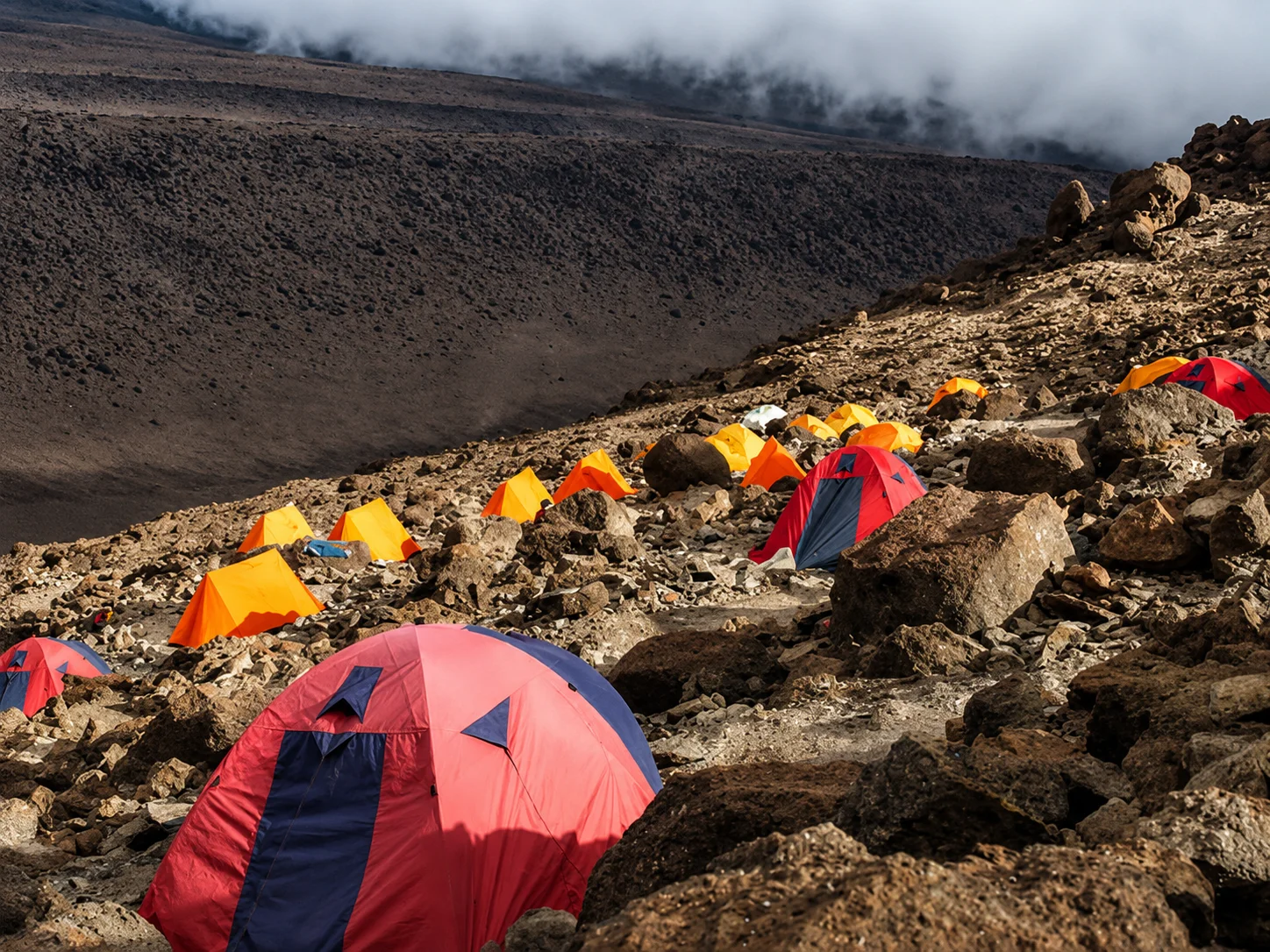
- Crowded Kilimanjaro camps
- Busy Zanzibar beaches
- Fully booked family rooms
- Seasonal lodge closures
- Long queues at popular attractions
For example, April and May are among the quietest months in northern Tanzania, but they also overlap with the main rainy period. August offers generally dry safari conditions but attracts more visitors to Serengeti, Ngorongoro, Kilimanjaro and Zanzibar.
The best strategy is to choose a period whose disadvantages you can comfortably accept.
Quick Answer: Worst Time to Visit Tanzania by Travel Priority
| Travel priority | Period to avoid | Main reason |
|---|---|---|
| Avoiding safari crowds | July–October | Peak dry-season demand |
| Avoiding high prices | July–October and late December | Peak accommodation season |
| Avoiding rain | March–May | Main rainy period in northern Tanzania |
| Avoiding muddy roads | April–May | Heavy rain can affect unpaved tracks |
| Avoiding busy Kilimanjaro routes | July–October and late December | Popular climbing periods |
| Avoiding busy Zanzibar beaches | July–October and late December–February | High beach-holiday demand |
| Avoiding migration-season vehicles | July–September in northern Serengeti | Demand for Mara River areas |
| Avoiding seasonal closures | April–May | Some camps close during the rains |
| Avoiding family holiday crowds | July–August and late December | International school holidays |
| Avoiding calving-season demand | January–February in Ndutu | Concentrated visitor interest |
Tanzania Tourist Seasons Explained
Tanzania’s tourism seasons are influenced by rainfall, wildlife movement, international holidays and accommodation availability.
| Season | Common months | Crowd level | Travel conditions |
|---|---|---|---|
| Peak dry season | July–October | High | Drier conditions and popular wildlife viewing |
| Festive peak | Approximately 20 December–5 January | High | Holiday demand and premium pricing |
| Calving season | January–March | High in Ndutu and southern Serengeti | Seasonal wildebeest concentrations |
| Long-rain season | March–May | Low | Green scenery, rain and possible difficult roads |
| Short-rain season | November–December | Low to moderate | Green landscapes and variable showers |
| Early dry season | June | Moderate | Improving roads and increasing demand |
Rainfall patterns vary between regions and years. Tanzania is a large country with coastal, highland, savannah, mountain and western lake climates.
Tanzania Crowds Month by Month
The following table provides a general guide rather than a guarantee.
| Month | General crowd level | Important considerations |
|---|---|---|
| January | Moderate to high | Busy in Ndutu, Zanzibar and during early festive travel |
| February | High in Ndutu | Popular calving-season safari month |
| March | Moderate, then lower | Rain becomes more likely as the month progresses |
| April | Very low | Main rainy period and some camp closures |
| May | Very low | Continued rain with quieter parks |
| June | Moderate | Dry-season demand begins to increase |
| July | Very high | School holidays and northern circuit peak season |
| August | Very high | Among the busiest safari and Kilimanjaro months |
| September | High | Strong demand for northern Serengeti and Kilimanjaro |
| October | High | Dry-season travel continues |
| November | Low to moderate | Short rains and greener landscapes |
| December | Low early, very high late | Festive demand increases from approximately 20 December |
Why July–October Is the Busiest Time in Tanzania
Tanzania National Parks identifies June–October as a generally dry period when wildlife can be easier to locate around water sources.
This period also attracts more visitors because:
- International schools are on holiday.
- Road conditions are generally drier.
- Wildlife visibility can be good.
- Northern Serengeti migration travel is popular.
- Kilimanjaro climbing conditions are often preferred.
- Zanzibar receives dry-season beach visitors.
- Families have more time to travel.
- Many camps and lodges are fully operational.
The high season does not mean the entire country is crowded. Visitor concentration is strongest around famous locations, busy roads, airstrips, river-crossing points and wildlife sightings.
A private safari cannot remove other vehicles from a national park, but it gives you more flexibility to leave early, explore quieter tracks and avoid following a fixed group schedule.
Is August the Worst Month to Visit Tanzania?
August may be the worst month for travellers who dislike crowds and peak-season prices. It is also an excellent month for travellers who prioritise generally dry conditions and broad safari accessibility.
August often brings:
- High lodge occupancy
- Increased vehicle traffic in popular parks
- Strong demand for northern Serengeti camps
- Busy Ngorongoro Crater access
- More climbers on popular Kilimanjaro routes
- Busy Zanzibar resorts
- Limited availability for family rooms
- Higher flight and accommodation prices
Travelling in August requires earlier booking and careful itinerary design. Avoid adding destinations simply because they are famous. Spending more nights in selected areas can reduce repeated transfers and rushed game drives.
Is April the Worst Month to Visit Tanzania?
April may be the worst month for travellers who strongly dislike rain, mud and uncertain road conditions. It can be among the best months for travellers seeking fewer vehicles, green scenery and a quieter atmosphere.
Possible April disadvantages include:
- Frequent rainfall
- Muddy game-drive tracks
- Slower road transfers
- Reduced visibility during heavy showers
- Temporary camp closures
- Limited operations at selected remote properties
- Higher insect activity in some areas
- Cloudier Kilimanjaro conditions
Potential April advantages include:
- Very low visitor numbers
- Green landscapes
- Dramatic skies
- Migratory birds
- Lower seasonal lodge rates at selected properties
- Fewer vehicles around wildlife sightings
- More flexible room availability
Rain does not necessarily fall continuously throughout every day. However, travellers must accept that conditions are unpredictable.
Worst Time to Visit Serengeti for Crowds
The busiest period in Serengeti is generally July–October, particularly in areas associated with seasonal migration activity.
Northern Serengeti
Northern Serengeti receives concentrated interest during the expected Mara River crossing period. Vehicle numbers can increase near:
- River access points
- Known crossing areas
- Major predator sightings
- Popular airstrips
- High-demand camps
River crossings cannot be scheduled. Herds may remain near a riverbank for hours or days before crossing, move to another area or turn away.
Central Serengeti
Central Serengeti around Seronera supports wildlife throughout the year. Its dependable game viewing and year-round accommodation can also make it busy.
Vehicle concentration often increases around:
- Lions close to main roads
- Leopards in well-known riverine areas
- Cheetah sightings
- Accessible water sources
- Main lodge and camp zones
Southern Serengeti and Ndutu
Ndutu and the southern Serengeti become busy during the January–March calving season, particularly from late January through February.
The area can attract many vehicles around predators, newborn wildebeest and large herds.
How to Avoid Crowds in Serengeti
Consider the following strategies:
- Travel in November or early December.
- Consider March outside the busiest calving weeks.
- Stay at least 3 nights rather than rushing through the park.
- Begin game drives early.
- Explore beyond the main lodge and airstrip areas.
- Avoid joining every cluster of vehicles.
- Ask your guide to prioritise quality viewing over a checklist.
- Select the Serengeti region according to the season.
- Use a private safari vehicle.
- Consider remote camps with fewer rooms.
Wildlife sightings cannot be guaranteed in quieter areas. Avoiding crowds may mean spending more time searching for animals.
Worst Time to Visit Ngorongoro Crater for Crowds
Ngorongoro Crater can become busy during:
- July–October
- Late December–early January
- Easter holiday periods
- Peak family-travel weeks
The crater has established descent roads and a limited floor area. Vehicles can gather around lions, rhinoceroses and other high-interest wildlife.
To reduce the effect of crowds:
- Stay near the crater or in the Ngorongoro highlands.
- Enter as early as regulations and logistics allow.
- Avoid arriving after a long same-day drive from Moshi or Arusha.
- Use a private vehicle.
- Spend time in less congested areas of the crater floor.
- Combine Ngorongoro with quieter highland experiences.
- Visit during March, November or early December.
Ngorongoro remains a popular destination because its geography allows varied wildlife viewing within a relatively compact area.
Worst Time to Visit Tarangire for Crowds
Tarangire receives increased visitor numbers during the dry season, particularly July–October. Wildlife often gathers around the Tarangire River and remaining water sources.
Busy areas may include:
- River viewpoints
- Main northern game-drive circuits
- Silale Swamp access routes
- Major elephant sightings
- Picnic locations
Tarangire is large enough for experienced guides to explore beyond the busiest northern areas when time and road conditions permit.
A rushed day trip concentrates visitors near the main gate. Spending 2 nights allows more time to travel deeper into the park.
Worst Time to Visit Lake Manyara for Crowds
Lake Manyara is frequently added to short northern circuit itineraries. Visitor traffic can be higher during the dry season and international holiday periods.
Crowding is often less extensive than in central Serengeti or Ngorongoro, but vehicles may concentrate around:
- The main gate
- Forest roads
- Elephant sightings
- Hippo viewing areas
- Picnic sites
Visit early, stay flexible and avoid treating tree-climbing lion sightings as guaranteed. Lions may use trees, but not every visitor sees this behaviour.
Worst Time to Climb Kilimanjaro for Crowds
Popular Kilimanjaro climbing periods include:
- January–early March
- July–October
- Christmas and New Year
The most crowded standard routes can include:
- Machame Route
- Marangu Route
- Shared sections near Barranco
- Barafu Camp
- Summit approaches around Stella Point
Even climbers using Lemosho eventually join busier southern-circuit trails. A quiet starting route does not mean every mountain day will be isolated.
How to Avoid Kilimanjaro Crowds
Consider:
- Climbing in June before peak demand
- Climbing in November with suitable rain equipment
- Choosing Lemosho for a quieter western start
- Selecting the Northern Circuit for a longer northern traverse
- Avoiding summit dates around major holidays
- Starting on a weekday when operationally practical
- Booking a private climb
- Choosing an itinerary with more acclimatisation time
April and May can be very quiet, but rain, mud, cloud and snow accumulation may make the climb more demanding.
Worst Time to Visit Zanzibar for Crowds
Zanzibar’s busiest travel periods commonly include:
- July–October
- Late December–early January
- January–February at popular beach resorts
High-demand areas may include:
- Nungwi
- Kendwa
- Stone Town
- Popular excursion departure points
- Major beachfront resorts
Late December is especially busy because festive travel combines with warm beach weather and international holidays.
How to Avoid Crowds in Zanzibar
Travellers seeking quieter beach time can consider:
- Early December before festive demand
- November outside major holiday dates
- March before the heaviest rains
- Smaller boutique hotels
- Matemwe
- Pongwe
- Michamvi
- Jambiani
- Less-developed stretches of Pemba Island
Quieter beaches can have fewer restaurants, shops and nightlife options. East-coast tide changes can also affect swimming, so select the location according to your priorities.
When Is Tanzania’s Main Rainy Season?
Northern Tanzania and Zanzibar commonly experience a bimodal rainfall pattern:
- March–May: Main or long rains
- October–December: Short-rain period
The Tanzania Meteorological Authority notes that March–May and October–December are typical rainfall seasons for areas including Arusha, Kilimanjaro, Manyara, the northern coast and Zanzibar.
Seasonal averages do not predict the weather for a specific trip. Rainfall may begin late, end early or differ significantly from historical patterns.
Does Rain Ruin a Tanzania Safari?
Not necessarily. Rain changes the safari rather than automatically ruining it.
Possible benefits include:
- Green landscapes
- Dramatic photography
- Fewer vehicles
- Migratory birds
- Young animals in several ecosystems
- Lower seasonal prices at selected lodges
- Better room availability
Possible disadvantages include:
- Muddy roads
- Longer transfers
- Closed tracks
- Insects
- Temporary camp closures
- Heavy showers affecting game drives
- Limited access to remote areas
A well-planned green-season safari uses suitable destinations, experienced guides and realistic travel times.
Best Low-Crowd Months for Tanzania
| Travel period | Crowd level | Main advantages | Main disadvantages |
|---|---|---|---|
| March | Low to moderate | Green scenery and declining demand | Rain becomes more likely |
| April | Very low | Few vehicles and flexible availability | Heavy rain and lodge closures |
| May | Very low | Quiet parks and green landscapes | Wet roads and limited operations |
| June | Moderate | Improving conditions before peak demand | Prices and occupancy begin increasing |
| November | Low to moderate | Fewer visitors and fresh landscapes | Short rains may affect tracks |
| 1–15 December | Low to moderate | Quieter than festive season | Variable weather |
| After 10 January | Moderate | Festive crowds decline | Ndutu and Zanzibar can remain busy |
Best Time to Visit Tanzania Without Crowds and Heavy Rain
Travellers wanting a balance between lower visitor numbers and manageable weather should consider:
June
June often marks the transition toward drier conditions. Parks are green, roads may improve and peak holiday crowds may not yet have reached their highest levels.
November
November can provide fewer visitors, greener landscapes and good birding. Short showers are possible, and some roads may become muddy.
Early December
The period before approximately 20 December can be quieter than Christmas and New Year. Migration herds may be moving toward southern areas, depending on rainfall.
March
Early and mid-March can provide a compromise between green-season scenery and lower visitor numbers. Rain risk increases as the month progresses.
No shoulder-season period guarantees dry conditions.
Best Quiet Safari Destinations in Tanzania
Travellers can reduce crowd exposure by looking beyond the busiest northern circuit routes.
| Destination | Why it can feel quieter | Important trade-off |
|---|---|---|
| Nyerere National Park | Large southern wilderness and varied activities | Seasonal access and flights require planning |
| Ruaha National Park | Large landscapes and lower visitor density | Remote location and longer transfers |
| Mkomazi National Park | Fewer visitors than major northern parks | Wildlife can be more dispersed |
| Katavi National Park | Remote and lightly visited | Limited flights and higher logistics costs |
| Mahale Mountains | Remote chimpanzee and Lake Tanganyika experience | Expensive and schedule-dependent access |
| Gombe National Park | Forest trekking and chimpanzees | Different from a vehicle-based Big Five safari |
| Burigi-Chato National Park | Large western Tanzania landscapes | Developing tourism infrastructure |
| Saadani National Park | Coastal environment and lower visitor numbers | Wildlife density differs from Serengeti |
A quieter destination does not automatically provide more wildlife sightings. Remote parks often require longer searches and more expensive transport.
Northern Circuit vs Southern Circuit for Crowds
| Feature | Northern circuit | Southern circuit |
|---|---|---|
| Main parks | Serengeti, Ngorongoro, Tarangire and Lake Manyara | Nyerere, Ruaha, Mikumi and Udzungwa |
| Visitor numbers | Higher overall | Generally lower |
| Road infrastructure | Established tourist routing | Longer distances and more flight use |
| Accommodation range | Extensive | More limited in selected areas |
| Best-known experience | Great Migration and Ngorongoro Crater | Large wilderness and lower vehicle density |
| Rainy-season access | Variable but many areas operate year-round | Some remote camps close |
| Best for 1st-time visitors | Famous parks and varied wildlife | Privacy and repeat visitors |
| Best for avoiding crowds | Requires careful timing and routing | Often stronger during the dry season |
Private Safari vs Group Safari for Avoiding Crowds
A private safari cannot control how many visitors enter a national park. It can, however, change how your time is used.
| Private safari advantage | How it helps |
|---|---|
| Flexible departure | Allows earlier game drives |
| Private vehicle | No waiting for unrelated travellers |
| Flexible stops | Leave crowded sightings when you choose |
| Personal interests | Focus on birds, landscapes or less famous animals |
| Route flexibility | Explore quieter tracks when conditions permit |
| Longer stays | Avoid rushing through every major park |
| Direct communication | Adjust the day with your guide |
A fixed group tour may follow a tighter schedule and remain near well-known routes to satisfy several travellers.
How to Plan a Crowd-Avoidance Safari
Stay Longer in Fewer Parks
A rushed itinerary often keeps travellers on the busiest roads between famous destinations. Spending 2–3 nights in selected parks gives the guide more time to explore.
Leave Early
Many vehicles depart after breakfast. An earlier departure may provide quieter roads and better morning wildlife activity.
Avoid Wildlife Traffic Jams
A large vehicle cluster usually indicates a major predator or rare sighting. You can choose to wait, approach only when space improves or search elsewhere.
Choose Accommodation Carefully
A small camp does not guarantee an empty park, but it can create a quieter experience outside game-drive hours.
Use Seasonal Geography
Do not stay in the same Serengeti region during every month. Select northern, central, western or southern areas according to wildlife movement and expected visitor patterns.
Consider the Southern Circuit
Nyerere and Ruaha can provide substantial wildlife experiences with fewer vehicles than Serengeti and Ngorongoro.
Travel Outside International Holidays
Avoid:
- Late December–early January
- July–August school holidays
- Easter periods
- Major local or international holiday weekends
Exact holiday dates change annually.
Sample 7-Day Low-Crowd Northern Tanzania Safari
This itinerary works best during selected shoulder-season periods.
| Day | Destination | Crowd-avoidance approach |
|---|---|---|
| 1 | Arusha or Moshi | Private arrival transfer |
| 2 | Tarangire | Travel beyond the busiest gate area |
| 3 | Tarangire | Early game drive and deeper park exploration |
| 4 | Serengeti | Travel to the seasonally suitable region |
| 5 | Serengeti | Early private game drive |
| 6 | Ngorongoro highlands | Morning wildlife viewing and highland stay |
| 7 | Ngorongoro Crater | Early descent and return transfer |
Actual routes depend on travel month, road conditions and accommodation availability.
Sample 8-Day Quiet Southern Tanzania Safari
| Day | Destination | Experience |
|---|---|---|
| 1 | Dar es Salaam | Arrival and private transfer |
| 2 | Nyerere National Park | Flight or road transfer and afternoon activity |
| 3–4 | Nyerere | Game drives, boat safari or guided activity |
| 5 | Nyerere to Ruaha | Scheduled or charter flight |
| 6–7 | Ruaha | Private wildlife viewing |
| 8 | Departure | Flight connection |
Flight schedules and camp-opening dates should be confirmed before booking.
Is Low Season Always Cheaper?
Low season can provide reduced accommodation rates at selected lodges and camps. However, the total trip is not always dramatically cheaper.
Costs that may remain fixed include:
- National park fees
- Private safari vehicle
- Driver-guide
- Fuel
- Airport transfers
- Domestic flights
- Government taxes
Remote destinations can remain expensive because flights and logistics do not decrease in the same way as lodge rates.
Ask for a complete itinerary quotation rather than comparing room prices alone.
Frequently Asked Questions About the Worst Time to Visit Tanzania
What is the busiest month in Tanzania?
July and August are generally among the busiest months for northern Tanzania safaris, Kilimanjaro and Zanzibar.
What is the least crowded month in Tanzania?
April and May are often among the least crowded months, but they overlap with the main rainy season.
What is the worst month for a Serengeti safari?
August may be unsuitable for travellers who strongly dislike crowds. April may be unsuitable for travellers who want consistently dry roads. Neither month is universally bad.
When should I avoid Serengeti?
Avoid July–September if your main concern is vehicle density in northern migration areas. Avoid April–May if muddy roads and rain would significantly affect your enjoyment.
Is Tanzania crowded in June?
June is generally less crowded than July and August, although visitor numbers rise as dry-season conditions develop.
Is Tanzania crowded in October?
October remains part of the popular dry-season period. Visitor numbers may begin changing toward the end of the month, depending on destination and school holidays.
Is November a good month for avoiding crowds?
Yes. November can offer fewer visitors and greener landscapes, but short rains and muddy tracks are possible.
Is December crowded in Tanzania?
Early December can be relatively quiet. Demand rises sharply around Christmas and New Year.
Is February crowded in Serengeti?
Southern Serengeti and Ndutu can be busy during February because travellers visit for the calving season.
Is April too rainy for a Tanzania safari?
April is commonly wet, but safaris remain possible in accessible areas. Travellers must accept changing roads, possible lodge closures and rainfall.
When is Zanzibar least crowded?
April, May, November and early December can have fewer visitors. Rain, humidity and limited resort operations may affect the experience.
Which Kilimanjaro route has fewer crowds?
Lemosho has a quieter western beginning, while the Northern Circuit spends more time on Kilimanjaro’s northern side. Both routes eventually use sections where other climbers may be present.
How can I avoid crowds during peak season?
Use a private vehicle, leave early, stay longer in fewer parks, choose remote camps and consider Ruaha, Nyerere or Mkomazi.
Plan a Quieter Tanzania Safari with KiliPori Safaris
The worst time to visit Tanzania depends on what would negatively affect your trip.
Avoid July–October and late December if your main concern is crowds and peak-season demand. Consider avoiding April–May if heavy rain, muddy roads and seasonal lodge closures would be unacceptable.
For a balance of fewer visitors and workable conditions, consider:
- June
- March
- November
- 1–15 December
KiliPori Safaris can design a private crowd-avoidance itinerary using:
- Early game drives
- Longer stays in fewer parks
- Seasonally suitable Serengeti regions
- Private safari vehicles
- Remote accommodation
- Southern Tanzania parks
- Quieter Kilimanjaro routes
- Less-developed Zanzibar beaches
Tell us your travel dates, preferred destinations, budget and tolerance for rain. Our local team will explain the seasonal trade-offs before recommending an itinerary.
Anything you would like to ask about avoiding crowds in Tanzania? Chat with KiliPori Safaris on WhatsApp: +255 755 287 311.
Written by the KiliPori Safaris Tanzania Travel Team
Local specialists in private Tanzania safaris, Kilimanjaro climbing and Zanzibar extensions.

KiliPori Safaris Travel Team
A local Tanzania team helping travellers plan wildlife safaris, Kilimanjaro climbs and Zanzibar holidays with clear routing and direct destination support.
Published August 3, 2026. Travel conditions, fees and schedules can change; confirm time-sensitive details before departure.