Explore this guide
Our guides combine current planning research with practical knowledge from arranging safaris, Kilimanjaro climbs and Zanzibar holidays.
The Big 5 animals in Tanzania are among Africa's most celebrated wildlife species and remain the highlight of countless safaris every year. Tanzania is one of the few countries where travelers have an excellent opportunity to encounter all five animals naturally during a single itinerary, especially when visiting the Northern Safari Circuit.
At Kilipori Safaris, our guides spend hundreds of days every year inside Tanzania's national parks. Rather than simply driving to popular sightings, we interpret animal behavior, seasonal movements, habitat preferences, and park conditions to maximize your chances of unforgettable wildlife encounters.
This guide explains:
- What the Big Five actually means
- Each animal in detail
- Where to see them in Tanzania
- Best parks for photography
- Best safari seasons
- Interesting wildlife facts
- Expert safari tips
- Frequently asked questions
What Does "Big Five" Mean?
Many first-time visitors believe the Big Five refers to Africa's five largest animals.
It does not.
The term originated during the early safari era and described the five most challenging wild animals to track on foot because of their strength, awareness, unpredictable behavior, and ability to defend themselves.
Today, the Big Five represents conservation rather than hunting, and seeing all five has become one of the greatest achievements for wildlife enthusiasts visiting Tanzania.
The Big Five include:
| AnimalScientific NameConservation Status | ||
| African Lion | Panthera leo | Vulnerable |
| African Leopard | Panthera pardus | Vulnerable |
| African Elephant | Loxodonta africana | Endangered |
| Black Rhinoceros | Diceros bicornis | Critically Endangered |
| African Buffalo | Syncerus caffer | Least Concern |
Why Tanzania Is One of Africa's Best Big Five Destinations


Unlike many African destinations where travelers must visit several reserves to complete the Big Five, Tanzania offers multiple ecosystems supporting healthy populations of these iconic mammals.
Reasons Tanzania stands out include:
- Vast protected ecosystems
- One of Africa's largest lion populations
- Excellent elephant numbers
- Reliable buffalo sightings
- Healthy leopard territories
- Protected black rhino population inside Ngorongoro Crater
- Year-round game viewing
- Highly experienced local safari guides
1. African Lion


Overview
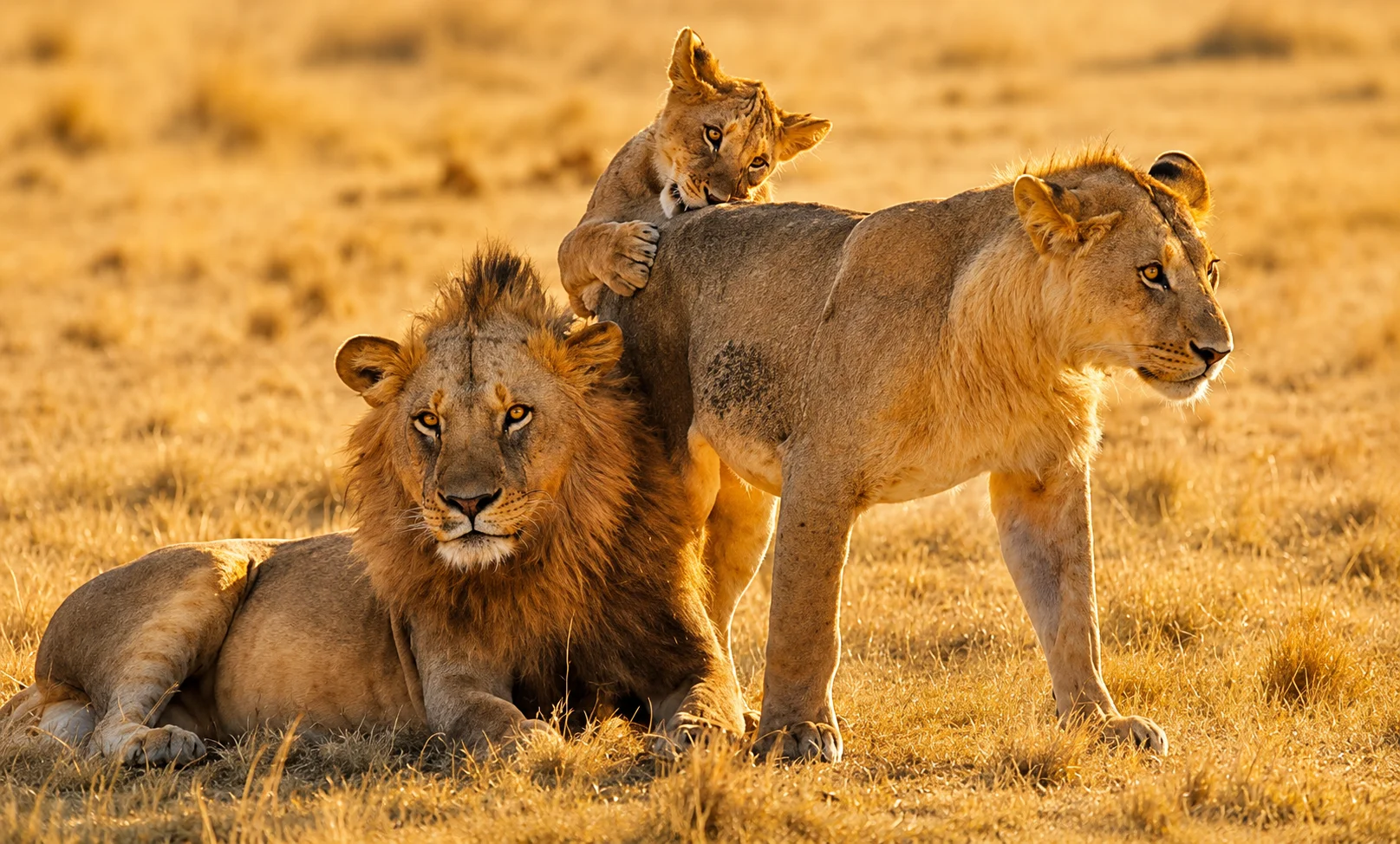
The African lion is Tanzania's most recognized predator.
The Serengeti ecosystem supports one of the largest remaining lion populations on Earth, where prides occupy extensive territories across open grasslands, rocky kopjes, and river valleys.
Interesting Facts
- Males may weigh over 250 kg
- A roar travels up to 8 kilometers
- Females perform most hunting
- Cubs begin learning hunting skills at only a few months old
- Lions sleep nearly 20 hours daily
Best Places to See Lions
- Serengeti National Park
- Ngorongoro Crater
- Ruaha National Park
- Nyerere National Park
Best Time
Lions are visible year-round, although sightings become easier during the dry season when prey gathers near water sources.
2. African Leopard


Overview
Leopards are the most elusive member of the Big Five.
Unlike lions, they hunt alone and spend much of the day resting in trees, often hiding carcasses among branches to protect them from hyenas and lions.
Interesting Facts
- Excellent climbers
- Mostly nocturnal
- Can drag prey heavier than themselves into trees
- Superb camouflage
- Exceptional eyesight
Best Parks
- Serengeti National Park
- Tarangire National Park
- Ruaha National Park
- Lake Manyara National Park
Photography Tip
Early morning drives dramatically increase your chances of finding leopards before they disappear into thick vegetation.
3. African Elephant


Overview
Tanzania protects some of Africa's largest elephant populations.
Tarangire National Park is particularly famous for enormous dry-season herds gathering along the Tarangire River beneath ancient baobab trees.
Interesting Facts
- Largest land mammal
- Females lead family groups
- Can communicate through low-frequency vibrations
- Outstanding long-term memory
- Consume up to 150 kg of vegetation daily
Best Places
- Tarangire National Park
- Serengeti National Park
- Ruaha National Park
- Nyerere National Park
Best Season
June to October offers spectacular concentrations around rivers.
4. Black Rhinoceros


Overview
The black rhinoceros is Tanzania's rarest Big Five animal.
Strict conservation efforts have helped protect a carefully monitored population inside the Ngorongoro Crater.
Seeing one is considered a special achievement even for experienced safari travelers.
Interesting Facts
- Critically endangered
- Excellent hearing and smell
- Can sprint over 50 km/h
- Mostly solitary
- Uses a hooked upper lip for browsing shrubs
Best Place
Ngorongoro Crater is by far Tanzania's most reliable location.
5. African Buffalo


6
Overview
The African buffalo is often underestimated, yet it is one of Africa's most formidable animals.
Large herds can exceed several hundred individuals, and buffalo are known for their strong defensive behavior when threatened.
Interesting Facts
- Herds may exceed 1,000 animals
- Strong social bonds
- Excellent memory
- Highly protective of calves
- Frequently seen alongside oxpecker birds
Best Parks
- Serengeti
- Ngorongoro
- Tarangire
- Katavi
- Ruaha
Where Can You See All Big Five Animals?
| National ParkLionLeopardElephantRhinoBuffalo | |||||
| Serengeti | ✅ | ✅ | ✅ | ❌ | ✅ |
| Ngorongoro Crater | ✅ | Occasionally | ✅ | ✅ | ✅ |
| Tarangire | Occasionally | ✅ | ✅ | ❌ | ✅ |
| Ruaha | ✅ | ✅ | ✅ | ❌ | ✅ |
| Nyerere | ✅ | Occasionally | ✅ | ❌ | ✅ |
Expert Tip from Kilipori Safaris:
The highest probability of completing the Big Five on a single trip comes from combining Tarangire National Park, Serengeti National Park, and the Ngorongoro Crater over 5–7 days. This itinerary pairs abundant elephant and leopard habitats with the crater's protected black rhino population, while Serengeti consistently delivers exceptional lion and buffalo sightings.
Best Time to See the Big Five in Tanzania
| SeasonWildlife Experience | |
| January – March | Calving season, active predators, lush scenery |
| June – October | Dry season, easiest wildlife viewing, excellent visibility |
| November | Fewer crowds, scattered rain, rewarding sightings |
| December | Green landscapes, excellent photography |
Although the Big Five can be seen throughout the year, the dry season (June–October) generally provides the highest sighting success because vegetation is thinner and animals congregate around permanent water sources.
Photography Tips for the Big Five
- Schedule game drives at sunrise and late afternoon when wildlife is most active.
- Use a telephoto lens (200–600 mm) for detailed wildlife portraits while maintaining a respectful distance.
- Keep camera settings ready before approaching an animal, as behavior can change quickly.
- Include environmental elements such as baobab trees, kopjes, or the vast Serengeti plains to tell a richer story.
- Follow your guide's instructions and avoid sudden movements that may disturb wildlife.
Conservation Matters
The future of Tanzania's Big Five depends on habitat protection, anti-poaching efforts, scientific monitoring, and responsible tourism. By choosing ethical safari operators, visitors contribute to conservation through park fees, community initiatives, and support for protected areas.
At Kilipori Safaris, we believe every game drive should balance exceptional wildlife viewing with respect for the animals and the ecosystems they inhabit. Our guides prioritize responsible viewing distances, minimize disturbance, and share insights that help travelers appreciate the ecological role of each species—not just check them off a list.
Frequently Asked Questions
Can you see all Big Five animals in one safari?
Yes. A well-planned 5–7 day Northern Circuit safari that includes Tarangire, Serengeti, and Ngorongoro Crater offers an excellent chance of seeing all five, although sightings of the black rhino are never guaranteed due to its small, protected population.
Which Big Five animal is hardest to find?
The black rhinoceros is typically the most difficult because its numbers are limited and it is closely protected. Leopards can also be challenging due to their secretive behavior.
Which park has the highest lion population?
The Serengeti ecosystem supports one of the largest lion populations in Africa and is widely regarded as Tanzania's premier destination for observing prides in their natural habitat.
Is the Big Five available all year?
Yes. Tanzania offers year-round opportunities to see the Big Five, with seasonal changes affecting visibility rather than their presence.
Which safari length is best for the Big Five?
A 6- or 7-day private safari provides enough time to visit multiple habitats, increasing the likelihood of encountering every member of the Big Five without rushing between parks.
Why Travel with Kilipori Safaris?
Choosing the right safari operator influences far more than transportation. Knowledgeable guides, thoughtful route planning, and an understanding of wildlife behavior often determine the quality of your sightings.
With Kilipori Safaris, your itinerary is designed by professionals who know Tanzania's parks throughout the seasons. We focus on realistic wildlife opportunities, flexible game drives, and small details—such as timing, habitat selection, and animal movement—that help turn a standard safari into a memorable wildlife experience.
Whether your goal is to photograph a leopard at dawn, witness a lion pride on the hunt, or complete your Big Five checklist with a rare black rhino, our team is committed to helping you experience Tanzania's remarkable wildlife responsibly and authentically.

KiliPori Safaris Travel Team
A local Tanzania team helping travellers plan wildlife safaris, Kilimanjaro climbs and Zanzibar holidays with clear routing and direct destination support.
Published July 5, 2026. Travel conditions, fees and schedules can change; confirm time-sensitive details before departure.