Explore this guide
Our guides combine current planning research with practical knowledge from arranging safaris, Kilimanjaro climbs and Zanzibar holidays.
Hadzabe Tribe Visit: Cost, Experience and Ancient Culture
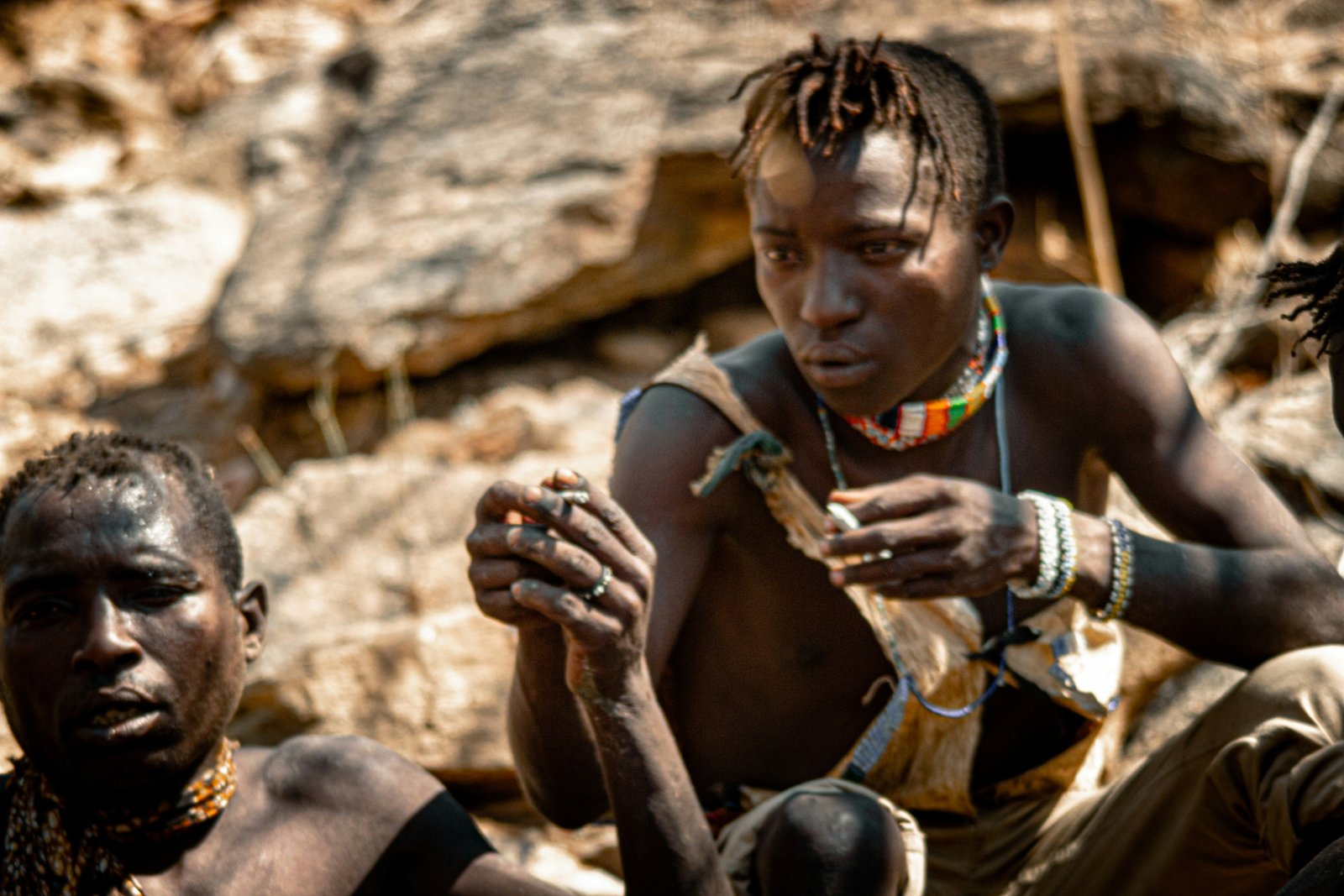
A Hadzabe tribe visit at Lake Eyasi offers travellers an opportunity to learn about the knowledge, language and traditions of 1 of Tanzania’s smallest Indigenous communities.
The Hadza, also called the Hadzabe, have lived in the Lake Eyasi and Yaeda Valley region of northern Tanzania for thousands of years. Some community members continue to obtain significant parts of their food through hunting, gathering wild plants, collecting honey and using detailed knowledge of the surrounding landscape.
A respectful visit may include:
- Walking with Hadza community members
- Learning how plants are identified and used
- Observing traditional fire-making
- Practising archery at an agreed target
- Learning about bows, arrows and hunting knowledge
- Listening to the Hadzane language
- Seeing how seasonal foods are gathered
- Discussing changes affecting Hadza land and culture
- Purchasing locally made items directly from community members
The Hadza are a living contemporary community, not people frozen in the past. They use inherited knowledge while responding to land pressure, tourism, education, healthcare and contact with neighbouring communities.
KiliPori Safaris organises Hadzabe cultural experiences as private visits from Karatu, Arusha, Moshi, Ngorongoro and the wider northern Tanzania safari circuit.
Who Are the Hadza or Hadzabe?
The Hadza people are an Indigenous hunter-gatherer community associated with Lake Eyasi and the Yaeda Valley in north-central Tanzania.
Official and research sources provide different population estimates, generally ranging from approximately 1,000–1,500 people. Not every Hadza person follows the same lifestyle, and not every household depends entirely on hunting and gathering.
The terms used for the community include:
- Hadza: The most common English name
- Hadzabe: A name also widely used in Tanzania and tourism searches
- Hadzane: The name commonly used for the Hadza language
“Tribe” is a common tourism search term, but Hadza people or Hadzabe community may be more respectful in normal conversation.
Hadzabe Tribe Facts at a Glance
| Feature | Hadza information |
|---|---|
| Country | Tanzania |
| Main region | Lake Eyasi and Yaeda Valley |
| Northern Tanzania location | Southwest of Karatu and Ngorongoro |
| Estimated population | Approximately 1,000–1,500 |
| Language | Hadzane |
| Language classification | Generally recognised as a language isolate |
| Traditional livelihood | Hunting, gathering, foraging and honey collection |
| Main visitor access | Lake Eyasi and Mang’ola area |
| Common visit duration | 2–4 hours |
| Best starting point | Karatu or Lake Eyasi |
| Best time of day | Early morning |
| Can be visited year-round | Yes, subject to roads and local arrangements |
| Nearest major safari area | Ngorongoro Conservation Area |
Where Do the Hadzabe Live?
The Hadza are primarily associated with the Lake Eyasi basin and Yaeda Valley in northern Tanzania. UNESCO documentation refers to Hadzabe settlements around Lake Eyasi and Yaeda Chini.
Lake Eyasi lies within the East African Rift system, southwest of Karatu and the Ngorongoro highlands. The landscape includes:
- Seasonal lake shores
- Dry woodland
- Rocky hills
- Baobab trees
- Bushland
- Open areas
- Escarpments
- Seasonal water sources
Hadza camps are not permanent tourist attractions. Families may move according to water, food availability, social relationships and other local conditions. A knowledgeable local coordinator is necessary to identify where a visit is appropriate on the selected date.
How Far Is Lake Eyasi from Tanzania Safari Destinations?
| Starting point | Approximate driving time to Lake Eyasi |
|---|---|
| Karatu | 1.5–2.5 hours |
| Ngorongoro highlands | 2–3 hours |
| Lake Manyara or Mto wa Mbu | 2.5–3.5 hours |
| Tarangire area | 3–4.5 hours |
| Arusha | 4–5.5 hours |
| Moshi | 5–6.5 hours |
| Central Serengeti | 5–7 hours, depending on routing and park conditions |
Travel times are approximate. Weather, road conditions, starting lodge and stops can change the duration.
The final road toward some Lake Eyasi communities may be rough or dusty. During rainy periods, mud can slow down access.
Is Hadza Culture Really Ancient?
Hadza history and cultural knowledge extend back thousands of years. Their continued use of hunting, gathering, tracking and wild-food knowledge provides insight into a livelihood that existed long before agriculture became dominant in the region.
However, calling Hadza culture “ancient” requires care.
The Hadza are not unchanged representatives of prehistoric humanity. They are modern Tanzanians who:
- Interact with neighbouring communities
- Use money in some transactions
- Participate in tourism
- Access markets and medical services
- Use manufactured tools and clothing
- Respond to government policies
- Face land and resource pressures
- Make individual decisions about education and settlement
A respectful Hadzabe cultural tour focuses on living knowledge and present-day reality rather than presenting community members as museum exhibits.
The Hadzane Language
The Hadza speak Hadzane, a language known for its click consonants.
Hadzane is generally classified as a language isolate, meaning researchers have not established a proven close relationship with another living language family.
The presence of click sounds has sometimes led people to group Hadzane with southern African Khoisan languages. Linguistic similarity in sound does not automatically prove that the languages belong to the same family.
During a visit, travellers may hear:
- Hadzane conversation
- Click consonants
- Greetings
- Names of plants and animals
- Hunting and tracking vocabulary
- Swahili translation through a local guide
Do not ask community members to repeat words continuously only for entertainment. Language should be approached as a living part of identity.
What Happens During a Hadzabe Tribe Visit?
No 2 visits are identical. Activities depend on the community, season, weather and what people are doing on the selected day.
A typical visit may include the following experiences.
Early Morning Arrival
Visitors often leave their Lake Eyasi accommodation shortly after sunrise. Early morning is cooler and may align better with daily community activities.
The local guide introduces the visitors, explains appropriate behaviour and translates between Hadzane, Swahili and the visitor’s language.
Camp Introduction
Community members may explain:
- How the camp is organised
- Which natural materials are used
- How food is shared
- How water is located
- How seasonal movement works
- How the landscape has changed
The exact information depends on what individuals are comfortable sharing.
Guided Bush Walk
A guided walk may introduce visitors to:
- Animal tracks
- Wild fruits
- Edible tubers
- Medicinal or useful plants
- Baobab products
- Honey collection
- Water sources
- Seasonal changes
Visitors should not eat an unfamiliar plant unless the guide and community member clearly confirm that it is safe.
Fire-Making Demonstration
Community members may demonstrate how fire can be produced using friction and local materials.
Visitors may be invited to try under guidance. This should be treated as a learning activity rather than a competition or staged performance.
Bow and Arrow Experience
The Hadza are known for specialised knowledge of bows, arrows and tracking.
A visit may include:
- Explanation of bow construction
- Discussion of arrow types
- Archery demonstration
- Target practice in a controlled area
Weapons should only be handled when invited and under direct guidance.
Music and Dance
Singing or dancing may form part of some visits. It should occur with community consent rather than being demanded as part of a tourist performance.
Participation may be welcomed, but visitors should follow the local guide’s instructions.
Can Visitors Join a Hadzabe Hunting Experience?
Some Lake Eyasi tours advertise an opportunity to accompany Hadza men during an early morning hunt.
This experience requires careful understanding:
- Hunting is not guaranteed to occur every day.
- Finding an animal is not guaranteed.
- A successful hunt cannot be promised.
- Activities depend on community decisions.
- Local regulations and permissions must be followed.
- Visitors should not pressure anyone to hunt for entertainment.
- Participants must follow safety instructions.
- Long walks through rough terrain may be required.
- Photography must be approved.
The activity should be understood as learning about tracking, movement, landscape knowledge and subsistence practices. It should not be treated as a staged wildlife-killing show.
Travellers uncomfortable with hunting can request a visit focused on foraging, tracking, language, archery, fire-making and cultural discussion.
What Foods Do the Hadza Gather?
Hadza food collection varies according to season, location and availability.
Traditionally gathered foods may include:
- Wild berries
- Edible tubers
- Baobab fruit
- Honey
- Wild plants
- Meat obtained through hunting
The relative importance of different foods changes through the year. A short tourist visit cannot represent the entire Hadza diet or the experience of every Hadza household.
Visitors should avoid photographing people eating without permission or treating ordinary food as a spectacle.
Hadzabe Visit Cost
The average Hadzabe tribe visit cost ranges from approximately US$100–US$350 per person when starting from Karatu or Lake Eyasi. A complete 2-day Lake Eyasi cultural tour from Arusha may cost approximately US$450–US$1,200 per person.
The final cost depends on:
- Starting location
- Number of travellers
- Private vehicle and guide
- Local community contribution
- Local cultural guide
- Accommodation category
- Number of nights
- Meals
- Additional Datoga experience
- Ngorongoro or safari extension
- Travel season
The figures below are general planning estimates for at least 2 adults sharing.
Estimated Hadzabe Tour Prices
| Hadzabe experience | Estimated cost per person |
|---|---|
| 2–4-hour visit from a Lake Eyasi lodge | US$75–US$200 |
| Half-day private visit from Karatu | US$100–US$250 |
| Full-day Lake Eyasi tour from Karatu | US$150–US$350 |
| 1-day Hadzabe tour from Arusha | US$250–US$550 |
| 1-day Hadzabe tour from Moshi | US$300–US$650 |
| 2-day Lake Eyasi cultural tour | US$450–US$1,200 |
| 3-day Hadzabe, Datoga and Ngorongoro tour | US$800–US$1,800 |
| Luxury Lake Eyasi cultural package | US$1,500–US$3,000+ |
| Hadzabe and northern Tanzania safari | Quoted according to itinerary |
A solo visit costs more because the vehicle, driver-guide and local logistics are not shared with other travellers.
Hadzabe Tribe Visit Cost Breakdown
| Cost component | What it covers | Estimated cost per person |
|---|---|---|
| Community and cultural fees | Agreed access, local participation and cultural activities | US$30–US$100 |
| Local Hadza guide or coordinator | Translation, introduction and activity coordination | US$25–US$80 |
| Private 4x4 vehicle | Transport to Lake Eyasi and community areas | US$75–US$250 |
| Professional driver-guide | Regional guidance and trip coordination | US$40–US$120 |
| Accommodation | Lodge, tented camp or guesthouse | US$60–US$500+ per night |
| Meals and drinking water | According to the selected package | US$30–US$120 |
| Government taxes and logistics | Reservations, local operations and applicable taxes | US$20–US$100 |
| Datoga cultural visit | Optional separate community experience | Quoted separately or combined |
There is no universal Hadzabe entry price that applies to every settlement. Community arrangements, local guides and included activities can differ.
What Is Normally Included?
A KiliPori Safaris Lake Eyasi cultural package can include:
- Pickup from Arusha, Moshi, Karatu or your safari lodge
- Private 4x4 vehicle
- Professional Tanzania driver-guide
- Local cultural guide
- Community contribution
- Hadzabe camp introduction
- Guided bush walk
- Fire-making demonstration
- Archery experience where appropriate
- Meals stated in the itinerary
- Drinking water during the tour
- Lake Eyasi accommodation where specified
- Datoga visit where specified
- Government taxes
- Direct local support
Every inclusion should be stated in the written quotation.
What Is Usually Excluded?
Unless specifically included, visitors should budget separately for:
- International flights
- Tanzania visa
- Travel insurance
- Additional accommodation
- Alcoholic drinks
- Personal purchases
- Optional activities
- Guide gratuities
- Community crafts
- Medical expenses
- Ngorongoro and national park fees
- Serengeti safari extension
- Zanzibar extension
Where Does the Money from a Hadzabe Visit Go?
A responsible tour should provide a clear explanation of how community-related payments are handled.
The tour cost may support:
- Community access arrangements
- Participating families
- Local guides
- Translators
- Cultural coordinators
- Community-approved activities
- Local transport and administration
- Accommodation employees
Travellers should ask:
- Is a community contribution included?
- Who receives the cultural fee?
- Is the local guide Hadza or community-approved?
- Are photographs included or subject to separate consent?
- Can crafts be purchased directly?
- Are children involved in organised begging?
Avoid giving money or sweets directly to children. Uncoordinated gifts can create conflict and encourage children to prioritise visitors over school or family responsibilities.
If you want to contribute additional support, ask the local guide which approach the community considers appropriate.
Photography Rules During a Hadzabe Visit
Always request consent before photographing or recording people.
Follow these guidelines:
- Ask before taking close-up photographs.
- Do not photograph children without responsible adult consent.
- Do not photograph private moments.
- Avoid pushing a camera into someone’s personal space.
- Do not promise to send photographs unless you can do so.
- Do not use drones without official and community permission.
- Do not post disrespectful captions on social media.
- Ask before recording Hadzane conversations.
- Respect anyone who declines.
Paying for a tour does not purchase unlimited rights to photograph people.
Respectful Words to Use
| Avoid | Use instead |
|---|---|
| Primitive tribe | Indigenous Hadza community |
| People from the Stone Age | People maintaining hunter-gatherer knowledge |
| Unchanged for thousands of years | A living culture with long historical continuity |
| Human attraction | Community hosts or cultural guides |
| Wild people | Hadza people |
| Real Africans | Local community members |
| Backward lifestyle | A livelihood adapted to a specific landscape |
| Tribal show | Community-led cultural experience |
SEO content should never depend on disrespectful stereotypes. Accurate, human-centred language strengthens trust and reflects responsible tourism.
Hadzabe vs Datoga: Are They the Same Community?
No. The Hadza and Datoga are distinct peoples with different languages, histories and livelihoods.
| Feature | Hadza | Datoga |
|---|---|---|
| Traditional livelihood | Hunting and gathering | Pastoralism, farming and metalwork among some groups |
| Language | Hadzane | Datoga language varieties |
| Lake Eyasi presence | Strong historical association | Communities also live in the wider region |
| Common visitor activity | Foraging, tracking, archery and cultural discussion | Livestock, household culture and blacksmithing |
| Community identity | Indigenous hunter-gatherer people | Pastoralist and agro-pastoralist people |
Many Lake Eyasi itineraries include both communities. Each visit should have separate introductions, fees and consent.
The Datoga should not be presented merely as an “extra stop” attached to the Hadzabe tour.
Best Time for a Hadzabe Tribe Visit
A Hadzabe cultural experience can be arranged throughout the year, but road and walking conditions change seasonally.
| Travel period | General conditions | Visitor considerations |
|---|---|---|
| June–October | Drier and cooler | Easier roads, dust and popular safari season |
| November–December | Short rains possible | Green landscapes and variable tracks |
| January–March | Warm with possible showers | Can combine with Ndutu calving season |
| April–May | Main rainy period | Muddy roads and more difficult access |
The best time of day is usually early morning, when temperatures are cooler and community activities may be beginning.
A visit should not be scheduled so tightly that a delayed road journey causes pressure on the community.
What Should You Wear?
Wear practical clothing suitable for walking through bushland.
Recommended items include:
- Lightweight trousers
- Neutral-coloured shirt
- Closed walking shoes
- Sun hat
- Sunglasses
- Sunscreen
- Refillable water bottle
- Small daypack
- Insect repellent
- Light rain jacket
- Camera with consent-based use
Avoid:
- Military-style camouflage
- Expensive jewellery
- Strong perfume
- Clothing unsuitable for walking
- Open sandals on rough bush trails
- Large camera equipment that dominates the interaction
How Physically Demanding Is the Experience?
A standard camp visit may require only light walking. A longer foraging or tracking walk can involve:
- Uneven ground
- Rocky slopes
- Thorny vegetation
- Heat
- Dust
- Limited shade
- No formal toilet facilities
- Unpredictable walking distances
Tell KiliPori Safaris about mobility limitations before booking. A shorter cultural discussion and camp-based experience may be arranged when appropriate.
Health and Safety
Visitors should follow the guide’s instructions and avoid joining the visit when seriously unwell.
Practical precautions include:
- Carry sufficient drinking water.
- Use sun protection.
- Wear closed shoes.
- Follow instructions around bows and arrows.
- Do not touch unfamiliar plants.
- Do not wander away from the guide.
- Disclose significant allergies or mobility concerns.
- Avoid offering medication directly to community members.
- Purchase appropriate travel insurance.
Medical or charitable assistance should be coordinated through qualified organisations rather than provided casually during a short visit.
1-Day Hadzabe Visit from Karatu
A private Hadzabe tour from Karatu normally begins very early.
| Time | Activity |
|---|---|
| 05:00–06:00 | Depart from Karatu |
| 07:00–08:00 | Meet the local guide and community hosts |
| 08:00–10:00 | Guided walk, tracking or seasonal activity |
| 10:00–11:00 | Fire-making, archery or cultural discussion |
| 11:00–12:00 | Optional craft purchase and departure |
| 13:00–14:00 | Return to Karatu or continue the safari |
Times are approximate and should remain flexible.
2-Day Lake Eyasi Cultural Tour
| Day | Destination | Experience |
|---|---|---|
| 1 | Arusha, Tarangire or Karatu to Lake Eyasi | Scenic transfer, Lake Eyasi area and lodge stay |
| 2 | Hadzabe and optional Datoga visits | Early cultural experience followed by return transfer |
This option provides a more relaxed schedule than driving from Arusha and returning on the same day.
3-Day Hadzabe and Ngorongoro Safari
| Day | Destination | Experience |
|---|---|---|
| 1 | Arusha to Lake Eyasi | Private transfer and overnight stay |
| 2 | Hadzabe and Datoga communities | Early visit followed by travel to Karatu |
| 3 | Ngorongoro Crater | Private wildlife safari and onward transfer |
This itinerary combines culture with wildlife without forcing both experiences into a single day.
5-Day Hadzabe and Tanzania Safari
| Day | Destination | Experience |
|---|---|---|
| 1 | Arusha or Moshi to Tarangire | Elephant and baobab safari |
| 2 | Ngorongoro Crater | Private crater game drive |
| 3 | Karatu to Lake Eyasi | Scenic transfer and Lake Eyasi experience |
| 4 | Hadzabe and Datoga visits | Community-led cultural activities |
| 5 | Lake Manyara to Arusha | Forest and lakeside safari before returning |
The route can be extended into Serengeti or Ndutu.
Combining a Hadzabe Visit with Serengeti
Lake Eyasi lies southwest of Karatu and Ngorongoro, while Serengeti lies farther northwest. The combination requires thoughtful routing.
A practical itinerary may follow:
- Tarangire National Park
- Lake Eyasi
- Ngorongoro Crater
- Serengeti National Park
- Return to Arusha or fly onward
A Hadzabe visit should not be added to a short Serengeti itinerary without accounting for the extra driving.
Combining Lake Eyasi with the Ndutu Calving Season
January–March can be suitable for combining Lake Eyasi with the Ndutu and southern Serengeti ecosystem.
A sample route may include:
- Tarangire
- Lake Eyasi
- Ngorongoro highlands
- Ndutu
- Southern Serengeti
- Ngorongoro Crater
Wildebeest and predator locations depend on rainfall. Calving and wildlife events cannot be guaranteed.
Is a Hadzabe Visit Suitable for Children?
Yes, but the experience should be adapted to the child’s age and attention span.
Children may enjoy:
- Archery practice
- Learning animal tracks
- Fire-making demonstrations
- Identifying wild plants
- Hearing Hadzane click sounds
- Seeing bows and traditional tools
Parents should prepare children to:
- Ask before taking photographs
- Avoid laughing at unfamiliar practices
- Listen to the guide
- Avoid handing out sweets or money
- Respect personal space
- Understand that the community is not a performance
Long hunting or foraging walks may not be suitable for young children.
Is the Hadzabe Experience Authentic?
Authenticity depends on how the visit is arranged and how the word is understood.
Tourism naturally affects any interaction. Community members know visitors are coming, and some activities may be explained or demonstrated specifically for guests.
A meaningful experience should still be:
- Community-approved
- Respectful
- Properly compensated
- Honest about tourism
- Based on real knowledge
- Free from forced performance
- Clear about photography
- Led by local people
Avoid operators promising an untouched community with no outside influence. Such claims are inaccurate and encourage harmful stereotypes.
Frequently Asked Questions About Hadzabe Tribe Visits
Where do the Hadzabe live?
The Hadza primarily live around Lake Eyasi and the Yaeda Valley in northern Tanzania.
How much does a Hadzabe tribe visit cost?
A visit from Karatu or Lake Eyasi generally costs approximately US$100–US$350 per person. A complete 2-day tour from Arusha may cost US$450–US$1,200 per person.
How long does a Hadzabe visit take?
Most cultural visits last approximately 2–4 hours. A longer foraging or tracking experience may require additional time.
What time does the visit begin?
Visits commonly begin early in the morning, often between 06:00 and 08:00, depending on the starting lodge and community arrangements.
Can visitors hunt with the Hadzabe?
Some tours may allow visitors to accompany community members during a locally permitted hunting or tracking activity. A hunt or successful result cannot be guaranteed.
Do the Hadza still hunt and gather?
Some Hadza individuals and households continue to depend significantly on hunting, gathering, honey and wild foods. Livelihoods differ between families and locations.
What language do the Hadzabe speak?
The Hadza speak Hadzane, a language isolate known for click consonants. Some community members also speak Swahili.
Are the Hadzabe related to the San people?
The presence of click consonants has led to comparisons, but linguistic research generally treats Hadzane as a language isolate rather than a proven member of the southern African Khoisan language families.
Are the Hadzabe and Datoga the same?
No. They are distinct communities with different languages, identities and traditional livelihoods.
Can I take photographs?
Yes, when the individual and community agree. Consent should be requested before taking portraits, photographing children or recording conversations.
Can I give money directly to children?
Direct gifts are discouraged. Ask the community-approved guide how additional support should be provided.
Can I visit the Hadzabe from Arusha?
Yes. A same-day trip is possible but long. A 2-day Lake Eyasi itinerary is more relaxed.
Can I combine the Hadzabe with Ngorongoro?
Yes. Lake Eyasi is commonly combined with Karatu and Ngorongoro Crater.
Can I combine Lake Eyasi with Serengeti?
Yes, but the route needs extra time. A 5–7-day itinerary is more practical than a rushed short safari.
Is Lake Eyasi suitable throughout the year?
Yes, but April–May rain can make roads muddy and increase transfer times.
Book a Respectful Hadzabe Visit with KiliPori Safaris
A Hadzabe cultural experience should create a respectful meeting rather than turning people into tourist exhibits.
KiliPori Safaris can arrange:
- Private Lake Eyasi transfers
- Community-approved local guides
- Hadzabe cultural visits
- Datoga cultural experiences
- Karatu accommodation
- Ngorongoro Crater safaris
- Tarangire and Lake Manyara packages
- Serengeti extensions
- Ndutu calving-season safaris
- Family cultural tours
- Luxury Tanzania itineraries
Tell us your travel dates, starting location, number of travellers and preferred safari destinations. We will recommend a realistic route and explain the cultural fees before booking.
Anything you would like to ask about visiting the Hadzabe at Lake Eyasi? Chat with KiliPori Safaris on WhatsApp: +255 755 287 311.
Written by the KiliPori Safaris Tanzania Cultural Travel Team
Local specialists in private Tanzania safaris, cultural experiences, Kilimanjaro climbs and Zanzibar extensions.

KiliPori Safaris Travel Team
A local Tanzania team helping travellers plan wildlife safaris, Kilimanjaro climbs and Zanzibar holidays with clear routing and direct destination support.
Published August 3, 2026. Travel conditions, fees and schedules can change; confirm time-sensitive details before departure.