Explore this guide
Our guides combine current planning research with practical knowledge from arranging safaris, Kilimanjaro climbs and Zanzibar holidays.
Jungle vs Safari Animals: What Is the Difference?
The main difference between jungle and safari animals is not an official biological classification. The terms describe different ideas.
A jungle animal is generally an animal associated with dense tropical forest, rainforest or thick woodland. Examples include gorillas, orangutans, jaguars, tigers, forest elephants, chimpanzees and many monkey species.
A safari animal is any wild animal observed during a safari. The word “safari” describes a journey or wildlife-viewing activity rather than a specific habitat. Safari animals may live in savannah, grassland, woodland, forest, wetland, desert or mountain environments.
Lions, giraffes, zebras, wildebeest and cheetahs are often called safari animals because they are commonly seen during African game drives. However, not every safari takes place on an open savannah. Tanzania also offers forest-based chimpanzee safaris in Gombe and Mahale Mountains National Parks.
Jungle Animals vs Safari Animals: Quick Comparison
| Feature | Jungle animals | Safari animals |
|---|---|---|
| Meaning | Animals associated with dense forest or rainforest | Animals observed during a wildlife safari |
| Habitat | Tropical forest, rainforest and thick woodland | Savannah, forest, wetland, desert, mountain and woodland |
| Visibility | Often difficult to see through vegetation | Many savannah species are easier to observe in open areas |
| Typical movement | Climbing, swinging, stalking and moving through dense cover | Grazing, migrating, hunting and travelling across open landscapes |
| Common examples | Tiger, jaguar, gorilla, orangutan and forest elephant | Lion, giraffe, zebra, wildebeest, elephant and cheetah |
| Main continents | Africa, Asia, Central America and South America | Safaris operate worldwide but are strongly associated with Africa |
| Viewing style | Forest trekking, boat travel and guided walking | Game drives, walking safaris, boats, flights and trekking |
| Tanzania examples | Chimpanzees and forest monkeys | Lions, elephants, giraffes, zebras, chimpanzees and hippos |
Is a Safari a Habitat?
No. A safari is not a type of habitat.
A safari is a journey made to observe wildlife and natural landscapes. It may take place in:
- Savannah
- Grassland
- Woodland
- Tropical forest
- Montane forest
- Wetland
- River systems
- Semi-desert
- Coastal habitats
- Mountain environments
The Serengeti is famous for open plains and savannah wildlife. Mahale Mountains National Park offers chimpanzee trekking in forest beside Lake Tanganyika. Nyerere National Park combines woodland, rivers, lakes and open areas.
All these experiences can be called safaris even though they take place in different habitats.
What Is a Jungle?
“Jungle” is an informal word commonly used for land covered by dense tropical vegetation. In travel content, it may refer to tropical rainforest, thick forest or difficult-to-cross vegetation.
A tropical forest usually has:
- Dense plant growth
- Multiple vegetation layers
- Tall trees
- Vines and climbing plants
- High humidity
- Limited visibility at ground level
- Many insects, reptiles and birds
- Animals adapted to climbing or moving through thick vegetation
Wildlife viewing in dense forest differs from a savannah game drive. A visitor may hear an animal before seeing it, and guides often use tracks, calls, feeding signs and movement in the vegetation to locate wildlife.
What Is the African Savannah?
The African savannah is generally characterised by grassland with scattered trees and shrubs. Rainfall is seasonal, and many animals move in response to water and fresh grazing.
Savannah habitats support:
- Large grazing herds
- Predators that hunt in open terrain
- Scavengers
- Ground-living birds
- Large herbivores
- Seasonal wildlife movements
The open environment can make animals easier to observe than wildlife hidden inside a dense tropical forest.
Tanzania’s Serengeti ecosystem is strongly associated with savannah wildlife, large carnivore populations and the Great Migration.
Jungle Animals and Safari Animals Compared
| Animal | Main habitat association | Jungle animal, safari animal or both? |
|---|---|---|
| Lion | Savannah, grassland, scrub and open woodland | Safari animal |
| Tiger | Forest, grassland, mangrove and wetland in Asia | Jungle or forest animal |
| Jaguar | Tropical forest, wetland and woodland in the Americas | Jungle animal |
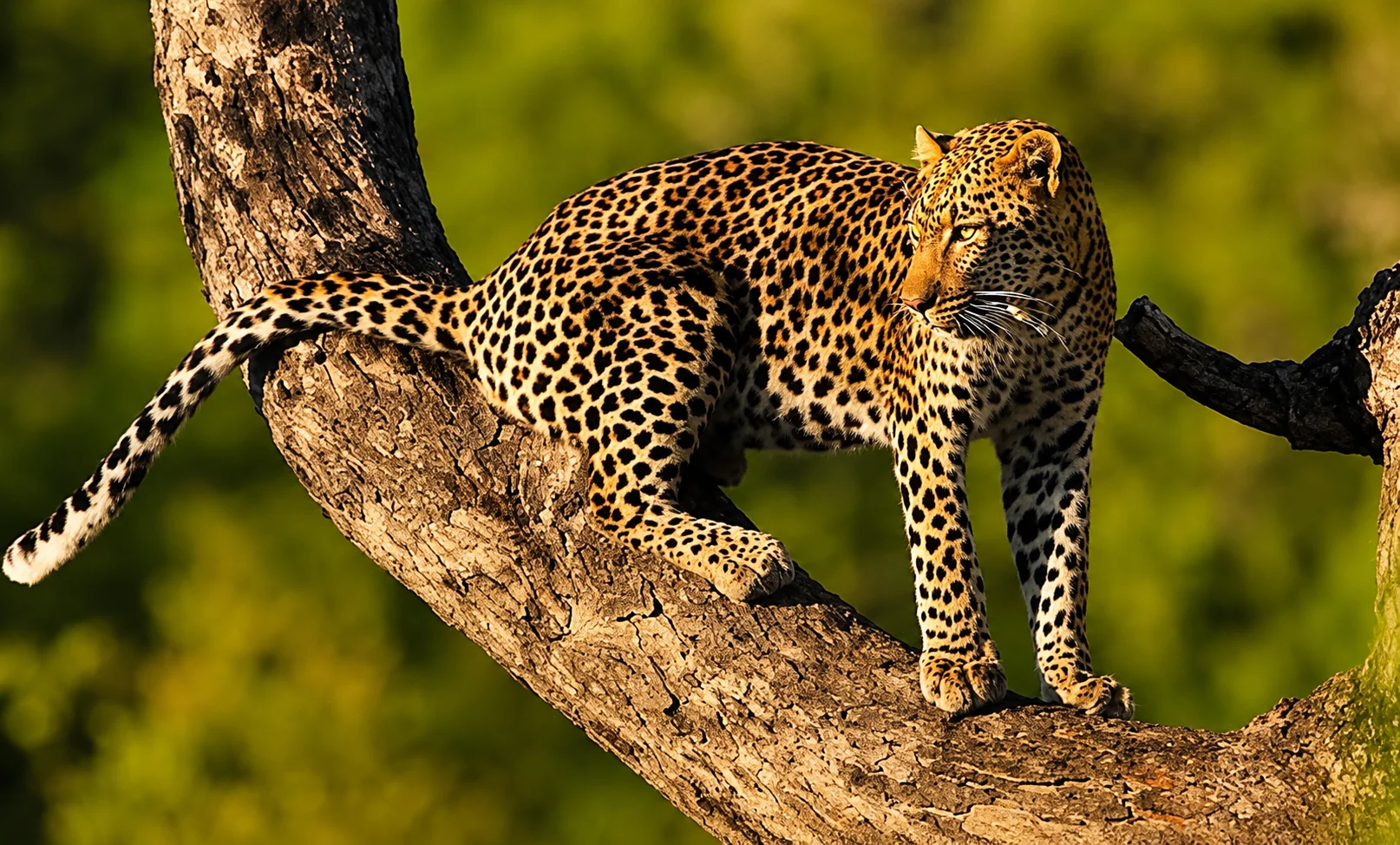
| Leopard | Savannah, woodland, forest and mountain habitats | Both |
| Cheetah | Open grassland, savannah and semi-arid terrain | Safari animal |
| Giraffe | Savannah and open woodland | Safari animal |
| Zebra | Grassland, savannah and open woodland | Safari animal |
| Wildebeest | Grassland and savannah | Safari animal |
| African elephant | Savannah, woodland and forest | Both |
| Asian elephant | Forest, grassland and scrub in Asia | Commonly described as a jungle animal |
| Chimpanzee | Tropical and woodland forest in Africa | Both |
| Gorilla | Tropical and montane forest in central Africa | Jungle or forest animal |
| Orangutan | Tropical forest in Borneo and Sumatra | Jungle animal |
| Hippopotamus | Rivers, lakes and wetlands | Safari animal |
| Rhinoceros | Savannah, grassland, woodland and shrubland | Safari animal |
| Crocodile | Rivers, lakes, wetlands and estuaries | Both |
| Monkey | Forest, savannah, woodland and mountain habitats | Both |
| Hyena | Savannah, grassland, woodland and semi-desert | Safari animal |
Are Lions Jungle Animals?
Lions are often called “kings of the jungle,” but most African lions do not live in tropical rainforest.
Their main habitats include:
- Savannah
- Open grassland
- Scrub
- Dry woodland
- Semi-arid landscapes
Open habitat allows lions to locate prey and coordinate group hunting. Their prey may include wildebeest, zebras, buffaloes and antelopes.
Lions can use wooded and bush-covered environments, but describing them as tropical jungle specialists is inaccurate.
Travellers can search for wild lions in Tanzania’s:
- Serengeti National Park
- Ngorongoro Conservation Area
- Tarangire National Park
- Nyerere National Park
- Ruaha National Park
- Mkomazi National Park
Wildlife sightings cannot be guaranteed because lions move freely within their ecosystems.
Why Are Lions Called Kings of the Jungle?
The title is cultural rather than scientific. Lions have been associated with power, bravery and royalty for centuries. Their size, mane, roar and social behaviour helped create the popular image of the lion ruling other animals.
The phrase does not mean that tropical rainforest is the lion’s primary habitat.
A more geographically accurate description would be “king of the African savannah,” although lions also live in woodland, scrub and semi-arid environments.
Do Tigers Live in Africa?
No wild tiger populations occur naturally in Africa. Tigers are native to Asia.
Tiger habitats include:
- Tropical forest
- Temperate forest
- Mangrove forest
- Grassland
- Wetland
- Snow-covered forest regions
Travellers will not see wild tigers during a Tanzania safari. Claims that tigers are native African safari animals are incorrect.
Africa’s large wild cats include:
- Lion
- Leopard
- Cheetah
- Caracal
- Serval
The tiger and lion are both members of the cat family, but they have different natural ranges and social behaviour.
Lion vs Tiger Habitat
| Feature | Lion | Tiger |
|---|---|---|
| Natural range | Africa, with a small Asiatic lion population in India | Asia |
| Typical habitat | Savannah, grassland, scrub and woodland | Forest, grassland, mangrove and wetland |
| Social behaviour | Often lives in a pride | Generally solitary |
| Tanzania safari | Possible to see in several national parks | Not found naturally |
| Dense forest adaptation | Can use woodland but is not a rainforest specialist | Several tiger populations use dense forest |
| Open-country hunting | Common | Depends on the tiger population and habitat |
Are Elephants Jungle or Safari Animals?
Elephants can be described as both jungle and safari animals because different elephant species and populations use different habitats.
African Savanna Elephant
The African savanna elephant is associated with:
- Grassland
- Savannah
- Open woodland
- Bushland
Tanzania’s Tarangire National Park is particularly known for its elephants and baobab landscapes.
African Forest Elephant
The African forest elephant lives mainly in the dense forests of central and western Africa. It is a distinct species from the African savanna elephant.
Asian Elephant
Asian elephants use forests, grasslands and scrub habitats across parts of Asia. They are frequently represented as jungle animals in books and films.
Are Leopards Jungle or Safari Animals?
Leopards can be both. They are highly adaptable cats found in forests, savannahs, woodlands, mountains and semi-arid landscapes.
Leopards use trees for:
- Resting
- Scanning the surroundings
- Avoiding other predators
- Storing prey in some environments
During a Tanzania safari, leopards may be seen in Serengeti, Tarangire, Ruaha, Nyerere, Lake Manyara and other protected areas. Their spotted coats and secretive behaviour make them difficult to locate.
Why Are Cheetahs Safari Animals?
Cheetahs are strongly associated with African safaris because they favour open environments where their speed can be used during hunting.
Common cheetah habitats include:
- Grassland
- Savannah
- Open woodland
- Semi-arid plains
The open plains of Serengeti provide suitable conditions for cheetahs to scan for prey and use speed during short pursuits.
Cheetahs are not well adapted to chasing prey through extremely dense tropical vegetation.
Why Do Giraffes Live on the Savannah?
Giraffes are adapted to browse leaves from trees and shrubs in savannah and woodland environments.
Their height allows them to:
- Reach vegetation unavailable to many herbivores
- Scan open landscapes
- Detect predators from a distance
- Move efficiently between feeding areas
Giraffes can be seen during safaris in Serengeti, Tarangire, Arusha, Mkomazi and several other Tanzania parks.
Jungle Primates vs Safari Primates
Primates are commonly associated with jungles, but they occupy several forest and woodland habitats.
| Primate | Natural habitat | Where it may be seen |
|---|---|---|
| Chimpanzee | Tropical and woodland forest | Gombe, Mahale and Rubondo in Tanzania |
| Gorilla | Tropical and montane forest | Central and East-Central Africa |
| Orangutan | Tropical forest | Borneo and Sumatra |
| Black-and-white colobus | Forest and woodland | Arusha and Kilimanjaro forest areas |
| Baboon | Savannah, woodland, forest edge and rocky terrain | Many Tanzania safari parks |
| Vervet monkey | Woodland, savannah and riverine forest | Several Tanzania parks |
| Blue monkey | Forest | Kilimanjaro, Arusha and other forested areas |
A safari does not need to involve a vehicle. Chimpanzee trekking in a Tanzanian forest is also a safari experience.
Chimpanzee Safaris in Tanzania
Tanzania National Parks identifies Gombe, Mahale and Rubondo as destinations for chimpanzee experiences.
Gombe National Park
Gombe lies beside Lake Tanganyika near Kigoma. The park is known for chimpanzees and several other primate species.
Wildlife includes:
- Chimpanzees
- Olive baboons
- Blue monkeys
- Red-tailed monkeys
- Red colobus monkeys
- Vervet monkeys
- Bushbabies
Chimpanzee viewing normally involves guided trekking rather than a conventional game drive.
Mahale Mountains National Park
Mahale lies on the eastern shore of Lake Tanganyika. It combines forested mountains, beaches and chimpanzee habitat.
Activities may include:
- Chimpanzee trekking
- Hiking
- Boat trips
- Snorkelling
- Birdwatching
- Lake Tanganyika experiences
Access and accommodation require more planning than a standard northern Tanzania safari.
Rubondo Island National Park
Rubondo is an island national park in Lake Victoria. It includes forest habitats and several wildlife species, including chimpanzees.
Chimpanzee encounters depend on tracking conditions, animal movement and park regulations.
Can Jungle Animals Be Seen on Safari?
Yes. Forest and jungle animals can be seen on safari when the itinerary visits suitable habitats.
Examples include:
- Chimpanzee trekking in Mahale
- Chimpanzee trekking in Gombe
- Gorilla trekking in Uganda or Rwanda
- Jaguar safaris in South American wetlands and forests
- Tiger safaris in India
- Orangutan tours in Borneo or Sumatra
- Forest-monkey walks in Tanzania
The activity should be described according to the habitat and viewing method. A Serengeti game drive and a Mahale chimpanzee trek are both safaris, but they require very different travel arrangements.
Main Adaptations of Jungle Animals
Animals living in dense forests may develop adaptations that help them climb, hide and communicate where visibility is limited.
Common adaptations include:
- Strong limbs for climbing
- Gripping hands, feet or tails
- Camouflage suited to shade and vegetation
- Powerful hearing
- Loud calls for communication through forest
- Ability to move through trees
- Diets based on fruit, leaves, insects or forest prey
- Solitary behaviour among some predators
Examples include chimpanzees, orangutans, jaguars and many monkey species.
Main Adaptations of Savannah Animals
Savannah animals often live in open environments affected by seasonal rainfall.
Common adaptations include:
- Speed across open ground
- Long-distance migration
- Herd behaviour
- Wide visual awareness
- Ability to survive seasonal water shortages
- Camouflage matching dry grass
- Grazing or browsing specialisation
- Group defence against predators
Wildebeest, zebras, giraffes, lions, cheetahs and many antelope species display these adaptations.
Jungle vs Savannah Animal Adaptations
| Adaptation | Jungle or forest animals | Savannah animals |
|---|---|---|
| Movement | Climbing, swinging and moving through cover | Running and travelling across open ground |
| Visibility | Limited by dense vegetation | Wider visibility |
| Camouflage | Shadow, leaves and broken forest light | Dry grass, soil and open woodland |
| Social structure | Varies; some species are solitary | Herds and groups are common |
| Food | Fruit, leaves, insects and forest prey | Grass, shrubs, leaves and grazing animals |
| Communication | Calls travel through dense vegetation | Visual signals, scent and long-distance calls |
| Predator strategy | Close-range ambush | Stalking, pursuit and coordinated hunting |
| Seasonal movement | May follow fruit and forest resources | May migrate for water and grass |
Which Habitat Has More Animals?
The answer depends on how wildlife is measured.
Tropical forests can have extremely high biodiversity, particularly among:
- Insects
- Birds
- Reptiles
- Amphibians
- Plants
- Small mammals
African savannahs are particularly visible for their concentration of large mammals, including:
- Elephants
- Giraffes
- Buffaloes
- Wildebeest
- Zebras
- Lions
- Cheetahs
- Rhinoceroses
A jungle may contain more species, but dense vegetation can make individual animals harder to observe. Open savannah can make large animals easier to find and photograph.
Where Can You See Safari Animals in Tanzania?
| Tanzania destination | Main habitat | Wildlife highlights |
|---|---|---|
| Serengeti National Park | Savannah and woodland | Lions, cheetahs, leopards, wildebeest and zebras |
| Tarangire National Park | Savannah and woodland | Elephants, giraffes, lions and baobab landscapes |
| Ngorongoro Crater | Grassland, woodland and wetland | Lions, buffaloes, elephants, hippos and rhinoceroses |
| Lake Manyara National Park | Forest, woodland and lakeside habitat | Elephants, monkeys, buffaloes and birds |
| Arusha National Park | Montane forest, lakes and grassland | Colobus monkeys, giraffes, buffaloes and zebras |
| Nyerere National Park | Woodland, rivers, wetlands and open areas | Elephants, lions, hippos, crocodiles and wild dogs |
| Ruaha National Park | Savannah and miombo woodland | Lions, elephants, buffaloes and antelopes |
| Mkomazi National Park | Semi-arid savannah | Giraffes, elephants, oryx, gerenuks and predators |
| Gombe National Park | Forest beside Lake Tanganyika | Chimpanzees and monkeys |
| Mahale Mountains National Park | Forest, mountains and lake shore | Chimpanzees and forest wildlife |
Best Tanzania Safari for Savannah Animals
Travellers wanting famous African safari animals should consider the northern circuit.
A typical route includes:
- Tarangire National Park
- Serengeti National Park
- Ngorongoro Crater
- Lake Manyara National Park
A 5–7-day itinerary provides more time than a rushed 2–3-day safari, particularly when including Serengeti.
Best Tanzania Safari for Forest Animals
Travellers interested in forest animals can consider:
- Mahale Mountains National Park
- Gombe National Park
- Rubondo Island National Park
- Arusha National Park
- Kilimanjaro forest experiences
Chimpanzee safaris require different transport and accommodation arrangements from northern circuit game drives. Mahale and Gombe are in western Tanzania and are commonly reached through Kigoma or scheduled safari flights.
Sample 7-Day Tanzania Safari for Famous African Animals
| Day | Destination | Wildlife experience |
|---|---|---|
| 1 | Arusha or Moshi | Arrival and private transfer |
| 2 | Tarangire | Elephants, giraffes and baobabs |
| 3 | Serengeti | Savannah game drive |
| 4 | Serengeti | Lions, cheetahs and herbivore herds |
| 5 | Serengeti | Full-day wildlife viewing |
| 6 | Ngorongoro highlands | Morning safari and transfer |
| 7 | Ngorongoro Crater | Crater wildlife and return transfer |
The precise route can be adjusted according to travel dates, accommodation preference and Great Migration location.
Sample Tanzania Forest and Savannah Safari
| Day | Destination | Experience |
|---|---|---|
| 1 | Arusha | Arrival in northern Tanzania |
| 2 | Tarangire | Savannah elephants and giraffes |
| 3–4 | Serengeti | Big cats and open-plains wildlife |
| 5 | Ngorongoro | Crater wildlife |
| 6 | Flight or transfer west | Travel toward Kigoma or Mahale |
| 7–9 | Mahale or Gombe | Chimpanzee trekking and forest wildlife |
| 10 | Departure | Flight connection |
Western Tanzania logistics should be planned around flight schedules and accommodation availability.
Jungle and Safari Animals Commonly Confused
Lion and Tiger
Lions are mainly associated with African savannah and open woodland. Tigers are native to Asia and commonly use forest, grassland and wetland habitats.
Leopard and Jaguar
Leopards occur in Africa and Asia across several habitats. Jaguars are native to the Americas and are strongly associated with tropical forest and wetland habitats.
African and Asian Elephants
African savanna elephants are common safari animals. African forest elephants and Asian elephants are more strongly associated with forest habitats.
Chimpanzees and Gorillas
Chimpanzees occur naturally in Tanzania, including Mahale and Gombe. Gorillas do not occur naturally in Tanzania. Gorilla trekking is associated with countries such as Uganda, Rwanda and the Democratic Republic of the Congo.
Cheetahs and Leopards
Cheetahs are adapted to speed and open terrain. Leopards are stronger climbers and use a wider range of habitats, including woodland and forest.
Frequently Asked Questions About Jungle vs Safari Animals
What is the difference between jungle and safari animals?
Jungle animals are associated with dense forest environments. Safari animals are animals observed during a wildlife trip and can live in several habitats.
Are lions jungle animals?
Lions mainly live in savannah, grassland, scrub and open woodland. They are not primarily tropical rainforest animals.
Why are lions called kings of the jungle?
The expression is cultural and symbolic rather than geographically accurate. Lions are more closely associated with savannah habitats.
Are tigers safari animals?
Tigers can be observed on specialised wildlife safaris in Asia. They are not African safari animals and do not occur naturally in Tanzania.
Are elephants jungle animals?
Some elephants live in forests, while African savanna elephants live in grassland, woodland and savannah habitats. Elephants can therefore be described as both jungle and safari animals.
Are monkeys jungle animals?
Many monkey species live in forests, but others use woodland, savannah and mountain habitats. Monkeys can also be observed during safaris.
Do giraffes live in jungles?
Giraffes mainly live in savannah and open woodland where suitable trees and shrubs are available.
Do cheetahs live in the jungle?
Cheetahs are better adapted to open grassland, savannah and semi-arid habitats than dense tropical forest.
Which jungle animals live in Tanzania?
Tanzania’s forest wildlife includes chimpanzees, colobus monkeys, blue monkeys, red-tailed monkeys, bushbabies and several smaller mammals.
Can I see gorillas in Tanzania?
No wild gorilla populations occur naturally in Tanzania. Tanzania offers chimpanzee trekking in Mahale, Gombe and Rubondo.
What are the Big Five safari animals?
The Big Five are the lion, leopard, elephant, rhinoceros and buffalo. The name came from historical hunting terminology but is now widely used in wildlife tourism.
Where can I see the most safari animals in Tanzania?
Serengeti, Ngorongoro, Tarangire, Nyerere and Ruaha are important wildlife destinations. The best choice depends on travel dates and animal interests.
Plan a Tanzania Wildlife Safari with KiliPori Safaris
Understanding jungle vs safari animals helps travellers choose the right destination.
Choose Serengeti, Tarangire and Ngorongoro if you want:
- Lions
- Leopards
- Cheetahs
- Elephants
- Giraffes
- Zebras
- Wildebeest
- Big Five wildlife
Choose Mahale, Gombe or Rubondo if you want:
- Chimpanzee trekking
- Forest wildlife
- Primates
- Lake and mountain scenery
- A remote western Tanzania experience
KiliPori Safaris can create private Tanzania itineraries combining savannah game drives, forest experiences, Mount Kilimanjaro and Zanzibar.
Tell us your travel dates, number of travellers, preferred animals and available days. Our local team will recommend the most suitable national parks and route.
Anything you would like to ask about Tanzania’s jungle and safari animals? Chat with KiliPori Safaris on WhatsApp: +255 755 287 311.
Written by the KiliPori Safaris Tanzania Wildlife Team
Local specialists in private Tanzania safaris, Kilimanjaro climbs and Zanzibar extensions.

KiliPori Safaris Travel Team
A local Tanzania team helping travellers plan wildlife safaris, Kilimanjaro climbs and Zanzibar holidays with clear routing and direct destination support.
Published August 3, 2026. Travel conditions, fees and schedules can change; confirm time-sensitive details before departure.