Explore this guide
Our guides combine current planning research with practical knowledge from arranging safaris, Kilimanjaro climbs and Zanzibar holidays.
Which Tanzania National Parks Belong on Your Safari?
Tanzania has 21 national parks protecting approximately 97,078 square kilometres of land. They range from the wildlife-rich plains of Serengeti to the forests of Udzungwa and the remote wilderness of Ruaha. Tanzania National Parks
For first-time visitors, Serengeti, Tarangire and Ngorongoro provide the strongest classic safari route. Travellers seeking fewer vehicles and more varied activities should consider Nyerere and Ruaha, while Mikumi works well for a short safari from Dar es Salaam.
The best Tanzania national park depends on your travel month, starting city, available time and preferred wildlife experience.
Tanzania’s Main Safari Circuits
| Safari Circuit | Principal Parks | Best For |
|---|---|---|
| Northern circuit | Serengeti, Tarangire, Lake Manyara and Arusha | Great Migration, Big Five and first safaris |
| Southern circuit | Nyerere, Ruaha, Mikumi and Udzungwa | Fewer vehicles, boat safaris and wilderness |
| Western circuit | Katavi, Mahale Mountains and Gombe Stream | Chimpanzees and remote expeditions |
| Eastern and coastal circuit | Saadani and Mkomazi | Beach combinations, scenery and quieter parks |
| Lake and northwestern parks | Rubondo, Burigi-Chato, Ibanda-Kyerwa and Rumanyika-Karagwe | Birdlife, islands and less-visited landscapes |
Tanzania’s Best National Parks Compared
| Park | Best Known For | Recommended Stay |
|---|---|---|
| Serengeti | Great Migration and big cats | 3–5 days |
| Tarangire | Elephants and baobab trees | 1–2 days |
| Lake Manyara | Rift Valley scenery and birdlife | 1 day |
| Arusha | Mount Meru, walking and canoeing | 1 day |
| Nyerere | Boat safaris and remote wilderness | 3–4 days |
| Ruaha | Predators, elephants and low visitor numbers | 3–4 days |
| Mikumi | Short safaris from Dar es Salaam | 2–3 days |
| Udzungwa | Hiking, waterfalls and primates | 1–3 days |
| Katavi | Remote wildlife concentrations | 3–4 days |
| Mahale Mountains | Chimpanzees and Lake Tanganyika | 3–5 days |
| Gombe Stream | Chimpanzee trekking | 2–3 days |
| Saadani | Wildlife beside the Indian Ocean | 2–3 days |
Serengeti National Park: Best Overall Safari Park
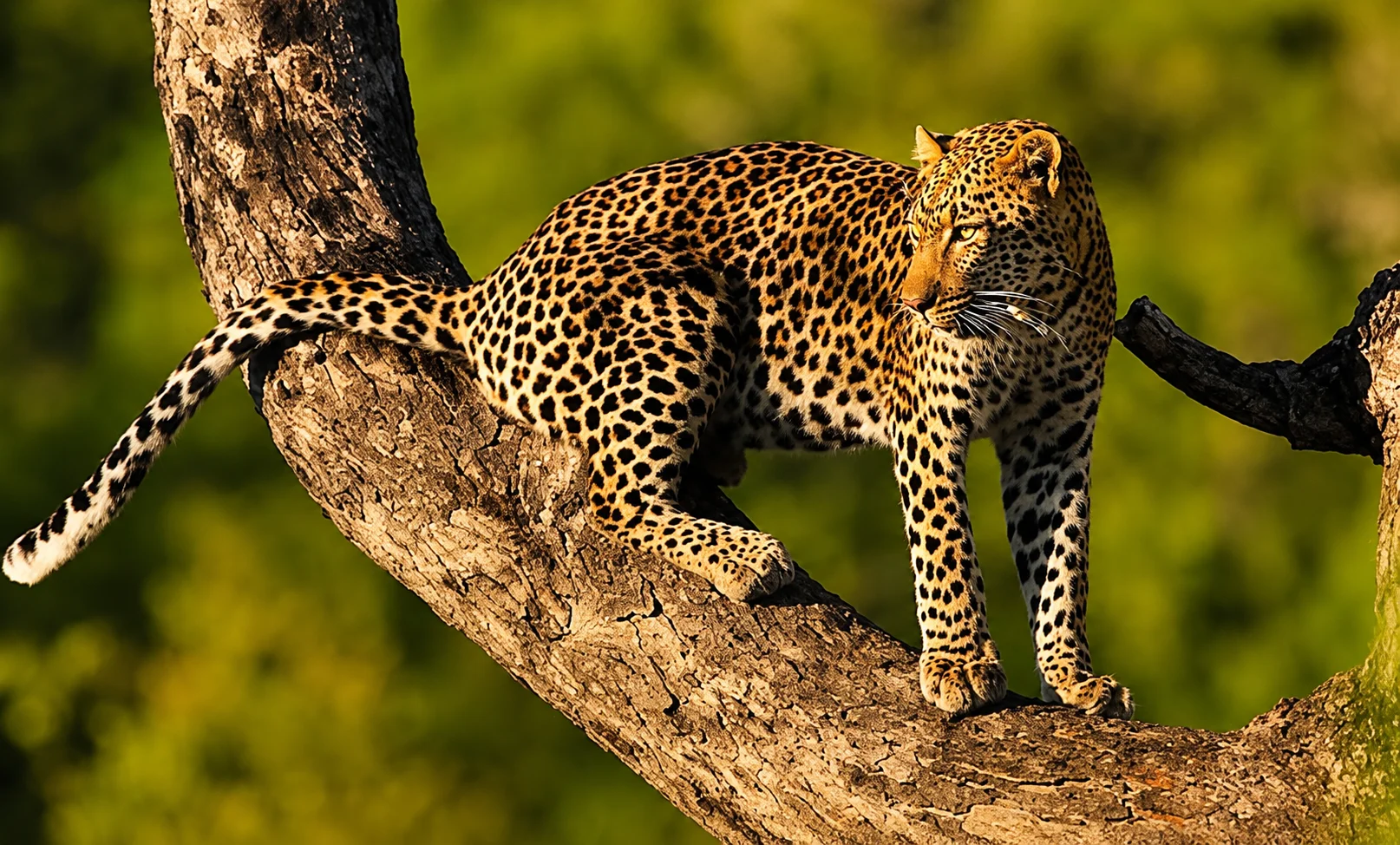
Serengeti National Park is Tanzania’s most famous wildlife destination. Its open plains, river systems, woodlands and rocky kopjes support lions, leopards, cheetahs, elephants, buffaloes, giraffes and large herds of grazing animals.
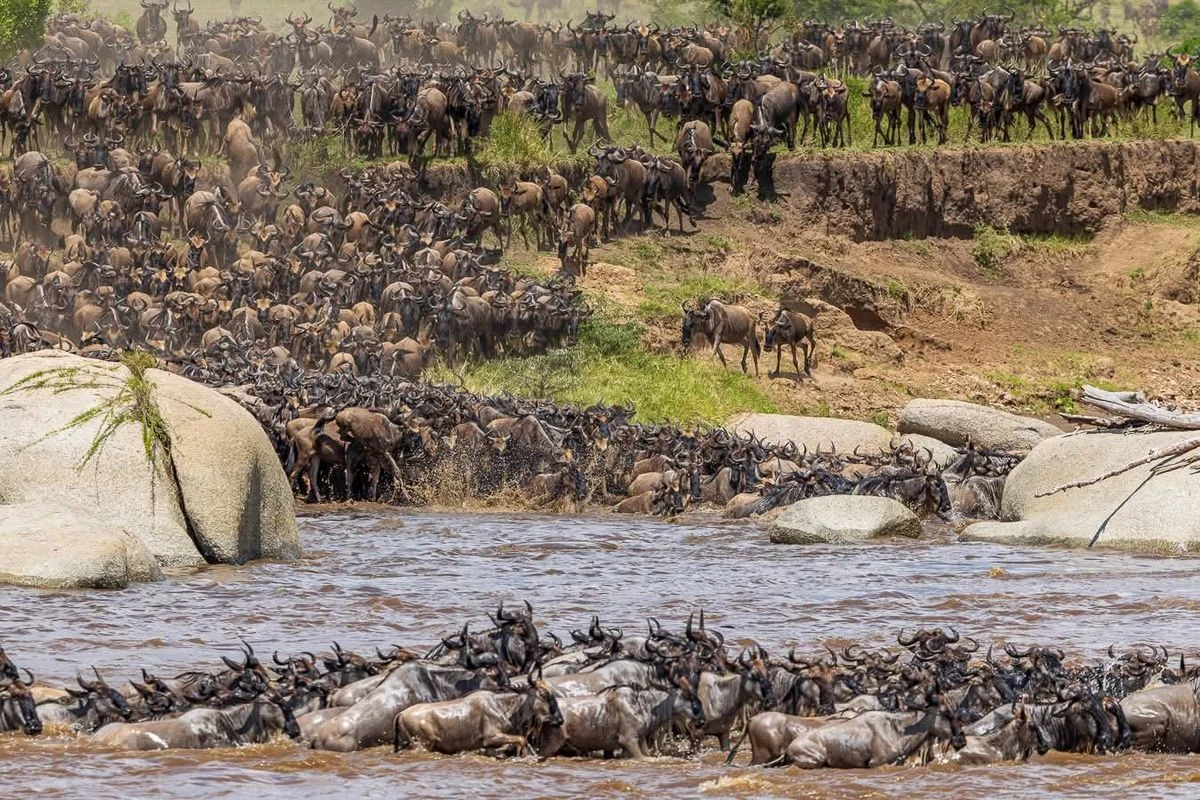
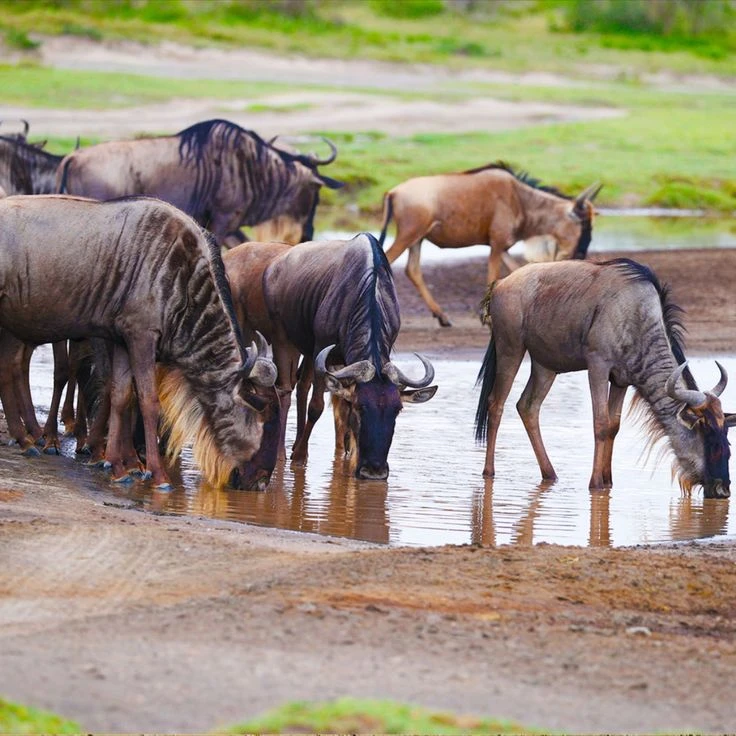
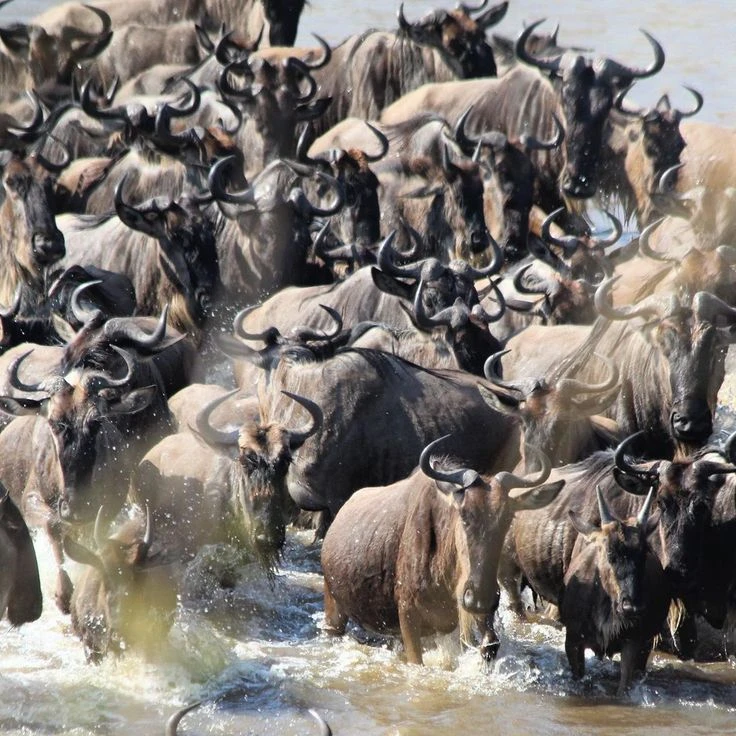
The Serengeti is also the principal setting for the Great Wildebeest Migration, but the herds are not found in one location throughout the year.
Choose Serengeti for:
- Great Migration safaris
- Big-cat sightings
- Balloon safaris
- Photography
- Honeymoons
- Multi-day private safaris
Spend at least three days in the park. Select the correct region—central, northern, western or southern Serengeti—according to the season.
Tarangire National Park: Best for Elephants
Tarangire is characterised by baobab trees, seasonal wetlands and the Tarangire River. During the dry season, the river attracts substantial numbers of animals from the surrounding ecosystem.
Choose Tarangire for:
- Elephants
- Baobab landscapes
- Birdwatching
- Dry-season wildlife
- Short safaris from Arusha
- A quieter alternative to Serengeti
One full day is possible, but two nights allow more time to explore areas away from the entrance.
Lake Manyara National Park: Best for Varied Landscapes
Lake Manyara sits beneath the Great Rift Valley escarpment. The park combines forest, woodland, open areas and a shallow alkaline lake within a relatively compact destination.
Choose Lake Manyara for:
- Birdlife
- Rift Valley views
- Forest scenery
- Elephants and primates
- A short stop between Arusha and Ngorongoro
Lake Manyara works best as an additional park on a longer northern circuit itinerary.
Arusha National Park: Best First or Final Day
Arusha National Park is close to Arusha city and Kilimanjaro International Airport. Its attractions include Mount Meru, Momella Lakes and the forested Ngurdoto Crater.
It does not provide the same traditional Big Five experience as Serengeti or Ngorongoro, but it offers activities that are less common in other northern parks.
Choose Arusha National Park for:
- Guided walking safaris
- Canoeing, when available
- Giraffes and colobus monkeys
- Birdwatching
- Mount Meru scenery
- A one-day safari
Nyerere National Park: Best for Boat Safaris
Nyerere is one of southern Tanzania’s leading safari destinations. The Rufiji River system supports wildlife viewing on land and water.
Depending on the season, camp and operating permissions, visitors can combine game drives with boat and guided walking safaris.
Choose Nyerere for:
- Boat safaris
- Fewer safari vehicles
- Fly-in trips from Zanzibar
- Elephants, lions and African wild dogs
- Remote tented camps
- Varied safari activities
Allow three or four days to experience more than a single game-drive route.
Ruaha National Park: Best for Remote Wilderness
Ruaha offers baobab-covered landscapes, seasonal rivers and large wilderness areas. It is particularly rewarding for experienced safari travellers and photographers.
Choose Ruaha for:
- Lions and other predators
- Elephants
- Remote camps
- Low vehicle density
- Birdlife
- Longer, unhurried game drives
Because Ruaha is distant from Tanzania’s other major parks, fly-in safaris are often the most practical option.
Mikumi National Park: Best Short Safari from Dar es Salaam
Mikumi provides an accessible introduction to the southern circuit. Its open areas support elephants, giraffes, buffaloes, zebras, antelopes and lions.
Choose Mikumi for:
- Two- or three-day safaris
- Road trips from Dar es Salaam
- SGR train safari combinations
- Families
- Travellers with limited time
- Affordable private safaris
Mikumi cannot match Serengeti’s scale, but it offers good value for travellers who cannot reach northern Tanzania.
Udzungwa Mountains National Park: Best for Hiking
Udzungwa protects forested mountains containing waterfalls, primates and endemic plants and animals. It is a hiking destination rather than a conventional game-drive park.
Choose Udzungwa for:
- Sanje Waterfall
- Forest trekking
- Primates
- Endemic species
- Active holidays
- A combined Mikumi and Udzungwa itinerary
Combine it with another park if large mammals and traditional game drives are your priority.
Katavi National Park: Best for an Exclusive Safari
Katavi is one of Tanzania’s most remote national parks. Its seasonal floodplains and rivers can attract large wildlife concentrations during the dry season.
Choose Katavi for:
- Very few visitors
- Buffaloes and hippos
- Predators
- Remote fly-in safaris
- Experienced safari travellers
The journey is expensive compared with mainstream circuits, but the reward is a genuine wilderness experience.
Mahale Mountains National Park: Best for Chimpanzees and Scenery
Mahale Mountains National Park combines forested mountains with the clear shoreline of Lake Tanganyika. Its main attraction is guided chimpanzee trekking.
Choose Mahale for:
- Chimpanzees
- Lake Tanganyika
- Forest walks
- Beach relaxation
- Exclusive camps
Mahale requires more time and a larger budget because access normally involves scheduled or charter flights and boat transfers.
Gombe Stream National Park: Best for Chimpanzee History
Gombe is associated with Jane Goodall’s long-term chimpanzee research. Visitors reach the park by boat from Kigoma and explore it mainly on foot.
Choose Gombe for:
- Chimpanzee trekking
- Forest hiking
- Primate observation
- Lake Tanganyika scenery
- Conservation history
Chimpanzee sightings are never guaranteed, and trekking difficulty varies according to the animals’ location.
Saadani National Park: Best Bush-and-Beach Combination
Saadani is Tanzania’s only national park directly adjoining the Indian Ocean. It combines coastal habitats, the Wami River and savannah wildlife.
Choose Saadani for:
- A beach and wildlife combination
- Boat trips
- Short trips from Dar es Salaam
- Birdwatching
- Fewer visitors
Wildlife density can be lower than in Tanzania’s leading safari parks, so Saadani is better for variety than for a first Big Five safari.
Mkomazi National Park: Best for Scenery and Conservation
Mkomazi lies between northern Tanzania’s mountains and the Kenyan border. It offers dry landscapes, birdlife and conservation programmes involving threatened species.
Choose Mkomazi if you want a quiet park that can be combined with Moshi, Kilimanjaro or the Usambara Mountains.
Other Less-Visited Tanzania National Parks
| National Park | Main Reason to Visit |
|---|---|
| Rubondo Island | Forest, birdlife and Lake Victoria scenery |
| Burigi-Chato | Lakes, savannah and a developing western safari route |
| Ibanda-Kyerwa | Remote woodland and wildlife near the Uganda–Rwanda borders |
| Rumanyika-Karagwe | Valleys, grasslands and low visitor numbers |
| Kitulo | Wildflowers, orchids and mountain hiking |
| Kilimanjaro | Trekking to Africa’s highest summit |
| Mount Meru area within Arusha NP | Multi-day mountain trekking |
| Ugalla River | Remote rivers, woodlands and wilderness |
| Saanane Island | Short wildlife visits from Mwanza |
These parks suit specialist interests and repeat visitors more than first-time safari travellers.
Is Ngorongoro a National Park?
No. The Ngorongoro Conservation Area is not a national park. It is a multiple-use conservation area managed by the Ngorongoro Conservation Area Authority.
It remains one of Tanzania’s most important safari destinations because the Ngorongoro Crater contains a high concentration of wildlife, including possible black rhino sightings. All crater visitors must follow the authority’s rules and be accompanied by a licensed guide. Ngorongoro Conservation Area Authority
National Park, Game Reserve or Conservation Area?
| Protected Area | Example | Main Difference |
|---|---|---|
| National park | Serengeti | Managed primarily for conservation and regulated tourism |
| Conservation area | Ngorongoro | Wildlife conservation alongside permitted human land use |
| Game reserve | Selous ecosystem areas | Managed under a different legal and activity framework |
| Wildlife management area | Community-managed destinations | Conservation linked with local community benefits |
The term “Tanzania safari park” is often used broadly, but not every protected wildlife destination is legally a national park.
Which Parks Should You Choose?
| Your Main Interest | Recommended Destination |
|---|---|
| First Tanzania safari | Serengeti, Ngorongoro and Tarangire |
| Great Migration | Serengeti |
| Big Five | Serengeti and Ngorongoro |
| Elephants | Tarangire or Ruaha |
| Fewer vehicles | Ruaha, Nyerere or Katavi |
| Boat safari | Nyerere |
| Short safari from Dar es Salaam | Mikumi |
| Short safari from Zanzibar | Fly to Nyerere |
| Chimpanzees | Mahale or Gombe |
| Hiking and waterfalls | Udzungwa |
| Mountain climbing | Kilimanjaro or Mount Meru |
| Bush and beach | Saadani |
| Birdwatching | Lake Manyara, Tarangire or Nyerere |
Best Time to Visit Tanzania National Parks
The dry season, generally from June to October, offers easier wildlife viewing around water sources and more predictable road conditions.
The green season provides greener landscapes, fewer visitors and excellent birdlife. Calving in the southern Serengeti ecosystem usually occurs early in the year, while northern Serengeti river-crossing opportunities are associated with the middle and later months of the dry season.
Wildlife movements depend on rainfall, so exact dates cannot be guaranteed.
How Many Parks Should You Visit?
Avoid adding parks only to make the itinerary look longer.
- Three days: Choose one or two nearby destinations.
- Five days: Combine approximately three northern parks.
- Seven days: Explore Serengeti, Ngorongoro and Tarangire comfortably.
- Seven to ten days: Combine Nyerere and Ruaha or take a complete northern safari.
- Ten days or more: Add a western park or Zanzibar extension.
Spending more time in fewer parks normally produces better wildlife sightings and less tiring travel days.
Frequently Asked Questions
What is the best national park in Tanzania?
Serengeti is the best overall choice for wildlife variety, big cats and the Great Migration.
Which Tanzania park is best for a first safari?
Combine Serengeti, Ngorongoro Crater and Tarangire for the strongest first-time experience.
Which park is closest to Zanzibar?
No major mainland safari park is immediately beside Zanzibar. Nyerere and Mikumi are popular options, while scheduled flights also connect Zanzibar with Serengeti.
Can I visit Tanzania’s parks without a guide?
Rules differ between destinations, but international visitors receive greater safety, navigation and wildlife knowledge when travelling with a licensed safari guide.
Does KiliPori Safaris arrange private park itineraries?
Yes. KiliPori Safaris can design private Tanzania safari packages based on travel dates, preferred parks, trip length, starting city and budget.
Final Recommendation
First-time visitors should prioritise Serengeti, Ngorongoro and Tarangire. Choose Nyerere and Ruaha for fewer vehicles and a more remote safari, or Mikumi for a short journey from Dar es Salaam.
The best Tanzania national parks itinerary is not the one containing the most destinations. It is the route that matches the season, allows enough time in each park and minimises unnecessary travel.

KiliPori Safaris Travel Team
A local Tanzania team helping travellers plan wildlife safaris, Kilimanjaro climbs and Zanzibar holidays with clear routing and direct destination support.
Published July 25, 2026. Travel conditions, fees and schedules can change; confirm time-sensitive details before departure.