Explore this guide
Our guides combine current planning research with practical knowledge from arranging safaris, Kilimanjaro climbs and Zanzibar holidays.
Introduction
Tanzania is one of the few safari destinations where every month of the year offers something genuinely rewarding. While many travellers begin planning with a simple question—"What is the best time to visit Tanzania?"—the answer is rarely as straightforward as choosing one season over another. Wildlife does not follow a calendar designed for tourism, landscapes change with the rhythm of rainfall, and each month brings different opportunities across the country's national parks, conservation areas, mountains, and coastline.
For some visitors, the ideal safari means watching thousands of wildebeest and zebras crossing crocodile-filled rivers in the northern Serengeti. Others dream of witnessing newborn calves taking their first steps across the nutrient-rich plains of southern Serengeti and Ndutu, where predators remain close in search of easy prey. Photographers often seek the soft golden light of the dry season, while birdwatchers look forward to the arrival of colourful migratory species during the greener months. Families may prioritise school holidays and comfortable weather, whereas couples planning a honeymoon often prefer quieter lodges and more private game drives.
Understanding these differences is far more valuable than simply knowing which months are labelled as the "high season" or "low season." Tanzania's wildlife is constantly responding to changing grazing conditions, rainfall, water availability, and breeding cycles. These natural events influence where animals gather, how predators hunt, and what visitors are most likely to experience during a safari.
One of Tanzania's greatest advantages is the diversity of its landscapes. Within a single journey, travellers can explore the endless plains of the Serengeti, descend into the wildlife-rich floor of the Ngorongoro Crater, watch enormous elephant herds beneath ancient baobab trees in Tarangire, search for tree-climbing lions in Lake Manyara, or travel south to the remote wilderness of Nyerere National Park and Ruaha National Park for a quieter safari experience. Each destination follows slightly different seasonal patterns, meaning the best time to visit one park may not be identical to another.
The famous Great Migration is another reason why timing matters. Rather than remaining in one location, more than a million wildebeest, accompanied by hundreds of thousands of zebras and gazelles, move continuously in search of fresh grass. Their journey is shaped by rainfall rather than fixed dates, meaning river crossings, calving season, rutting behaviour, and predator activity occur in different parts of the ecosystem throughout the year. Travellers who understand this annual cycle can choose a safari that matches the specific wildlife encounters they hope to witness instead of relying on general travel advice.
Weather also influences the overall safari experience in ways that go beyond sunshine and rainfall. During the dry months, vegetation becomes thinner, making wildlife easier to spot around permanent rivers and waterholes. Roads are generally easier to navigate, and cooler mornings often provide excellent conditions for longer game drives. After seasonal rains, the landscape transforms into vibrant shades of green, attracting migratory birds, supporting newborn herbivores, and creating dramatic scenery that many photographers consider even more beautiful than the dry season. Although occasional showers may occur, they rarely prevent visitors from enjoying memorable wildlife encounters.
For travellers combining a safari with other adventures, choosing the right time becomes even more important. Many visitors extend their journey by relaxing on the white-sand beaches of Zanzibar, climbing Mount Kilimanjaro, visiting local communities, or exploring lesser-known national parks. While some months offer ideal conditions for beach holidays, others provide clearer summit views on Africa's highest mountain or exceptional marine life along the Indian Ocean coastline. Understanding how these experiences align with Tanzania's seasonal calendar helps create a smoother and more rewarding itinerary.
In this guide, we draw on practical knowledge of Tanzania's safari regions to explain how wildlife, weather, and travel conditions change throughout the year. Instead of recommending one universal "best month," we compare each season based on what visitors can realistically expect, including wildlife viewing, the Great Migration, photography opportunities, birdwatching, family travel, honeymoon safaris, budget considerations, and overall safari conditions.
By the end of this guide, you'll have a clear understanding of when to visit Tanzania based on your own interests rather than following a one-size-fits-all recommendation. Whether your goal is to experience dramatic predator action, photograph the Great Migration, enjoy peaceful private game drives, climb Kilimanjaro under clear skies, or simply experience Africa's extraordinary wildlife for the first time, choosing the right season will help you make the most of every day of your journey.
Tanzania Weather & Safari Seasons Explained
Many travellers assume that Tanzania has four distinct seasons similar to Europe or North America. In reality, Tanzania's climate is shaped by tropical weather patterns, altitude, and seasonal rainfall rather than dramatic temperature changes. While daytime temperatures remain pleasant throughout much of the year, rainfall has the greatest influence on wildlife movements, road conditions, vegetation, and the overall safari experience.
Understanding Tanzania's weather is not simply about deciding whether to pack a rain jacket or sunscreen. Seasonal changes affect where animals concentrate, how easy they are to spot, the condition of safari tracks, photography opportunities, birdlife, and even accommodation availability. Choosing the right time to visit depends on the type of safari experience you are hoping to enjoy rather than searching for one universally "perfect" month.
Tanzania's Two Main Safari Seasons
Although Tanzania experiences two rainy periods, safari planning is generally divided into two broader seasons:
- The Dry Season (June to October)
- The Green Season (November to May)
Rather than thinking of one season as "good" and the other as "bad," it is more accurate to understand what each season offers. Some of Tanzania's most remarkable wildlife spectacles actually occur during the greener months when many travellers mistakenly assume conditions are less favourable.
The Dry Season (June to October)
The dry season is widely regarded as the most predictable period for wildlife viewing. Rainfall becomes minimal across much of northern Tanzania, rivers and seasonal water sources begin to shrink, and wildlife gradually concentrates around permanent waterholes and rivers.
As grasses become shorter and vegetation less dense, animals are easier to locate. Elephants gather in impressive numbers beneath Tarangire's ancient baobab trees, buffalo herds become more visible on open plains, and predators spend less energy searching for prey because herbivores follow increasingly limited water supplies.
Morning game drives during this period often begin with crisp, cool air before warming into comfortable daytime temperatures. Dust becomes more noticeable later in the season, particularly in September and October, but clear skies create excellent conditions for landscape photography and sunrise wildlife encounters.
The dry season is especially attractive for first-time safari visitors because wildlife sightings are generally more consistent, road conditions remain excellent, and travel between parks is straightforward.
What makes the dry season popular?
- Easier wildlife spotting due to shorter vegetation.
- Large concentrations of animals around rivers and waterholes.
- Comfortable conditions for full-day game drives.
- Excellent visibility for photography.
- Lower chance of rain interrupting outdoor activities.
- Ideal road conditions throughout the Northern Circuit.
However, popularity also brings higher demand. Many international travellers visit Tanzania during these months, meaning premium lodges and camps often sell out several months in advance, especially around July, August, and September.
The Green Season (November to May)
The term "Green Season" often creates the mistaken impression that safaris become poor during these months. In reality, many experienced guides consider this one of Tanzania's most rewarding periods because the entire ecosystem becomes more active.
Seasonal rains transform dry grasslands into vibrant green landscapes. Fresh grazing attracts enormous herds of herbivores, which in turn support increased predator activity. Trees regain their leaves, wildflowers bloom across open plains, and many bird species enter their breeding season, displaying brilliant breeding plumage rarely seen during the dry months.
Rainfall during much of the Green Season is also less disruptive than many travellers expect. Short showers frequently occur during the afternoon or overnight, leaving mornings clear for game drives. Even during wetter months, safaris continue every day, and wildlife remains active.
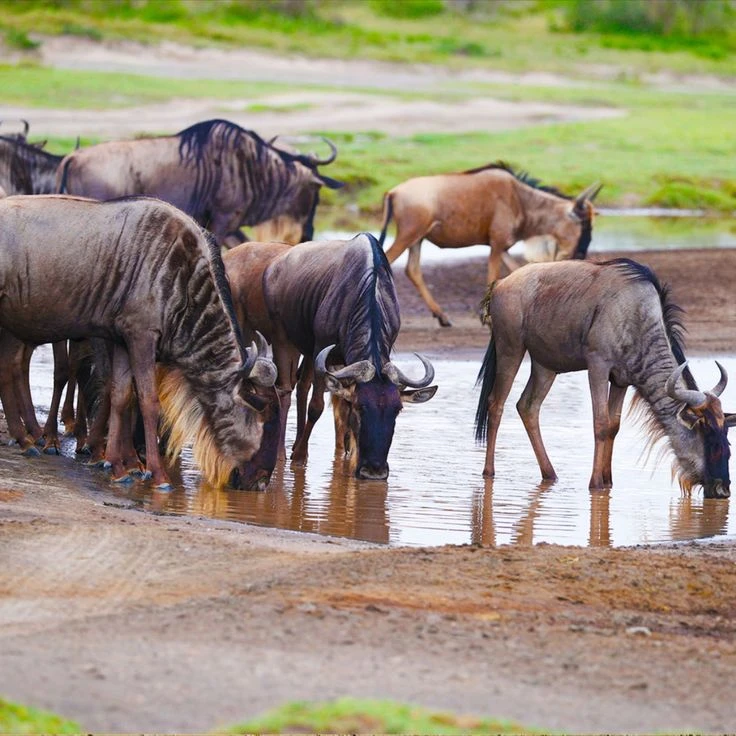
The Green Season is also when one of Africa's greatest wildlife events unfolds—the calving season in southern Serengeti and Ndutu. Between late January and early March, hundreds of thousands of wildebeest gather on nutrient-rich plains to give birth within a remarkably short period. Thousands of calves are born every day, attracting lions, cheetahs, hyenas, jackals, and other predators, creating extraordinary wildlife interactions.
For photographers, the Green Season offers richer colours, dramatic cloud formations, reflective water surfaces, and cleaner air after rainfall, producing landscapes that look completely different from those of the dry season.
Advantages of the Green Season
- Beautiful green landscapes with fewer safari vehicles.
- Calving season and intense predator activity.
- Outstanding birdwatching opportunities.
- Better availability at many lodges.
- Excellent value for private safaris.
- Dramatic scenery for photography.
While some remote roads may become muddy during the long rains, experienced safari guides adjust daily routes according to conditions to maximise wildlife viewing and ensure guest safety.
Understanding Tanzania's Rainy Seasons
Rather than one continuous wet season, Tanzania experiences two distinct rainfall periods, each influencing wildlife differently.
Short Rains (November to December)
The short rains usually begin sometime in November, although their exact arrival varies from year to year. These showers are generally brief and scattered rather than continuous.
Fresh grass begins to appear across the Serengeti ecosystem, encouraging migratory herds to move south after spending several months in the northern regions. Wildlife remains active, visitor numbers are relatively low, and landscapes quickly become greener without significantly affecting safari quality.
Long Rains (March to May)
The long rains are typically more sustained and can produce heavier showers, particularly during April. However, rain does not usually fall throughout the entire day. Mornings often remain suitable for game drives before afternoon clouds develop.
This period sees Tanzania at its greenest. Rivers flow strongly, forests become lush, and birdlife reaches its seasonal peak. While some remote camps close temporarily due to road conditions, many permanent lodges continue operating and offer attractive seasonal rates.
For travellers who prioritise photography, peaceful safari experiences, and exceptional value rather than guaranteed river crossings or peak wildlife concentrations, this season can be surprisingly rewarding.
Does Weather Affect Wildlife?
One of the biggest misconceptions is that wildlife disappears during the rainy season. In reality, animals remain in Tanzania throughout the year—they simply spread across a larger area when food and water become abundant.
During the dry season, limited water sources naturally draw wildlife into smaller areas, making sightings easier.
During the Green Season, abundant grazing allows herbivores to disperse across wider landscapes. This creates a different safari experience, one that rewards patience with natural animal behaviour, newborn wildlife, breeding displays, and spectacular scenery rather than simply high animal density.
Predators adapt as well. Lions, leopards, cheetahs, and hyenas follow herbivore movements throughout the year, meaning exciting predator encounters remain possible in every season.
Altitude Creates Different Climates
Tanzania's weather is also influenced by elevation. Conditions can vary significantly within a single itinerary.
For example:
- The Serengeti generally experiences warm days and cool mornings.
- The Ngorongoro Conservation Area sits at a much higher altitude, making early mornings noticeably colder throughout the year.
- Tarangire National Park is typically warmer and drier than the crater highlands.
- Mount Kilimanjaro contains multiple climate zones, ranging from tropical rainforest to alpine desert and permanent glaciers near the summit.
- Coastal destinations such as Zanzibar remain warmer and more humid than inland safari regions.
This diversity means travellers often experience several different climates during one holiday, making layered clothing more practical than relying on seasonal temperatures alone.
Expert Insight from Kilipori Safaris
After guiding travellers through Tanzania's national parks across different months of the year, one lesson becomes clear: there is no single best time to visit Tanzania—only the best time for the experience you want.
If your priority is watching massive elephant herds gather around the Tarangire River, the dry season offers exceptional viewing. If witnessing thousands of newborn wildebeest taking their first steps while predators patrol nearby is at the top of your bucket list, the Green Season provides an unforgettable spectacle. Bird enthusiasts, photographers, honeymooners, families, and first-time safari travellers all benefit from different seasonal conditions.
The most rewarding safari begins not by choosing the most popular month, but by matching your travel dates with the wildlife encounters and experiences that matter most to you.
Best Time to Visit Tanzania Month by Month
One of the most common questions travellers ask is, "Which month is the best to visit Tanzania?" The answer depends on the type of safari experience you want. Wildlife movements, weather conditions, bird activity, landscapes, and even the Great Migration change throughout the year. Instead of focusing on a single "best" month, it is more useful to understand what each month offers and how it aligns with your travel goals.
The month-by-month guide below explains what you can realistically expect across Tanzania's major safari destinations, helping you choose the right time for unforgettable wildlife encounters.
Tanzania in January
January is one of the most rewarding months for a safari, particularly in the southern Serengeti and Ndutu region. The seasonal rains have transformed the plains into vast green grazing areas, attracting enormous herds of wildebeest, zebras, and gazelles as they prepare for the calving season.
Predators closely follow these herds, creating excellent opportunities to witness lions, cheetahs, hyenas, and jackals in action. Birdlife is also exceptional, with many migratory species present alongside resident birds displaying their colourful breeding plumage.
Morning game drives often enjoy clear skies, while occasional afternoon showers refresh the landscape without significantly affecting safari activities.
January is ideal for:
- Calving season safaris
- Wildlife photography
- Birdwatching
- Couples seeking quieter parks
- Private safaris with fewer vehicles
Tanzania in February
February is widely regarded as one of Tanzania's finest safari months. Thousands of wildebeest calves are born every day across the southern Serengeti and Ndutu plains, creating one of Africa's most remarkable wildlife events.
The abundance of vulnerable newborns attracts predators, making February one of the best months to observe natural predator-prey interactions. Lions patrol the open plains, cheetahs take advantage of inexperienced calves, while hyenas remain active throughout the day.
The lush scenery also provides spectacular photographic backdrops, with dramatic skies and vibrant grasslands replacing the dusty landscapes of later months.
February is best for:
- Great Migration calving season
- Predator sightings
- Nature photographers
- First-time safari visitors
- Luxury private safaris
Tanzania in March
March marks the transition toward the long rains, although excellent wildlife viewing continues in many parks. Herds remain in the southern Serengeti while young wildebeest become increasingly mobile.
The landscape reaches its peak greenery, rivers begin filling, and bird activity remains outstanding. Visitor numbers are generally lower than during the dry season, creating a more peaceful safari experience.
Although occasional rain becomes more frequent, most game drives continue without interruption.
March is recommended for:
- Green season safaris
- Birdwatching
- Scenic photography
- Value-for-money private safaris
- Travellers seeking quieter parks
Tanzania in April
April receives the highest rainfall in many parts of Tanzania and is considered the heart of the long rainy season. While some seasonal camps temporarily close, wildlife remains active across the parks.
The advantage of travelling in April is the incredible sense of wilderness. Visitor numbers are at their lowest, landscapes are exceptionally green, and accommodation prices often become more attractive.
Photographers appreciate the dramatic cloud formations, reflections after rain, and vibrant vegetation rarely seen during peak safari months.
April suits travellers looking for:
- Affordable safari packages
- Exclusive wildlife viewing
- Green landscapes
- Bird photography
- Peaceful safari experiences
Tanzania in May
Rainfall gradually decreases during May as Tanzania begins transitioning toward the dry season. Vegetation remains lush, rivers continue flowing strongly, and wildlife becomes increasingly active around permanent water sources.
Safari vehicles are still relatively few, allowing visitors to enjoy uncrowded game drives while benefiting from lower accommodation rates than during peak season.
By the end of the month, road conditions improve significantly across most northern parks.
May is ideal for:
- Budget-conscious travellers
- Landscape photography
- Private safaris
- Birdwatching
- Early dry-season wildlife viewing
Tanzania in June
June marks the beginning of Tanzania's dry season and the return of consistently excellent safari conditions. Cooler mornings, comfortable daytime temperatures, and minimal rainfall create ideal conditions for long game drives.
Vegetation gradually becomes thinner, making wildlife easier to locate. The Great Migration usually begins moving northwest through the central Serengeti, while elephant herds become increasingly visible in Tarangire National Park.
June offers an excellent balance between favourable weather and relatively moderate visitor numbers.
June is perfect for:
- Classic Tanzania safaris
- Family holidays
- Wildlife photography
- Comfortable weather
- Great Migration safaris
Tanzania in July
July is one of the busiest safari months in Tanzania, and for good reason. Dry conditions concentrate wildlife around rivers and waterholes, significantly improving game viewing across the country's major parks.
Large elephant herds dominate Tarangire, predator sightings become increasingly reliable, and the Great Migration continues its journey toward northern Serengeti.
Because July coincides with school holidays in many countries, early booking is highly recommended.
July is excellent for:
- First-time safari visitors
- Family safaris
- Private game drives
- Wildlife photography
- Dry season safaris
Tanzania in August
August continues the exceptional wildlife viewing established in July. The northern Serengeti becomes increasingly important as migrating wildebeest approach the Mara River.
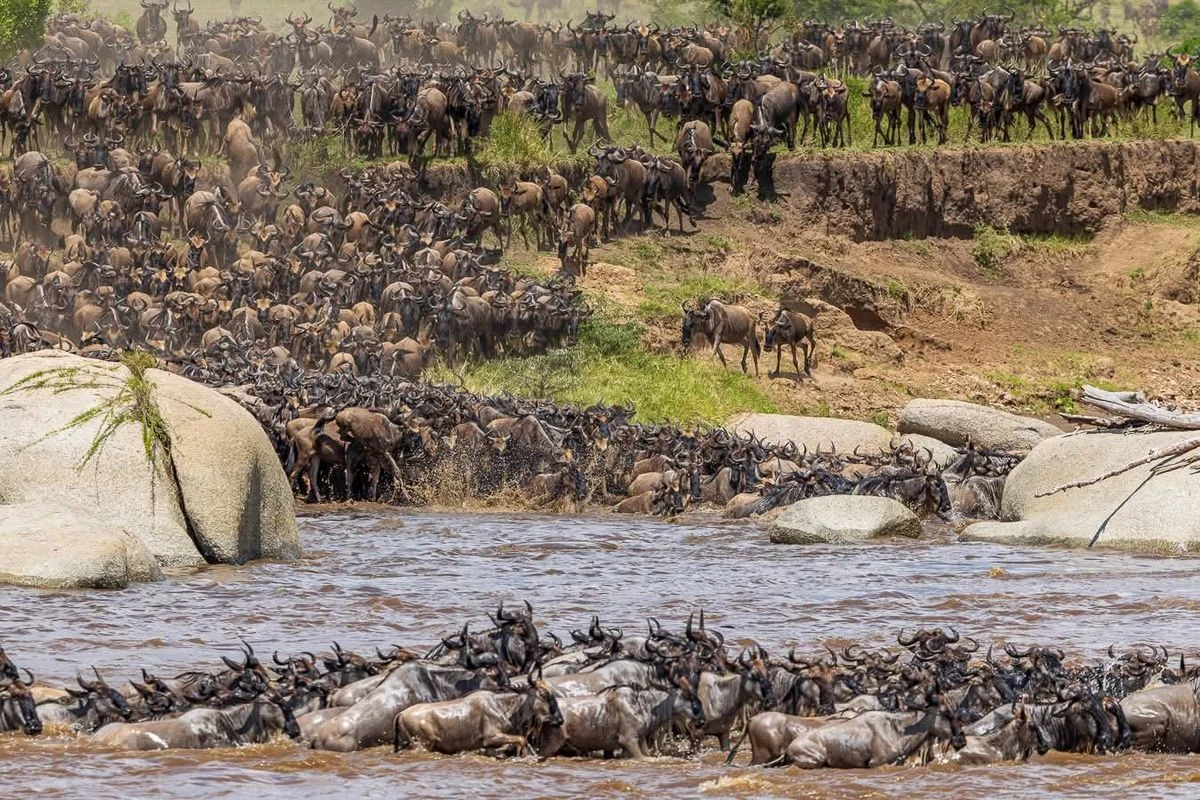
Although river crossings cannot be guaranteed, this is one of the best periods to witness dramatic attempts by thousands of wildebeest to cross crocodile-filled waters.
Dry conditions also produce excellent wildlife sightings in Ngorongoro Crater, Tarangire, and Lake Manyara.
August is best known for:
- Mara River crossings
- Great Migration safaris
- Predator encounters
- Dry season wildlife viewing
- Luxury safari holidays
Tanzania in September
September combines excellent wildlife viewing with slightly fewer visitors than August. Water becomes increasingly scarce across many ecosystems, encouraging large concentrations of herbivores around permanent rivers and waterholes.
Predator activity remains consistently high, while cooler mornings provide comfortable conditions for extended game drives.
Many experienced safari travellers consider September one of the most balanced months for visiting Tanzania.
September is ideal for:
- Wildlife enthusiasts
- Serious photographers
- Private safaris
- Big Five viewing
- Comfortable safari weather
Tanzania in October
October is the final month of the dry season before the arrival of the short rains. Wildlife remains highly concentrated, making game viewing particularly rewarding.
The dry landscapes create dramatic contrasts between golden grasslands and blue African skies, producing striking photography opportunities.
As temperatures gradually rise toward the end of the month, animals continue gathering around remaining water sources, often creating memorable wildlife encounters.
October is recommended for:
- Big Five safaris
- Wildlife photography
- Great Migration
- Luxury safaris
- Couples travelling outside peak holiday periods
Tanzania in November
November welcomes the arrival of the short rains, although rainfall usually occurs as scattered showers rather than prolonged storms. Fresh grazing begins appearing across the Serengeti ecosystem, encouraging migratory herds to move south.
The landscape rapidly transforms from golden plains to vibrant green scenery, offering a completely different safari atmosphere from the dry season.
Visitor numbers decrease, making November attractive for travellers seeking greater privacy during game drives.
November is ideal for:
- Green season safaris
- Birdwatching
- Scenic photography
- Quiet private safaris
- Great Migration movement
Tanzania in December
December combines festive holiday travel with excellent wildlife viewing. Early in the month, migratory herds continue moving toward the southern Serengeti, where preparations for the calving season begin.
Green landscapes, pleasant temperatures, and active wildlife make December an excellent choice for travellers combining a safari with a beach holiday in Zanzibar.
Christmas and New Year departures are particularly popular, so advance reservations are recommended.
December is perfect for:
- Family holidays
- Christmas safaris
- Safari and Zanzibar combinations
- Birdwatching
- Beginning of the calving season
Quick Month-by-Month Summary
| MonthWildlife ViewingGreat MigrationBirdwatchingPhotographyCrowds | |||||
| January | ★★★★★ | Southern Serengeti | Excellent | Excellent | Moderate |
| February | ★★★★★ | Calving Season | Excellent | Outstanding | Moderate |
| March | ★★★★☆ | Southern Serengeti | Excellent | Excellent | Low |
| April | ★★★☆☆ | Moving West | Outstanding | Outstanding | Very Low |
| May | ★★★★☆ | Western Corridor | Excellent | Excellent | Low |
| June | ★★★★★ | Central Serengeti | Very Good | Excellent | Moderate |
| July | ★★★★★ | Northern Movement | Good | Excellent | High |
| August | ★★★★★ | Mara River | Good | Excellent | High |
| September | ★★★★★ | Northern Serengeti | Good | Outstanding | Moderate |
| October | ★★★★★ | Northern Serengeti | Good | Excellent | Moderate |
| November | ★★★★☆ | Heading South | Excellent | Excellent | Low |
| December | ★★★★★ | Southern Serengeti | Excellent | Excellent | Moderate |
Expert Tip from Kilipori Safaris
One of the biggest mistakes travellers make is choosing their safari based solely on the calendar. Wildlife in Tanzania responds to rainfall, grazing conditions, and natural migration patterns—not fixed dates. A well-planned itinerary considers not only the month of travel but also the specific parks, wildlife experiences, and pace of your journey.
For example, two travellers visiting Tanzania in August can have completely different experiences depending on whether they spend their time following the Great Migration in northern Serengeti, exploring the elephant-rich landscapes of Tarangire, or enjoying the remote wilderness of southern Tanzania. Matching your itinerary to your interests is what transforms a good safari into an unforgettable one.
Best Time to See the Great Migration in Tanzania
The Great Migration is the most searched safari topic in Africa, but it is also one of the most misunderstood. Many travel guides present it as a fixed calendar of events—January in one place, July river crossings in another, October in the north—but in reality, the migration does not follow dates. It follows rainfall, grazing quality, and herd survival instincts.
More than 1.5 million wildebeest, accompanied by hundreds of thousands of zebras and gazelles, are constantly moving through the Serengeti–Mara ecosystem. The movement is not a circle on a map that resets each year; it is a living system that shifts slightly depending on seasonal rainfall patterns. This is why no two migration years are exactly identical.
Understanding the migration properly is the difference between a standard safari and a well-timed wildlife experience designed around real animal behaviour.
What Drives the Great Migration?
The migration is not triggered by a single event like river crossings or breeding seasons. It is driven by one primary factor:
Fresh grazing after rainfall.
When rains fall in one part of the ecosystem, grass begins to grow quickly. Wildebeest instinctively move toward these nutrient-rich areas. Once the grass is depleted or dries out, they move again.
Zebras often lead the movement because they feed on taller grass, followed by wildebeest who prefer shorter, fresh shoots. Gazelles follow in smaller groups, benefiting from the grazing patterns left behind.
Predators such as lions, cheetahs, hyenas, and crocodiles do not migrate with fixed timing either. They follow the herds, adjusting their territories based on prey availability.
This constant interaction between rain, grass, herbivores, and predators is what creates the dramatic wildlife scenes Tanzania is famous for.
The Migration Calendar (Realistic Safari Breakdown)
Instead of a rigid timeline, it is more accurate to understand the migration in four behavioural stages that shift slightly each year.
1. Calving Season (January – March)
Southern Serengeti & Ndutu Area
This is one of the most biologically intense periods in Africa.
After moving south in late November and December, the herds gather on the short-grass plains of southern Serengeti and Ndutu. These areas provide rich minerals that support rapid birth and early calf development.
Between late January and March:
- Hundreds of thousands of calves are born
- Most births happen within a short window
- Predators increase activity significantly
- Survival becomes a daily struggle for newborns
This stage is not about river crossings—it is about life beginning and survival pressure at its peak.
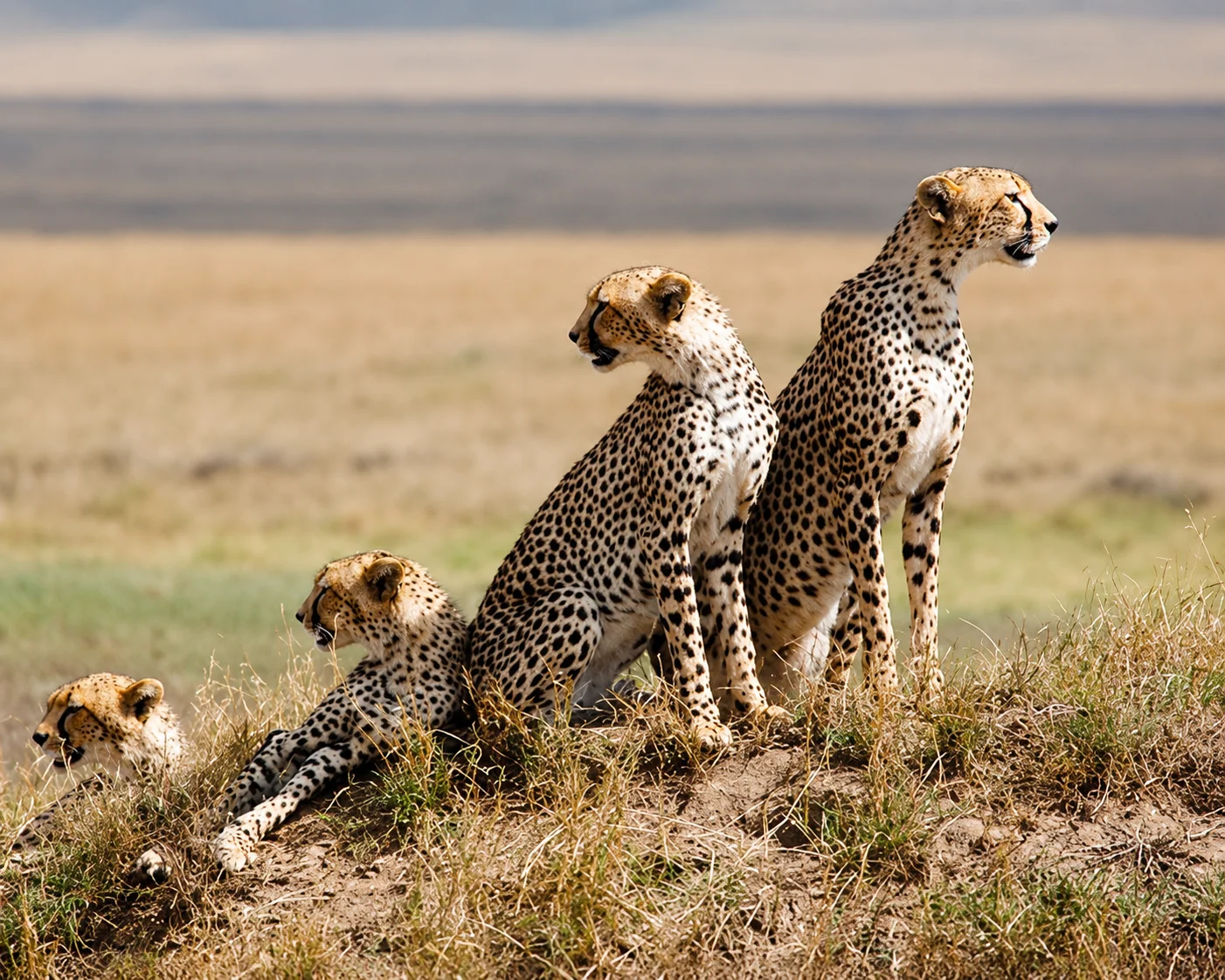
Cheetahs hunt in open plains, lions patrol nearby prides, and hyenas take advantage of vulnerable calves. This is one of the best times for action-focused safari photography.
Best for:
- Wildlife photographers
- Predator action
- First-time safari travellers
- Green season safaris
2. Long Rains Movement (April – May)
Central Serengeti & Western Corridor
As the long rains begin, the herds slowly start dispersing northwards and westwards.
The plains remain lush and green, and wildlife spreads out across a wider area. This makes sightings more unpredictable but also more natural and less crowded.
During this stage:
- Herds begin forming directional movement patterns
- Calves grow stronger and more mobile
- Predators continue following dispersed groups
- Landscapes are at their greenest
This is not a peak river crossing period, but it is an important transitional stage where the migration starts building momentum again.
Best for:
- Scenic photography
- Budget safaris
- Birdwatching
- Travellers avoiding crowds
3. Grumeti River & Western Corridor Stage (May – June)
Western Serengeti
As herds move toward the western Serengeti, they encounter the Grumeti River system. This is the first major obstacle of the annual migration cycle.
Although smaller than the Mara River, the Grumeti still contains large crocodile populations and creates dramatic crossing attempts—though less predictable and less concentrated than northern crossings.
During this stage:
- Herds gather in large but scattered groups
- River crossings may occur depending on rainfall
- Predators exploit bottlenecks near water sources
- Safari traffic is relatively low
This stage is often overlooked but offers excellent wildlife viewing without heavy crowds.
Best for:
- Experienced safari travellers
- Off-the-beaten-path safaris
- Predator sightings
- Private safari itineraries
4. Northern Serengeti & Mara River Crossings (July – October)
Northern Serengeti & Maasai Mara Border Region
This is the most famous stage of the Great Migration—but also the most unpredictable.
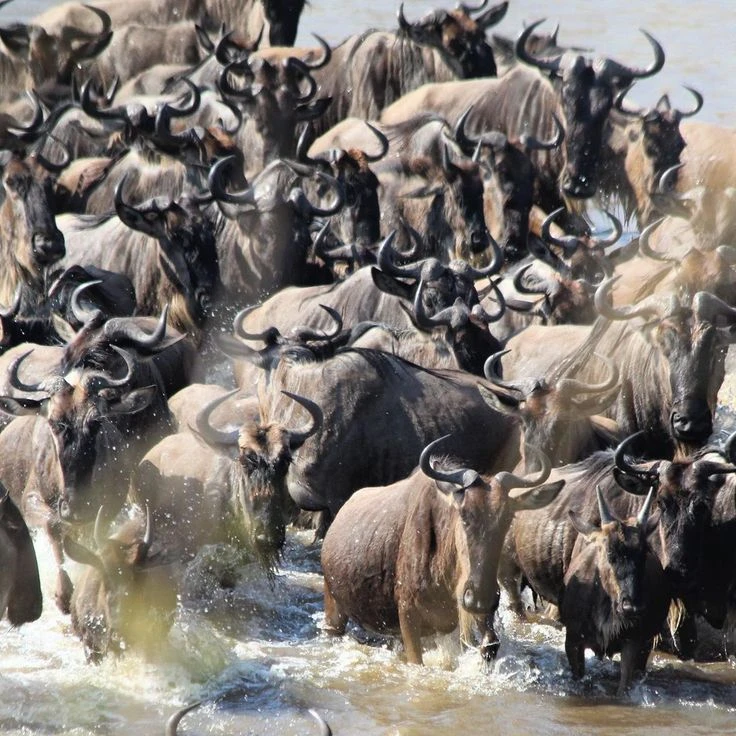
From July onwards, herds begin arriving in northern Serengeti. The Mara River becomes the central focus, where thousands of wildebeest gather and attempt dangerous crossings into Kenya’s Maasai Mara.
However, important detail:
👉 River crossings are not daily events.
👉 Herds may gather for hours or even days before crossing.
👉 Timing depends on water levels, predator pressure, and herd confidence.
When crossings do happen, they are among the most dramatic wildlife spectacles in the world:
- Crocodiles ambush crossing herds
- Stampedes occur under pressure
- Weak individuals struggle with currents
- Predators wait on both sides of the river
Even when crossings are not happening, the northern Serengeti remains exceptional for wildlife viewing, with resident predators, elephants, giraffes, and other species.
Best for:
- Migration river crossing safaris
- Luxury safari travellers
- Wildlife filmmakers
- High-impact safari experiences
5. Return South (October – December)
Northern to Central & Southern Serengeti
After the dry season peaks, the herds gradually begin moving south again as short rains return to the Serengeti ecosystem.
Fresh grass begins growing in southern regions, pulling the migration back toward Ndutu and the calving grounds.
During this stage:
- Herds move in long, flowing columns
- Predator interactions remain active
- Landscape begins turning green again
- Migration becomes more spread out
This is a transitional stage rather than a dramatic spectacle, but it offers peaceful safari conditions and excellent photography opportunities.
Best for:
- Shoulder-season safaris
- Landscape photography
- Fewer crowds
- Safari and Zanzibar combinations
Can You Guarantee River Crossings?
One of the most important truths about the Great Migration is this:
No safari company can guarantee river crossings.
Crossings depend entirely on animal behaviour and environmental conditions. Even being in the right location during peak months does not guarantee a crossing will happen during your stay.
However, experienced guides significantly increase your chances by:
- Tracking herd movement patterns
- Monitoring river conditions daily
- Positioning vehicles near known crossing points
- Adjusting itineraries based on real-time movement
This is where expertise matters more than timing alone.
Best Overall Months for the Great Migration
While the migration is present year-round in Tanzania, the most consistent viewing opportunities generally occur during:
- January – March: Calving season (southern Serengeti)
- July – October: Northern Serengeti river crossings
These two periods represent the most concentrated wildlife events, but they offer completely different experiences—one focused on birth and survival, the other on movement and danger.
Expert Insight from Kilipori Safaris
The biggest misconception about the Great Migration is that it is a fixed event that can be scheduled like a performance. In reality, it is a fluid ecosystem process shaped by rainfall and survival instincts.
A well-planned safari does not chase a date on the calendar—it follows the animals based on real movement patterns at the time of travel. This is why flexible itineraries and knowledgeable guiding make a significant difference in the quality of your experience.
At Kilipori Safaris, migration safaris are designed not just around months, but around behavioral zones—calving areas, river systems, and transitional corridors—so that travellers are positioned in the right ecosystem stage rather than relying on luck.
Best Time for Wildlife Viewing in Tanzania (Big Five & Predator Activity)
While the Great Migration dominates most discussions about Tanzania safaris, it is only one part of a much larger wildlife system. In reality, Tanzania offers outstanding game viewing throughout the year across multiple ecosystems, and some of the most reliable Big Five and predator sightings happen far away from migration routes.
Understanding the best time for wildlife viewing requires looking beyond herd movements and focusing on how animals behave under different water, grass, and temperature conditions. These environmental factors determine how easily wildlife can be seen, how predators hunt, and how animals interact within their habitats.
Unlike migration timing, which is location-specific, Big Five and predator viewing is influenced more by seasonal concentration vs dispersal patterns.
How Seasons Affect Wildlife Visibility
Wildlife visibility in Tanzania is largely determined by one key cycle:
Dry Season = Concentration Phase
Green Season = Dispersal Phase
During the dry season, water sources become limited, forcing animals to gather around predictable locations such as rivers, springs, and permanent waterholes. This creates high-density wildlife viewing opportunities.
During the green season, rainfall spreads water and grazing across wide areas, allowing animals to disperse more freely. Wildlife is still present, but sightings require more tracking and patience.
Both seasons offer value—but in different ways.
Best Season for Big Five Safaris
Tanzania is one of the few countries in Africa where all members of the Big Five (lion, leopard, elephant, buffalo, and rhino) can be seen within a single itinerary, especially in the northern circuit.
However, the ease of spotting them changes with the seasons.
1. Dry Season (June – October): Highest Visibility
The dry season is the most reliable period for Big Five sightings because animals concentrate around shrinking water sources.
Why it works so well:
- Vegetation is thinner, improving visibility
- Animals gather near rivers and waterholes
- Game drives cover predictable wildlife hotspots
- Tracking becomes easier for guides
Park-specific highlights:
Serengeti National Park
- Lions are highly active in open plains
- Leopards are easier to locate in riverine forests
- Large buffalo herds gather in visible groups
Ngorongoro Crater
- One of the best places in Africa to see all Big Five in one day
- Black rhino sightings are more reliable due to limited movement space
Tarangire National Park
- Massive elephant herds dominate the landscape
- Predator activity increases near river corridors
Key insight:
If your priority is maximizing Big Five sightings in a short time, the dry season offers the highest success rate.
2. Green Season (November – May): Behaviour-Focused Viewing
During the green season, wildlife spreads across wider areas due to abundant grazing and water availability.
Big Five animals are still present, but they are less concentrated.
What changes during this season:
- Lions hunt more actively due to widespread prey dispersal
- Leopards become more territorial in forested areas
- Elephants move in smaller, more flexible family groups
- Buffalo herds spread across multiple grazing zones
The advantage:
You observe natural behaviour rather than predictable clustering.
This is the season where:
- Predator-prey interactions feel more authentic
- Landscapes are greener and more dramatic
- Wildlife sightings are more varied and less crowded
Best Time for Predator Sightings
Predators in Tanzania respond directly to prey density, temperature, and visibility conditions.
Lions
Best months: June – October & January – March
Lions are most active when prey is concentrated or vulnerable.
- Dry season: Easier hunting due to limited water access
- Calving season: High activity due to newborn wildebeest
Key locations:
- Serengeti plains
- Ndutu region (during calving season)
- Ngorongoro Crater floor
Lions are territorial year-round, but visibility peaks during dry conditions.
Leopards
Best months: June – October (highest visibility)
Leopards are naturally elusive, but dry season improves spotting chances.
- Riverine forests become key hunting zones
- Reduced foliage improves tree visibility
- Early mornings and late afternoons are most productive
Key locations:
- Central Serengeti (Seronera Valley)
- Lake Manyara forests
- Ruaha River systems (southern circuit)
Leopards remain present year-round but require patience and expert tracking.
Cheetahs
Best months: January – March & June – October
Cheetahs prefer open landscapes where they can use speed to hunt.
- Calving season creates ideal hunting opportunities
- Dry season improves visibility across open plains
Key locations:
- Southern Serengeti (Ndutu)
- Central Serengeti plains
- Ruaha open grasslands
Cheetahs are highly sensitive to competition from lions and hyenas, so they are often seen in less crowded hunting zones.
Hyenas
Best months: Year-round activity, peak during calving season
Hyenas are among the most adaptable predators in Tanzania.
- Highly active during nighttime and early mornings
- Opportunistic hunters and scavengers
- Increased activity during wildebeest calving period
Key locations:
- Ndutu plains
- Serengeti ecosystem edges
- Ngorongoro Crater
Hyenas are one of the most consistently seen predators throughout the year.
Best Time for Elephant Viewing
Elephants are present year-round, but their behaviour and visibility vary significantly.
Dry Season (June – October): Peak Viewing
- Large herds gather around Tarangire River
- Family groups become more visible in open terrain
- Dust conditions make tracking easier for guides
Best location in Africa for elephants:
👉 Tarangire National Park
During peak dry months, elephant herds can number in the hundreds in a single area.
Green Season (November – May): Dispersed Movement
- Smaller family units spread across wider areas
- More natural behaviour patterns observed
- Calving within elephant herds increases interaction diversity
Best Time for Black Rhino Sightings
Black rhinos are critically endangered and highly protected in Tanzania.
Best location:
👉 Ngorongoro Crater
Best months:
- June – October (dry season improves visibility)
Because the crater is a contained ecosystem, rhino sightings are relatively consistent compared to other regions. However, they still require patience and experienced guiding.
Hidden Advantage: Night & Early Morning Drives
Across Tanzania, wildlife behaviour changes significantly outside midday hours.
Best wildlife activity periods:
- Early morning (6:00–9:00 AM)
- Late afternoon (4:00–7:00 PM)
- Night drives (select parks only)
These periods often produce:
- Predator hunting activity
- Reduced human presence
- Cooler temperatures increasing animal movement
Key Insight from Kilipori Safaris
Many safari guides focus only on “where to see animals.” However, professional guiding is equally about when animals are most active within a single day and across a season.
The best wildlife experiences in Tanzania are not determined only by month, but by:
- Water distribution patterns
- Grass height and grazing pressure
- Predator territorial behaviour
- Temperature cycles
- Human vehicle density in specific regions
A well-designed safari itinerary uses these patterns to position travellers in high-probability wildlife zones, rather than relying on chance sightings.
Best Time for Birdwatching in Tanzania
Birdwatching in Tanzania is often underestimated by safari planners who focus only on large mammals. Yet Tanzania is one of Africa’s most rewarding birding destinations, with more than 1,100 recorded bird species, including endemics, migratory visitors from Europe and Asia, and highly specialized wetland and forest species.
What makes Tanzania especially unique is not just the number of species, but the seasonal shift in bird behavior, breeding cycles, and migration timing, which transforms the experience throughout the year. Unlike big game viewing, birdwatching often becomes more rewarding when rainfall increases and landscapes turn green.
For serious birders, the idea that the dry season is always “best” is misleading. In fact, some of Tanzania’s most spectacular birding happens during the Green Season (November to May) when migratory species arrive and resident birds enter breeding plumage.
Why Tanzania Is a World-Class Birding Destination
Tanzania sits at the intersection of multiple ecological zones:
- East African savannah ecosystems
- Rift Valley lakes and wetlands
- Coastal mangroves and Indian Ocean habitats
- Mountain forests (including Kilimanjaro slopes)
- Acacia woodlands and riverine forests
This diversity creates habitats for:
- Raptors (eagles, hawks, vultures)
- Waterbirds (flamingos, pelicans, storks)
- Forest specialists (turacos, hornbills)
- Endemic species (found only in Tanzania or East Africa)
- Palearctic migrants from Europe and Asia
Because of this variety, birding in Tanzania is not concentrated in a single park or season—it changes depending on rainfall, water levels, and breeding cycles.
Best Season for Birdwatching in Tanzania
1. Green Season (November – May): Peak Birding Period
The Green Season is widely considered the best time for birdwatching in Tanzania, and for good ecological reasons.
During this period:
- Migratory birds arrive from Europe and Asia
- Resident birds enter breeding plumage (brighter colours)
- Insect populations increase, supporting bird activity
- Wetlands, rivers, and lakes expand
- Forest and woodland habitats become more active
What you will experience:
Migratory Species Arrival (November – April)
Tanzania welcomes a large number of seasonal visitors, including:
- European bee-eaters
- Steppe eagles
- Barn swallows
- Various warblers and wagtails
These species dramatically increase bird diversity across savannah and wetland ecosystems.
Breeding Plumage & Courtship Behaviour
One of the most visually rewarding aspects of this season is breeding activity.
Birds display:
- Brighter plumage colours
- Courtship dances and territorial displays
- Nest building behaviour
- Increased vocal activity
Species such as rollers, weavers, and hornbills become particularly active and visible.
Best Birding Locations During Green Season
Lake Manyara National Park
- High concentration of waterbirds
- Flamingos, pelicans, storks, and herons
- Forest bird species along groundwater forests
Ngorongoro Conservation Area
- Highland forest species
- Endemic and rare sightings
Tarangire National Park
- Large variety of woodland birds
- Migratory species in river valleys
Southern Tanzania (Ruaha & Nyerere)
- Less crowded, highly diverse bird habitats
- Excellent for serious birders
2. Dry Season (June – October): Stable & Predictable Birding
While the Green Season offers diversity, the Dry Season provides visibility and consistency, making bird identification easier.
Key advantages:
- Birds concentrate around permanent water sources
- Foliage becomes thinner, improving visibility
- Raptors are easier to spot while soaring
- Roads are more accessible for remote birding areas
Birding style during dry season:
- Fewer species than green season, but easier to observe
- Better conditions for photography (clear skies)
- Raptors become more visible due to thermal currents
Best dry season birding locations:
Tarangire National Park
- One of the most reliable birding destinations year-round
- Large concentration of raptors and savannah species
Serengeti National Park
- Open plains make spotting large birds easier
- Secretary birds, ostriches, and raptors frequently seen
Ngorongoro Crater
- Stable ecosystems allow consistent sightings
- Good for waterbirds and scavengers
Wetlands & Flamingo Cycles (Lake Natron & Lake Manyara)
Tanzania’s Rift Valley lakes are critical birding ecosystems, especially for flamingos.
Lake Natron (Flamingo Breeding Site)
Best time: July – October (dry conditions for nesting)
Lake Natron is one of the most important flamingo breeding sites in East Africa. When conditions are stable, thousands of lesser flamingos gather here to breed.
Key highlights:
- Large breeding colonies
- Pink shoreline formations
- Unique alkaline lake ecosystem
- Highly specialized birdlife adapted to extreme conditions
This is one of the most visually striking birding experiences in Africa.
Lake Manyara (Flamingos & Waterbirds)
Best time: November – May (wet season expansion)
During wetter months:
- Water levels rise
- Flamingos feed in shallow areas
- Pelicans, storks, and herons increase in number
- Tree-climbing lions may also be observed
Lake Manyara becomes a dense wetland ecosystem with high bird density in a relatively small area.
Raptors: Tanzania’s Most Dramatic Birding Experience
Tanzania is especially strong in raptor diversity, including:
- Martial eagles
- African fish eagles
- Bateleur eagles
- Tawny eagles
- Vultures (multiple species)
Best viewing period:
- June – October (dry season thermals improve soaring visibility)
- Early mornings and late afternoons are most active
Raptors are easier to spot when vegetation is sparse and air currents allow extended flight patterns.
Forest & Endemic Bird Species
Tanzania’s forests, especially in the Eastern Arc Mountains and highland zones, support rare and localized species.
Key regions:
- Ngorongoro Highlands
- Kilimanjaro foothills
- Usambara Mountains (outside main safari circuits)
Best season:
- November – May (breeding activity increases visibility)
Forest birding requires patience, but it often rewards travellers with unique sightings not found in savannah ecosystems.
Birdwatching by Month (Simple Pattern)
- Nov – Apr: Maximum species diversity (migrants + breeding activity)
- May – Jun: Transitional period, still high activity
- Jul – Oct: Best visibility and raptor viewing
- All year: Resident species present across major parks
Expert Insight from Kilipori Safaris
Birdwatching in Tanzania is not a secondary safari activity—it is a parallel ecosystem experience that changes completely with rainfall cycles.
Many travellers miss the most rewarding birding simply because they assume wildlife viewing is only about large mammals. In reality, Tanzania’s birdlife often becomes more dynamic and visually impressive during the green season, when breeding behavior and migration overlap.
A well-designed safari itinerary balances both:
- Big game viewing in open plains
- Wetland ecosystems for waterbirds
- Forest zones for rare species
- Seasonal timing for migratory birds
This layered approach creates a far richer safari experience than focusing only on the “Big Five season.”
Best Time for Photography in Tanzania
Tanzania is not just a safari destination—it is a light-driven photography environment where every season changes the way landscapes, wildlife, and atmosphere appear through the lens. Unlike destinations where photography conditions remain relatively stable year-round, Tanzania offers a constantly shifting visual palette shaped by rainfall, dust levels, vegetation density, and animal behavior.
This is why professional wildlife photographers do not ask only “when is the best time to visit Tanzania?” They ask a more specific question:
“What kind of light, contrast, and wildlife behavior do I want in my frame?”
Understanding this difference is what separates average safari photos from publication-level wildlife imagery.
How Seasons Shape Photography in Tanzania
Tanzania offers two dominant photography environments:
Dry Season (June – October)
- High contrast lighting
- Dust-enhanced golden sunsets
- Clear wildlife silhouettes
- Concentrated animal behavior
Green Season (November – May)
- Rich saturated landscapes
- Dramatic cloud formations
- Reflective surfaces after rain
- Behaviour-focused wildlife scenes
Both are visually powerful—but in completely different ways.
1. Dry Season Photography (June – October)
The dry season is the most popular period for wildlife photography because of clarity, predictability, and concentration of subjects.
Light Quality & Atmosphere
During the dry season:
- Skies are generally clear and deep blue
- Sunrises are crisp with defined horizons
- Sunsets produce warm golden tones
- Dust in the air enhances color intensity
The slightly dusty atmosphere acts as a natural diffuser, creating cinematic lighting conditions—especially in the early morning and late afternoon.
Wildlife Behavior for Photography
Dry conditions force animals to gather around limited water sources, creating strong photographic opportunities:
- Lions resting near open plains or shaded trees
- Elephants walking in long visible lines toward rivers
- Buffalo herds forming dense, textured groups
- Predators positioned near predictable hunting areas
This concentration of wildlife improves your chances of capturing:
- Action shots
- Predator-prey interactions
- Clean, unobstructed compositions
Best Dry Season Photography Locations
Serengeti National Park
- Open plains ideal for long-distance compositions
- Predator visibility increases significantly
Ngorongoro Crater
- High density of wildlife in a contained environment
- Excellent for Big Five framing in a single frame
Tarangire National Park
- Elephant herds against baobab silhouettes
- Strong vertical composition opportunities
Dry Season Photography Strengths
- High probability of iconic wildlife shots
- Predictable animal movement
- Excellent telephoto conditions
- Clean compositions with minimal vegetation clutter
2. Green Season Photography (November – May)
The Green Season is often underestimated, but among professional photographers it is considered the most creative and visually dynamic period in Tanzania.
This is the season where landscapes become part of the story—not just the background.
Landscape Transformation
After seasonal rains:
- Grasslands turn deep green
- Wildflowers appear across plains
- Rivers and pools reflect the sky
- Clouds build dramatic layered skies
This creates a completely different photographic identity compared to the dry season.
Light & Weather Conditions
Green season light is:
- Softer and more diffused due to cloud cover
- Less harsh midday exposure
- Highly dramatic during storm formation
- Rich in contrast after rainfall
Storm clouds often create some of the most dramatic safari images in Africa, especially when combined with wildlife silhouettes.
Wildlife Photography Opportunities
This season focuses less on concentration and more on behavior and storytelling:
- Wildebeest calving scenes (January–March)
- Predator action in open green plains
- Baby animals taking first steps
- Birds in breeding plumage
- Herd movement across vast green landscapes
Instead of static compositions, you capture life cycles and movement stories.
Best Green Season Photography Locations
Southern Serengeti (Ndutu)
- Calving season action shots
- Predator interactions
Lake Manyara
- Flamingos and water reflections
- Forest wildlife in lush backgrounds
Tarangire
- Green landscapes with elephant herds
- Strong contrast between trees and open grasslands
Green Season Photography Strengths
- Dramatic skies and storm formations
- Vibrant natural colors
- Fewer safari vehicles in frame
- Unique wildlife behavior (calving season)
- Strong storytelling compositions
3. The Calving Season (January – March): Peak Action Photography
For action-focused wildlife photography, this is one of the most important periods in Africa.
During this time:
- Thousands of wildebeest calves are born daily
- Predators are highly active and visible
- Constant movement across open plains
This creates rare opportunities for:
- Chase sequences (cheetahs hunting)
- Predator interactions
- Newborn wildlife portraits
- Emotional wildlife storytelling
Ndutu becomes one of the most photogenic wildlife zones in the world during this window.
4. River Crossings Photography (July – October)
River crossings are among the most dramatic photography subjects in Tanzania—but also the most unpredictable.
When conditions align:
- Massive herds gather at riverbanks
- Crocodiles lie in ambush
- Dust and movement create dynamic scenes
- Lighting changes rapidly depending on time of day
However, crossings cannot be scheduled. Photographers often spend hours or days waiting for the right moment.
Even without crossings, northern Serengeti offers:
- Strong predator presence
- Scenic river landscapes
- Herd movement compositions
5. Best Light Times for Photography (All Year)
Regardless of season, Tanzania follows a consistent daily photography rhythm:
Early Morning (6:00 – 9:00 AM)
- Soft golden light
- Active predator behavior
- Cooler temperatures
Late Afternoon (4:00 – 7:00 PM)
- Warm directional light
- Long shadows for depth
- Increased animal movement
Midday
- Harsh light (less ideal for photography)
- Better for rest or travel between locations
6. Shoulder Seasons: The Hidden Advantage
The most underrated photography periods in Tanzania are:
- Late May
- Early June
- Late October
- Early November
During these times:
- Landscapes transition between dry and green states
- Lighting conditions are highly dynamic
- Tourist numbers are lower
- Wildlife behavior is less predictable but more natural
These months often produce unique, non-standard safari imagery.
Expert Insight from Kilipori Safaris
Great safari photography in Tanzania is not defined by equipment alone—it is defined by timing, patience, and environmental understanding.
Most travellers focus on what animals they will see. Professional photographers focus on:
- Where the light is strongest
- How weather will shape behavior
- How landscapes will frame subjects
- How animal density affects composition
A well-planned photography safari is not about chasing the most famous month—it is about positioning yourself in the right ecosystem stage for the kind of images you want to create.
Best Time for Family Safaris in Tanzania
A family safari in Tanzania is not just about seeing wildlife—it is about creating a travel experience that works for different ages, energy levels, attention spans, and comfort needs at the same time. Unlike specialist safaris (photography, birding, or migration-focused trips), family travel requires a balance between reliable wildlife viewing, short travel distances, predictable weather, and flexible daily schedules.
Because of this, the “best time” for a family safari is not only about wildlife concentration. It is about when Tanzania offers the smoothest combination of road conditions, animal visibility, and comfortable weather patterns for children and parents alike.
What Makes a Season Family-Friendly?
A family-friendly safari season is defined by four practical factors:
1. Predictable Wildlife Viewing
Children benefit from shorter game drives with higher chances of sightings.
2. Comfortable Weather Conditions
Extreme heat or heavy rain can reduce enjoyment and flexibility.
3. Easy Park Accessibility
Good road conditions reduce long, tiring transfers.
4. Flexible Safari Rhythm
Shorter drives, rest time at lodges, and fewer logistical disruptions.
1. Best Overall Season for Families: June – October (Dry Season)
The dry season is widely considered the most reliable and comfortable time for family safaris in Tanzania.
Why it works so well for families
During this period:
- Wildlife gathers around water sources → easier sightings
- Roads are dry and easy to travel
- Fewer interruptions from rain
- Cooler mornings and pleasant evenings
- Shorter search time for animals
This means children spend less time “waiting” and more time actually seeing wildlife.
Wildlife experience for families
The dry season makes safari viewing more “instant”:
- Elephants are easy to spot near rivers in Tarangire
- Lions are often seen resting in open areas of Serengeti
- Giraffes and zebras are visible in large numbers across plains
- Ngorongoro Crater offers near-guaranteed Big Five sightings in a single day
This predictability is especially important for younger children who may lose interest during long, low-sighting drives.
Best family-friendly parks during dry season
Serengeti National Park
- Open landscapes = easy wildlife spotting
- Flexible game drive routes
Ngorongoro Crater
- Compact ecosystem → short drives, high reward
- Excellent for one-day Big Five experience
Tarangire National Park
- Large elephant herds in visible zones
- Less crowded than Serengeti
Family advantages of dry season
- Fewer weather disruptions
- Easier logistics between parks
- Better road conditions for long-distance travel
- More predictable daily safari planning
2. Green Season Family Safaris (November – May)
The Green Season is often overlooked for families, but it can be a highly rewarding experience for the right type of travellers.
What changes during this season
- Landscapes become lush and green
- Wildlife disperses across wider areas
- Short afternoon rains may occur
- Birdlife becomes highly active
While this reduces predictability slightly, it increases visual richness and natural storytelling experiences.
Why some families choose Green Season
This period is ideal for families who prefer:
- Fewer safari vehicles in parks
- Lower accommodation prices
- More relaxed safari pacing
- Unique wildlife experiences like calving season (Jan–Mar)
Calving Season advantage (January – March)
For families with older children, this is one of the most educational safari periods in Africa:
- Thousands of wildebeest calves are born daily
- Predators are highly active and visible
- Natural survival behavior is clearly observable
It is not just a safari—it becomes a real-life wildlife education experience.
Considerations for families
- Occasional rain may interrupt game drives
- Some roads may become muddy in remote areas
- Wildlife sightings may require more patience
However, experienced guides adjust routes to ensure comfort and safety.
3. Best Time for School Holiday Safaris
Many international families plan Tanzania safaris around school breaks. The most common periods are:
December – January Holidays
- Good wildlife viewing in southern Serengeti
- Green landscapes
- Combined safari + Zanzibar trips possible
June – August Holidays
- Peak dry season safari conditions
- Excellent Big Five visibility
- High demand → early booking required
Both periods are strong, but they offer different experiences:
- June–August = predictable wildlife + dry comfort
- Dec–Jan = greener scenery + calving potential
4. Best Parks for Family Safaris (All Seasons)
Some parks in Tanzania are naturally better suited for families regardless of season.
Ngorongoro Crater (Top Family Choice)
- High density of wildlife in a small area
- Short game drives (2–5 hours)
- High chance of seeing Big Five in one visit
This is one of the easiest safari environments for children.
Tarangire National Park
- Famous for elephant herds
- Less crowded than Serengeti
- Strong visual wildlife experience
Serengeti National Park
- Best for longer family itineraries
- Wide landscapes and iconic wildlife scenes
- Flexible pacing depending on lodge location
Lake Manyara National Park
- Compact park with forest and lake ecosystems
- Good for shorter safari days
- Flamingos and tree-climbing lions
5. Recommended Family Safari Duration
The most effective family safari lengths are:
- 4–5 days: Short, focused Northern Circuit safari
- 6–8 days: Balanced safari including Serengeti + Ngorongoro + Tarangire
- 9+ days: Relaxed pace with optional Zanzibar beach extension
Shorter, well-planned itineraries often perform better for families than long, exhausting routes.
Expert Insight from Kilipori Safaris
Family safaris are not about seeing the most animals—they are about creating consistent engagement, comfort, and memorable shared experiences across different age groups.
The most successful family safaris in Tanzania are designed with:
- Shorter driving times between parks
- High-probability wildlife zones (not remote speculation routes)
- Flexible daily schedules
- Rest time between game drives
In practice, the best season depends less on wildlife density alone and more on how smoothly the safari experience flows from one day to the next.
A well-designed itinerary ensures that children remain engaged, parents remain relaxed, and wildlife encounters happen frequently enough to maintain excitement throughout the journey.
Best Time for Honeymoon Safaris in Tanzania
A honeymoon safari in Tanzania is not defined by the number of animals seen—it is defined by privacy, atmosphere, emotional pacing, and the feeling of having the wilderness to yourselves. Unlike standard safaris, where timing is mostly about wildlife density, honeymoon travel is shaped by something more subtle: how the landscape feels, how busy the parks are, and how smoothly each day unfolds without pressure or crowds.
Tanzania is one of the few destinations where you can combine intimate safari lodges, untouched wilderness, and Indian Ocean beaches in a single journey. But the experience varies significantly depending on the season you choose.
What Makes a Season Ideal for Honeymoon Safaris?
A honeymoon-friendly safari season is not only about weather. It is defined by four emotional and logistical factors:
1. Privacy in the Parks
Fewer vehicles at sightings and quieter lodge environments.
2. Romantic Atmosphere
Soft light, dramatic landscapes, and calm safari pacing.
3. Flexible Itineraries
Time to slow down instead of rushing between locations.
4. Seamless Safari + Beach Combination
Easy transition between Serengeti and Zanzibar or the coast.
1. Best Overall Honeymoon Season: June – October (Dry Season)
The dry season is the most popular honeymoon period in Tanzania because it delivers a balance of comfort, exclusivity, and consistently strong wildlife viewing.
Why couples prefer this season
During this period:
- Weather is stable and predictable
- Roads are in excellent condition
- Wildlife viewing is highly reliable
- Sunsets are warm and visually dramatic
- Safari logistics are smooth and stress-free
For honeymooners, this creates a sense of ease—no uncertainty, no disruptions, just uninterrupted time together in the wilderness.
Romantic safari atmosphere in dry season
The dry season creates a distinct aesthetic:
- Golden grasslands at sunset
- Clear skies ideal for stargazing
- Wildlife silhouettes against open plains
- Calm mornings with soft light
Even simple moments—coffee at sunrise, or an evening game drive—feel cinematic.
Best honeymoon parks in dry season
Serengeti National Park
- Private luxury camps in remote areas
- Sunset game drives across open plains
- High chance of exclusive wildlife sightings
Ngorongoro Crater
- Dramatic volcanic landscape
- High density of wildlife in a compact area
- Ideal for a one-day romantic safari experience
Tarangire National Park
- Quiet, less crowded than Serengeti
- Elephant herds and baobab landscapes
- Strong sense of wilderness privacy
Dry season honeymoon highlights
- Hot air balloon safaris over Serengeti
- Private bush dinners under stars
- Sundowner experiences in remote viewpoints
- Easy combination with Zanzibar beach escape
2. Green Season Honeymoon Safaris (November – May)
The Green Season is the most underrated honeymoon period in Tanzania, especially for couples who prioritize exclusivity, atmosphere, and visual richness over predictable wildlife density.
What makes it special for couples
During this season:
- Parks are quieter with fewer safari vehicles
- Landscapes are lush, green, and photogenic
- Lodges often offer better availability and privacy
- Wildlife behavior feels more natural and less staged
This season feels more intimate because you are not sharing the wilderness with large numbers of other travelers.
Romantic landscape experience
The Green Season creates a completely different mood:
- Dramatic storm clouds over open plains
- Fresh green grasslands after rain
- Reflective water pools and rivers
- Soft, diffused lighting for photography
It is a more emotional and atmospheric version of Tanzania.
Calving season advantage (January – March)
For honeymooners who also want wildlife drama, this is one of the most powerful periods in Africa.
In southern Serengeti and Ndutu:
- Thousands of wildebeest calves are born
- Predator interactions increase significantly
- Wildlife activity is constant and intense
This creates a rare combination of:
romance + raw wilderness energy
Considerations for honeymooners
- Some short rains may occur (usually brief)
- Wildlife is more spread out in some regions
- Travel planning requires experienced guiding
However, these are usually outweighed by the privacy and exclusivity benefits.
3. Best Time for Zanzibar + Safari Honeymoon Combination
Most honeymoon safaris in Tanzania are paired with Zanzibar, so timing matters for both safari and beach conditions.
Best combination periods
June – October (Dry Season + Zanzibar peak beach season)
- Ideal weather on both safari and coast
- Calm ocean conditions
- Excellent visibility for marine activities
January – March (Green Season + warm tropical beaches)
- Lush safari landscapes
- Hot, tropical beach conditions
- Excellent for romantic resort stays
Why this combination is powerful
Tanzania allows couples to experience two completely different environments:
- Safari: raw wilderness, wildlife, adventure
- Zanzibar: ocean, relaxation, privacy, luxury
This contrast is what makes honeymoon itineraries in Tanzania so unique.
4. Most Romantic Safari Experiences in Tanzania
Regardless of season, certain experiences consistently define honeymoon safaris:
Private Game Drives
Exclusive vehicle use with flexible timing.
Hot Air Balloon Safari (Serengeti)
Sunrise flight over wildlife-rich plains followed by champagne breakfast.
Bush Dinners
Private dining setups in remote wilderness areas.
Sundowners
Evening drinks in scenic viewpoints during golden hour.
Luxury Tented Camps
Intimate camps designed for privacy and atmosphere.
5. Shoulder Seasons: The Hidden Honeymoon Advantage
The most quietly powerful honeymoon timing periods are:
- Late May
- Early June
- Late October
- Early November
During these transitions:
- Fewer tourists in parks
- Lower lodge occupancy
- Balanced weather conditions
- Excellent photography light
These months often provide the best privacy-to-experience ratio.
Expert Insight from Kilipori Safaris
A honeymoon safari is not about maximizing wildlife sightings—it is about designing emotional space within nature.
The most successful honeymoon itineraries are not the busiest or most ambitious. They are the ones that:
- Reduce unnecessary movement between parks
- Prioritize private and remote camps
- Balance safari intensity with relaxation time
- Match wildlife timing with comfort and atmosphere
In practice, the “best time” for a honeymoon in Tanzania is not a single month—it is the season that best aligns with your preferred balance of privacy, climate, and experience style.
Best Time for Budget Safaris in Tanzania
A budget safari in Tanzania is not simply about choosing the cheapest month—it is about choosing the right season where wildlife experience remains strong while accommodation demand, park traffic, and operational costs naturally decrease.
Unlike luxury safari planning, where exclusivity is always prioritized, budget travel depends heavily on seasonal pricing cycles and lodge occupancy levels. Tanzania has clear seasonal patterns that directly influence safari costs without necessarily reducing wildlife quality.
In fact, some of the most rewarding safari experiences happen during periods when prices are lower but the parks feel more natural and less crowded.
How Safari Prices Change in Tanzania
Safari costs in Tanzania are influenced by three main seasonal factors:
1. Park Demand (High vs Low Season)
When demand increases, lodge and flight prices rise significantly.
2. Weather Risk Perception
Months associated with rain often have lower prices, even when wildlife viewing is still excellent.
3. Availability of Lodges and Camps
High-season months sell out early, reducing flexibility and increasing cost.
1. Best Overall Budget Season: March – May (Long Rains Season)
This is the lowest pricing period in Tanzania’s safari calendar, but also one of the most misunderstood.
Many travellers avoid these months due to expectations of heavy rain. In reality, rainfall is usually intermittent rather than continuous, and safaris still operate daily.
Why prices are lowest during this period
- Lower international tourist arrivals
- Reduced demand for lodges and camps
- Seasonal discounts across many safari properties
- Greater availability of vehicles and guides
This creates one of the best opportunities for high-value private safaris at reduced cost.
Wildlife experience during long rains
Even during this low season:
- Serengeti wildlife remains active
- Ngorongoro Crater offers consistent Big Five sightings
- Birdlife reaches its seasonal peak
- Landscapes are at their greenest and most photogenic
Animals do not leave Tanzania—they simply spread out more widely.
Advantages of budget travel in this season
- Lower safari package costs
- Fewer vehicles at sightings
- More flexible lodge availability
- Strong photographic conditions after rainfall
Considerations
- Some roads in remote areas may become muddy
- Occasional afternoon rain showers
- A few seasonal camps may close temporarily
However, experienced safari operators adjust routes daily to ensure smooth travel.
2. Shoulder Season Budget Opportunities
Some of the best value-for-money safaris occur during transition months:
Late May
- End of long rains
- Prices still low
- Landscapes remain green
Early June
- Beginning of dry season
- Wildlife visibility improving
- Still lower prices than peak July–August
Late October – Early November
- End of dry season / start of short rains
- Wildlife still concentrated
- Lower demand before peak December travel
These periods offer a rare combination of:
good wildlife + moderate weather + reduced pricing pressure
3. Green Season Value (November – March excluding peak holidays)
Outside of Christmas and New Year, the Green Season provides excellent budget safari opportunities.
What makes this period valuable
- Lower lodge occupancy rates
- Flexible safari itineraries
- High-quality wildlife experiences
- Strong photographic conditions
Wildlife highlights during value Green Season
- Calving season (January–March) in southern Serengeti
- Predator activity remains strong
- Migratory birds increase biodiversity
- Fresh green landscapes enhance scenery
Even though this period includes some rainfall, safari experiences remain rich and dynamic.
4. When Budget Travel Becomes More Expensive
Understanding peak pricing helps avoid unnecessary costs.
Peak high-cost periods:
- July – August (international holiday season)
- Christmas and New Year (mid-December – early January)
- Early September (migration peak in northern Serengeti)
During these times:
- Lodges sell out months in advance
- Prices increase significantly
- Availability becomes limited
These months are excellent for wildlife—but not ideal for budget travel.
5. Best Parks for Budget Safaris (Year-Round)
Some parks offer better value regardless of season:
Tarangire National Park
- Lower congestion than Serengeti
- Excellent elephant viewing
- Good lodge variety at different price levels
Lake Manyara National Park
- Compact park = lower travel costs
- Short game drives reduce vehicle usage cost
- Good for 1-day budget safaris
Ngorongoro Crater
- High wildlife density in a small area
- Efficient game drive (1–2 days maximum needed)
Southern Circuit (Nyerere & Ruaha)
- Naturally lower tourist density
- Often more affordable lodge options
- Authentic wilderness experience
6. Budget Safari Strategy (Expert Insight)
A successful budget safari in Tanzania is not about cutting wildlife experiences—it is about optimizing timing and itinerary structure.
The most effective cost-saving strategies include:
- Traveling during shoulder or green seasons
- Combining parks efficiently to reduce transfers
- Staying slightly outside peak migration zones
- Choosing mid-range lodges instead of peak-luxury camps
The biggest mistake budget travelers make is assuming that “cheaper season” means “worse safari.” In Tanzania, that is not true. Many of the most visually rich and behaviorally active wildlife moments occur during lower-cost months.
Expert Insight from Kilipori Safaris
Budget safaris in Tanzania work best when they are designed around seasonal value windows rather than discounted shortcuts.
A well-planned budget itinerary focuses on:
- High-density wildlife parks (Ngorongoro, Tarangire)
- Efficient routing to reduce travel costs
- Seasonal timing that balances price and wildlife activity
- Avoiding unnecessary peak-season surcharges
In many cases, travellers who choose the right low or shoulder season actually experience more authentic safari conditions than peak-season visitors, due to fewer vehicles and more natural wildlife behavior.
Best Time to Combine Tanzania Safari & Zanzibar
Combining a Tanzania safari with Zanzibar is one of the strongest travel patterns in East Africa, but it is also where most itineraries become unbalanced. The mistake many travellers make is planning the safari and beach as two separate experiences instead of one connected journey shaped by seasonal climate differences, ocean conditions, and wildlife timing.
Tanzania’s mainland safari regions and Zanzibar follow different weather systems. The safari circuit is influenced by inland rainfall patterns, while Zanzibar is shaped by Indian Ocean monsoon winds (Kaskazi and Kusi systems). Because of this, the “best time” is not identical for both destinations—and the ideal combination depends on which experience you want to prioritize.
How Safari and Zanzibar Seasons Differ
Before choosing dates, it is important to understand a key reality:
Tanzania Safari Climate
- Driven by rainfall (dry vs green seasons)
- Wildlife visibility changes with vegetation and water
Zanzibar Climate
- Driven by ocean winds and humidity cycles
- Beach conditions depend on sea clarity, wind strength, and tides
This means:
- A perfect safari month may not be the best beach month
- A perfect beach month may not align with peak migration timing
The goal is to find a balanced overlap window.
1. Best Overall Safari + Zanzibar Combination: June – October
This is the most reliable and widely recommended combination period for Tanzania.
Why this period works so well
During these months:
On Safari (Mainland)
- Dry season = excellent wildlife visibility
- Animals gather around rivers and waterholes
- Clear skies and stable travel conditions
- Peak Great Migration activity in northern Serengeti (July–October)
In Zanzibar
- Dry, sunny beach conditions
- Calm ocean with good visibility
- Excellent conditions for snorkeling and diving
- Lower humidity compared to wet months
This creates a high-consistency travel window across both destinations.
Safari experience during this period
- Big Five sightings are highly reliable
- Predator encounters are more predictable
- River crossings may occur (July–October)
- Photography conditions are strong due to clear light
Zanzibar experience during this period
- White sand beaches are at their best visually
- Ocean is clear and swimmable
- Water activities (diving, snorkeling) are excellent
- Sunset conditions are consistently strong
Who this season is best for
- First-time visitors to Tanzania
- Honeymoon couples seeking reliability
- Wildlife-focused travellers
- Luxury safari + beach itineraries
2. Best Green Season Combination: January – March
This is the most visually rich and emotionally dynamic safari + beach combination.
Safari experience (mainland)
- Calving season in southern Serengeti (Ndutu)
- Intense predator activity
- Green, dramatic landscapes
- High photographic value
Zanzibar experience
- Warm tropical beach conditions
- Occasional short rains (usually brief)
- Lush island vegetation
- Fewer tourists compared to peak dry season
Why this combination is special
This period creates a contrast:
- Safari = life, birth, and predator action
- Zanzibar = calm, warm ocean relaxation
It is especially popular for:
- Honeymoon safaris
- Photography-focused trips
- Couples seeking privacy
3. Shoulder Season Combination: Late May – Early June
This is one of the most underrated safari + beach windows in Tanzania.
Safari conditions
- End of long rains
- Landscapes still green and vibrant
- Wildlife starting to concentrate again
- Lower safari traffic
Zanzibar conditions
- Transition toward dry season
- Improving beach weather
- Fewer tourists
- Lower accommodation rates
Why it works
This period offers:
- Better pricing flexibility
- Fewer crowds in both destinations
- Balanced weather conditions
It is ideal for travellers who want value without sacrificing experience quality.
4. Short Rains Transition Combination: Late October – November
This is a transitional window between peak dry and green seasons.
Safari conditions
- Wildlife still visible from dry season concentration
- Short rains begin but are usually light
- Migration begins moving south again
Zanzibar conditions
- Humidity increases slightly
- Occasional rain showers
- Still good travel conditions overall
Why choose this period
- Lower prices than peak season
- Fewer tourists
- Good wildlife sightings continue
- More flexible safari availability
5. Months to Be Careful With (Safari + Zanzibar Balance)
Some months require more careful planning because one destination performs better than the other.
April – May
Safari:
- Long rains peak
- Some areas become less accessible
- Lower tourist numbers
Zanzibar:
- Heavier rainfall possible
- Humid conditions
👉 Best for budget-focused travellers, not ideal for first-time safari + beach combinations.
Late December (Christmas–New Year)
Safari:
- Peak holiday demand
- Higher pricing
- Busy parks
Zanzibar:
- Very high occupancy in resorts
- Limited availability
👉 Excellent experience, but requires early booking and higher budget.
6. Strategic Safari + Zanzibar Itinerary Planning
A well-balanced Tanzania trip is not just about timing—it is about sequencing the journey correctly.
Recommended order
Option 1 (Most common)
Safari → Zanzibar
- Builds excitement through wildlife first
- Ends with relaxation on the beach
Option 2 (Reverse luxury flow)
Zanzibar → Safari
- Soft introduction before adventure
- Popular for honeymooners seeking gradual pacing
Why sequence matters
- Safari requires early wake-ups and activity
- Zanzibar is best for relaxation and slow rhythm
- Proper sequencing improves travel comfort and emotional flow
Expert Insight from Kilipori Safaris
A successful safari + Zanzibar combination is not about choosing a single “best month”—it is about aligning two different climate systems into one smooth travel experience.
The strongest itineraries are built around:
- Dry season alignment for maximum wildlife reliability
- Green season pairing for emotional and visual contrast
- Shoulder season timing for value and privacy balance
Instead of treating Zanzibar as an add-on, the most effective approach is to design the journey as a two-environment narrative: the wilderness of the mainland followed by the ocean calm of the coast.
Best Time to Climb Mount Kilimanjaro
Climbing Mount Kilimanjaro is not just a trekking activity—it is a multi-climate expedition that moves through five ecological zones in a matter of days, from tropical rainforest to arctic summit conditions. Because of this, timing plays a much more critical role here than in most other safari experiences in Tanzania.
Unlike wildlife safaris where animals adapt to seasonal changes, Kilimanjaro climbing success depends heavily on trail conditions, visibility, precipitation levels, and summit night temperatures. Choosing the right season can significantly improve comfort, safety, and summit success rates.
However, there is no single “perfect month.” Instead, there are two main climbing windows that consistently offer the best balance of weather stability and visibility.
Understanding Kilimanjaro’s Climate Zones
Before choosing a season, it is important to understand what climbers actually experience:
- Rainforest Zone (Lower slopes): humid, wet, and slippery during rainy seasons
- Heather & Moorland Zone: cooler, misty, and windy
- Alpine Desert Zone: dry, exposed, high UV radiation
- Arctic Summit Zone (Uhuru Peak): freezing temperatures, strong winds, thin air
Weather patterns affect each zone differently, which is why summit success depends more on trail conditions and precipitation timing than temperature alone.
1. Best Overall Climbing Seasons (January – March & June – October)
These two periods are considered the most reliable for Kilimanjaro climbs.
A. January – March (Warm Climbing Season)
This is one of the most comfortable climbing windows on Kilimanjaro.
Key conditions:
- Warmer temperatures on lower slopes
- Clearer skies on many summit attempts
- Light to moderate foot traffic
- Occasional mist and light showers in rainforest zone
Why climbers choose this period
During these months:
- The mountain feels less harsh at lower altitudes
- Summit nights are cold but stable
- Visibility improves after early morning cloud breaks
- Photographic conditions are strong
This season is especially popular among:
- First-time climbers
- Couples and honeymoon trekkers
- Climbers who prefer slightly warmer conditions
Consideration
- Rainforest section may be damp in some weeks
- Clouds can build up in afternoon hours
However, summit success rates remain strong due to generally stable weather windows.
2. June – October (Dry Season Climbing Window)
This is the most popular and widely recommended Kilimanjaro climbing season.
Key conditions:
- Dry, stable weather across most routes
- Clear skies and strong summit visibility
- Firm, less slippery trails
- High success rates for summit attempts
Why this season is preferred
During this period:
- Trails are in their best physical condition
- Rainfall is minimal
- Summit views are often crystal clear
- Mountain photography is at its best
This is also the busiest climbing season, especially July–September.
Route conditions during dry season
Machame & Lemosho Routes
- Excellent visibility through rainforest and moorland zones
- Comfortable trekking conditions
Marangu Route
- Drier hut-to-hut trekking experience
- Less mud compared to rainy months
Consideration
- Higher number of climbers on popular routes
- Early booking required for guides and camps
3. Shoulder Season Climbing Windows (Hidden Advantage)
Some of the most underrated Kilimanjaro climbs happen during transition periods:
Late May
- End of long rains
- Fewer climbers on the mountain
- Green, lush lower slopes
Early June
- Transition into dry season
- Improving trail conditions
- Lower crowd density
Late October
- End of dry season
- Clear visibility still possible
- Fewer climbers than peak months
Why these months are valuable
- More peaceful mountain experience
- Lower logistical pressure on routes
- Strong photographic contrast between seasons
These windows are often preferred by experienced climbers who value solitude over peak-season crowds.
4. Rainy Seasons on Kilimanjaro (Not Recommended but Possible)
Kilimanjaro can still be climbed during rainy periods, but conditions become more challenging.
April – May (Long Rains)
- Heavy rainfall in rainforest zone
- Slippery and muddy trails
- Limited visibility on summit attempts
- Some operators reduce departures
However:
- Mountain is quieter
- Very few climbers on routes
- Green scenery is at its peak
November (Short Rains)
- Light to moderate showers
- Variable trail conditions
- Less crowded than peak season
Important insight
Rain does not make Kilimanjaro impossible—it makes it more demanding. Success depends more on guide experience and pacing than weather alone.
5. Summit Night Conditions (All Year Reality)
Regardless of season, summit night remains the most challenging part of the climb.
Typical conditions:
- Temperatures between -7°C and -20°C
- Strong winds above 4,500m
- Thin oxygen levels
- Slow, steady ascent required
The difference between seasons is not summit difficulty—it is:
- Trail comfort before summit night
- Visibility at the summit
- Overall fatigue levels during ascent
6. Best Time for Kilimanjaro + Safari Combination
Many travellers combine Kilimanjaro with a Tanzania safari. Timing both together improves the overall experience.
Best combinations:
June – October
- Kilimanjaro: dry climbing conditions
- Safari: peak wildlife viewing season
January – March
- Kilimanjaro: warmer climbing conditions
- Safari: calving season in Serengeti
This makes both periods highly efficient for combined itineraries.
Expert Insight from Kilipori Safaris
Kilimanjaro climbing success is not only determined by physical fitness—it is heavily influenced by weather timing, route selection, and acclimatization strategy.
The best climbing experiences are not necessarily during the most crowded peak months, but during periods when:
- Trail conditions are stable
- Cloud cover allows summit visibility
- Climbers can maintain steady pacing without environmental pressure
A well-planned climb focuses less on chasing “perfect weather” and more on choosing the right seasonal window for your comfort level, experience, and summit strategy.
Northern Circuit vs Southern Circuit by Season in Tanzania
Tanzania’s safari system is not a single continuous experience—it is split into two major wildlife regions that behave very differently throughout the year. Most travellers focus only on the Northern Circuit because it contains the Serengeti and Ngorongoro Crater, but the Southern Circuit offers a completely different style of safari that becomes especially powerful in certain seasons.
Understanding how these two circuits respond to rainfall, wildlife movement, and tourist pressure is essential for designing a safari that is not only well-timed, but also well-balanced in terms of crowds, wildlife density, and experience quality.
Rather than asking “which circuit is better,” the real question is:
Which circuit performs better in which season?
Overview of Tanzania’s Two Safari Circuits
Northern Circuit (Most Popular Route)
Includes:
- Serengeti National Park
- Ngorongoro Conservation Area
- Tarangire National Park
- Lake Manyara National Park
Key characteristics:
- High wildlife density
- Great Migration access (seasonal)
- Well-developed safari infrastructure
- Higher visitor numbers
Southern Circuit (Less Crowded Wilderness)
Includes:
- Nyerere National Park (Selous ecosystem)
- Ruaha National Park
- Mikumi National Park (gateway park)
Key characteristics:
- Remote, low-tourism wilderness
- Larger safari territories
- More natural, less vehicle congestion
- Strong predator populations in certain areas
1. Best Time for Northern Circuit Safaris
The Northern Circuit is active year-round, but its performance changes significantly depending on season.
June – October (Dry Season Peak Performance)
This is the strongest overall period for the Northern Circuit.
Why it works best:
- Wildlife concentrates around rivers and waterholes
- Serengeti offers high predator visibility
- Tarangire hosts massive elephant herds
- Ngorongoro Crater delivers near-guaranteed Big Five sightings
Migration advantage:
- July–October: Northern Serengeti river crossings (Mara River)
- Large predator activity follows migrating herds
Experience style:
- High wildlife density
- Predictable sightings
- Strong photography conditions
- Busy but efficient safari flow
January – March (Calving Season Strength)
This period transforms the southern Serengeti within the Northern Circuit ecosystem.
Key location:
- Ndutu (southern Serengeti)
Highlights:
- Massive wildebeest calving event
- High predator interaction frequency
- Open green plains ideal for photography
Experience style:
- Action-heavy wildlife viewing
- Strong storytelling opportunities
- Green landscapes with dramatic skies
April – May (Low Season Transition)
What happens:
- Heavy rains reduce road accessibility in some areas
- Wildlife disperses more widely
- Fewer tourists in parks
Advantage:
- Very low crowd density
- Lower safari costs
- High landscape richness
2. Best Time for Southern Circuit Safaris
The Southern Circuit behaves very differently from the north. It is less influenced by mass migrations and more defined by territorial wildlife, predator stability, and seasonal water access.
June – October (Absolute Peak Season)
This is the most reliable time for Southern Circuit safaris.
Why it works:
- Dry conditions concentrate animals around rivers
- Ruaha and Nyerere offer excellent predator sightings
- Road conditions are at their best
- Wildlife viewing becomes highly predictable
Key experiences:
Ruaha National Park
- Strong lion populations
- Large buffalo herds
- Remote wilderness atmosphere
Nyerere National Park
- Boat safaris on Rufiji River
- Elephants and hippos near water channels
- Wild, uncrowded safari experience
Experience style:
- Authentic wilderness safaris
- Fewer vehicles at sightings
- High predator encounter potential
November – March (Green Season Advantage)
The Southern Circuit becomes especially interesting during the Green Season.
Key changes:
- Landscapes turn lush and green
- Bird activity increases significantly
- Predator-prey interactions remain strong
Why it is underrated:
- Fewer tourists than Northern Circuit
- Strong photographic conditions
- Very low crowd density
April – May (True Wilderness Season)
During peak rains:
- Some remote areas become harder to access
- Wildlife spreads widely
- Parks feel extremely remote and untouched
This is the most “raw” safari experience in Tanzania.
3. Northern vs Southern Circuit by Season (Comparison)
| SeasonNorthern CircuitSouthern Circuit | ||
| Jan–Mar | Calving season, high drama | Good but less concentrated wildlife |
| Apr–May | Low season, rains affect travel | True wilderness, very quiet |
| Jun–Oct | Peak migration + Big Five | Best overall wildlife consistency |
| Nov–Dec | Migration transition, green landscapes | Excellent birding + low crowds |
4. How to Choose Between Circuits (Expert Strategy)
Choosing the right circuit is not about preference—it is about timing your safari around wildlife concentration patterns.
Choose Northern Circuit if you want:
- Great Migration experiences
- Big Five in a short time
- Iconic safari landscapes
- Well-structured itineraries
Choose Southern Circuit if you want:
- Fewer tourists
- More remote wilderness experience
- Boat safaris and off-road adventure
- Strong predator territories without crowds
Best strategy (recommended by guides)
Many high-quality itineraries combine both circuits:
- Northern Circuit = iconic wildlife + migration + structure
- Southern Circuit = wilderness depth + privacy + exclusivity
This creates a more complete understanding of Tanzania’s ecosystems.
Expert Insight from Kilipori Safaris
The difference between the Northern and Southern Circuits is not just geography—it is safari rhythm and density.
- The Northern Circuit is driven by migration and concentration of wildlife
- The Southern Circuit is driven by territory, solitude, and natural stability
A well-designed itinerary does not treat them as competing options. Instead, it uses seasonal timing to decide when each circuit delivers its strongest performance.
For example:
- Dry season = Northern Circuit dominance
- Green season = Southern Circuit depth and exclusivity
Understanding this balance is what allows travellers to experience Tanzania beyond the standard safari route.
When NOT to Visit Tanzania (And Why These Months Are Underrated)
Most “best time to visit Tanzania” guides avoid this topic or soften it into generic advice like “you can visit all year.” While that is technically true, it is not useful for planning a high-quality safari.
A more honest approach is to explain when travel becomes logistically challenging, when wildlife viewing changes in structure, and when certain expectations may not match reality. At the same time, it is equally important to understand that some of these “not recommended” periods are actually the most underrated safari windows in Tanzania for travellers who prioritize privacy, photography, and value.
There is no month in Tanzania where wildlife disappears. The real difference is accessibility, concentration, and comfort level.
1. April (Peak Long Rains) — Most Challenging Travel Month
April is often considered the most difficult month for safari travel in Tanzania due to sustained rainfall across many regions.
What actually happens in April
- Heavy and frequent rainfall in many parks
- Some dirt roads become difficult to navigate
- Certain seasonal camps temporarily close
- Wildlife spreads out due to abundant grazing
- Visibility can vary depending on daily weather
Why it is considered “not ideal”
- Some remote areas may require route adjustments
- Game drives may be shorter or more weather-dependent
- Photography can be affected by overcast conditions on some days
However, this does NOT mean safari quality is low.
The underrated reality of April
April is one of the most visually dramatic months in Tanzania:
- Deep green landscapes across Serengeti and Ngorongoro
- Fewer safari vehicles at sightings
- Atmospheric skies and post-rain light conditions
- Excellent bird activity in wetlands and forests
For experienced travellers, April offers a rare sense of true wilderness isolation.
2. May — Transitional “Hidden Value” Month
May is often overlooked because it sits between the long rains and dry season.
What happens in May
- Rainfall gradually decreases
- Landscapes remain green and rich
- Wildlife begins to re-concentrate slowly
- Tourist numbers remain low
Why it is sometimes avoided
- Some road conditions may still be soft in early May
- Wildlife is less concentrated than peak dry season
Why May is underrated
May is one of Tanzania’s best value safari months:
- Lower accommodation pricing than peak season
- High availability of lodges and camps
- Strong photography conditions with green landscapes
- Very low crowd pressure in major parks
It is especially good for:
- Budget safaris
- Private safaris
- Photography-focused itineraries
3. Early November — Unstable but Rewarding Transition
Early November marks the beginning of the short rains.
What to expect
- Short, scattered rain showers
- Rapidly changing landscapes (dry → green transition)
- Migration movement begins shifting south
- Lower tourist volumes before December peak
Why some travellers avoid it
- Weather is less predictable
- Some afternoon rain interruptions possible
Why it is strategically valuable
Early November is one of the most balanced shoulder-season windows:
- Wildlife is still active from dry season concentration
- Landscapes begin turning green
- Prices remain lower than peak season
- Fewer safari vehicles in key areas
This is a strong period for travellers who want balance between wildlife and privacy.
4. Late March — Transition Before Heavy Rains
Late March is another “misunderstood” period in Tanzania safari planning.
What is happening in late March
- Calving season is ending in southern Serengeti
- Wildlife begins dispersing northward
- Rainfall increases gradually
- Bird activity remains high
Why it is sometimes avoided
- Increasing rain frequency
- Reduced migration concentration
- Some unpredictability in game drive planning
Why it is underrated
Late March still offers:
- Strong predator activity following herds
- Fewer safari vehicles in Ndutu and Serengeti
- Green, cinematic landscapes
- Excellent photographic contrast
For many photographers, this is a transition gold window.
5. Months That Are NOT “Bad” — Just Different
A key misconception in safari planning is labeling months as good or bad.
In Tanzania:
- Wildlife is present all year
- Parks remain active year-round
- Ecosystems do not shut down seasonally
The real difference is:
Peak months = predictable wildlife concentration
Low months = natural behavior + fewer crowds
6. The Real Trade-Off (Expert Perspective)
Instead of thinking:
“When should I avoid Tanzania?”
A more accurate question is:
“What experience am I willing to prioritize—predictability or exclusivity?”
Dry Season Trade-Off (June–October)
- Easier wildlife viewing
- More tourists in key areas
- Higher accommodation prices
- Very structured safari experience
Green Season Trade-Off (November–May)
- Less predictable wildlife distribution
- Fewer tourists
- Lower prices
- More natural and atmospheric landscapes
7. Strategic Insight: The Most Underrated Safari Windows
From a field perspective, the most overlooked high-value safari periods are:
- Late May
- Early June
- Late October
- Early November
These months often deliver the best balance of:
- Good wildlife visibility
- Lower crowd density
- Reasonable weather conditions
- Strong photography light
Expert Insight from Kilipori Safaris
The idea of “not visiting Tanzania” during certain months is misleading. A more accurate understanding is that each season changes the structure of the safari experience rather than reducing its quality.
Experienced guides do not avoid the green or rainy seasons—they adjust routing, timing, and park selection to match conditions.
In practice:
- Dry season = precision wildlife viewing
- Green season = behavior-driven safari storytelling
- Shoulder seasons = balance of both worlds
A well-designed itinerary does not avoid months—it adapts to them.
FAQs About the Best Time to Visit Tanzania
This FAQ section is designed to directly match how real travellers search and think. Instead of generic answers, each response focuses on seasonal logic, wildlife behavior, and practical travel outcomes so search engines and users clearly understand intent and expertise.
1. What is the absolute best time to visit Tanzania?
The most reliable overall period is June to October because it combines:
- Dry season wildlife concentration
- Clear travel conditions
- High visibility of Big Five animals
- Great Migration activity in the Serengeti
However, “best” depends on priority:
- Wildlife density → June–October
- Calving + predator action → January–March
- Low prices + fewer tourists → April–May
- Birdwatching → November–May
2. Can I see the Big Five all year in Tanzania?
Yes. The Big Five are present year-round in key parks:
- Ngorongoro Crater (best density)
- Serengeti National Park
- Tarangire National Park (especially elephants)
The difference between seasons is not availability—it is how easily they are seen.
3. When is the Great Migration in Tanzania?
The Great Migration is a year-round circular movement, not a single event.
Key timing:
- December – March: Calving season (southern Serengeti / Ndutu)
- May – July: Movement toward western corridor
- July – October: River crossings in northern Serengeti
- November: Return toward southern plains
4. What is the worst time to visit Tanzania?
There is no “bad” time, but the most challenging period is:
- April (peak long rains)
This month can bring:
- Heavier rainfall
- Some road limitations in remote areas
- Lower wildlife concentration in some regions
However, it also offers:
- Lowest prices
- Very few tourists
- Dramatic green landscapes
So it depends on travel style.
5. Is Tanzania worth visiting during the rainy season?
Yes—especially for:
- Photography (green landscapes + dramatic skies)
- Birdwatching (peak migratory activity)
- Budget safaris (lower costs, fewer crowds)
Rain usually comes in short bursts, not continuous all-day storms.
6. When is Tanzania cheapest to visit?
The cheapest safari months are:
- April – May (long rains season)
Also relatively affordable:
- November (early short rains)
- Late March
These months often have:
- Lower lodge prices
- Better availability
- Reduced tourist demand
7. When is Zanzibar best combined with safari?
Best combinations:
- June – October → dry safari + perfect beach weather
- January – March → green safari + warm tropical beaches
Both work well but offer different atmospheres.
8. When is the best time for honeymoon safari in Tanzania?
Top honeymoon periods:
- June – October (stable, luxury-friendly, private lodges)
- January – March (romantic green landscapes + calving season)
Shoulder months (best privacy):
- Late May
- Early November
9. What is the best month for Kilimanjaro climbing?
Best climbing windows:
- January – March (warmer conditions)
- June – October (dry trails, highest success rates)
Avoid peak difficulty months:
- April (heavy rain)
- November (short rains variability)
10. When is Tanzania least crowded?
Least crowded periods:
- April – May
- November
- Early December
These are excellent for:
- Privacy-focused safaris
- Photography without vehicle congestion
- Lower accommodation occupancy
11. Is July a good time to visit Tanzania?
Yes. July is one of the strongest months:
- Peak dry season wildlife visibility
- Migration movement begins in northern Serengeti
- Excellent safari road conditions
Downside:
- Higher prices
- More tourists in key parks
12. Is December a good safari month?
Yes, especially late December:
- Start of green season in some areas
- Migration moves south
- Excellent bird activity
- Good combination with Zanzibar
However:
- Christmas/New Year = peak pricing and demand
13. What is the best time for photography in Tanzania?
Best photography seasons:
- June – October → clear light, dust-enhanced sunsets
- January – March → green landscapes, predator action
- April – May → dramatic skies and low crowd density
14. When is birdwatching best in Tanzania?
Peak birding:
- November – May
Why:
- Migratory birds present
- Breeding plumage visible
- Wetlands and lakes are active
15. Can I do safari and Zanzibar in the same trip?
Yes, and it is the most common Tanzania itinerary.
Best timing:
- June – October
- January – March
Safari first, beach second is the most popular flow.
16. When is the best time for families?
Best family safari months:
- June – October (predictable wildlife, easy travel)
- December – January (holiday season + green landscapes)
Ngorongoro Crater is ideal year-round for families.
17. Is Tanzania good to visit in March?
Yes, especially early March:
- Calving season still active
- Predator action strong
- Green landscapes
- Some rain possible but manageable
Late March becomes more transitional.
18. When should I avoid Serengeti?
Avoid only if you dislike:
- Rain interruptions (April–May)
- High tourist density (July–August peak zones)
Otherwise, Serengeti is active year-round.
19. What is the most underrated time to visit Tanzania?
Underrated high-value periods:
- Late May
- Early June
- Late October
- Early November
These offer:
- Good wildlife
- Low crowds
- Better pricing
- Strong photography conditions
20. What is the best all-around month for first-time visitors?
For first-time safaris, the most balanced month is:
👉 September
Why:
- Peak dry season wildlife visibility
- Migration still active in northern Serengeti
- Stable weather
- Excellent road conditions
- Strong photography light
Expert Insight from Kilipori Safaris (Final Authority Note)
The concept of a single “best time to visit Tanzania” is misleading. Tanzania does not operate on a simple seasonal ranking—it operates on shifting ecological systems.
Each season creates a different safari identity:
- Dry season → clarity and concentration
- Green season → behavior and atmosphere
- Shoulder season → balance and exclusivity
A well-designed itinerary does not chase the “perfect month.” It aligns travel dates with the experience type you want to prioritize most.

KiliPori Safaris Travel Team
A local Tanzania team helping travellers plan wildlife safaris, Kilimanjaro climbs and Zanzibar holidays with clear routing and direct destination support.
Published July 5, 2026. Travel conditions, fees and schedules can change; confirm time-sensitive details before departure.