Explore this guide
Our guides combine current planning research with practical knowledge from arranging safaris, Kilimanjaro climbs and Zanzibar holidays.
BEST TIME TO VISIT NDUTU
What Is the Best Time to Visit Ndutu?
The best time to visit Ndutu depends on what you want to experience. For travellers specifically interested in the wildebeest calving season, January to March is the key period, with the Southern Serengeti and Ndutu area becoming an important calving landscape. Tanzania National Parks describes January to March as the annual calving period in the southern plains, with Ndutu and the surrounding short-grass plains forming a major centre of this seasonal activity.
If your priority is the calving season, newborn wildebeest and predator activity, January through March is the most relevant period to plan around. If your priority is generally easier wildlife viewing, drier conditions and access across Tanzania's safari areas, the broader dry-season months from June to October can be more suitable. TANAPA's trip-planning guidance identifies June to October as the dry season and notes that dry conditions generally make wildlife easier to spot around water sources.
The important point is that there is no single "best month" for every traveller. The right time to visit Ndutu depends on whether you want calving, green scenery, predator action, photography, fewer crowds or a broader Northern Tanzania safari.
Best Months to Visit Ndutu at a Glance
| Travel Period | What to Expect | Best For |
|---|---|---|
| January | Green plains and beginning of the main calving period | Calving, landscapes and photography |
| February | Peak calving activity in the Southern Serengeti | Newborn calves and predators |
| March | Calving season continues, with changing weather | Wildlife and green landscapes |
| April–May | Long-rain period; wetter conditions | Green scenery, fewer visitors and flexible travellers |
| June | Transition toward drier conditions | Wildlife and quieter safari experiences |
| July–October | Dry-season conditions | General wildlife viewing |
| November–December | Short rains and renewed greenery | Landscapes, birding and lower-season travel |
This table is a planning guide rather than a guarantee of wildlife movements. Migration patterns respond to rainfall, pasture and local environmental conditions.
January to March: Best Time for Ndutu Calving Season
For most travellers searching specifically for the best time to visit Ndutu, January to March is the most important period.
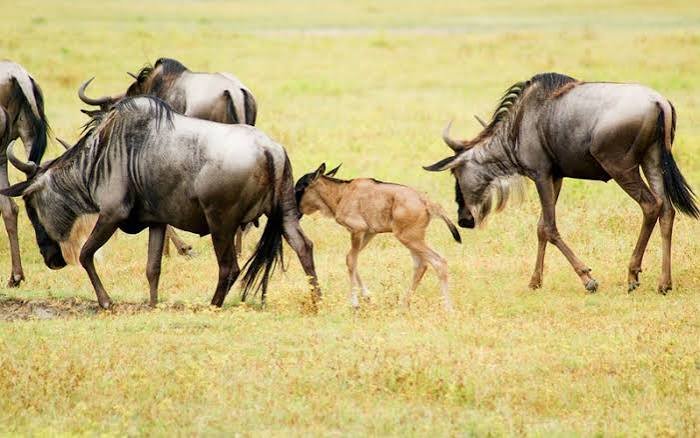
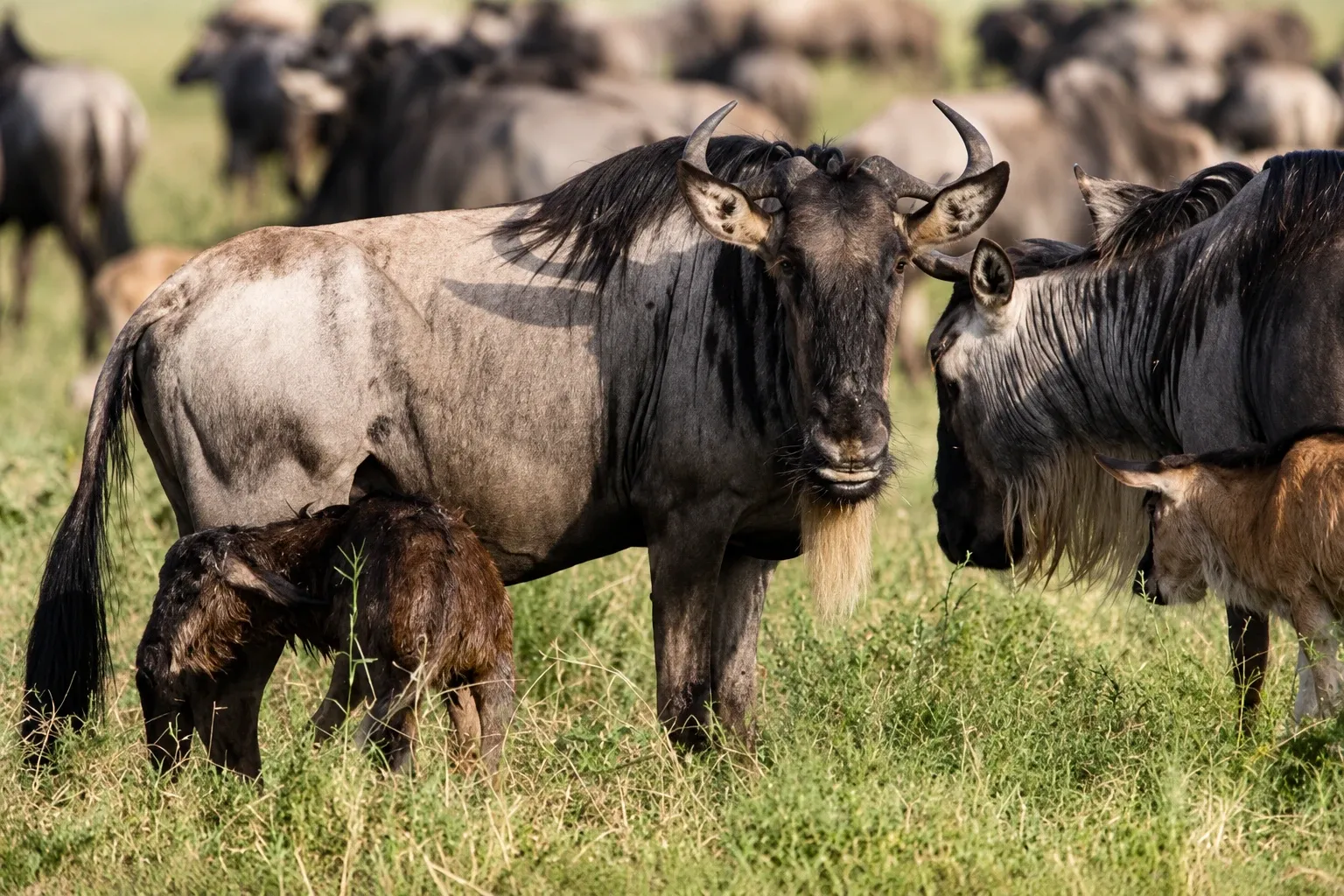
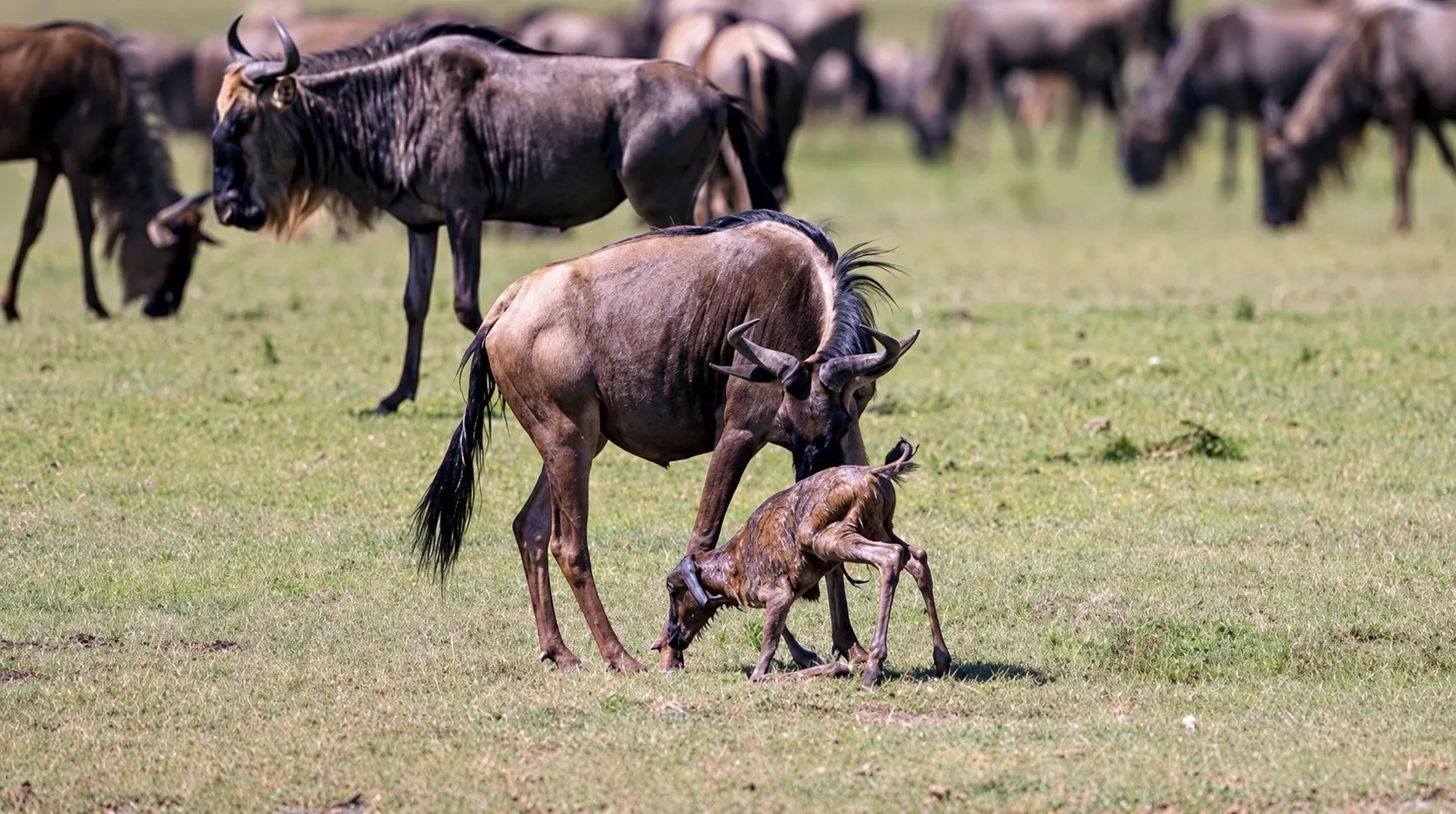
During these months, the Southern Serengeti becomes a major calving area of the Great Migration. TANAPA describes Ndutu and the surrounding short-grass plains as the heart of the calving period, with more than half a million wildebeest giving birth within a few weeks across the wider seasonal event.
The attraction is not simply the number of animals. The calving season creates a different type of safari experience because large numbers of newborn animals attract predators.
Visitors may encounter:
-
Wildebeest giving birth
-
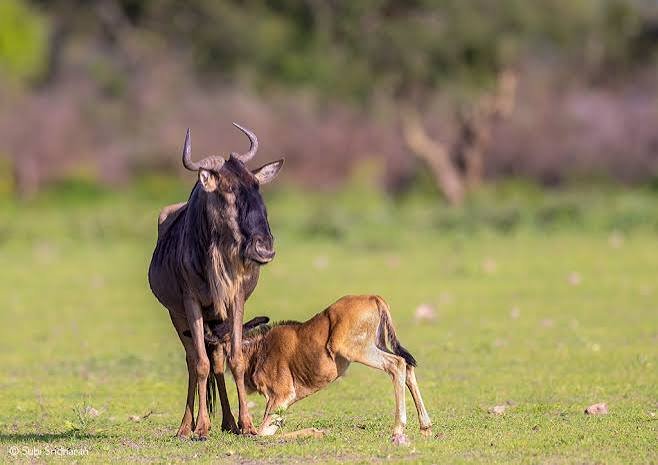
Newborn calves
-
Large wildebeest herds
-
Zebra and other plains wildlife
-
Lions
-
Cheetahs
-
Hyenas
-
Other predators taking advantage of vulnerable young animals
-
Green grasslands following seasonal rainfall
For photographers, this period can provide opportunities to photograph newborn animals, predator-prey interactions and dramatic green landscapes.
February: A Strong Choice for Calving Season
February is often an especially attractive month for travellers whose main objective is to experience wildebeest calving.
By this stage of the season, the Southern Serengeti is firmly associated with the calving cycle, and Ndutu can offer concentrated wildlife activity.
However, visitors should understand that wildlife is unpredictable. There is no exact date on which every animal gives birth, and rainfall can influence where herds concentrate.
February is therefore best viewed as a strong planning month rather than a guarantee of a particular sighting.
Why Visit Ndutu in February?
February can be a good choice for:
-
Wildebeest calving
-
Newborn calves
-
Predator viewing
-
Wildlife photography
-
Green landscapes
-
Great Migration enthusiasts
Travellers should book accommodation early because demand can increase around the calving season, especially for camps located close to the Ndutu plains.
January: Green Landscapes and the Start of Calving Activity
January is another excellent month for travellers interested in the Southern Serengeti.
Seasonal rainfall helps transform the plains into greener landscapes, while the calving period begins to become an important feature of the region.
January can be particularly attractive to photographers because the combination of green grass, wildlife and changing skies creates strong landscape conditions.
The exact timing and concentration of wildlife can vary from year to year, so travellers should avoid treating January as a fixed migration timetable.
March: Calving Season With Changing Weather
March can still provide excellent opportunities for experiencing the calving season, but it is also a period when rainfall patterns can become increasingly important.
TANAPA's general Tanzania planning guidance identifies March to May as the long-rain period nationally, although rainfall varies by location and year.
For travellers who do not mind occasional wet conditions, March can offer:
-
Green scenery
-
Wildlife activity
-
Calving-season opportunities
-
Fewer visitors than some peak travel periods
-
Strong photography conditions
The trade-off is that rain can affect road conditions and daily safari logistics.
April and May: Is Ndutu Still Worth Visiting?
April and May can be worthwhile for travellers who are flexible about weather and want greener scenery with potentially lower visitor numbers.
These months fall within Tanzania's broader long-rain period, so visitors should be prepared for wetter conditions. TANAPA notes that March to May is the long-rain period in its national trip-planning guidance.
The main advantage is that the landscapes can remain lush and visually attractive.
The disadvantages can include:
-
Wet roads
-
More difficult driving conditions in some areas
-
Rain interruptions
-
Some seasonal accommodation considerations
-
Less predictable safari logistics
For a first-time visitor whose main goal is a straightforward wildlife safari, the drier months may be easier to plan. For flexible travellers who value green landscapes and fewer visitors, the wetter season can still be rewarding.
June to October: Best Time for General Wildlife Viewing
June to October is Tanzania's main dry-season period and can be an excellent time for general safari wildlife viewing.
TANAPA identifies June to October as the dry season and notes that dry conditions generally make wildlife easier to spot around water sources.
For Ndutu specifically, this period is different from the January–March calving experience.
Travellers may prefer the dry season because:
-
Roads are generally easier to navigate
-
Vegetation becomes less dense
-
Animals can concentrate around remaining water sources
-
Game viewing can be easier
-
Rain is generally less disruptive
-
Conditions are often convenient for photography and long game drives
However, if your specific goal is to see newborn wildebeest calves in Ndutu, the dry season is not the period you should choose simply because it is traditionally considered the best general safari season.
July to October: Good for a Wider Tanzania Safari
If Ndutu is only one part of a larger Northern Tanzania itinerary, July to October can work very well.
You can combine Serengeti with destinations such as:
-
Ngorongoro Conservation Area
-
Tarangire National Park
-
Lake Manyara National Park
-
Arusha National Park
-
Central Serengeti
The dry-season advantage is particularly useful when you want to spend several days on game drives across different areas rather than focusing entirely on the Ndutu calving season.
However, migration movements should not be reduced to a simple month-by-month schedule. Rainfall, food availability and local conditions influence where wildlife moves.
November to December: Green Season Begins Again
November and December are associated with Tanzania's short-rain period in many areas.
These months can bring greener scenery and renewed vegetation, making them attractive for travellers who want a different visual experience from the dry season.
TANAPA's general planning guidance describes November and December as the short-rain period and notes that some tracks can become muddy.
This period can suit travellers who prefer:
-
Green landscapes
-
Fewer crowds
-
Birdwatching
-
Photography
-
More flexible safari planning
However, if your primary objective is the Ndutu calving season, January through March remains the more relevant period.
Best Time to Visit Ndutu for the Great Migration
Ndutu is particularly important because it forms part of the Southern Serengeti landscape used during the calving phase of the Great Migration.
The timing is closely connected to rainfall and grass availability rather than a rigid calendar.
This means that a safari company should not promise that a specific herd will be in a particular location on a specific day months in advance.
Instead, experienced safari planning should use the expected seasonal pattern while allowing flexibility for actual wildlife conditions.
For travellers specifically targeting calving, January through March is the logical period to prioritise.
Best Time to Visit Ndutu for Wildlife Photography
The best time for wildlife photography depends on the type of images you want.
For Newborn Animals
January to March is the strongest period to target the calving season and newborn wildlife.
For Green Landscapes
The wetter months can provide lush vegetation and dramatic skies.
For Clearer Dry-Season Conditions
June to October can provide more consistently dry conditions and easier road travel.
For Predator Photography
The calving season can be particularly interesting because newborn animals create natural predator-prey interactions. However, sightings are never guaranteed.
Photography travellers should also consider the position of the sun, time spent on game drives, guide experience, vehicle flexibility and how close their accommodation is to the areas they want to explore.
Best Time to Visit Ndutu for Fewer Crowds
If avoiding crowds is important, travelling outside the most popular periods can help.
January to March can be busy because the calving season attracts travellers specifically interested in the Great Migration.
The June to October dry season is also popular across Tanzania.
April and May can offer a quieter atmosphere, although the trade-off is wetter weather and potentially more difficult road conditions.
There is therefore a clear trade-off:
| Priority | Better Period |
|---|---|
| Wildebeest calving | January–March |
| Newborn calves | January–March |
| Green scenery | January–May and November–December |
| Dry conditions | June–October |
| Easier road travel | Generally June–October |
| Fewer visitors | Often shoulder/green-season periods |
| General wildlife viewing | June–October |
| Calving-season photography | January–March |
What Is the Weather Like in Ndutu?
Ndutu's weather varies seasonally and can change during the day.
During the green and calving period, travellers should be prepared for rain, wet grass and changing road conditions.
During the dry season, conditions are generally drier, which can make driving and wildlife viewing more straightforward.
Morning and evening temperatures can also feel cooler than during the middle of the day, particularly during game drives in open vehicles.
Travellers should therefore pack layers rather than relying only on warm-weather clothing.
Recommended items include:
-
Light waterproof jacket
-
Warm layer for early morning drives
-
Comfortable safari trousers
-
Neutral-coloured clothing
-
Sun protection
-
Hat
-
Sunglasses
-
Binoculars
-
Camera equipment
-
Insect repellent
-
Comfortable closed shoes
Does the Best Time to Visit Ndutu Affect Safari Prices?
Yes. Travel timing can influence the overall cost of your safari.
The January–March calving period is a high-interest period, especially for accommodation close to the wildlife concentration. Premium seasonal camps can therefore become more expensive and availability can be limited.
The dry season from June to October is also popular and can carry strong demand.
Travellers looking for better value should compare several dates and accommodation categories rather than assuming that one month will always be the cheapest.
For a detailed breakdown of Ndutu safari pricing, see our guide to [Ndutu Safari Cost Guide].
How Long Should You Stay in Ndutu?
If the primary reason for your visit is the calving season, spending several nights in the Ndutu area gives you more opportunities to experience changing wildlife activity.
A short itinerary can work for travellers with limited time, but staying longer provides greater flexibility.
A well-planned itinerary might combine:
Day 1: Arusha or Moshi to the Ndutu area
Day 2: Full-day Ndutu game drives
Day 3: Full-day Ndutu and Southern Serengeti exploration
Day 4: Morning game drive and onward travel
Longer itineraries can add Ngorongoro, Central Serengeti, Tarangire or other Northern Tanzania destinations.
When Should You Book a Ndutu Safari?
If you want to travel during the January–March calving season, early booking is recommended.
This is particularly important if you want:
-
Accommodation close to Ndutu
-
A specific camp
-
A private safari vehicle
-
A particular room category
-
A specific travel date
-
A fly-in safari
-
A photography-focused itinerary
Booking early does not guarantee wildlife sightings, but it can provide more accommodation and itinerary choices.
Best Time to Visit Ndutu: Quick Decision Guide
Choose January to March if your priority is the wildebeest calving season, newborn calves and predator activity.
Choose June to October if your priority is generally dry weather, easier road travel and classic Tanzania wildlife viewing.
Choose April to May if you are comfortable with wetter conditions and want greener landscapes and potentially quieter safari conditions.
Choose November to December if you prefer green scenery, seasonal birdlife and a less traditional safari-season atmosphere.
If you are unsure, the best choice should be based on your specific wildlife objective rather than simply selecting the most popular month.
Frequently Asked Questions About the Best Time to Visit Ndutu
What is the best month to visit Ndutu?
February is a strong choice for travellers specifically targeting the calving season, but January through March is the broader period to consider. Wildlife movements and calving intensity can vary with rainfall and local conditions.
Is January a good time to visit Ndutu?
Yes. January can offer green landscapes and the beginning of the main calving period. It is a good option for travellers who want to combine wildlife activity with lush Southern Serengeti scenery.
Is February the best time for the Ndutu calving season?
February is often a particularly attractive month for calving-season travellers, but there is no guaranteed peak date. Weather and wildlife movements vary from year to year.
Is March still good for Ndutu?
Yes. March can still provide calving-season opportunities and green landscapes. However, travellers should be prepared for increasing rainfall and potentially wetter road conditions.
Can I visit Ndutu in the dry season?
Yes. June to October can be good for general wildlife viewing and easier road travel. However, this is not the main period to target if your primary goal is the Ndutu calving season.
Is Ndutu worth visiting outside January to March?
Yes, depending on your safari objectives. Ndutu is part of the broader Serengeti ecosystem, so visiting at another time can still provide valuable wildlife experiences. However, the specific calving-season experience is seasonal.
What is the best time for photography in Ndutu?
January to March is particularly attractive for photographers interested in newborn animals, predators and green landscapes. June to October can be better for travellers who prefer drier conditions and clearer road access.
When is Ndutu less crowded?
The quieter periods can be outside the main peak travel windows, particularly during parts of the green and rainy seasons. However, visitor levels vary by accommodation, travel date and broader Tanzania tourism demand.
KiliPori Safaris Recommendation
For travellers whose main objective is to experience the Ndutu calving season, we recommend planning around January to March, with February often being a particularly attractive month to consider.
However, do not choose your dates based on wildlife alone. Accommodation availability, road conditions, safari duration, budget and the rest of your Tanzania itinerary all matter.
If you want the classic dry-season safari experience rather than specifically the calving event, June to October can be a better fit.
The most effective approach is to decide what you want to see first, then select the travel period that best matches that objective.
Plan Your Ndutu Safari With KiliPori Safaris
KiliPori Safaris can help you plan a Ndutu safari around your preferred travel dates, wildlife interests, budget and accommodation level.
Whether you want to experience the wildebeest calving season, photograph newborn animals, explore the wider Serengeti ecosystem or combine Ndutu with Ngorongoro and other Northern Tanzania destinations, your itinerary can be designed around your priorities.
For a personalised safari quotation, contact KiliPori Safaris via WhatsApp at +255 755 287 311.
When requesting a quotation, provide your preferred travel dates, number of travellers, number of safari days and accommodation preference. This allows the itinerary and price to be planned more accurately.
Final Recommendation
There is no single best time to visit Ndutu for every traveller. If your priority is the famous wildebeest calving season, January to March is the period to target, with February being a particularly strong option to consider. If you prefer dry conditions and general wildlife viewing, June to October may suit you better. The green and rainy periods can also reward flexible travellers with lush scenery and fewer visitors.
Ultimately, the best Ndutu safari is the one that matches your objective, budget and available travel dates. Plan around the experience you want rather than choosing a month simply because it is labelled "peak season."

KiliPori Safaris Travel Team
A local Tanzania team helping travellers plan wildlife safaris, Kilimanjaro climbs and Zanzibar holidays with clear routing and direct destination support.
Published September 15, 2026. Travel conditions, fees and schedules can change; confirm time-sensitive details before departure.