Explore this guide
Our guides combine current planning research with practical knowledge from arranging safaris, Kilimanjaro climbs and Zanzibar holidays.
Best Time to Visit Ndutu for the Great Migration
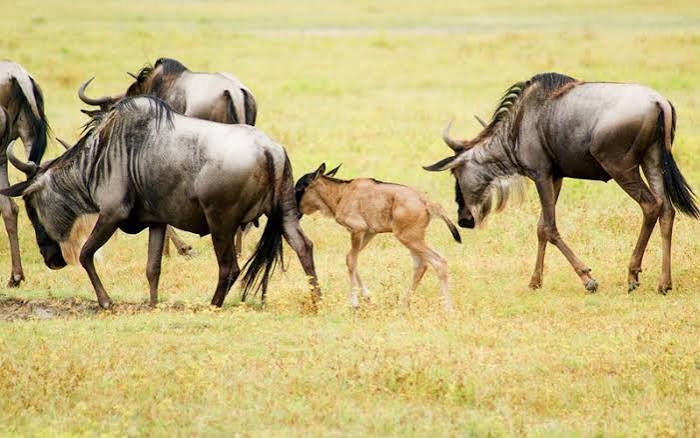
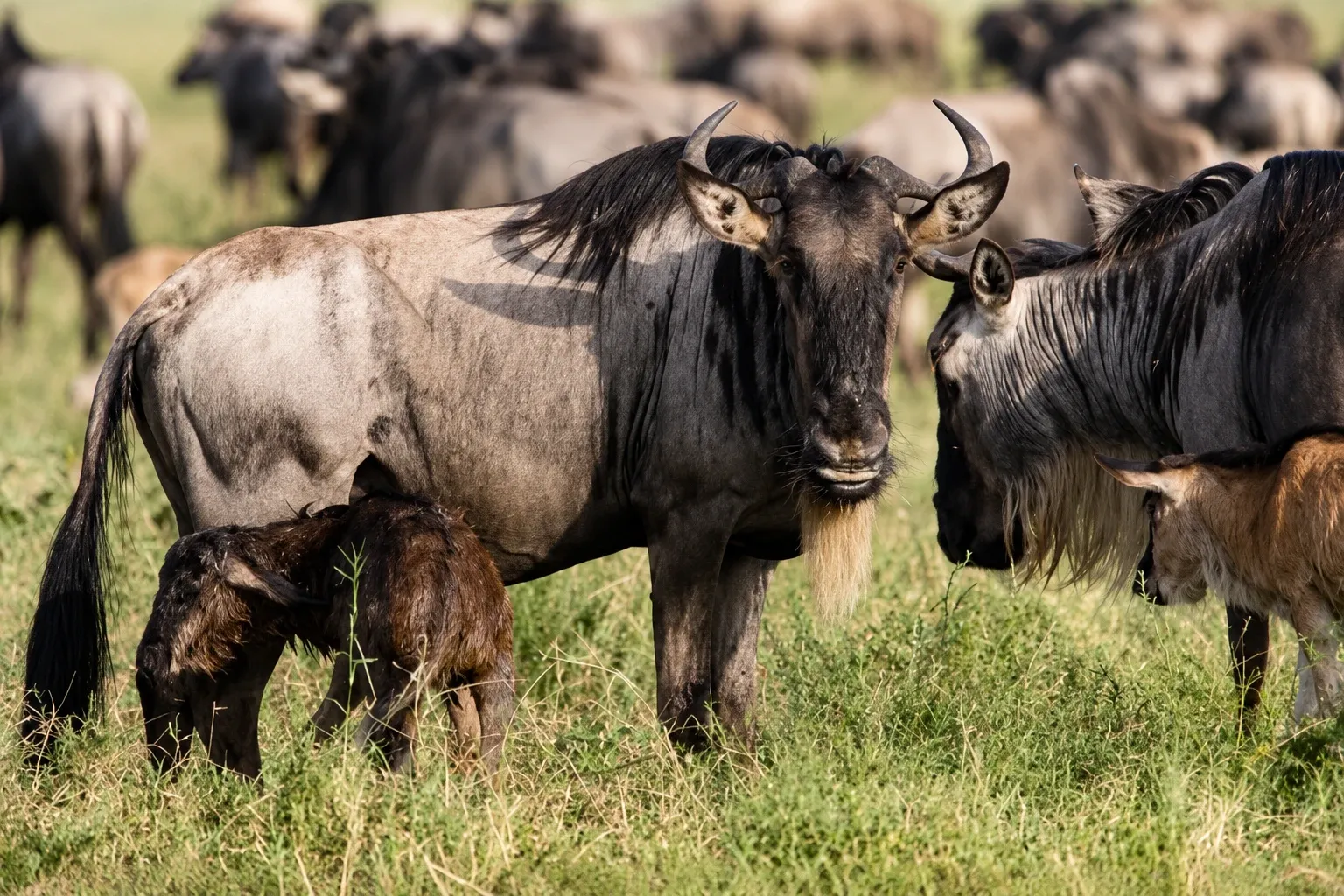
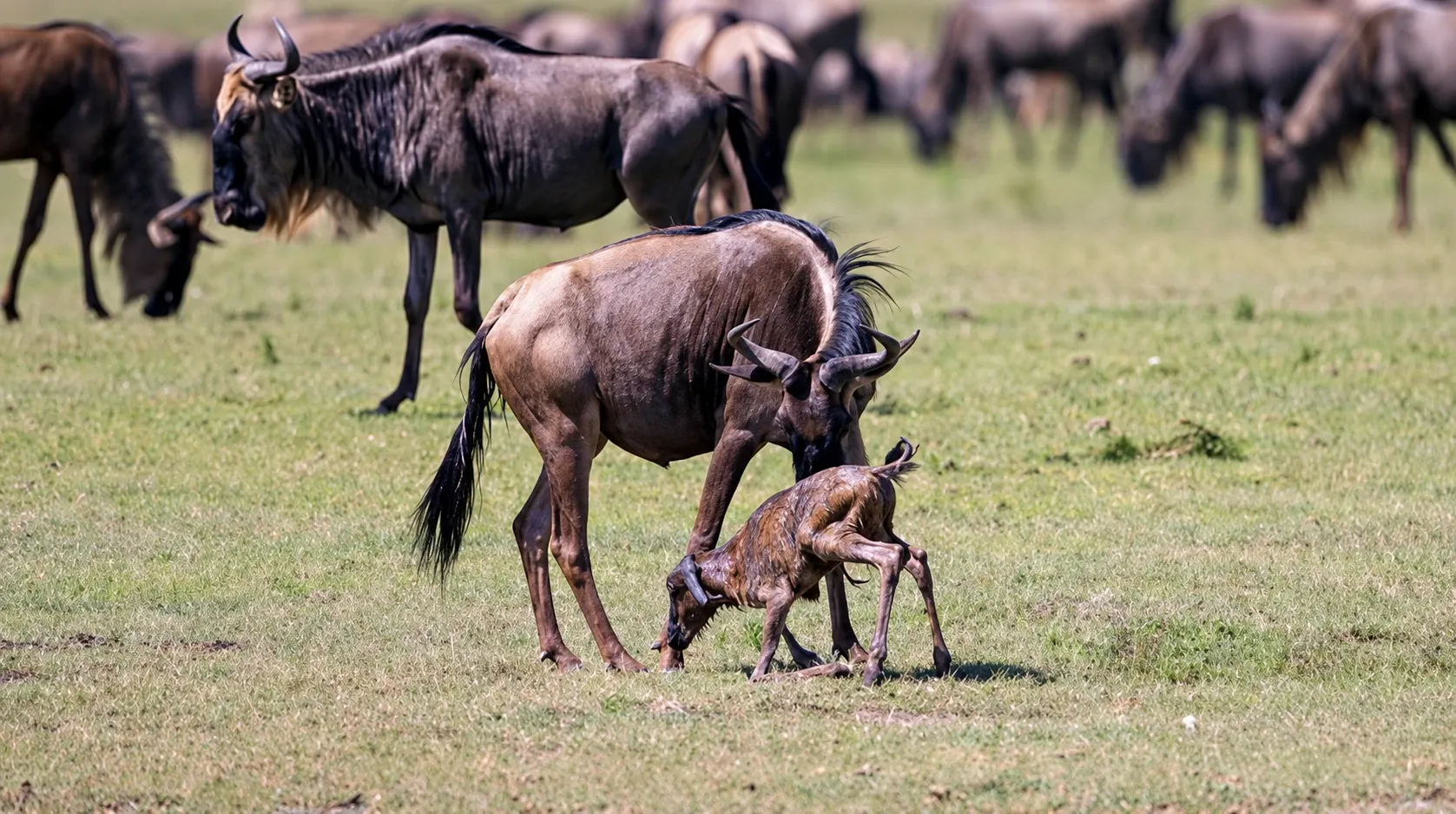
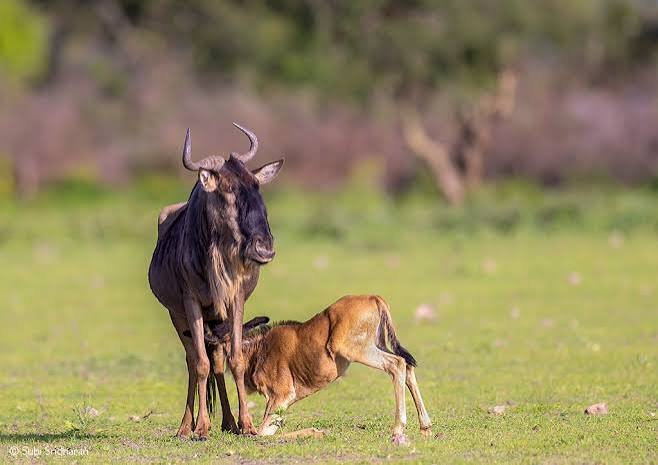
The best time to visit Ndutu for the Great Migration is generally from January to March, when large herds of wildebeest gather across the Southern Serengeti plains for the annual calving season. Among these months, February is often the period most sought after by travellers who specifically want to experience concentrated calving activity and see large numbers of newborn wildebeest.
However, there is no single date that guarantees the same migration experience every year. The timing and location of the herds are influenced by rainfall, grazing conditions and other environmental factors. This means the best time to visit Ndutu depends not only on the calendar month, but also on what you want to experience: newborn calves, predator activity, green landscapes, photography, weather conditions or a longer Northern Tanzania safari.
For travellers planning specifically around the Great Migration, the key decision is therefore whether to visit during the January–March calving window and, if dates are flexible, which part of that period best matches their safari priorities.
When Is the Best Time to Visit Ndutu for the Great Migration?
For most travellers interested in the Great Migration at Ndutu, January to March is the key travel window.
January to March is the main calving period on the Southern Serengeti plains, with Ndutu and the surrounding short-grass plains forming an important area for the seasonal concentration of wildebeest.
This period is different from the migration experiences associated with other parts of the Serengeti ecosystem. If your priority is witnessing the calving stage of the Great Migration, travelling during the Southern Serengeti calving season is more relevant than simply visiting the Serengeti during any month of the year.
The three-month calving window
| Travel period | Why consider it for the Great Migration? |
|---|---|
| January | Early part of the main calving period, green landscapes and increasing numbers of newborn animals |
| February | Particularly important for concentrated calving and newborn wildebeest |
| March | Still within the calving season, with green landscapes but increasing influence from the long rains |
The important point is that January, February and March are all part of the same broader calving season, but the experience can change as the season develops.
Why February Is Often Considered the Best Time for Ndutu Calving
If your main objective is to see the Great Migration during the most concentrated part of the calving season, February deserves particular consideration.
The Southern Serengeti plains can hold large concentrations of wildebeest during this period, while newborn calves become a major part of the wildlife scene. The presence of vulnerable young animals also creates opportunities to observe predator activity involving lions, cheetahs and hyenas.
For photographers and wildlife enthusiasts, February can therefore offer several of the experiences most closely associated with a Ndutu calving-season safari.
Is January a Good Time to Visit Ndutu?
Yes. January is firmly within the Ndutu calving-season window and can be a strong choice for travellers who want to experience the beginning of the main calving period.
The Southern Serengeti landscape can be green and productive following seasonal rainfall, while wildebeest, zebra and other plains animals use the short-grass plains.
January can be particularly suitable if you want a combination of:
-
Early calving-season activity
-
Green landscapes
-
Large herbivore concentrations
-
Opportunities for newborn wildlife
-
Predator viewing
-
A Northern Tanzania safari combined with other destinations
The exact timing of births can vary, so January should not be treated as simply before the calving season. It is already part of the recognised January to March calving period.
Is March Still a Good Time to Visit Ndutu?
Yes. March remains within the broader Ndutu calving season, although the weather becomes an increasingly important consideration.
TANAPA's current trip-planning information identifies March to May as Tanzania's long-rains period and advises travellers to consider changing road conditions when planning travel during wetter periods.
For travellers who can only travel in March, this does not mean that Ndutu should be excluded. Calving activity can continue, green landscapes remain attractive, and wildlife viewing can still be productive.
The main difference is that travellers should be more prepared for variable weather and potentially wetter road conditions.
Best Time to Visit Ndutu Based on What You Want to See
The phrase best time means different things to different safari travellers.
| Your main priority | Period to consider |
|---|---|
| Concentrated calving activity | February |
| Newborn wildebeest | February, with January and March also possible |
| Beginning of the calving season | January |
| Green landscapes | January-March |
| Predator activity around vulnerable young | January-March |
| Photography of newborn wildlife | February |
| Green-season photography | January-March |
| Fixed March travel dates | March |
| More flexibility within the calving window | January or February |
Best Time of Year for the Great Migration at Ndutu
If the question is specifically about the Great Migration rather than general Serengeti wildlife, January through March is the most important period to consider for Ndutu.
The reason is ecological rather than simply touristic: the Southern Serengeti short-grass plains become an important seasonal area for wildebeest during the calving stage of their annual migration cycle.
This makes Ndutu particularly relevant to travellers whose primary objective is to see the migration during calving rather than during another stage of the annual cycle.
A traveller visiting Ndutu outside this seasonal window may still see wildlife, but the experience should not automatically be described as the Ndutu Great Migration calving experience.
What Is the Exact Best Month to Visit Ndutu?
There is no scientifically fixed best month that guarantees the same wildlife conditions every year.
For a traveller whose priority is concentrated calving and newborn wildebeest, February is generally the month to consider first.
For someone who wants the early part of the calving season, January may be more appropriate.
For someone travelling in March, the destination can still provide a genuine calving-season experience, provided they are prepared for greater weather variability.
The difference is therefore one of priorities rather than a simple ranking of the three months.
How Many Days Should You Spend in Ndutu During the Best Migration Period?
If the purpose of your safari is specifically the Great Migration calving season, spending several nights in Ndutu is more useful than trying to predict one perfect day.
A practical starting point is three nights in Ndutu.
This gives you multiple morning and afternoon game-drive opportunities and allows your guide to adjust daily routes according to current wildlife movements.
A longer stay can be particularly useful for photographers or travellers who want more time to observe animal behaviour rather than simply searching for a checklist of species.
When Should You Book a Ndutu Great Migration Safari?
If you are planning to travel during the January to March calving season, it is sensible to plan accommodation and safari logistics well in advance, particularly if your dates are centred around February.
Ndutu accommodation includes seasonal camps and lodges, and availability can influence where you can stay and how your safari route is structured.
At KiliPori Safaris, we recommend deciding the seasonal objective first and then building the itinerary around it. This helps avoid spending too little time in Ndutu simply because too many destinations have been added to a short safari.
KiliPori Safaris Expert Recommendation
For travellers asking us specifically, When is the best time to visit Ndutu for the Great Migration?, our answer is:
January to March is the main Ndutu calving-season window, while February is particularly suitable if your priority is concentrated calving and newborn wildebeest.
Choose January if you want to experience the early part of the calving period and green Southern Serengeti landscapes.
Choose February if your main objective is to maximise your opportunity to experience concentrated calving and see newborn animals.
Choose March if your dates are fixed then or if you prefer green-season travel and are comfortable with more variable weather.
Most importantly, allow enough time in Ndutu. The Great Migration does not follow an exact calendar, so a safari planned around several nights gives you more flexibility than trying to build the entire trip around one predicted peak day.
Plan Your Ndutu Great Migration Safari With KiliPori Safaris
KiliPori Safaris can help you plan a Northern Tanzania safari around the Ndutu Great Migration calving season, whether your preferred travel period is January, February or March.
We can structure the safari around Ndutu and combine it with destinations such as Ngorongoro, Central Serengeti or Tarangire depending on your available days and onward travel plans.
If you are unsure whether January, February or March fits your trip, share your travel dates, number of safari days and your main wildlife priority.
WhatsApp: +255 755 287 311
Frequently Asked Questions About the Best Time to Visit Ndutu
What is the best time to visit Ndutu for the Great Migration?
The main period is January to March, when Ndutu and the Southern Serengeti become important areas during the wildebeest calving season. February is particularly relevant for travellers prioritising concentrated calving and newborn wildebeest.
Is February the best month for Ndutu?
February is often the month most associated with concentrated calving activity, but there is no guarantee that wildlife conditions will be identical every year. Rainfall and grazing conditions can influence the timing and location of the herds.
Can I see the Great Migration in Ndutu in January?
Yes. January is part of the main January to March calving period and can provide opportunities to see wildebeest, newborn animals and predators in the Southern Serengeti.
Can I visit Ndutu in March for the Great Migration?
Yes. March remains within the calving-season window. The main additional consideration is the increasing influence of Tanzania's long-rains period.
Which month is best for newborn wildebeest?
February is the month to consider if newborn wildebeest are your main priority, although births also occur during January and March and the exact seasonal pattern varies between years.
How long should I stay in Ndutu during the Great Migration?
Three nights is a practical starting point for a calving-focused safari. More nights provide greater flexibility for wildlife movements and photography.
Is Ndutu better than Central Serengeti for the Great Migration?
The answer depends on which stage of the migration you want to experience. For the January–March calving season, Ndutu and the Southern Serengeti are particularly relevant. Central Serengeti offers a different geographic and seasonal wildlife experience.
Can I combine Ndutu with Ngorongoro?
Yes. Ndutu and the Ngorongoro Conservation Area can be combined in a Northern Tanzania itinerary, although the most efficient route depends on accommodation and the rest of the safari plan.
Final Recommendation
If your main reason for visiting Tanzania is to experience the Great Migration calving season at Ndutu, plan your safari between January and March.
Among these months, February is particularly worth considering when newborn wildebeest and concentrated calving are your main priorities. January is suitable for travellers who want the early part of the calving season, while March remains a valid option for travellers who accept more variable and potentially wetter conditions.
There is no single calendar date that guarantees the migration will be in exactly the same place every year. Rainfall, grazing and animal movements influence the season naturally.
For that reason, the best Ndutu safari is not simply about choosing the “right” month. It is about choosing the right part of the calving season for your priorities and allowing enough time to follow the wildlife once you arrive.

KiliPori Safaris Travel Team
A local Tanzania team helping travellers plan wildlife safaris, Kilimanjaro climbs and Zanzibar holidays with clear routing and direct destination support.
Published September 17, 2026 · Last updated October 31, 2026. Travel conditions, fees and schedules can change; confirm time-sensitive details before departure.