Explore this guide
Our guides combine current planning research with practical knowledge from arranging safaris, Kilimanjaro climbs and Zanzibar holidays.
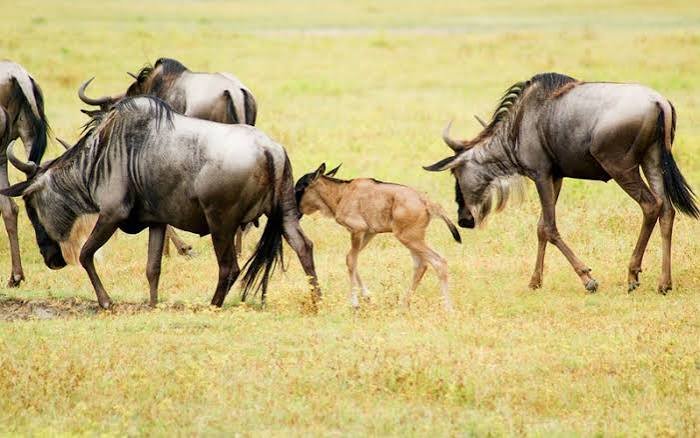
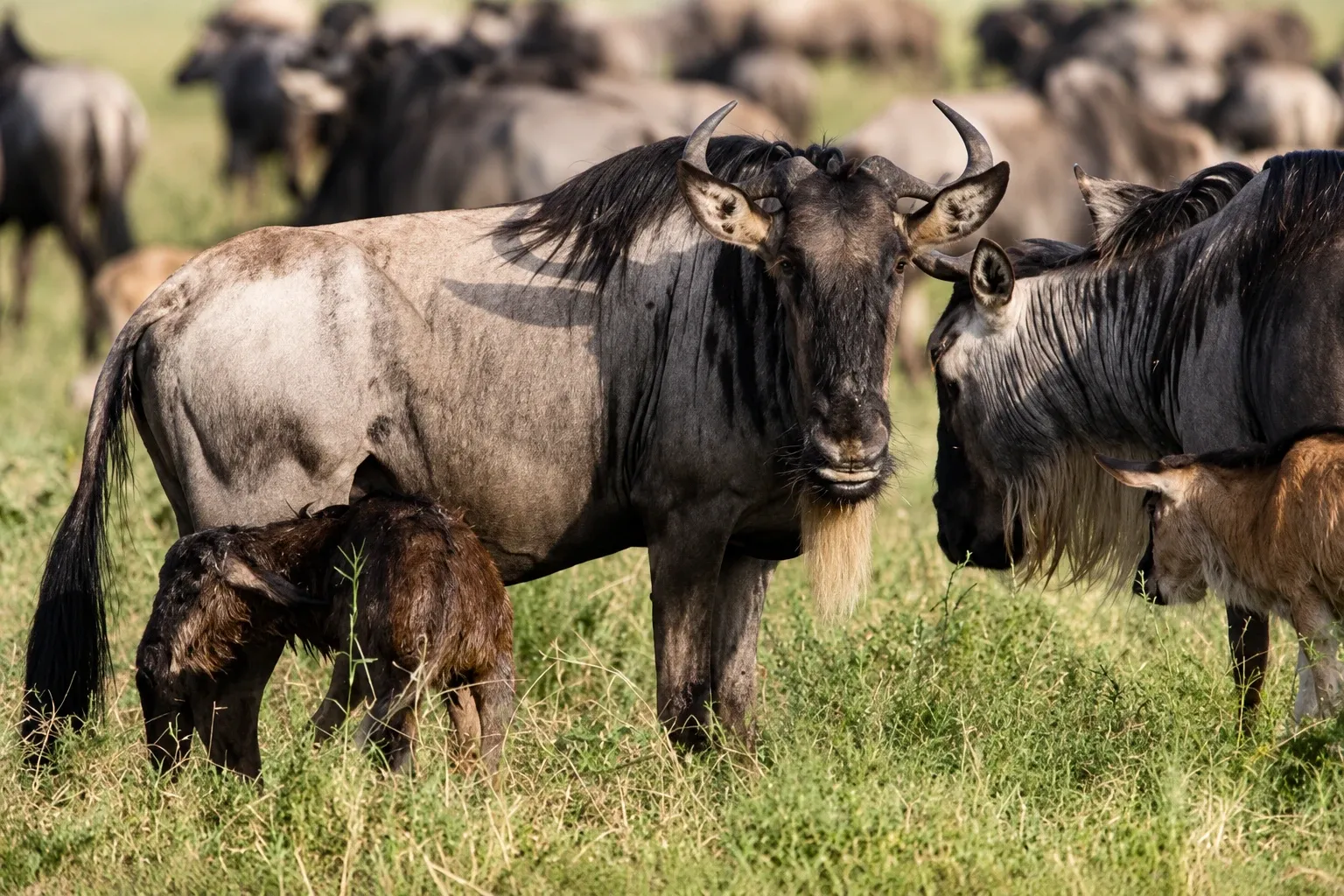
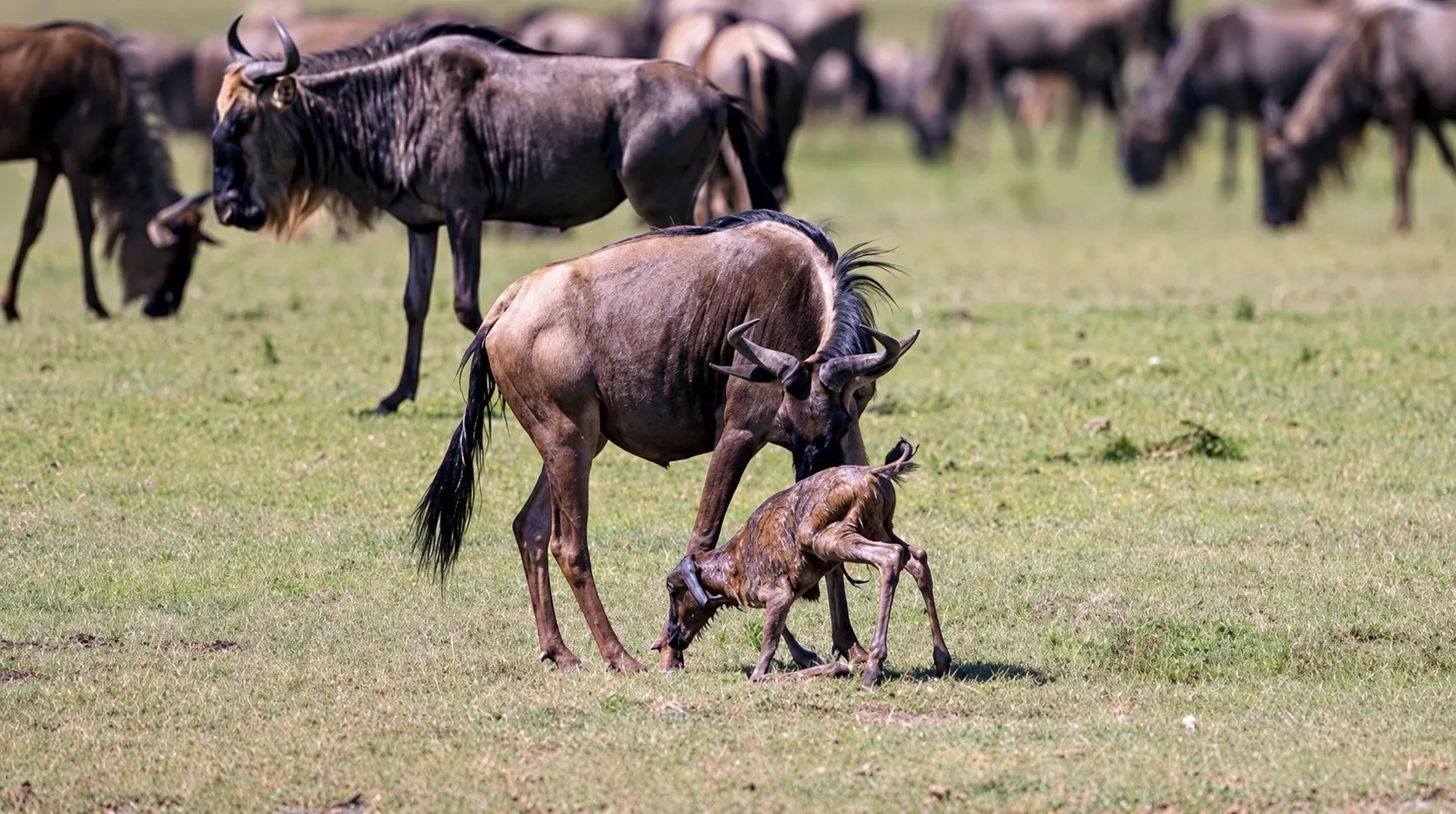
The Ndutu calving season takes place mainly from January to March in the Southern Serengeti, with February generally representing the peak calving period. More than half a million wildebeest can give birth within a few weeks, attracting large numbers of predators to the short-grass plains. For travellers focused on newborn wildlife, predator activity and the Great Wildebeest Migration, January to March is the key period to plan a Ndutu safari.
What Is the Ndutu Calving Season?
The Ndutu calving season is the annual period when large numbers of wildebeest gather on the short-grass plains of the Southern Serengeti and surrounding Ndutu area to give birth.
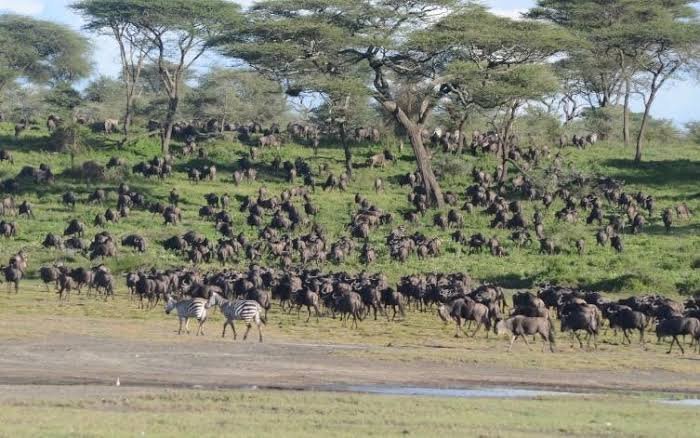
It forms one of the most important stages of the Great Wildebeest Migration in Tanzania. During this period, the herds concentrate in the southern plains where fresh grass provides suitable feeding conditions for pregnant wildebeest and newborn calves.
According to the Tanzania National Parks Authority, the southern Serengeti, particularly the Ndutu area and surrounding short-grass plains, becomes the centre of the calving period between January and March. TANAPA reports that more than half a million wildebeest can give birth within a few weeks.
The concentration of newborn animals also attracts predators. Lions, cheetahs, hyenas and other carnivores follow the herds because young calves are more vulnerable than adult wildebeest.
For safari travellers, this creates a very different experience from the famous northern Serengeti river-crossing season.
When Is the Ndutu Calving Season?
The Ndutu calving season generally occurs from January through March, although the exact timing can vary according to rainfall and grazing conditions.
February is normally regarded as the central month of the calving period and is particularly attractive for travellers who want to combine large wildebeest concentrations, newborn calves and predator activity.
Ndutu Calving Season Month by Month
| Month | What to Expect | Best For |
|---|---|---|
| January | Herds concentrate in the Southern Serengeti and calving activity increases | Early calving, green landscapes and large herds |
| February | Peak calving period with very high concentrations of wildebeest and predators | Newborn calves, predator photography and migration viewing |
| March | Calving continues while herds gradually begin moving onward | Travellers seeking a quieter alternative to February |
These are seasonal patterns rather than fixed guarantees. Wildlife movements respond to rainfall, grass conditions and other environmental factors, so the location and intensity of activity can change from year to year.
Why Do Wildebeest Gather Around Ndutu?
The Southern Serengeti and Ndutu area contain short-grass plains that become highly productive after seasonal rainfall.
These plains provide important grazing conditions for the migrating herds. TANAPA explains that the wildebeest return to the southern plains because of the mineral-rich grasses, which provide favourable conditions for mothers and their newborn calves.
The calving strategy also has an important survival advantage. When many animals give birth within a relatively short period, predators cannot easily isolate every newborn calf.
This does not eliminate predation. Instead, it creates a constantly changing environment in which predators and prey interact across the plains.
What Happens During the Ndutu Calving Season?
The calving season is not simply about seeing baby wildebeest.
It is a complete wildlife cycle involving migration, grazing, birth, nursing, predator activity and the movement of herds across the Southern Serengeti ecosystem.
During a typical safari, travellers may see:
- Large wildebeest herds spread across the plains
- Newborn wildebeest calves
- Adult wildebeest protecting or moving with their young
- Zebra and gazelle sharing the grazing areas
- Lions following or hunting around the herds
- Cheetahs searching for vulnerable young animals
- Hyenas moving through the migration areas
- Large flocks of birds feeding around the plains
- Dramatic interactions between predators and prey
A birth itself is never guaranteed during a game drive. A well-planned safari increases opportunities to observe the calving environment, but wildlife behaviour remains unpredictable.
How Many Wildebeest Are Born During the Calving Season?
TANAPA reports that more than 500,000 wildebeest can give birth within a few weeks during the Southern Serengeti calving season. Its Great Migration guidance also describes a highly concentrated period of births, with historical estimates reaching thousands of births per day during the peak.
This concentration explains why the Ndutu area becomes an important destination for wildlife photographers and travellers interested in animal behaviour.
The number should be understood as a seasonal estimate rather than a guaranteed count for a particular year.
What Wildlife Can You See in Ndutu During Calving Season?
Wildebeest are the main attraction, but the ecosystem supports much more than the migrating herds.
Wildebeest
The wildebeest are the defining species of the calving season. Large groups gather on the short-grass plains, with mothers giving birth and calves quickly becoming part of the moving herds.
Zebra
Zebra move through the same Southern Serengeti ecosystem and are often seen among or near wildebeest herds.
Gazelles
Thomson's gazelles and other plains game can be seen across the open grasslands. Their presence contributes to the overall concentration of herbivores during this period.
Lions
Lions are among the important predators associated with the calving grounds. The concentration of young prey can increase hunting opportunities.
Cheetahs
The open plains provide suitable habitat for cheetahs. Travellers may encounter cheetahs hunting or resting while monitoring the movements of prey.
Hyenas
Hyenas are important predators and scavengers in the ecosystem and can be particularly active around areas with large concentrations of herbivores.
Wildlife sightings are never guaranteed. A safari guide's ability to track animal movements and interpret current conditions is therefore important.
Why Is Predator Activity High During Ndutu Calving Season?
Newborn animals are generally more vulnerable than healthy adult animals.
This creates opportunities for predators that follow the migrating herds into the Southern Serengeti.
The predator-prey relationship is one of the main reasons Ndutu is attractive to wildlife photographers. A traveller may see predators searching, stalking, resting near herds or responding to opportunities created by the movement of newborn calves.
However, this should not be interpreted as a guarantee of a particular kill or predator encounter. Wildlife behaviour is natural and unpredictable.
Where Is Ndutu Located?
Ndutu is located in the Southern Serengeti ecosystem near the boundary between Serengeti National Park and the Ngorongoro Conservation Area.
This location is important when planning a safari because the wider Ndutu area is not simply a single game-viewing point. Wildlife moves across a broader ecosystem, and the best area for game viewing can change during the season.
Ndutu is also strategically positioned for combining a calving-season safari with other Northern Tanzania attractions, particularly the Ngorongoro Crater and Serengeti.
For travellers arriving internationally, Kilimanjaro International Airport is one of the main gateways for Northern Tanzania safari itineraries.
How Do You Get to Ndutu?
There are two main approaches to planning access to the Ndutu area: by road or by scheduled/private safari flight.
By Road
A road safari from Arusha normally forms part of a Northern Tanzania circuit.
Depending on the itinerary, travellers may combine destinations such as:
Arusha → Tarangire → Ngorongoro → Ndutu → Serengeti
or
Arusha → Ngorongoro → Ndutu → Central Serengeti → Arusha
Actual driving time depends on the selected route, road conditions, weather and game-drive stops.
By Air
Travellers who want to reduce long road transfers can consider flying into a suitable airstrip serving the Southern Serengeti/Ndutu area.
Flight schedules, baggage restrictions, aircraft type and operating dates vary, so these details should be confirmed when booking.
For a private safari, the best transport option depends on the traveller's budget, available time and preferred safari style.
How Many Days Do You Need for an Ndutu Calving Safari?
For a focused Ndutu experience, 3 to 4 nights in the Southern Serengeti can provide a useful amount of time for game viewing.
A longer Northern Tanzania itinerary can provide a more complete safari experience.
Recommended Itinerary Lengths
| Safari Length | Suitable For | Typical Focus |
|---|---|---|
| 3–4 Days | Short safari | Ndutu and surrounding Southern Serengeti |
| 5–6 Days | First-time safari | Tarangire, Ngorongoro and Ndutu |
| 7–8 Days | More comprehensive safari | Northern circuit plus extended Serengeti time |
| 9+ Days | Slow-paced or specialist safari | More game-viewing time and multiple ecosystems |
For photographers or travellers whose main objective is the calving season, spending additional nights around Ndutu can be more useful than continuously changing locations.
What Is the Best Month for Ndutu Calving Season?
February is generally the strongest month for travellers specifically targeting peak wildebeest calving.
January can be attractive for travellers who want to see the herds arriving and calving activity developing.
March can work for travellers who prefer a later part of the season, although the distribution of the herds may become more variable as the season progresses.
The most important point is that the Great Migration follows environmental conditions rather than a fixed timetable. Therefore, February should be treated as the strongest planning window, not as a guarantee that a specific event will occur on a specific date.
What Is the Weather Like During Ndutu Calving Season?
January to March is part of the greener period in Northern Tanzania.
Rainfall can occur, and conditions can vary from day to day. Roads can become muddy after rain, particularly on less-developed tracks.
The advantage is that the landscape can become green and productive, creating strong conditions for herbivores and attractive photography.
Travellers should therefore pack for changing conditions rather than expecting uninterrupted sunshine every day.
Where Should You Stay During Ndutu Calving Season?
Accommodation location is one of the most important considerations when planning a Ndutu safari.
Options can include:
- Seasonal tented camps
- Permanent camps and lodges in the wider Southern Serengeti area
- Accommodation around the Ngorongoro Conservation Area
- Camps farther away combined with longer game drives
For a calving-focused safari, staying close to the Southern Serengeti/Ndutu wildlife area can reduce unnecessary daily transfers.
Peak-season accommodation can have limited availability, so early planning is advisable.
How Much Does an Ndutu Calving Season Safari Cost?
There is no single fixed price for an Ndutu safari.
The final cost depends on:
- Number of safari days
- Accommodation category
- Private or group safari
- Number of travellers
- Road or fly-in transport
- Park and conservation fees
- Season
- Vehicle and guide arrangements
- Domestic flights, if included
- Additional destinations
- Accommodation location
Typical Cost Structure
| Cost Element | What Affects the Price |
|---|---|
| Accommodation | Budget, mid-range, luxury or seasonal camp |
| Safari vehicle | Private vehicle or shared vehicle |
| Park/conservation fees | Applicable authorities, dates and traveller category |
| Guide | Safari package and operating arrangement |
| Meals | Full-board or package arrangement |
| Transport | Road safari or fly-in option |
| Flights | Domestic or international flights if included |
| Activities | Game drives and other permitted activities |
Current park fees and other mandatory charges should always be checked against the applicable official tariff before booking because tourism fees can change.
What Should You Pack for a Ndutu Safari?
Pack for both warm daytime conditions and cooler mornings or evenings.
Recommended items include:
- Neutral-coloured lightweight clothing
- Warm fleece or jacket
- Comfortable trousers
- Closed walking shoes
- Sun hat
- Sunglasses
- Sunscreen
- Insect repellent
- Reusable water bottle
- Binoculars
- Camera and spare batteries
- Extra memory cards
- Power bank
- Small day bag
- Rain jacket
- Personal medication
- Headlamp or small torch
For photography, bring sufficient storage and battery capacity because game drives can last several hours.
Is Ndutu Calving Season Good for Photography?
Yes, the calving season can provide excellent photographic opportunities because the landscape combines large herds, newborn animals, predators and green plains.
Photographers should consider:
- Early morning game drives
- Late afternoon light
- A telephoto lens for wildlife
- A wider lens for large herds and landscapes
- Fast shutter speeds for moving animals
- Extra batteries and memory cards
- Dust and rain protection for equipment
A long lens is particularly useful because responsible wildlife viewing requires maintaining appropriate distance from animals.
Photographers should also avoid pressuring guides to approach animals too closely for a photograph.
Is Ndutu Calving Season Suitable for Families?
Ndutu can be suitable for families, but the safari should be designed around the ages and interests of the children.
Long game drives, early departures and changing weather can be challenging for younger children.
Families should discuss:
- Child ages
- Private vehicle requirements
- Driving distances
- Accommodation policies
- Meal arrangements
- Travel time
- Activities suitable for children
A private safari can provide greater flexibility because the daily schedule can be adjusted more easily around the family's needs.
Is Ndutu Good for First-Time Tanzania Safari Travellers?
Ndutu is a strong option for travellers whose priority is the Great Wildebeest Migration and the calving period.
However, first-time visitors may benefit from combining Ndutu with other Northern Tanzania destinations.
A balanced itinerary could include:
Arusha → Tarangire → Ngorongoro → Ndutu → Central Serengeti
This allows travellers to experience different landscapes and wildlife habitats rather than focusing entirely on one seasonal event.
What Are the Advantages of Visiting Ndutu During Calving Season?
The main advantages include:
- Large concentrations of wildebeest
- Opportunity to see newborn calves
- High predator activity
- Green Southern Serengeti landscapes
- Strong wildlife photography opportunities
- Access to the Great Migration during a major stage of its annual cycle
- Possibility of combining Ndutu with Ngorongoro and other Northern Tanzania destinations
The experience is especially relevant for travellers whose main interest is wildlife behaviour rather than simply checking off individual animal species.
What Are the Disadvantages?
There are also trade-offs.
Potential disadvantages include:
- Seasonal weather changes
- Muddy roads after rainfall
- High demand for popular accommodation
- Potentially higher seasonal prices
- Wildlife movements can vary
- A birth or predator kill cannot be guaranteed
- Some road transfers can be long
- Popular areas can become busy during peak periods
Understanding these trade-offs helps travellers choose the right itinerary rather than assuming that the calving season is suitable for everyone.
Common Mistakes to Avoid When Planning a Ndutu Safari
Booking Too Late
Popular accommodation around the calving grounds can fill early during peak periods.
Spending Too Little Time in the Area
If the main objective is calving, a quick visit may provide less opportunity than staying multiple nights.
Treating Migration Dates as Fixed
The Great Migration is influenced by rainfall and grass conditions. Avoid planning around a single exact date.
Focusing Only on Births
A safari can still be successful without witnessing an actual birth. The broader wildlife ecosystem is the main experience.
Ignoring Accommodation Location
A cheaper property farther away may require longer daily drives. Compare total safari time rather than accommodation price alone.
Packing Only for Hot Weather
Morning temperatures, rain and changing conditions make layers useful.
Responsible Wildlife Viewing During Calving Season
The presence of many newborn animals makes responsible safari behaviour particularly important.
Travellers should:
- Follow the instructions of their professional guide
- Maintain appropriate distance from wildlife
- Avoid shouting or making unnecessary noise
- Never feed wild animals
- Avoid blocking animal movement
- Stay inside the vehicle where required
- Follow park and conservation-area regulations
- Avoid disturbing mothers and newborn calves
- Dispose of waste responsibly
- Respect other safari vehicles and visitors
The goal is to observe natural behaviour without changing it.
Ndutu Calving Season vs Other Great Migration Experiences
The Great Wildebeest Migration changes location throughout the year.
Ndutu is associated primarily with the southern calving stage, while other parts of the Serengeti become more important during different periods.
| Experience | Approximate Period | Main Attraction |
|---|---|---|
| Ndutu Calving | January–March | Newborn wildebeest and predator activity |
| Central Serengeti | Various months | Resident wildlife and migration movements |
| Western Serengeti | Around May–July | Migration movement and rut-related activity |
| Northern Serengeti | Around July–October | Mara River region and seasonal crossings |
These periods are approximate because migration movements respond to environmental conditions.
Who Should Visit Ndutu During Calving Season?
Ndutu is particularly suitable for:
- Wildlife enthusiasts
- Great Migration travellers
- Wildlife photographers
- Couples
- Private safari travellers
- Experienced safari travellers
- Families with suitable planning
- Travellers interested in animal behaviour
- Visitors who want to combine Serengeti with Ngorongoro
It may be less suitable for travellers who want guaranteed sightings of a specific animal or a fixed wildlife event on a particular day.
KiliPori Expert Recommendation
For travellers whose main objective is the Ndutu calving season, KiliPori Safaris should plan the itinerary around time in the Southern Serengeti rather than treating Ndutu as a brief stop between other destinations.
February is generally the strongest month to target if newborn wildebeest and peak calving activity are the priority. However, the exact distribution of the herds changes with rainfall and grazing conditions, so the itinerary should retain enough flexibility for the guide to respond to current wildlife movements.
For a first Tanzania safari, combining Ndutu with Ngorongoro and one additional Northern Tanzania destination can provide a more balanced experience. Travellers should also confirm accommodation availability early, especially when planning travel during the peak February period.
Frequently Asked Questions About Ndutu Calving Season
1. When is the Ndutu calving season?
The Ndutu calving season generally occurs from January to March, with February commonly representing the peak period.
2. What month is best for Ndutu calving?
February is generally the strongest month for travellers specifically interested in peak wildebeest calving and associated predator activity.
3. How many wildebeest calves are born in Ndutu?
TANAPA reports that more than half a million wildebeest can give birth within a few weeks during the Southern Serengeti calving period.
4. Can I see a wildebeest giving birth?
It is possible, but it cannot be guaranteed. Wildlife births happen naturally and may occur away from vehicles or at times when visitors are not present.
5. Can I see predators during Ndutu calving season?
Predator activity can be significant because large numbers of vulnerable newborn animals attract predators. Lions, cheetahs and hyenas are among the predators associated with the ecosystem.
6. How many days should I spend in Ndutu?
A focused safari can use approximately 3–4 nights in the Southern Serengeti, while a broader Northern Tanzania itinerary can use 5–8 or more days depending on the traveller's interests.
7. Is February the busiest month?
February is a major peak period for the calving season, so accommodation and safari planning should be arranged well in advance.
8. Can I combine Ndutu with Ngorongoro?
Yes. Ndutu and the Ngorongoro Conservation Area are geographically close enough to be combined in a Northern Tanzania safari itinerary, subject to the exact route and accommodation plan.
9. Is Ndutu suitable for photography?
Yes. Newborn animals, large herds, predators and green landscapes provide strong photographic subjects. Wildlife behaviour and sightings, however, cannot be guaranteed.
10. Is Ndutu worth visiting outside February?
Yes. January and March can also provide valuable calving-season experiences. February is generally the strongest target month, but natural conditions can shift from year to year.
Plan Your Trip With KiliPori Safaris
Planning a Ndutu calving season safari requires more than choosing a travel date.
The location of accommodation, number of nights, road conditions, park regulations, current wildlife movements and connections with other Northern Tanzania destinations all influence the quality and efficiency of the itinerary.
KiliPori Safaris can help travellers plan a Tanzania safari around the Southern Serengeti and Ndutu calving season while considering their available time, accommodation preferences, transport style and wider Tanzania travel plans.
For safari enquiries:
WhatsApp: +255 755 287 311
Recommended planning options include:
- Private Ndutu Calving Season Safari
- Southern Serengeti and Ndutu Wildlife Safari
- Ndutu and Ngorongoro Safari
- Northern Tanzania Great Migration Safari
- Customized Tanzania Wildlife Safari
Final Recommendation
The Ndutu calving season is one of the most important periods in Tanzania's Great Wildebeest Migration. From January to March, the Southern Serengeti becomes a major calving area, with February generally offering the strongest opportunity to experience large herds, newborn wildebeest and increased predator activity.
For travellers planning around this season, the most important decisions are timing, accommodation location and the number of nights spent near the Southern Serengeti. A flexible itinerary is preferable because wildlife movements depend on natural conditions rather than fixed dates.
If newborn wildlife and predator behaviour are your priority, plan around the January–March window, with February as the primary target, while keeping expectations realistic and allowing your safari guide to adapt the game-drive plan to current conditions.

KiliPori Safaris Travel Team
A local Tanzania team helping travellers plan wildlife safaris, Kilimanjaro climbs and Zanzibar holidays with clear routing and direct destination support.
Published September 15, 2026. Travel conditions, fees and schedules can change; confirm time-sensitive details before departure.