Explore this guide
Our guides combine current planning research with practical knowledge from arranging safaris, Kilimanjaro climbs and Zanzibar holidays.
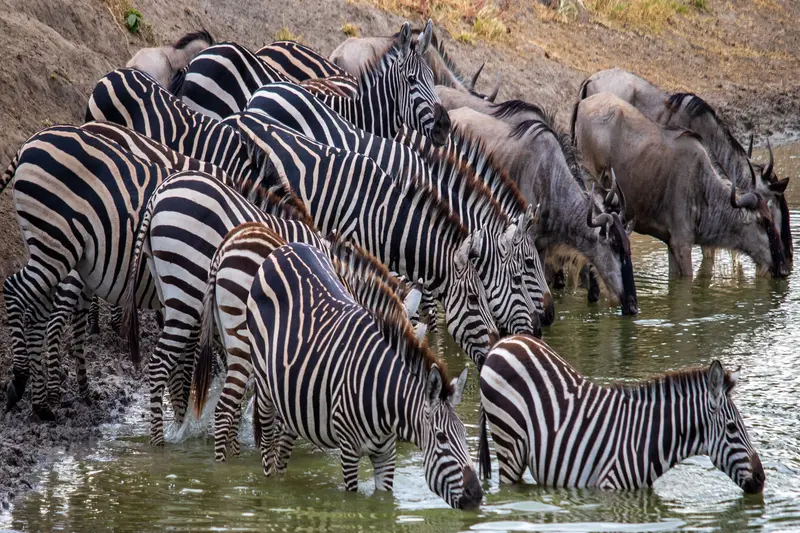
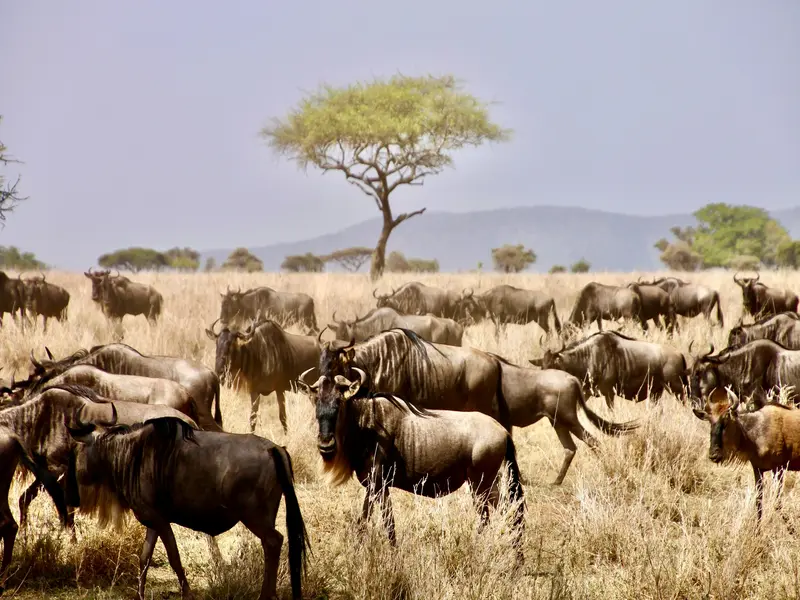
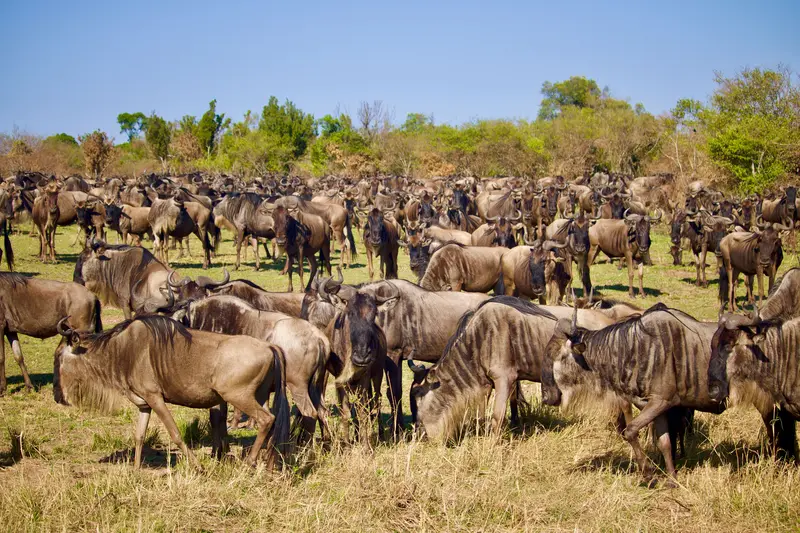
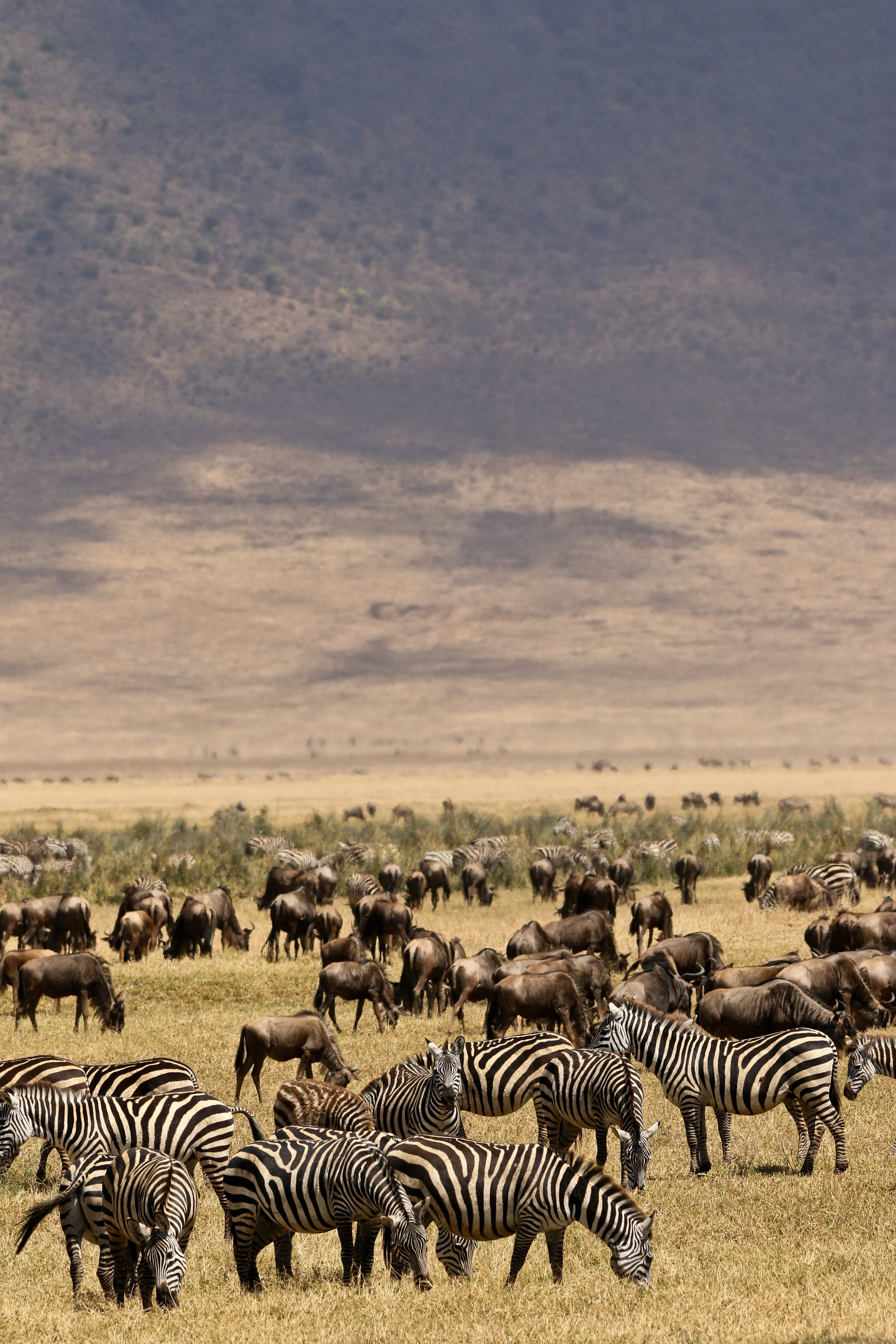
The Great Wildebeest Migration works as a continuous search for fresh grass and water across the Serengeti–Mara ecosystem. Wildebeest, zebras and gazelles generally move from the southern plains towards Western and Northern Serengeti before returning south, but rainfall determines the actual timing and route.
It is not a fixed event with guaranteed dates. Different groups can spread across several areas, change direction after rain or cross the same river more than once.
What Drives the Great Wildebeest Migration?
Rainfall produces new grass and replenishes seasonal water sources. The herds follow these changing resources rather than a calendar, which is why migration predictions should be treated as planning guidance.
The movement forms a broad annual circuit covering Serengeti National Park, the Ngorongoro Conservation Area and Kenya’s Maasai Mara. UNESCO describes it as a roughly 1,000-kilometre circular movement involving more than one million wildebeest and hundreds of thousands of other grazing animals. UNESCO’s Serengeti National Park profile confirms that water and grazing are central to this movement.
The Serengeti Migration Cycle
| Typical period | Main area | What usually happens | Planning consideration |
|---|---|---|---|
| December–March | Southern Serengeti and Ndutu plains | Herds spread across fresh short grass; most calving occurs during the early part of the year | Choose a camp close to the active plains rather than relying only on Central Serengeti |
| April–May | Southern and Central Serengeti | Herds begin moving north as the southern plains dry | Rain can make some tracks muddy; flexible game-drive plans are important |
| May–June | Western Corridor and Central Serengeti | Large groups often gather while moving towards the west and northwest | Western Serengeti is useful, but the precise route changes with local rainfall |
| June–July | Western and Northern Serengeti | Some herds pass the Grumeti River before continuing north | Grumeti crossings are smaller and less predictable than Mara River crossings |
| July–October | Northern Serengeti and Maasai Mara | Herds spread around Kogatende, Lamai and the Mara ecosystem; river crossings may occur | Stay several nights near the Mara River because a crossing cannot be scheduled |
| October–December | Northern, Eastern and Central Serengeti | Short rains can encourage movement back towards the southern plains | The herds may travel quickly or divide into separate groups |
These periods describe the usual pattern, not the live position of the herds. Use KiliPori’s Great Migration calendar and month-by-month guide to compare the expected locations in greater detail.
Is the Migration One Large Herd?
No. The migration is made up of numerous herds that can stretch across a wide area. Some animals may be in Northern Serengeti while others remain farther south or across the border in Kenya.
This explains why reports from different camps can appear to conflict. Both reports may be accurate for separate sections of the migrating population.
Why Does Calving Take Place in the South?
Seasonal rain turns the southern Serengeti and Ndutu plains into productive short-grass grazing areas. The open landscape provides nutritious grass for females and space where approaching predators are easier to detect.
Calving is a seasonal concentration rather than the beginning of the migration. The animals have already travelled south, and they begin leaving when water and suitable grazing become limited.
How Do the Grumeti and Mara River Crossings Differ?
The Grumeti River lies along the Western Corridor and is usually encountered as the herds move northwest. Crossings can occur, but the river channels and herd concentrations differ from the larger scenes commonly associated with the Mara River.
The Mara River lies in Northern Serengeti and the Maasai Mara. Wildebeest may wait for hours or days, retreat from the bank or cross in smaller groups. A safari guide cannot safely or accurately promise a specific crossing time.
How Many Nights Should You Spend in the Migration Area?
KiliPori recommends at least three nights in the area where the migration is expected. Four nights provide greater flexibility for travellers specifically hoping to observe a Mara River crossing.
A single night creates a high risk of missing the herds because road coverage is limited and wildlife movement continues throughout the day. During transitional months, combining Central Serengeti with the Western Corridor or Northern Serengeti can provide better coverage than staying in one location.
Drive-In or Fly-In Safari?
A drive-in safari from Arusha or Moshi allows travellers to combine the Serengeti with Tarangire or Ngorongoro, but reaching Northern Serengeti requires substantial overland travel. It suits longer itineraries where the journey between ecosystems is part of the experience.
A fly-in safari reduces travel time and is useful for short July–October trips focused on Kogatende or Lamai. Flights still operate according to schedules, weather and airstrip conditions, and baggage limits normally apply.
Common Migration Planning Mistakes
Booking the Wrong Serengeti Area
Serengeti is too large to treat as one camp location. A lodge near Seronera may be suitable for Central Serengeti wildlife but can be poorly positioned for a northern Mara River-focused trip.
Allowing Only One Night
Migration viewing requires time to locate moving herds. Add enough nights for changing road conditions, wildlife movements and long game-drive distances.
Treating the Calendar as a Guarantee
Monthly patterns are based on typical seasonal movement. Unusual rainfall can keep the herds in one area longer or cause an earlier change of direction.
Focusing Only on River Crossings
Crossings are dramatic but brief and unpredictable. Calving, large moving columns, predator activity and daily grazing behaviour are equally important parts of the complete migration cycle.
KiliPori Local Planning Advice
Choose your Serengeti area before choosing a camp. For calving-season travel, prioritise access to Ndutu and the southern plains; for July–October river-crossing trips, stay near Kogatende or Lamai instead of using Central Serengeti as the only base.
Keep at least one flexible game-drive day in the migration area. KiliPori Safaris plans around the normal seasonal pattern, then uses recent reports from camps and guides to adjust daily game-drive direction where practical. No itinerary should present a herd location or river crossing as guaranteed.
Frequently Asked Questions
Does the Great Migration happen throughout the year?
Yes. The animals move, graze, calve and regroup throughout the year. River crossings are only one stage of the wider cycle.
Is the Great Migration always in Tanzania?
Most of the annual cycle takes place within Tanzania’s Serengeti ecosystem. Some herds usually enter Kenya’s Maasai Mara during the northern phase, while others may remain in Northern Serengeti.
Can I see the migration without witnessing a river crossing?
Yes. Travellers can see calving on the southern plains, moving columns in Central or Western Serengeti and large grazing herds in the north. These experiences do not depend on a river crossing.
Which month is best for the Great Migration?
There is no single best month. January–March generally suits calving, May–June suits northward movement and Western Corridor travel, while July–October is commonly chosen for the Northern Serengeti and possible Mara River crossings.
KiliPori Safaris can help you choose the right Serengeti area, number of nights and drive-in or fly-in route for the migration stage you want to experience.

KiliPori Safaris Travel Team
A local Tanzania team helping travellers plan wildlife safaris, Kilimanjaro climbs and Zanzibar holidays with clear routing and direct destination support.
Published August 14, 2026. Travel conditions, fees and schedules can change; confirm time-sensitive details before departure.