Explore this guide
Our guides combine current planning research with practical knowledge from arranging safaris, Kilimanjaro climbs and Zanzibar holidays.
The best way to combine Ndutu with Ngorongoro Crater is to allow 4–5 safari days, including at least 2–3 nights in Ndutu and either 1 night near the crater rim or in Karatu. Visit the crater before travelling to Ndutu or after leaving it, depending on your wider route. Avoid driving from Ndutu, touring the crater and continuing to Arusha on the same day unless time is very limited.
How to Combine Ndutu With Ngorongoro Crater
Ndutu and Ngorongoro Crater can be combined easily because both are located within the wider Ngorongoro Conservation Area in northern Tanzania. However, they offer very different safari experiences.
Ndutu is known for:
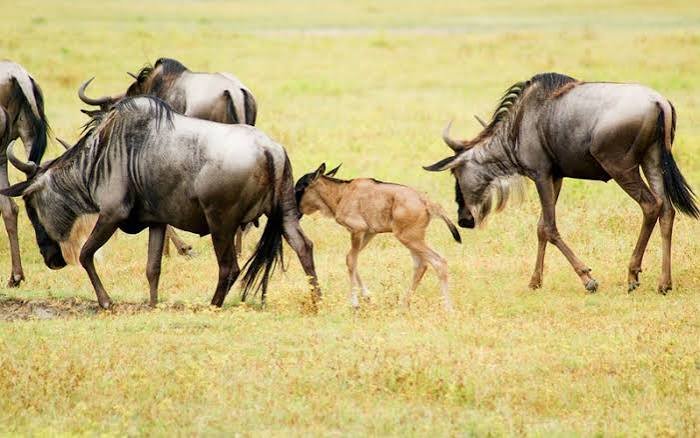
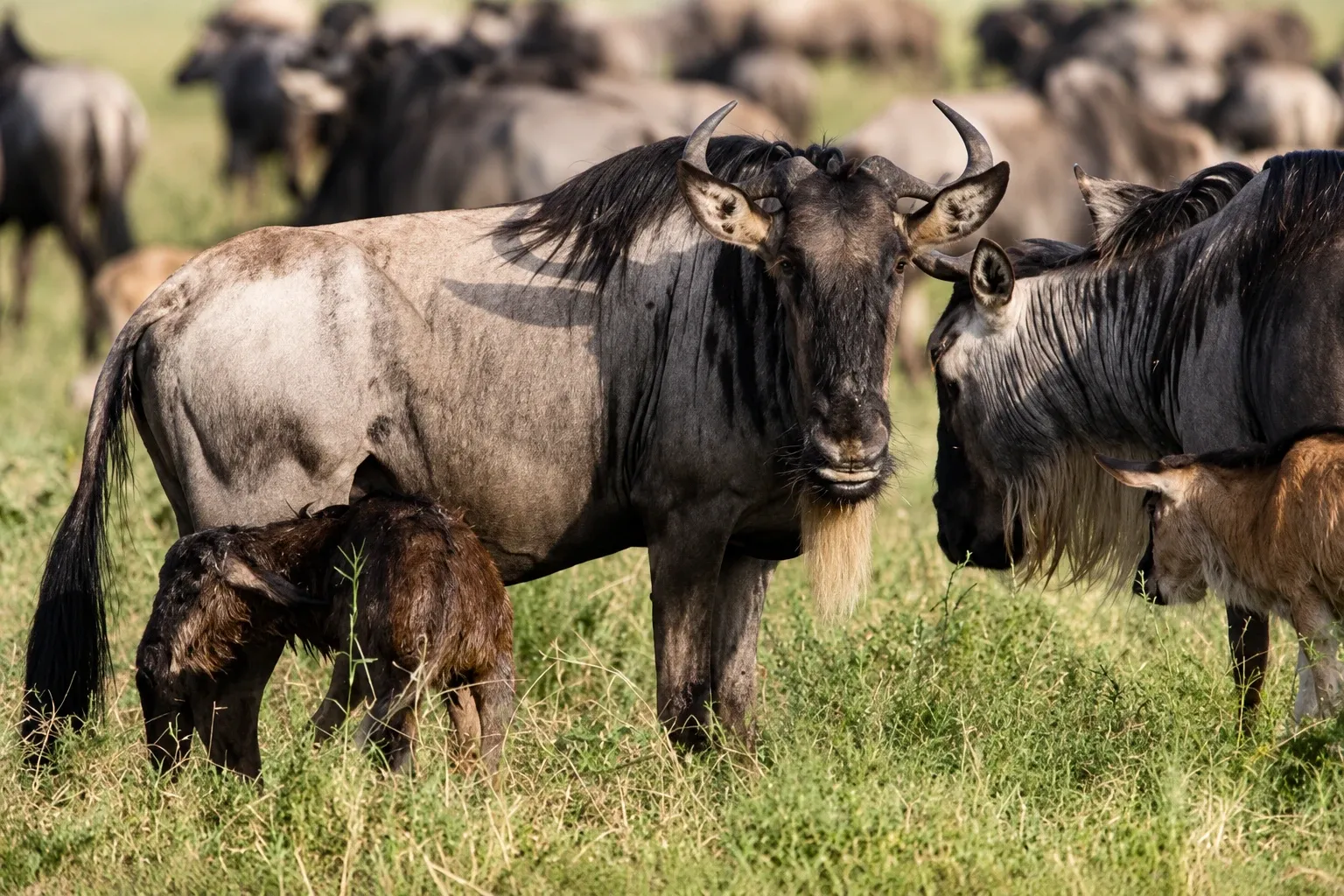
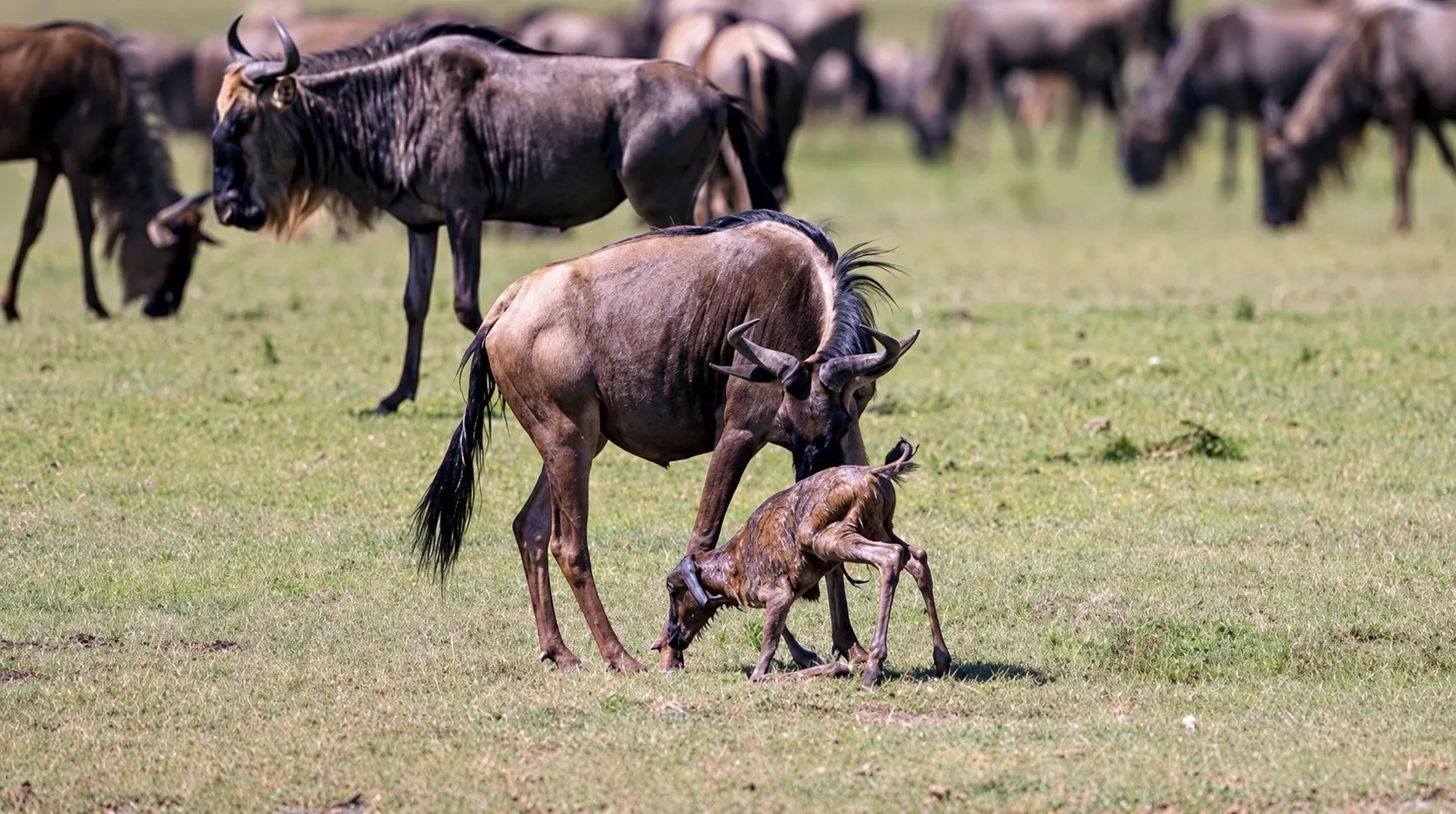
- The Great Migration calving season
- Open short-grass plains
- Wildebeest, zebras and gazelles
- Cheetahs, lions, hyenas and other predators
- Seasonal wildlife movements
- Extended game drives across a broad landscape
Ngorongoro Crater is known for:
- Wildlife concentrated within a volcanic caldera
- Large numbers of resident animals
- Opportunities to look for lions, elephants, buffaloes and black rhinos
- A defined crater-floor game-drive circuit
- Dramatic views from the crater rim
- A safari experience that can be completed in approximately half a day
Combining them provides a strong balance between seasonal migration viewing in Ndutu and resident wildlife inside Ngorongoro Crater.
Are Ndutu and Ngorongoro Crater in the Same Conservation Area?
Yes. Lake Ndutu, Lake Masek and most of the area generally called Ndutu lie within the western section of the Ngorongoro Conservation Area. Ngorongoro Crater lies farther east within the same conservation area.
Although they share the same conservation authority, they are not next to each other. Travelling between them involves crossing remote plains and highland landscapes on unpaved roads.
The Great Migration can move between Ndutu, the surrounding Ngorongoro plains and southeastern Serengeti National Park because the ecosystem is unfenced. The crater’s wildlife, by comparison, is largely resident throughout the year.
Ndutu and Ngorongoro Crater at a Glance
| Feature | Ndutu | Ngorongoro Crater |
|---|---|---|
| Protected area | Mostly Ngorongoro Conservation Area | Ngorongoro Conservation Area |
| Main attraction | Great Migration calving season | Resident wildlife within the caldera |
| Best-known season | December–March | Year-round |
| Recommended time | 2–4 nights | 1 game-drive day |
| Landscape | Lakes, woodlands and open plains | Crater floor, grassland, marsh and forest |
| Wildlife pattern | Highly seasonal | Predominantly resident |
| Main predators | Lions, cheetahs, hyenas and jackals | Lions, hyenas and occasionally leopards |
| Black rhino possibility | Uncommon | Possible, but never guaranteed |
| Accommodation | Seasonal camps and permanent lodges | Crater-rim lodges or properties in Karatu |
| Typical safari style | Flexible full-day game drives | Controlled descent and crater-floor circuit |
How Far Is Ndutu From Ngorongoro Crater?
The precise distance depends on your camp, the route used and the crater entrance or accommodation selected. Ndutu is a broad wildlife area rather than one single point.
As a practical safari estimate, allow approximately 3–4 hours between central Ndutu and the Ngorongoro Crater rim under normal conditions. The journey may take longer when:
- Roads are wet or muddy
- Wildlife stops are made
- The camp is far from the main route
- Visibility is poor
- Road conditions require a slower route
- There are delays at checkpoints
These are estimates rather than guaranteed transfer times. During the rainy calving season, conditions can change quickly.
What Is the Best Order for Visiting Ndutu and Ngorongoro Crater?
Both directions work, but the best order depends on where you start, where you finish and whether Central Serengeti is included.
Option 1: Ngorongoro Crater Before Ndutu
This is usually the best arrangement when travelling from Arusha or Moshi and finishing in Central Serengeti.
A typical route is:
Arusha or Moshi → Karatu or Ngorongoro → Ngorongoro Crater → Ndutu → Central Serengeti
Advantages:
- The crater fits naturally into the westbound route.
- You can stay near the crater before an early descent.
- Ndutu follows as the main calving-season destination.
- The safari can continue north into Central Serengeti.
- You avoid returning over the same route.
Disadvantages:
- The first days include more road travel.
- Travelling from the crater to Ndutu after a game drive can create a long day.
- A late crater exit may result in arriving in Ndutu close to sunset.
This route works best if you stay in Karatu or near the crater on the previous night, descend early and leave the crater with sufficient time to reach Ndutu.
Option 2: Ndutu Before Ngorongoro Crater
This is a practical arrangement when the safari finishes in Arusha, Moshi or at Kilimanjaro International Airport.
A typical route is:
Central Serengeti or Ndutu Airstrip → Ndutu → Ngorongoro Crater → Karatu → Arusha or Moshi
Advantages:
- The itinerary moves toward Arusha rather than backtracking.
- The crater provides a strong final wildlife experience.
- Karatu offers convenient accommodation before returning to Arusha.
- It can connect well with Tarangire National Park or Lake Manyara National Park.
Disadvantages:
- Driving from Ndutu, touring the crater and reaching Arusha on the same day is tiring.
- Leaving Ndutu very early may sacrifice valuable morning wildlife viewing.
- Road conditions can affect the arrival time at the crater.
The better version is to leave Ndutu after breakfast or a morning game drive, stay near the crater or in Karatu, and visit the crater the following day.
Option 3: Fly Into Ndutu and Drive Out Through Ngorongoro
Travellers with limited time can fly from Arusha or Zanzibar to Ndutu, spend 2–3 nights in the calving area and then travel by road through Ngorongoro Crater to Karatu or Arusha.
Advantages:
- Avoids the long road journey into Ndutu
- Preserves more time for game drives
- Suitable for shorter holidays
- Works well for families and travellers continuing to Zanzibar
Disadvantages:
- Domestic flights increase the cost.
- Light-aircraft luggage allowances are restricted.
- Seasonal schedules may not operate every day.
- The final road journey remains necessary unless flying out again.
Flight schedules and baggage rules must be checked for the traveller’s specific dates.
Recommended Ndutu and Ngorongoro Safari Length
A rushed combination can technically be completed in 3 days, but 4–5 days provides a much better balance.
| Safari length | Suggested allocation | Assessment |
|---|---|---|
| 3 days | 1 night Ndutu, 1 night near Ngorongoro | Possible but rushed; limited calving-area time |
| 4 days | 2 nights Ndutu, 1 night Karatu or crater rim | Good short option |
| 5 days | 3 nights Ndutu, 1 night near the crater | Recommended for most travellers |
| 6 days | 3 nights Ndutu, 1–2 nights Ngorongoro/Karatu | Comfortable pace with greater flexibility |
| 7+ days | Add Central Serengeti or Tarangire | Best for a wider northern-circuit safari |
If witnessing the calving season is the main objective, do not reduce Ndutu to a single night simply to include more destinations.
Recommended 5-Day Ndutu and Ngorongoro Itinerary
Day 1: Arusha to Ngorongoro Highlands
Travel from Arusha toward the Ngorongoro Conservation Area. Depending on the departure time and accommodation plan, stay in Karatu or at a lodge near the crater rim.
Karatu is usually more affordable and offers a wider choice of lodges. Crater-rim accommodation is generally more expensive but places you closer to the descent road for the following morning.
Day 2: Ngorongoro Crater Game Drive to Ndutu
After an early breakfast, enter the Ngorongoro Conservation Area and descend into the crater for a game drive.
The crater floor contains grassland, marshes, woodland and seasonal water sources. Wildlife may include lions, buffaloes, zebras, wildebeest, hippos, elephants, hyenas and, with luck, black rhinos. Sightings are never guaranteed.
After the game drive and picnic lunch, ascend from the crater and continue toward Ndutu. This is a long but practical day, so an early crater descent is important.
Day 3: Full-Day Ndutu Calving Season Safari
Spend the day exploring the Ndutu Plains, Lake Ndutu, Lake Masek and surrounding woodland or grassland according to recent wildlife information.
Your guide will plan the route around rainfall, road conditions and reported herd locations. During the calving season, the herds may be concentrated in one area or spread widely across the southern plains.
Day 4: Full-Day Ndutu Safari
A second full day provides time to explore a different section of Ndutu and wait for wildlife behaviour without rushing.
The area can provide opportunities to observe:
- Wildebeest calves
- Large zebra herds
- Cheetahs scanning the plains
- Lions near woodland or kopjes
- Hyenas and jackals
- Vultures and other scavenging birds
- Resident giraffes, elephants and antelopes
Predator hunts and actual births cannot be guaranteed.
Day 5: Ndutu to Arusha or Onward Destination
After breakfast, begin the return journey toward Karatu and Arusha. Because this is a long road transfer, some travellers may prefer to add a night in Karatu.
Alternatively, the itinerary can continue from Ndutu to Central Serengeti or include a seasonal flight from Ndutu Airstrip.
Better-Paced 6-Day Itinerary
For travellers who prefer shorter driving days, the following arrangement is more comfortable:
| Day | Route and experience | Overnight |
|---|---|---|
| Day 1 | Arusha to Karatu | Karatu |
| Day 2 | Ngorongoro Crater game drive | Crater rim or Karatu |
| Day 3 | Travel to Ndutu with wildlife viewing | Ndutu |
| Day 4 | Full-day Ndutu safari | Ndutu |
| Day 5 | Full-day Ndutu safari | Ndutu |
| Day 6 | Ndutu to Arusha, Central Serengeti or airstrip | Tour ends or continues |
This version avoids combining the crater game drive and journey to Ndutu in one demanding day. It is particularly suitable for families, older travellers and photographers carrying substantial equipment.
Should You Stay in Karatu or on the Crater Rim?
Both locations can work, but they offer different advantages.
| Factor | Karatu | Crater rim or conservation area |
|---|---|---|
| Price | Generally more affordable | Generally more expensive |
| Accommodation choice | Wide range | More limited |
| Access to crater | Longer morning transfer | Faster access to descent road |
| Views | Gardens, farms and highlands | Some lodges offer crater views |
| Access to Arusha | More convenient | Longer exit through the conservation area |
| Best for | Budget and mid-range travellers | Travellers prioritizing an early crater descent |
Staying close to the crater is useful when you want to descend early and continue to Ndutu afterward. Staying in Karatu is often better when budget, lodge choice or the return journey to Arusha is the priority.
Is It Possible to Drive From Ndutu to the Crater and Then Arusha in One Day?
It is possible, but it is not the best arrangement for most travellers.
The day may involve:
- An early departure from Ndutu
- Approximately 3–4 hours of driving toward the crater
- A crater game drive
- The ascent from the crater
- Another approximately 3–4 hours toward Arusha
Road, weather and gate conditions can make the day longer. It also leaves little time for unexpected wildlife sightings or delays.
A better plan is to overnight in Karatu after the crater game drive and return to Arusha the next morning. If the schedule is fixed, your safari specialist should verify that the route can be completed within current entry and operating regulations.
When Is the Best Time to Combine Ndutu and Ngorongoro?
The combination is most popular from January through March, when the Great Migration is commonly found across Ndutu and the surrounding southern plains.
| Period | Ndutu | Ngorongoro Crater | Overall recommendation |
|---|---|---|---|
| December | Herds may begin returning south | Good resident wildlife | Good, but migration location can vary |
| January | Strong calving-season potential | Good year-round viewing | Excellent |
| February | Principal calving period | Good year-round viewing | Most requested period |
| March | Herds may remain or begin shifting | Good year-round viewing | Excellent, depending on rainfall |
| April–May | Green, wet and quieter | Green scenery; roads may be wet | Suitable for flexible travellers |
| June–October | Main herds usually elsewhere | Reliable resident wildlife | Prioritize other Serengeti regions |
| November | Short rains may influence migration | Good year-round viewing | Migration position is less predictable |
Migration movements depend on rainfall and fresh grazing. Month-by-month patterns are useful for planning, but they cannot predict the exact position of the herds.
Can You Combine Ndutu and Ngorongoro Without Visiting Central Serengeti?
Yes. Ndutu and Ngorongoro Crater work well as a focused 4–5-day safari, especially when the traveller’s priority is the calving season.
Skipping Central Serengeti can:
- Reduce total driving time
- Lower park and accommodation costs
- Allow more time in Ndutu
- Suit travellers with limited safari days
- Make it easier to add Zanzibar
However, Central Serengeti offers varied habitats and dependable resident wildlife. Travellers with at least 6–7 safari days should consider adding 2 nights there.
How to Add Central Serengeti
A practical route is:
Arusha → Ngorongoro Crater → Ndutu → Central Serengeti → Seronera flight to Arusha or Zanzibar
Suggested allocation:
- 1 night in Karatu or near Ngorongoro
- 1 crater game-drive day
- 3 nights in Ndutu
- 2 nights in Central Serengeti
- Fly from Seronera on the final day
This order minimizes backtracking and finishes near an airstrip with more regular connections than seasonal Ndutu services.
Can You Add Tarangire National Park?
Yes, but only if the itinerary has enough time. Tarangire adds elephants, baobab landscapes and a different ecosystem from Ndutu and Ngorongoro.
A well-paced sequence is:
Arusha → Tarangire → Karatu → Ngorongoro Crater → Ndutu
Allow at least 6 safari days for this combination. With fewer days, prioritizing Ndutu and Ngorongoro may provide a stronger calving-season itinerary.
What Costs Should Travellers Consider?
The final price depends on the travel dates, group size, accommodation category, route and number of conservation-area nights.
Important cost components include:
- Ngorongoro Conservation Area entry fees
- Ngorongoro Crater service fee
- Accommodation or concession fees
- Private safari vehicle and fuel
- Professional driver-guide
- Lodges or tented camps
- Meals and drinking water
- Airport and hotel transfers
- Domestic flights, if selected
- Taxes and applicable levies
The crater service fee applies to each safari vehicle descending into the crater. Government fees can change and must be confirmed when the trip is quoted.
An exact KiliPori price should be calculated for the traveller’s dates, group size and preferred accommodation rather than estimated from a generic per-person figure.
Advantages of Combining Ndutu and Ngorongoro Crater
- Combines seasonal migration with resident wildlife
- Provides two distinctly different landscapes
- Works within a relatively compact geographic region
- Can be completed without entering Central Serengeti
- Suitable for private safaris of 4–6 days
- Offers strong predator-viewing potential
- Connects naturally with Karatu, Tarangire and Central Serengeti
- Works with both road and fly-in safari arrangements
Possible Disadvantages
- Roads between Ndutu and the crater are unpaved
- Wet-season conditions may increase journey times
- Government fees can make the combination expensive
- A rushed 3-day schedule provides limited game-drive time
- Crater traffic can be busy during peak travel periods
- Wildlife encounters are not guaranteed
- Crater-rim accommodation is often more expensive than Karatu
- Flying saves time but increases the total cost
Common Planning Mistakes
Allowing only 1 night in Ndutu
One night provides very little time to locate mobile herds or explore different habitats. Plan at least 2 nights, with 3 nights preferred.
Visiting the crater after a late departure from Ndutu
The transfer can take several hours. Arriving late reduces the time available on the crater floor and can make the day unnecessarily stressful.
Returning directly to Arusha after the crater
This creates a demanding day when combined with the journey from Ndutu. An overnight stay in Karatu is more comfortable.
Choosing accommodation by name rather than location
Some camps described as being in “Ndutu” or the “Southern Serengeti” may be far from the desired game-drive area. Confirm the exact location, not just the marketing description.
For more detail, read Ndutu Camps Inside vs Outside the Ngorongoro Conservation Area.
Treating migration dates as guaranteed
The Great Migration follows rain and fresh grass. A good itinerary allows enough time and gives the private guide flexibility to respond to current wildlife reports.
Adding too many destinations
A long list of parks does not always produce a better safari. During the calving season, 3 well-planned nights in Ndutu are usually more useful than several short overnight stops.
Who Is This Safari Combination Best For?
A combined Ndutu and Ngorongoro safari suits:
- First-time visitors to Tanzania
- Travellers visiting from January to March
- Couples seeking a private safari
- Families wanting varied wildlife without an extremely long itinerary
- Wildlife photographers
- Travellers combining safari and Zanzibar
- Visitors with approximately 4–6 safari days
It may be less suitable for travellers visiting during months when the migration is far from Ndutu. During those periods, Central, Western or Northern Serengeti may be a better match.
Responsible Safari Planning
Both Ndutu and Ngorongoro Crater are sensitive wildlife environments. Responsible travel includes:
- Following designated roads and official instructions
- Avoiding crowding around predators, births or distressed animals
- Keeping a safe distance from wildlife
- Never feeding animals
- Keeping litter inside the vehicle
- Limiting noise around wildlife
- Respecting local communities
- Using authorized accommodations and guides
- Accepting that wildlife welfare is more important than a photograph
During the calving season, guides should take particular care around newborn animals and hunting scenes.
KiliPori Expert Recommendation
For most travellers, KiliPori Safaris recommends 5 days for combining Ndutu with Ngorongoro Crater:
- 1 night in Karatu or near the crater
- 1 Ngorongoro Crater game drive
- 3 nights in Ndutu
If you plan to continue to Central Serengeti, visit the crater first and travel west through Ndutu. If you are returning to Arusha, visit Ndutu first, continue to the crater and stay overnight in Karatu before the final transfer.
Families and travellers who prefer shorter driving days should separate the Ndutu-to-Ngorongoro transfer from the crater game drive. Photographers should consider 3–4 nights in Ndutu because migration herds and predators may be distributed across a wide area.
Frequently Asked Questions
Can Ndutu and Ngorongoro Crater be visited on the same safari?
Yes. They are both within the wider Ngorongoro Conservation Area and can be combined efficiently in a 4–5-day safari.
How many nights should I spend in Ndutu?
Spend at least 2 nights in Ndutu. Three nights are recommended during the calving season because they provide 2 full game-drive days and greater flexibility to locate the herds.
How long does it take to drive from Ndutu to Ngorongoro Crater?
Allow approximately 3–4 hours as a planning estimate. The actual duration depends on the camp location, wildlife stops, weather and road conditions.
Should I visit Ngorongoro Crater before or after Ndutu?
Visit the crater first if continuing to Ndutu and Central Serengeti. Visit Ndutu first if your safari is finishing toward Karatu, Arusha or Moshi.
Can I visit the crater and drive to Ndutu on the same day?
Yes, provided the crater descent begins early. After a morning game drive and picnic lunch, you can ascend and continue to Ndutu. It will be a long travel and safari day.
Is 3 days enough for Ndutu and Ngorongoro?
Three days are technically possible but rushed. Four days are better, while 5 days allow a more useful 3-night stay in Ndutu.
Is Karatu or the crater rim better for an overnight stay?
Karatu generally offers better value and more accommodation choices. A crater-rim or conservation-area lodge provides easier access for an early crater descent but normally costs more.
Do I need to enter Serengeti National Park to visit Ndutu?
Not necessarily. Most of the main Ndutu area lies within the Ngorongoro Conservation Area. However, your guide may recommend entering southeastern Serengeti if the herds have moved across the boundary, which can affect fees.
Can I fly to Ndutu and visit Ngorongoro by road?
Yes. Seasonal flights can take you to Ndutu Airstrip, after which the safari continues by private 4×4 to Ngorongoro. Flight schedules and luggage allowances must be checked for your travel dates.
Is February the best time for this itinerary?
February is usually the most requested month because it falls within the principal wildebeest calving period. January and March can also be rewarding, depending on rainfall and herd movements.
Plan Your Trip With KiliPori Safaris
KiliPori Safaris can create a private Ndutu and Ngorongoro Crater itinerary based on your dates, group size, accommodation preference and budget.
Your safari can begin in Moshi or Arusha and include Tarangire, Central Serengeti or a flight to Zanzibar. We can also compare staying in Karatu with staying near the crater and recommend Ndutu camps based on location, comfort level and seasonal operation.
Contact us to request a personalized itinerary or an accurate quotation with accommodation, private transportation and applicable conservation fees included.
WhatsApp: +255 755 287 311
Final Recommendation
The best way to combine Ndutu with Ngorongoro Crater is to plan at least 4 days, with 5 days preferred. Allocate 2–3 nights to Ndutu and one game-drive day to the crater. Stay in Karatu or near the crater rim rather than attempting to travel from Ndutu, tour the crater and return to Arusha in one day.
Visit Ngorongoro first if you are continuing through Ndutu to Central Serengeti. Reverse the order if your safari ends in Arusha or Moshi. This combination provides seasonal Great Migration viewing on the Ndutu Plains and year-round resident wildlife inside Ngorongoro Crater without requiring an excessively long Tanzania safari.
Sources and Fact-Checking
- Ngorongoro Conservation Area Authority – Official Website
- Ngorongoro Conservation Area Authority – Ndutu Plains
- UNESCO World Heritage Centre – Ngorongoro Conservation Area
- UNESCO World Heritage Centre – Serengeti National Park
- Government fees, crater operating rules, flight schedules and baggage allowances should be reconfirmed for the traveller’s exact dates.

KiliPori Safaris Travel Team
A local Tanzania team helping travellers plan wildlife safaris, Kilimanjaro climbs and Zanzibar holidays with clear routing and direct destination support.
Published September 17, 2026. Travel conditions, fees and schedules can change; confirm time-sensitive details before departure.