Explore this guide
Our guides combine current planning research with practical knowledge from arranging safaris, Kilimanjaro climbs and Zanzibar holidays.
Ndutu Calving Season Safari Guide: Best Time, Wildlife and Trip Planning
The best period for a Ndutu calving season safari is usually from late January through February, although wildebeest movements depend on rainfall and fresh grazing. Spend at least 3 nights in Ndutu for 2 full days of game viewing. A well-balanced itinerary can combine Ndutu with Central Serengeti, Ngorongoro Crater or Tarangire National Park.
What Is the Ndutu Calving Season?
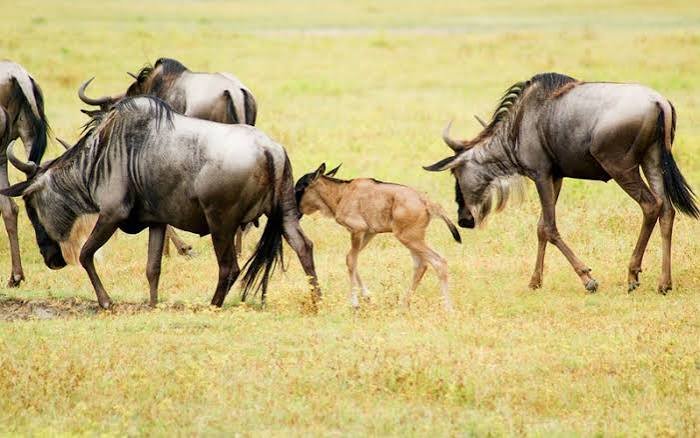
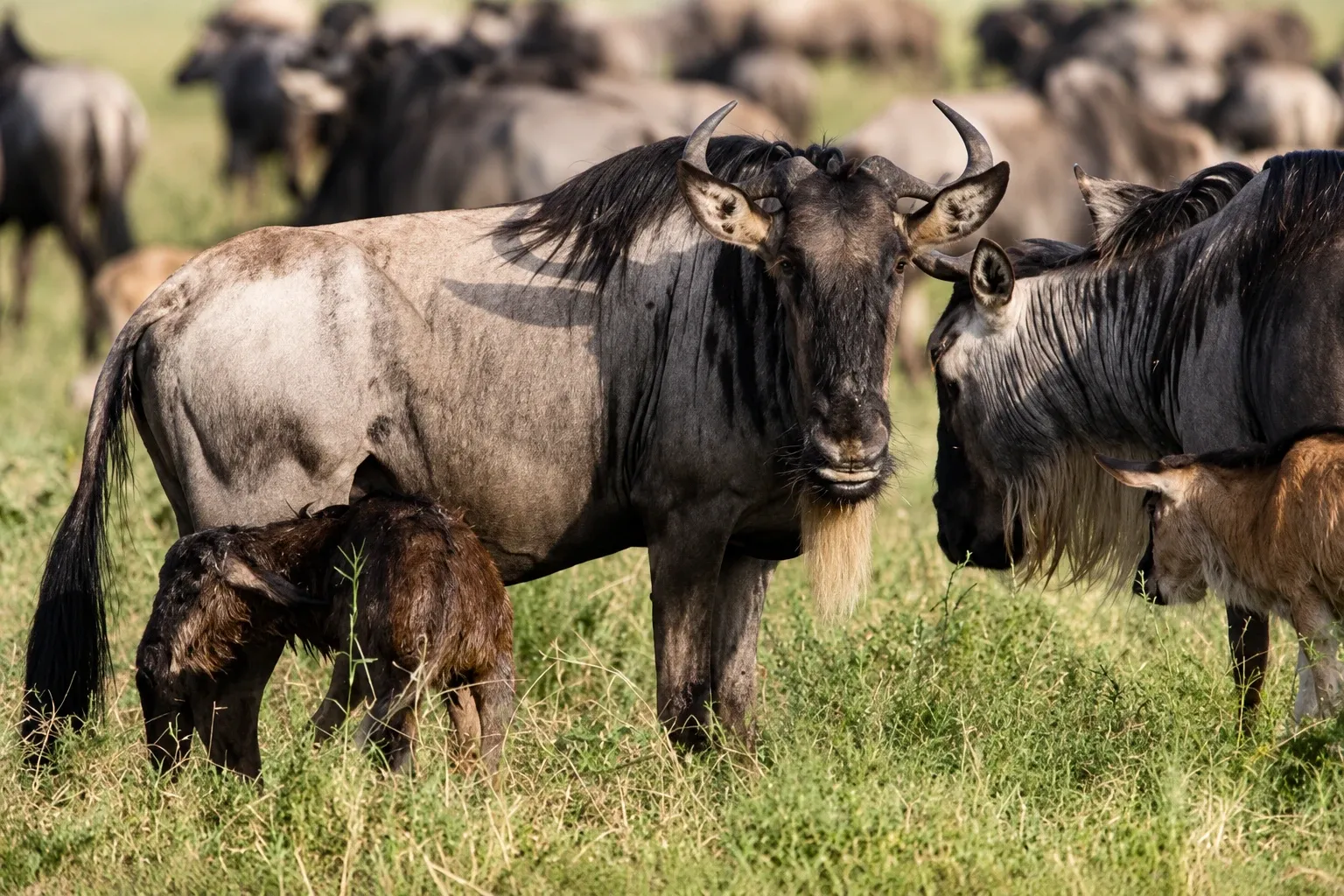
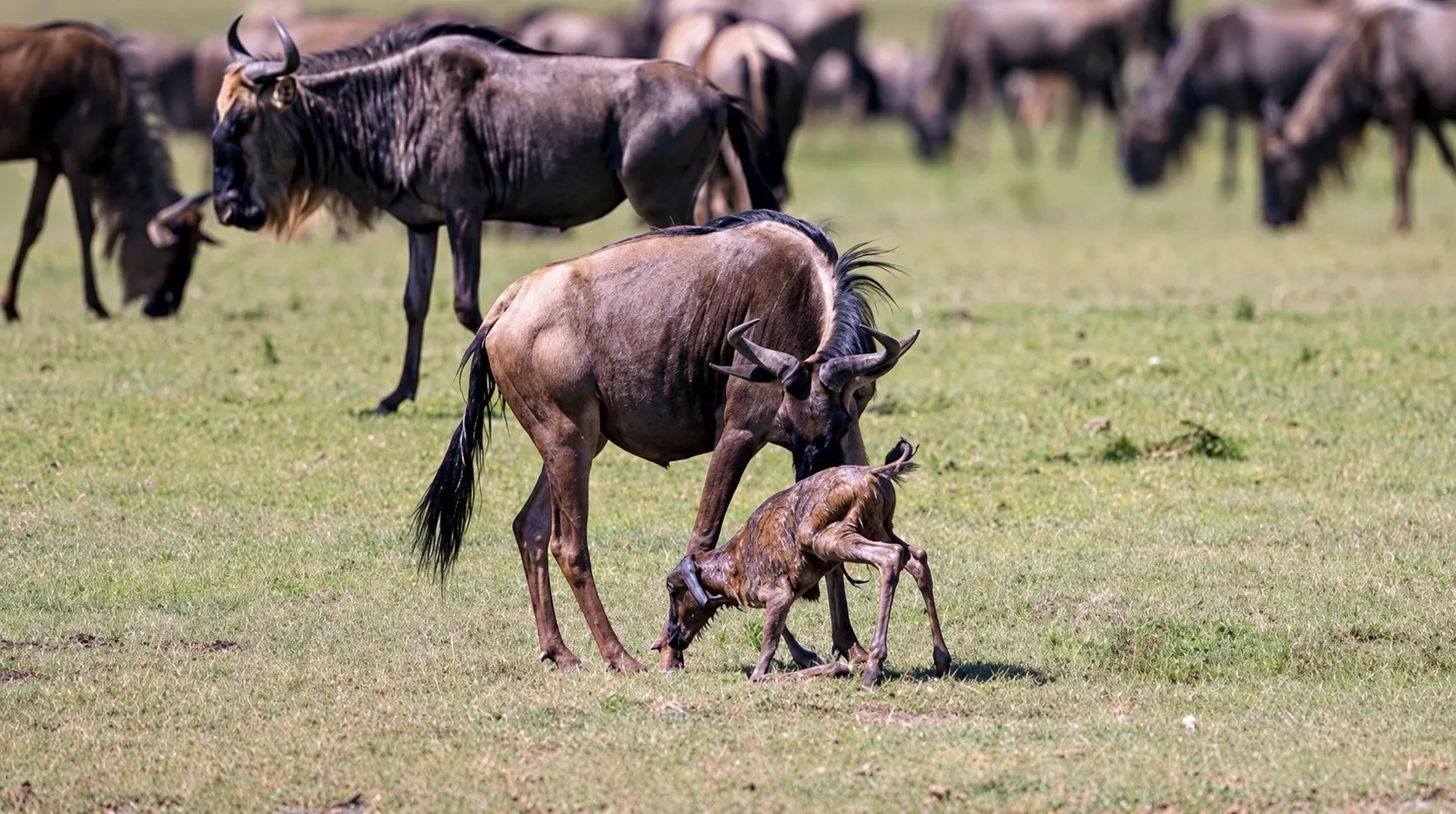
The Ndutu calving season is the period when large concentrations of migratory wildebeest gather on the short-grass plains of the southern Serengeti ecosystem to give birth.
The wider Great Migration involves wildebeest, zebras and gazelles moving through the Serengeti–Mara ecosystem in search of water and fresh grazing. UNESCO describes it as an annual circular movement involving more than 1 million wildebeest and hundreds of thousands of other grazing animals.
During the main calving period, many births occur within a relatively short number of weeks. TANAPA information indicates that more than 250,000 wildebeest calves are born annually, with a large proportion arriving during a concentrated period around February.
This abundance of vulnerable young animals also attracts predators. Lions, cheetahs, hyenas and jackals may be seen following the herds, while leopards are more commonly searched for around woodland and riverine habitats.
Wildlife sightings and live births can never be guaranteed. The location of the herds changes according to rainfall, water and the condition of the grass.
Where Is Ndutu in Tanzania?
Ndutu lies within the southern Serengeti ecosystem in northern Tanzania, close to the boundary between Ngorongoro Conservation Area and Serengeti National Park.

KiliPori Safaris Travel Team
A local Tanzania team helping travellers plan wildlife safaris, Kilimanjaro climbs and Zanzibar holidays with clear routing and direct destination support.
Published September 14, 2026. Travel conditions, fees and schedules can change; confirm time-sensitive details before departure.