Explore this guide
Our guides combine current planning research with practical knowledge from arranging safaris, Kilimanjaro climbs and Zanzibar holidays.
Is the Calving Season Still Happening in Ndutu in March?
Yes. March falls within the broader January-to-March calving period in the Southern Serengeti.
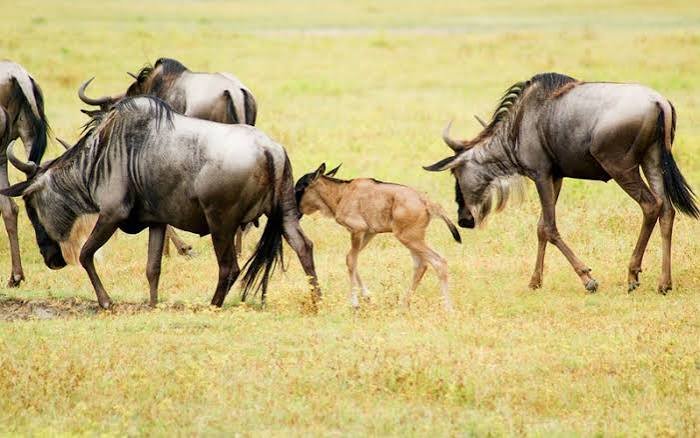
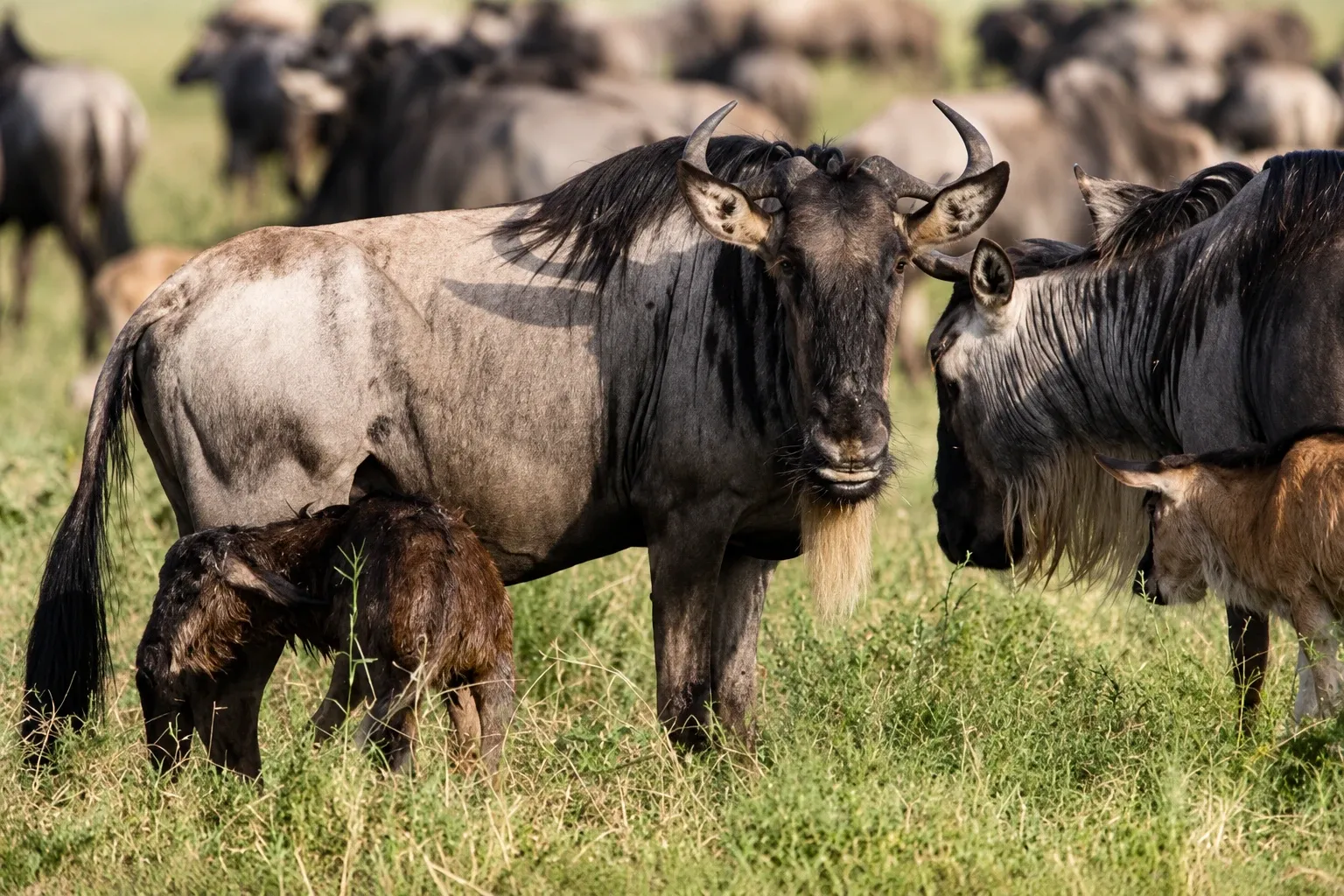
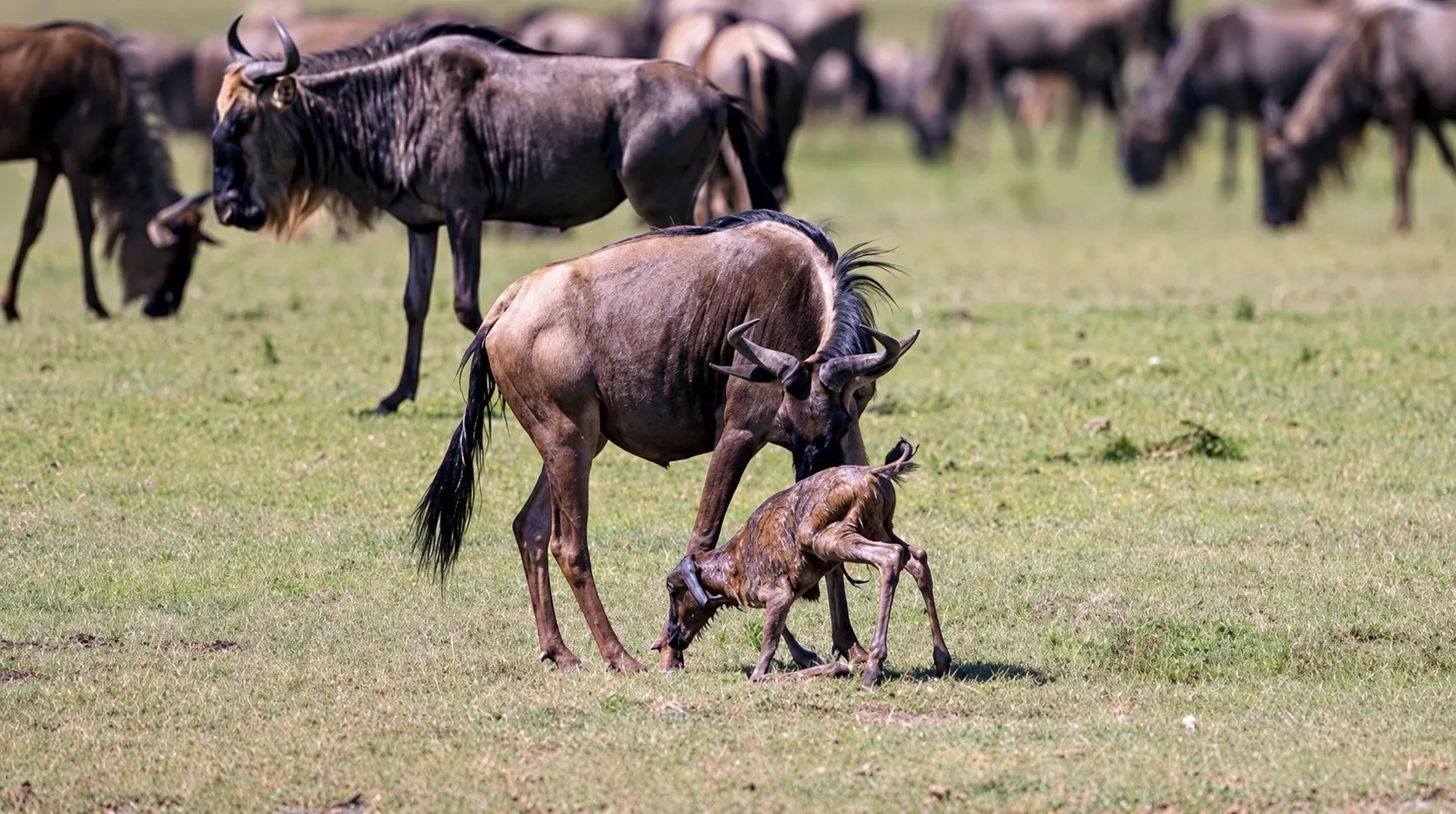
This is important because some travellers assume that the calving season effectively ends when February finishes. In reality, March can still offer opportunities to see wildebeest with young calves, large grazing groups and predator activity.
TANAPA's tourism publication describes January through March as the annual calving period and identifies the Southern Serengeti, particularly the Ndutu area and surrounding short-grass plains, as the heart of this seasonal concentration.
What changes in March is that the ecosystem is responding to the continuing movement of the herds and changing environmental conditions. The exact location of the animals cannot be fixed to a calendar date.
For this reason, KiliPori Safaris advises travellers to think of March as part of the calving-season window rather than expecting a particular herd to be in one exact location every day.
What Makes Ndutu Different in March?
March is interesting because you are visiting the ecosystem later in the main calving period rather than at its beginning.
By this stage, some calves are no longer newborns. They are becoming stronger and more mobile, while the wider herds continue to graze across the Southern Serengeti.
The result is a safari environment containing different stages of the calving cycle.
You may see:
-
Wildebeest with very young calves
-
Older calves moving with their mothers
-
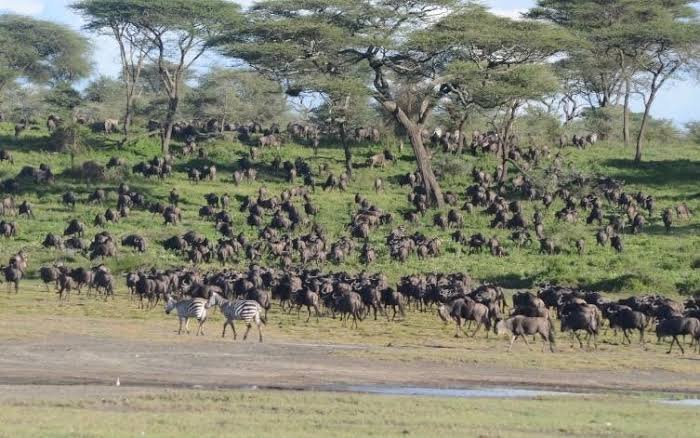
Large grazing herds
-
Zebra and gazelle alongside wildebeest
-
Lions following concentrations of prey
-
Cheetahs hunting or scanning open plains
-
Spotted hyenas moving through the grasslands
-
Large numbers of birds associated with the productive green-season environment
This makes March different from simply asking whether you can "see the migration."
The more useful question is what stage of the seasonal cycle the ecosystem is experiencing when you arrive.
Where Are the Wildebeest in March?
The wildebeest do not follow an exact route that can be predicted by date alone.
Their movement is strongly influenced by the availability of fresh grazing and water, which are themselves affected by rainfall.
The Southern Serengeti and Ndutu area are particularly important during the calving period because of the nutrient-rich short-grass plains. TANAPA notes that these plains provide important grazing conditions for pregnant and lactating wildebeest.
In March, a safari guide therefore needs to look at current conditions rather than simply follow a fixed itinerary.
At KiliPori Safaris, we recommend giving your guide enough flexibility to adjust game-drive locations according to recent wildlife movements and road conditions.
This is one reason several nights in the area can be more useful than trying to visit Ndutu for only a few hours.
What Wildlife Can You See Around Ndutu in March?
Wildebeest remain the main seasonal attraction, but the Ndutu ecosystem supports a much wider wildlife community.
Potential sightings include:
-
Wildebeest
-
Zebra
-
Thomson's gazelles
-
Grant's gazelles
-
Lions
-
Cheetahs
-
Spotted hyenas
-
Jackals
-
Giraffes
-
Elephants
-
Warthogs
-
Other plains antelope
-
Resident and migratory bird species
The concentration of herbivores is particularly important for predators.
A February or March safari should therefore not be planned only around seeing newborn wildebeest. The wider attraction is the interaction between grazing animals, predators, birds and the changing landscape.
As always, wildlife sightings are not guaranteed. A responsible safari plan should allow for natural variation rather than promising specific animals or behaviour.
Why March Can Be Interesting for Wildlife Photography
March can suit photographers who want more than standard wildlife portraits.
The combination of green landscapes, open plains, herds, young animals and predators can create opportunities for different types of photography.
A long lens is useful for animals at a distance, while a wider lens can help show the relationship between wildlife and the landscape.
For photographers interested in behavioural images, patience is more important than simply driving from sighting to sighting.
You may spend time watching a herd before anything significant happens. A predator approaching a group of wildebeest, a mother protecting a calf or a large herd moving across an open plain can provide stronger storytelling opportunities than a simple close-up photograph.
At KiliPori Safaris, we recommend telling your guide before the safari whether your priority is wildlife portraits, predator behaviour, newborn animals, landscapes or a mixture of all four.
What Is the Weather Like in Ndutu in March?
March can bring a mixture of warm conditions, green landscapes and rainfall.
Tanzania's March-to-May period is generally associated with the long rains, although rainfall patterns vary by location and year. TANAPA's current trip-planning information also notes that March to May is the long-rain period nationally and advises travellers to consider road conditions.
For Ndutu, this means travellers should be prepared for changing conditions.
Rain can contribute to the fresh vegetation that supports the seasonal wildlife concentration, but heavy rainfall can also affect some safari tracks.
A March safari therefore benefits from practical planning rather than relying on the assumption that every day will be dry.
Pack a waterproof layer, protect camera equipment and allow some flexibility in driving times.
Does Rain Affect a March Ndutu Safari?
Rain does not automatically mean that a March safari is cancelled or unsuccessful.
In fact, rainfall is part of the ecological cycle that produces the green grazing conditions associated with the calving season.
The practical issue is road and track condition.
After substantial rain, some tracks can become muddy, and a journey that looks short on a map may take longer than expected.
TANAPA advises travellers to consider road conditions when planning travel during the rainy period and to follow park rules and guide instructions.
For this reason, a well-planned March itinerary should avoid unnecessarily tight schedules between distant destinations.
How Long Should You Stay in Ndutu in March?
The right number of nights depends on whether Ndutu is your main objective or simply one part of a longer Tanzania safari.
For travellers specifically interested in the calving season, around 3 nights is a practical starting point.
This gives you several game-drive opportunities and some flexibility if weather or wildlife movement affects one particular day.
Two nights can work for travellers with limited time.
If wildlife photography is the main purpose of the trip, additional nights can provide more flexibility and reduce the pressure to obtain everything from one or two game drives.
At KiliPori Safaris, we would rather give a traveller enough time in Ndutu than add several destinations that create long transfer days and leave too little time for actual wildlife viewing.
What Is the Difference Between Ndutu in February and March?
February and March are both within the broader calving-season period, but they should not be treated as identical.
| February | March |
|---|---|
| Often associated with intense calving activity | Calving can still continue |
| Many very young calves may be present | Some calves are becoming more mobile |
| Strong predator interest around vulnerable young | Predator activity can continue as herds remain concentrated |
| Generally part of the green-season period | Increasing possibility of long-rain conditions |
| Good for travellers focused specifically on peak calving | Useful for travellers whose dates fall in March and still want the calving ecosystem |
These are broad seasonal patterns rather than fixed rules.
The actual experience depends on rainfall, grazing conditions and where the herds are concentrated during your visit.
If your travel dates are fixed in March, there is no reason to assume that the calving season has already finished.
Should You Visit Ndutu or Central Serengeti in March?
This depends on your main safari objective.
If your priority is the early-year calving ecosystem, Ndutu and the Southern Serengeti should receive significant attention.
If your priority is to experience a broader Serengeti landscape and follow changing wildlife distribution, adding Central Serengeti can make sense.
The two areas can therefore complement each other.
A longer itinerary could include Ndutu followed by Central Serengeti rather than choosing one location exclusively.
At KiliPori Safaris, we normally design the route according to the number of days available. A short safari should be geographically focused, while a longer safari gives more room to combine different ecosystems.
Can You Combine Ndutu With Ngorongoro in March?
Yes.
Ndutu and the Ngorongoro Conservation Area can be combined within a Northern Tanzania safari.
The important planning question is whether the traveller wants to visit the Ngorongoro Crater itself or simply travel through or stay within the wider conservation area.
If the calving season is the main objective, we recommend protecting sufficient time for Ndutu rather than reducing the stay there to make room for too many additional stops.
A combination such as:
Arusha → Ngorongoro area → Ndutu → Central Serengeti
can be considered for a longer itinerary, with the exact route depending on accommodation, road conditions and available safari days.
How Do You Get to Ndutu in March?
Ndutu can be reached as part of a road safari through Northern Tanzania, and flights can also be incorporated where appropriate airstrips and schedules match the itinerary.
Road travel is useful when you want to combine Ndutu with destinations such as Tarangire and the Ngorongoro area.
Flying can be considered when reducing road-transfer time is more important.
There is no single route that suits every traveller.
For example, someone with seven safari days has more flexibility to travel by road and visit several destinations, while a traveller with only three or four days may benefit from a more focused itinerary.
KiliPori Safaris can structure the route around the traveller's arrival point, safari duration and whether Zanzibar is included after the safari.
What Should You Pack for Ndutu in March?
March requires practical packing because weather conditions can change.
We recommend:
-
Lightweight safari clothing
-
Long trousers
-
Comfortable shirts
-
Warm layer for early mornings
-
Waterproof or rain jacket
-
Comfortable closed shoes
-
Hat
-
Sunglasses
-
Sunscreen
-
Binoculars
-
Camera and lenses
-
Spare batteries
-
Extra memory cards
-
Power bank
-
Personal medication
-
Small day bag
-
Protection for camera equipment against rain
Avoid bringing unnecessary heavy luggage.
If you are combining safari with Zanzibar, pack according to both parts of the trip rather than carrying everything in one large suitcase during the safari.
What Safari Activities Are Available in Ndutu in March?
Game Drives
Game drives are the primary way to explore the wildlife around Ndutu.
The daily route should respond to current wildlife conditions rather than follow a rigid sightseeing checklist.
Wildlife Photography
March can be particularly useful for photographers interested in calves, herds, predators and green landscapes.
A private safari vehicle can provide greater flexibility when photography is a major objective.
Bird Watching
The green-season environment also makes Ndutu interesting for birdwatchers.
Travellers who are serious about bird photography or bird identification should communicate this before the safari so the guide can incorporate birding into the daily plan.
Is March a Good Month for a Ndutu Safari?
March can be a good month for travellers who want to experience the later part of the Ndutu calving season and who are comfortable with the possibility of wetter conditions.
It is especially relevant for travellers whose dates are already fixed in March and who do not want to postpone their Tanzania safari simply because February is often highlighted in calving-season guides.
The main consideration is expectations.
March should not be sold as a guaranteed peak-calving experience on every date. The migration is a natural system, and wildlife distribution changes with environmental conditions.
TANAPA's own description places the calving season across January to March, which supports treating March as part of the wider calving-season period.
Who Will Enjoy Ndutu in March Most?
March can be particularly suitable for:
-
Travellers interested in the wildebeest calving cycle
-
Wildlife photographers
-
Nature enthusiasts
-
Couples looking for a focused safari
-
Travellers combining safari with Zanzibar
-
Repeat Tanzania safari visitors
-
Travellers who prefer greener landscapes
It may be less suitable for someone whose only priority is completely dry weather.
It may also be less practical for a very short itinerary that requires several long road transfers.
The best March itinerary is therefore one that matches the traveller's priorities rather than trying to reproduce a February itinerary exactly.
Frequently Asked Questions About Ndutu in March
Is March still calving season in Ndutu?
Yes. March falls within the broader January-to-March calving period in the Southern Serengeti and Ndutu area. The exact level of calving activity varies from year to year.
Can I see newborn wildebeest in March?
Yes, it is possible. March can still provide opportunities to see wildebeest with young calves, although the age and concentration of calves will vary depending on the timing of births and herd movements.
Is February or March better for Ndutu?
They represent different points within the same seasonal cycle. February is commonly associated with intense calving activity, while March can provide a later-stage calving experience. The actual conditions depend on rainfall and wildlife movement.
What animals can I see in Ndutu in March?
Possible sightings include wildebeest, zebra, gazelles, lions, cheetahs, spotted hyenas, giraffes, elephants and many bird species. Wildlife sightings cannot be guaranteed.
Does it rain in Ndutu in March?
Rain is possible and March falls within Tanzania's broader long-rain period. Conditions vary by location and year, so travellers should prepare for changing weather.
How many nights should I spend in Ndutu in March?
Around three nights is a practical starting point for travellers whose main objective is the calving season. Additional nights can be useful for photographers and travellers who want more flexibility.
Can I visit Ndutu and Central Serengeti in the same safari?
Yes. The two areas can be combined, especially when you have enough safari days to avoid spending too much time on long transfers.
Can I combine a March Ndutu safari with Zanzibar?
Yes. A Tanzania safari can be followed by a Zanzibar holiday. The practical connection depends on the safari route, departure airstrip and available flight schedules.
Is Ndutu worth visiting if I can only travel in March?
March remains within the recognised calving-season period, so travellers with March dates can still plan a safari around Ndutu. The important consideration is realistic planning around natural wildlife movement and possible rain.
Plan Your March Ndutu Safari With KiliPori Safaris
A March safari to Ndutu should be planned around the seasonal conditions rather than simply copying a January or February itinerary.
KiliPori Safaris can tailor a private Tanzania safari around your travel dates, preferred accommodation level, group size and overall route.
Depending on your available time, the safari can include:
-
Ndutu
-
Southern Serengeti
-
Central Serengeti
-
Ngorongoro Conservation Area
-
Tarangire National Park
-
Zanzibar
For travellers whose main objective is calving, we recommend giving Ndutu enough nights before adding too many other destinations.
For travellers with more time, Ndutu can form one part of a wider Northern Tanzania safari.
To discuss your March safari plans or request a personalised itinerary:
WhatsApp: +255 755 287 311
Final Recommendation
Ndutu in March remains relevant for travellers who want to experience the Southern Serengeti during the later part of the annual wildebeest calving season. The season extends through March, but the wildlife situation is naturally variable and should not be treated as a fixed calendar.
The biggest planning mistake is to assume that March means the calving season is already finished. The better approach is to understand March as part of the wider January-to-March seasonal cycle and allow enough time for your guide to respond to current wildlife movements.
For travellers with March dates, KiliPori Safaris recommends focusing the itinerary around Ndutu when calving is the priority, while allowing room for Central Serengeti, Ngorongoro or other Northern Circuit destinations when the total safari length permits.

KiliPori Safaris Travel Team
A local Tanzania team helping travellers plan wildlife safaris, Kilimanjaro climbs and Zanzibar holidays with clear routing and direct destination support.
Published September 17, 2026. Travel conditions, fees and schedules can change; confirm time-sensitive details before departure.