Explore this guide
Our guides combine current planning research with practical knowledge from arranging safaris, Kilimanjaro climbs and Zanzibar holidays.
What Is the Best Time to Avoid Crowds During the Great Migration?
April–May and November are generally among the quieter periods for a Serengeti safari, while January - March can also provide a less crowded migration experience in the Southern Serengeti compared with the peak Mara River crossing period.
The trade-off is that quieter periods can bring changing weather and more dispersed herds. However, travelers who prioritize space, photography and a relaxed game-drive experience may prefer these periods over the busiest July–September weeks.
For travelers who specifically want the Mara River crossings, early or later in the Northern Serengeti season can help reduce the pressure associated with the peak period, although crossing activity itself remains unpredictable.
Which Serengeti Areas Are Quieter During the Great Migration?
The Southern Serengeti, Western Corridor and parts of Northern Serengeti can offer quieter game drives than the busiest areas around major migration sightings. The right area depends on where the herds are moving during your travel dates.
Southern Serengeti and Ndutu
Ndutu and the Southern Serengeti are excellent choices for a quieter migration safari during the calving season. From approximately December to March, the area attracts large numbers of wildebeest for calving, along with predators such as lions, cheetahs and hyenas.
The migration can be spectacular without requiring travelers to concentrate around a single river crossing point.
Western Corridor and Grumeti
The Western Corridor can be a good alternative for travelers seeking migration scenery with fewer vehicles. The herds generally move through this region around May to July, with the Grumeti area providing opportunities for wildlife viewing and possible river-crossing activity.
The Western Corridor can be particularly attractive for travelers who want to experience the migration while avoiding the concentration associated with the famous Mara River crossings.
Northern Serengeti
Northern Serengeti offers access to the Mara River while still providing quieter areas away from the main crossing points. Kogatende is the main access area, while the wider northern region includes quieter landscapes around Lamai and other remote areas.
The key is not simply choosing Northern Serengeti, but choosing where to stay and which crossing areas your guide uses.
Can You See the Great Migration Without Going to a Crowded Mara River Crossing?
Yes. You do not need to spend your entire safari waiting at a busy river crossing to experience the Great Migration.
The migration covers a huge ecosystem, and the herds spend much of the year moving across open plains rather than crossing rivers.
Depending on your travel dates, you can experience:
-
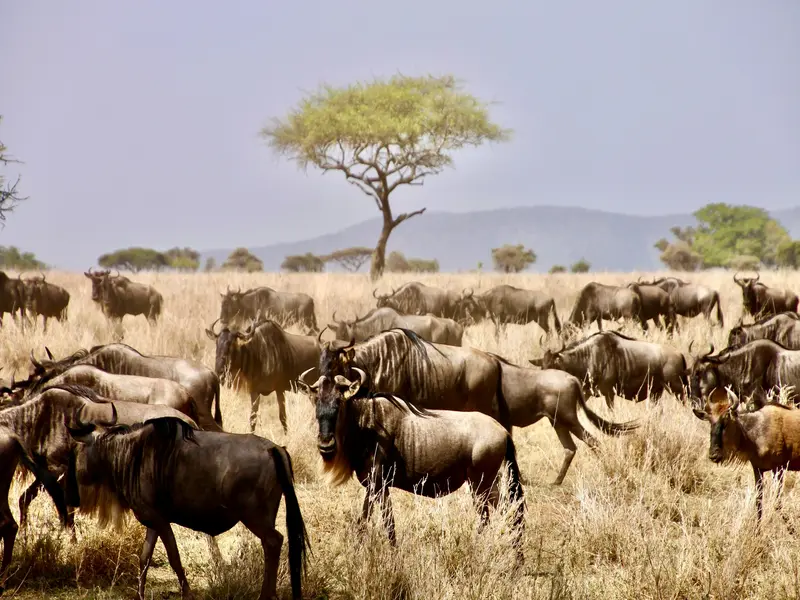
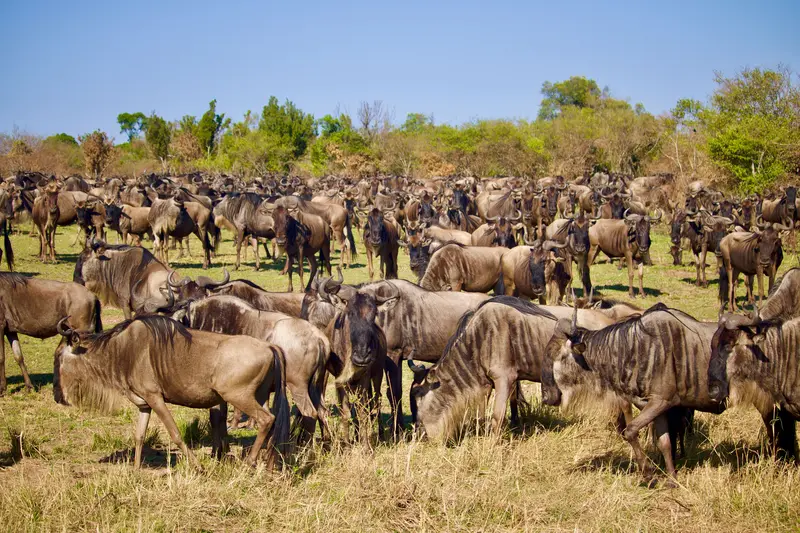
Large wildebeest herds
-
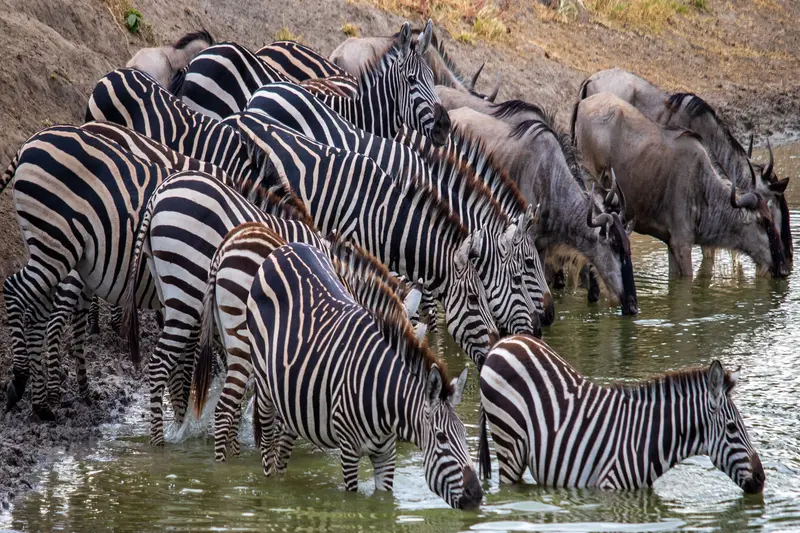
Zebra accompanying the migration
-
Predator activity
-
Calving
-
Herds moving across open plains
-
Dramatic landscapes
-
Wildlife photography
-
River crossings in quieter circumstances
This approach can provide a more varied safari than focusing exclusively on one famous crossing.
How Can You Avoid Crowds During Mara River Crossings?
The best strategy is to stay near the migration area but avoid concentrating your entire safari around the most famous crossing points.
Mara River crossings are unpredictable. Herds may gather near the river for hours before crossing, change direction or move away entirely. TANAPA therefore requires vehicles attending crossings to remain stationary in designated viewing areas rather than approaching the animals.
A quieter strategy includes:
-
Staying several nights in Northern Serengeti
-
Choosing accommodation away from the largest camp clusters
-
Using experienced local guides
-
Starting game drives early
-
Exploring alternative wildlife areas when no crossing is developing
-
Avoiding the assumption that every day must be spent at the river
This gives you a migration-focused safari without making the river crossing the only objective.
Which Is Quieter: Kogatende or Lamai?
Lamai can offer a quieter Northern Serengeti experience than the main Kogatende area, particularly when the goal is to stay away from the largest concentration of camps and vehicles.
Kogatende is an important access point for the Mara River and has a larger concentration of safari infrastructure. Lamai and the surrounding northern landscape can provide a more remote setting while still giving access to the migration area.
The choice should depend on the exact migration location, accommodation availability and your preferred balance between accessibility and seclusion.
Does Staying in a Mobile Camp Help Avoid Crowds?
Yes, a well-positioned mobile camp can help reduce unnecessary driving and place you closer to the seasonal migration area.
Mobile camps can relocate according to the movement of the herds, allowing travelers to stay closer to the migration rather than repeatedly driving long distances from a permanent base.
For travelers seeking a quieter experience, a small seasonal or mobile camp can also provide a more intimate safari atmosphere than a large accommodation property.
However, the camp itself does not guarantee solitude. The location, season and daily game-drive strategy remain important.
What Type of Accommodation Is Best for a Quiet Migration Safari?
Small tented camps, seasonal camps and mobile camps are particularly useful for travelers who prioritize a quieter safari experience.
When choosing accommodation, consider:
-
Number of tents or rooms
-
Distance from major migration areas
-
Location relative to busy game-drive routes
-
Whether the camp moves seasonally
-
Number of vehicles operating from the camp
-
Access to quieter areas
-
Distance from the nearest airstrip
A camp located close to the migration can reduce long transfers and allow more time for wildlife viewing.
How Can Early Game Drives Help Avoid Crowds?
Starting your game drive early is one of the simplest ways to reduce encounters with other safari vehicles.
Early departures allow you to reach wildlife areas before many vehicles arrive. Morning light can also provide excellent conditions for photography and wildlife activity.
Instead of waiting until late morning to begin a game drive, a private safari can leave shortly after sunrise and explore quieter tracks before traffic increases.
This is particularly useful around popular wildlife sightings in Central Serengeti and during peak migration periods.
Is Central Serengeti Too Crowded for a Great Migration Safari?
Central Serengeti can be busier than remote sectors, but it does not mean every game drive will be crowded.
The Seronera area is popular because of its year-round resident wildlife, good accessibility and central position within the park. This makes it an important safari base, but also means certain wildlife sightings can attract several vehicles.
To reduce crowd exposure in Central Serengeti:
-
Start early
-
Avoid spending the whole day around one famous sighting
-
Explore less-used tracks
-
Stay flexible with your route
-
Work with a guide who knows the area well
-
Spend some nights in another sector if your itinerary allows
How Many Days Do You Need for a Less Crowded Great Migration Safari?
A 5 to 7 day safari gives you more flexibility to avoid crowds than a 2–3 day itinerary.
A longer safari allows you to spend several nights in the migration area instead of trying to find the herds and return to Arusha within a short period.
For example:
Day 1: Arusha – Ngorongoro Highlands
Day 2: Ngorongoro Crater – Serengeti
Day 3: Serengeti – Migration game drives
Day 4: Serengeti – Explore quieter areas
Day 5: Serengeti – Full-day migration safari
Day 6: Serengeti – Morning game drive – Arusha
For Northern Serengeti and Mara River crossings, spending at least three nights in the area gives you more opportunities to adapt to herd movement and river conditions.
Can a Private Safari Help Avoid Crowds?
Yes. A private safari provides greater flexibility to change the timing and direction of your game drives.
Instead of following a fixed shared-vehicle schedule, your guide can adjust the day according to wildlife movement, road conditions and the number of vehicles around a sighting.
A private vehicle also makes it easier to:
-
Leave early
-
Spend longer at productive locations
-
Move away from crowded sightings
-
Explore alternative areas
-
Follow the family's or photographer's preferred pace
-
Return to camp when desired
The goal is not to avoid every other vehicle, but to minimize time spent in heavily concentrated areas.
What Are the Quietest Months for a Serengeti Safari?
April - May and November are among the quieter periods, while the Southern Serengeti can provide a relatively less crowded migration experience during the calving season compared with the peak northern crossing period.
A simple planning guide is:
| Period | Main Area | Migration Experience | Crowd Level |
|---|---|---|---|
| Jan–Mar | Ndutu & Southern Serengeti | Calving, predators, large herds | Low–Moderate |
| Apr–May | Central & Western Serengeti | Herd movement, green landscapes | Lower |
| Jun–Jul | Western & Northern Serengeti | Herd movement, possible river activity | Moderate |
| Jul–Sep | Northern Serengeti | Mara River crossings | Highest around major crossings |
| Oct | Northern Serengeti | Late crossings & movement south | Moderate |
| Nov–Dec | Southern/Eastern Serengeti | Herds moving south | Lower |
These are broad seasonal patterns rather than fixed migration dates because rainfall and pasture conditions influence herd movement.
How Can Photographers Avoid Crowds During the Great Migration?
Photographers should prioritize less crowded sectors, early game drives and longer stays rather than chasing the most famous sighting.
For example:
-
January - March: focus on Ndutu for calves, predators and herds.
-
May - July: consider the Western Corridor and Grumeti.
-
July - October: stay in Northern Serengeti but explore away from the busiest crossing points.
-
Use early morning light.
-
Spend multiple nights in one area.
-
Choose a small or mobile camp.
-
Work with a guide experienced in wildlife positioning.
For photography, fewer vehicles can make a significant difference because you have more opportunities to compose images without vehicles dominating the background.
Is the Great Migration Still Worth Visiting Outside Peak Season?
Yes. The Great Migration is more than the Mara River crossings. Outside the peak northern crossing period, travelers can experience enormous herds, predator encounters, calving, dramatic landscapes and the movement of animals across the Serengeti.
Traveling outside peak season can also provide greener scenery, fewer vehicles and a more relaxed pace, although weather and herd locations are less predictable.
For travelers who value space and wildlife immersion more than witnessing a specific river crossing, quieter periods can be particularly attractive.
What We Recommend at Kilipori Safaris
At Kilipori Safaris, we recommend planning a quieter Great Migration safari around season, location, accommodation and game-drive timing rather than simply booking the busiest migration month.
For January - March, we recommend Ndutu and Southern Serengeti for travelers who want calving, predator action and large herds with fewer vehicles than the peak Mara River period.
For May - July, the Western Corridor and Grumeti area can provide a quieter migration experience while the herds move north.
For July - October, we recommend staying in Northern Serengeti if the Mara River is your priority, but choosing accommodation and game-drive routes that allow you to explore beyond the busiest crossing points.
We also recommend private safari vehicles, early morning game drives and at least 5 - 7 days for travelers who want flexibility rather than rushing between locations.
Plan a quieter Great Migration safari with Kilipori Safaris.
WhatsApp: +255 755 287 311.
Frequently Asked Questions
What is the best way to avoid crowds on a Great Migration safari?
Travel during quieter periods, stay in a less crowded migration sector, choose a small or mobile camp and start game drives early.
What are the quietest months for the Great Migration?
April - May and November are generally quieter, while January - March can also provide a less crowded migration experience in the Southern Serengeti.
Can I see the Great Migration without visiting the Mara River?
Yes. The migration can be experienced in Ndutu, Southern Serengeti, Central Serengeti and the Western Corridor, depending on the season.
Which Serengeti area is quieter during the Mara River season?
Lamai and more remote parts of Northern Serengeti can provide a quieter experience than the main Kogatende crossing areas, although conditions vary according to where the herds and other vehicles are on a particular day.
Is Ndutu less crowded than Northern Serengeti during the Mara River season?
Yes, Ndutu is generally much quieter during July–October because the main migration focus has shifted north. Ndutu is most relevant for the Southern Serengeti calving season.
Does a mobile camp help avoid crowds?
A mobile camp can reduce unnecessary driving and place you closer to the seasonal migration area. It does not guarantee a crowd-free experience, but its location can help.
How many days should I spend on a quiet Great Migration safari?
Five to seven days provides good flexibility. For a Northern Serengeti safari focused on the Mara River, three or more nights in the region can provide additional opportunities to respond to changing herd movement.
Can I have a private Great Migration safari with fewer vehicles?
Yes. A private safari gives you greater flexibility to choose departure times, change routes and leave crowded wildlife sightings.
Can I see the Mara River crossing without crowds?
You can reduce crowd exposure by choosing the right camp, timing and crossing area, but no operator can guarantee a completely crowd-free river crossing. TANAPA regulates vehicle positioning at crossing points, and the number of vehicles depends on the conditions and visitor demand at the time.

KiliPori Safaris Travel Team
A local Tanzania team helping travellers plan wildlife safaris, Kilimanjaro climbs and Zanzibar holidays with clear routing and direct destination support.
Published September 25, 2026. Travel conditions, fees and schedules can change; confirm time-sensitive details before departure.