Explore this guide
Our guides combine current planning research with practical knowledge from arranging safaris, Kilimanjaro climbs and Zanzibar holidays.
Kilimanjaro Lemosho Route: Complete Climbing Guide
The Kilimanjaro Lemosho Route is a scenic and well-paced trail to Uhuru Peak, the highest point in Africa at 5,895 metres. Beginning on the quieter western side of Mount Kilimanjaro, the route crosses rainforest, the Shira Plateau, high-altitude desert and the southern slopes of Kibo before approaching the summit from Barafu Camp.
Lemosho is particularly suitable for climbers who want:
- Seven or eight days on Mount Kilimanjaro
- More time for gradual acclimatisation
- Varied landscapes and vegetation zones
- A quieter beginning than some popular routes
- Views across the Shira Plateau
- The climb-high, sleep-low experience at Lava Tower
- A guided climb that does not require technical mountaineering experience
The 8-day Lemosho Route is generally our preferred option for first-time high-altitude climbers because it provides a gradual schedule and an additional night on the mountain. A seven-day itinerary is also possible for fit trekkers with limited time.
KiliPori Safaris organises private Kilimanjaro Lemosho Route climbs with licensed mountain guides, porters, cooks, camping equipment and direct local support in Tanzania.
What Is the Kilimanjaro Lemosho Route?
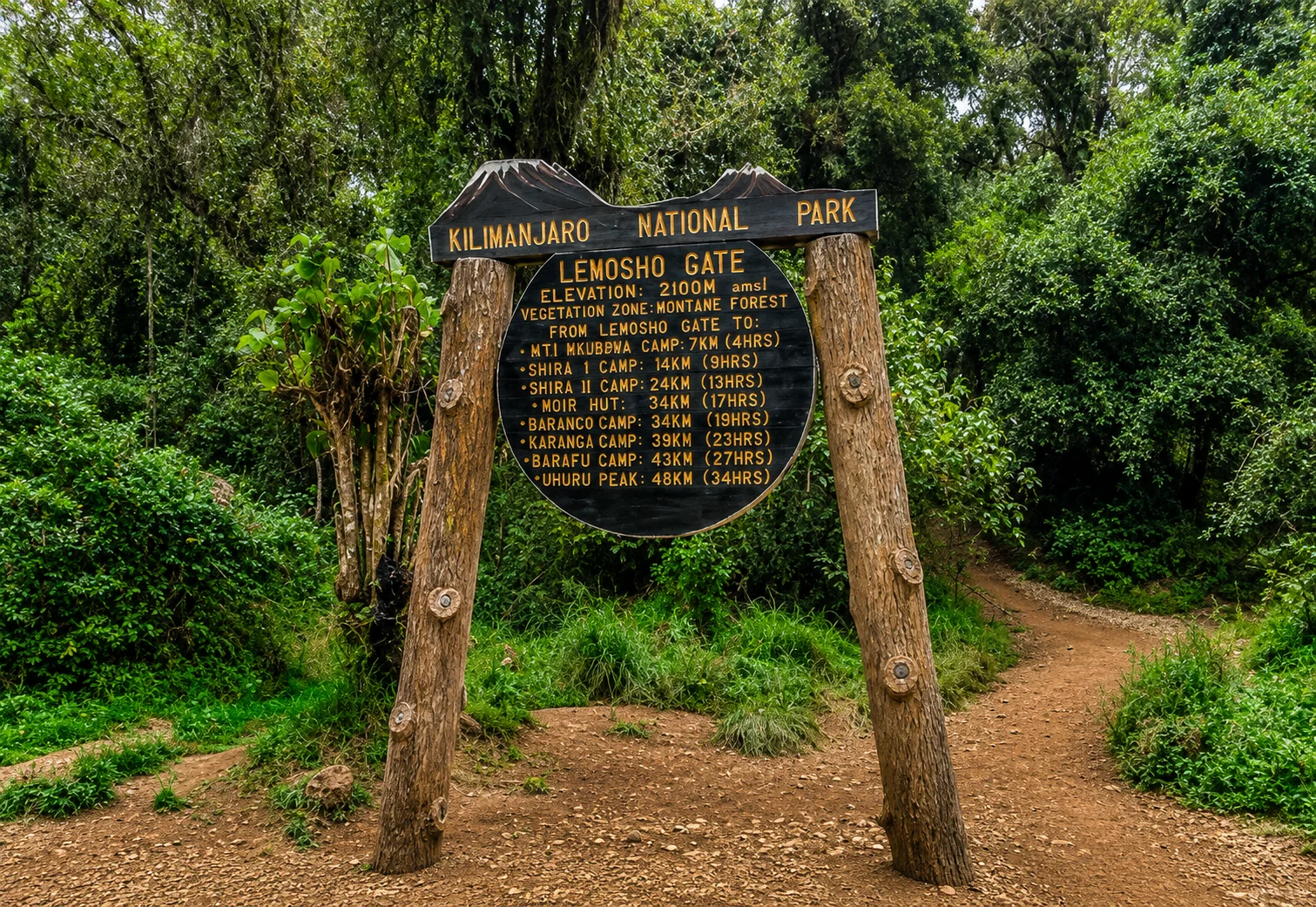
The Lemosho Route is one of the established trails used to climb Mount Kilimanjaro. It starts near Londorosi Gate, sometimes written as Londorossi Gate, on the western side of the mountain.
After registration, climbers normally travel to the trailhead and begin walking through Kilimanjaro’s montane forest. The route then reaches the Shira Plateau before joining the southern circuit used by the Machame Route.
The usual Lemosho trail passes through:
- Londorosi Gate
- Lemosho trailhead
- Mti Mkubwa Camp
- Shira 1 Camp
- Shira 2 Camp
- Lava Tower
- Barranco Camp
- Karanga Camp
- Barafu Camp
- Stella Point
- Uhuru Peak
- Mweka Camp
- Mweka Gate
The ascent is made from the west and south, while the descent follows the Mweka Route. This means climbers experience different landscapes during the ascent and descent.
Kilimanjaro Lemosho Route at a Glance
| Feature | Lemosho Route information |
|---|---|
| Mountain | Mount Kilimanjaro |
| Country | Tanzania |
| Highest point | Uhuru Peak |
| Summit elevation | 5,895 metres (19,341 feet) |
| Starting side | Western Kilimanjaro |
| Starting gate | Londorosi Gate |
| Common duration | 7 or 8 days |
| Approximate distance | Around 70 kilometres, depending on itinerary and campsite measurements |
| Accommodation | Mountain tents |
| Technical climbing required | No technical equipment on the standard route |
| Main challenge | High altitude and summit-night endurance |
| Notable locations | Shira Plateau, Lava Tower, Barranco Wall and Stella Point |
| Descent route | Mweka Route |
| Recommended option | 8-day Lemosho Route |
Why Choose the Lemosho Route?
The Lemosho Route is often recommended because it combines a gradual itinerary with varied mountain scenery.
More Time for Acclimatisation
The route can be completed in seven or eight days. The longer schedule allows the body more time to respond to increasing altitude.
No route can guarantee that a climber will avoid altitude sickness or reach the summit. However, a gradual itinerary is generally more responsible than gaining elevation too quickly.
A Quieter Western Beginning
Lemosho begins on the western side of Kilimanjaro, where the lower section is generally quieter than the beginning of the Machame Route.
The trail later joins other climbers around the Shira Plateau and southern circuit, so the entire route should not be described as uncrowded.
Varied Kilimanjaro Landscapes
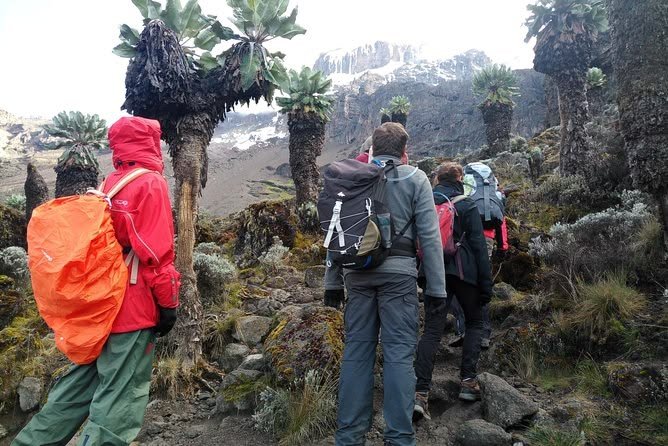
The trail passes through several of Kilimanjaro’s ecological zones, including:
- Montane forest
- Heath and moorland
- Alpine desert
- Arctic summit conditions
The transition between these environments is one of the main attractions of climbing Mount Kilimanjaro via the Lemosho Route.
The Shira Plateau
The Lemosho Route crosses the Shira Plateau, part of the ancient Shira volcanic formation. Its open landscape provides wide mountain views and a gradual introduction to higher elevations.
The Lava Tower Acclimatisation Day
The route normally climbs to Lava Tower at approximately 4,600 metres before descending to Barranco Camp at a lower elevation.
This is an important climb-high, sleep-low section. The body experiences a higher altitude during the day before recovering at a lower sleeping elevation.
The Barranco Wall
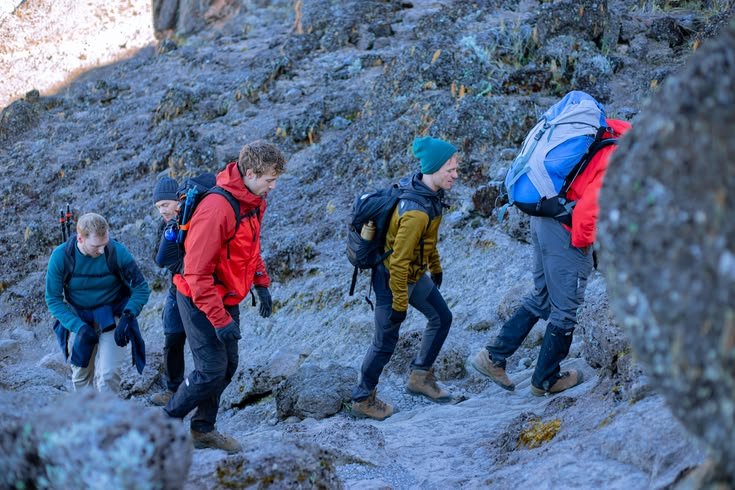
The Barranco Wall is a steep section climbed after leaving Barranco Camp. It looks intimidating from below, but it is normally completed as a guided scramble rather than a technical rock climb.
Climbers may need to use their hands for balance in some places. Your guide controls the pace and assists with more awkward sections.
Is the Lemosho Route Difficult?
The Lemosho Route difficulty is usually described as moderate to challenging. It does not normally require technical mountaineering skills, ropes or ice-climbing equipment, but it is still a serious high-altitude trek.
The main challenges are:
- Walking for several consecutive days
- Increasing altitude
- Cold nights
- Changing mountain weather
- Steep or uneven trails
- The Barranco Wall scramble
- Limited comfort at mountain camps
- A long summit attempt
- Physical and mental fatigue
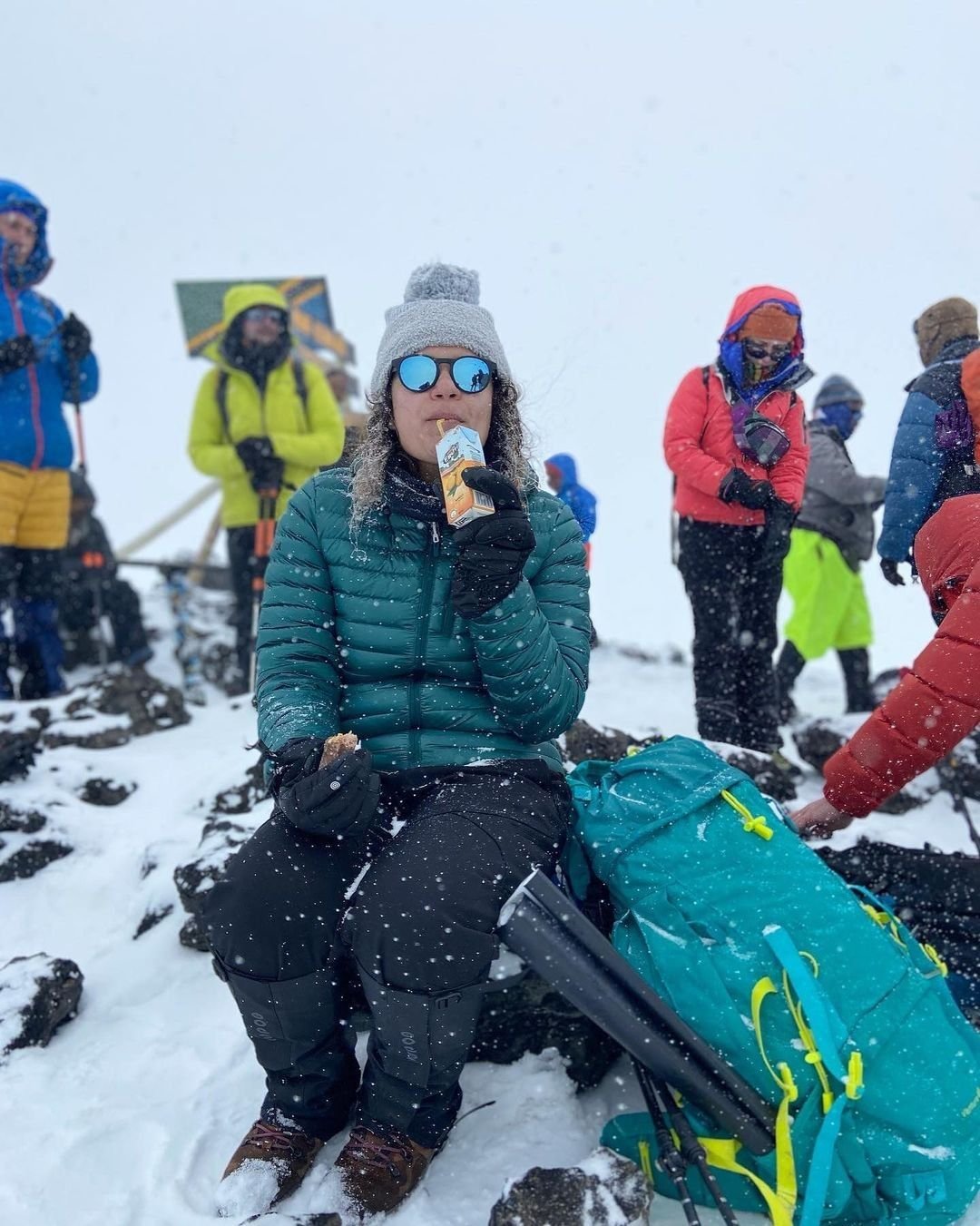
Summit night is the most demanding part of the Lemosho Route. Climbers usually leave Barafu Camp around midnight and walk slowly through darkness and cold toward Stella Point.
After reaching Stella Point on the crater rim, the trail continues to Uhuru Peak. Climbers then descend to Barafu Camp and continue farther down the mountain, making it the longest day of the itinerary.
Is the Lemosho Route Suitable for Beginners?
Yes. A physically prepared beginner can climb Kilimanjaro through the Lemosho Route with a suitable itinerary, professional guide and enough preparation.
The 8-day Lemosho Route is generally more appropriate for a first Kilimanjaro climb than a faster itinerary because it provides an additional day for gradual elevation gain.
You do not need to be a professional athlete, but you should prepare for:
- Five to eight hours of walking on ordinary trekking days
- Longer walking hours during summit day
- Steep and rocky terrain
- Cold temperatures
- Basic tented accommodation
- Reduced appetite or sleep quality at altitude
- Slow, controlled walking
Previous high-altitude experience is helpful but not compulsory. Regular hiking and good physical preparation are more important than speed.
Eight-Day Kilimanjaro Lemosho Route Itinerary
The following itinerary shows the common structure of an 8-day Lemosho Route climb. Walking distances, times and campsite elevations are approximate because measurements and trail conditions can differ.
| Day | Route | Approximate elevation | Distance | Walking time |
|---|---|---|---|---|
| 1 | Lemosho trailhead to Mti Mkubwa Camp | 2,780 m | 6 km | 3–4 hours |
| 2 | Mti Mkubwa to Shira 1 Camp | 3,500 m | 8 km | 5–6 hours |
| 3 | Shira 1 to Shira 2 Camp | 3,850 m | 7 km | 3–5 hours |
| 4 | Shira 2 to Lava Tower and Barranco Camp | 3,950 m sleeping elevation | 10 km | 6–8 hours |
| 5 | Barranco Camp to Karanga Camp | 4,035 m | 5 km | 4–5 hours |
| 6 | Karanga Camp to Barafu Camp | 4,670 m | 4 km | 3–4 hours |
| 7 | Barafu to Uhuru Peak and Mweka Camp | 5,895 m summit | 17 km | 12–16 hours |
| 8 | Mweka Camp to Mweka Gate | 1,640 m | 10 km | 3–4 hours |
Day 1: Londorosi Gate to Mti Mkubwa Camp
After breakfast at your hotel, the KiliPori Safaris mountain team collects you for the journey toward western Kilimanjaro. Climbers complete registration and entry procedures at Londorosi Gate before continuing to the Lemosho trailhead.
The first trek passes through Kilimanjaro’s montane forest. The trail may be wet or muddy, particularly after rain, so waterproof boots and gaiters can be useful.
Mti Mkubwa means “big tree” in Swahili. The camp is surrounded by forest, and temperatures can become noticeably cooler after sunset.
Main experience: First day of trekking through Kilimanjaro’s montane forest.
Day 2: Mti Mkubwa Camp to Shira 1 Camp
The trail continues through the upper forest before entering the heath and moorland zone. Vegetation becomes shorter as elevation increases, and views of the Shira Plateau begin to open.
The day includes a steady climb followed by easier walking toward Shira 1 Camp. Climbers should maintain a slow pace even when they feel strong.
Main experience: Leaving the rainforest and reaching the open Shira Plateau.
Day 3: Shira 1 Camp to Shira 2 Camp
The trek across the Shira Plateau is shorter than some other days. This gives climbers time to adapt to the elevation and enjoy views of Kibo when the weather is clear.
Some itineraries include an optional acclimatisation walk after reaching Shira 2 Camp. Whether this walk is appropriate depends on the weather and the guide’s assessment of the group.
Main experience: Gradual acclimatisation while crossing the Shira volcanic landscape.
Day 4: Shira 2 Camp to Lava Tower and Barranco Camp
This is one of the most important acclimatisation days on the Lemosho Route. The trail climbs toward Lava Tower at approximately 4,600 metres.
After lunch or a rest near Lava Tower, climbers descend to Barranco Camp at a lower sleeping elevation. The descent can feel long, but it supports the climb-high, sleep-low approach.
Barranco Camp sits below the Barranco Wall and provides dramatic views when clouds clear.
Main experience: Reaching a new high point at Lava Tower before descending to sleep lower.
Day 5: Barranco Camp to Karanga Camp
The day begins with the Barranco Wall. The climb involves a series of rocky steps and short scrambling sections.
After reaching the top, the route crosses ridges and valleys before descending into the Karanga Valley and climbing to Karanga Camp.
This is not usually a long day, but the changing terrain makes it physically engaging. Karanga provides another important night before the final move to Barafu.
Main experience: Climbing the Barranco Wall and crossing the southern slopes of Kilimanjaro.
Day 6: Karanga Camp to Barafu Camp
The route climbs through the alpine desert toward Barafu Camp. Vegetation becomes limited, and the landscape is dominated by rock, dust and views of Kibo.
After arriving at Barafu, climbers eat, prepare summit equipment and rest. Your guide explains the summit plan, clothing system and expected conditions.
Most climbers begin the summit attempt around midnight, although the exact time depends on weather and guide planning.
Main experience: Final summit preparation at Kilimanjaro’s high camp.
Day 7: Barafu Camp to Uhuru Peak and Mweka Camp
Summit night begins with a slow climb toward Stella Point. The trail is steep, cold and physically demanding. The pace is deliberately slow to conserve energy and manage the effects of altitude.
Stella Point sits on the crater rim at approximately 5,756 metres. From there, the route continues toward Uhuru Peak at 5,895 metres, the highest point in Africa.
After photographs and a short time at the summit, climbers descend to Barafu Camp. Following a meal and rest, the descent continues to Mweka Camp at a lower and warmer elevation.
The amount of time spent at Uhuru Peak should remain limited because of the altitude and cold.
Main experience: Reaching Uhuru Peak and beginning the long descent from Kilimanjaro.
Day 8: Mweka Camp to Mweka Gate
The final walk descends through the montane forest to Mweka Gate. The trail may be slippery, especially after rainfall.
At the gate, climbers complete park procedures and meet the transfer vehicle for the return journey to Moshi or Arusha.
This is also the time to recognise the work of the guides, porters and cooks who supported the climb.
Main experience: Completing the Lemosho Route and returning to your hotel.
7-Day Lemosho Route vs 8-Day Lemosho Route
The main difference is how the early Shira Plateau section is divided. The seven-day itinerary normally combines part of the first three days, while the eight-day option allows a more gradual progression.
| Feature | 7-day Lemosho Route | 8-day Lemosho Route |
|---|---|---|
| Total climbing days | 7 days | 8 days |
| Acclimatisation time | Good | More gradual |
| Early trekking days | Longer | More evenly divided |
| Suitable for beginners | Possible for fit trekkers | Usually the better beginner option |
| Total cost | Lower | Higher because of an additional mountain day |
| Time commitment | Better for limited schedules | Better when time permits |
| Our general recommendation | Suitable after individual assessment | Preferred for most first-time climbers |
The eight-day route does not guarantee a summit. Weather, altitude response, fitness, illness and other factors can affect every Kilimanjaro climb.
Lemosho Route vs Machame Route
Lemosho and Machame share part of the southern circuit after joining near the Shira Plateau. Both normally pass Lava Tower, Barranco, Karanga and Barafu before descending through Mweka.
| Feature | Lemosho Route | Machame Route |
|---|---|---|
| Starting side | Western Kilimanjaro | Southern Kilimanjaro |
| Common duration | 7–8 days | 6–7 days |
| Early trail traffic | Generally quieter | Usually busier |
| Shira Plateau crossing | Longer western approach | Shorter approach |
| Barranco Wall | Included | Included |
| Summit approach | Barafu to Stella Point | Barafu to Stella Point |
| Accommodation | Tents | Tents |
| Best suited to | Climbers wanting more time and a scenic western approach | Climbers wanting a shorter scenic itinerary |
Choose Lemosho if you have seven or eight days and prefer a more gradual western approach. Choose Machame if you want a six- or seven-day itinerary and are comfortable with a busier start.
What Is the Lemosho Route Success Rate?
There is no single official success rate that applies to every Lemosho climb. Percentages published online often differ because operators may use different definitions, itinerary lengths, group profiles and reporting methods.
Factors affecting whether a climber reaches Uhuru Peak include:
- Seven-day versus eight-day itinerary
- Individual response to altitude
- Physical preparation
- Walking pace
- Hydration and nutrition
- Weather conditions
- Quality of guiding
- Illness or injury
- Willingness to communicate symptoms
A longer itinerary can provide better acclimatisation opportunities, but no responsible operator should guarantee that every client will reach the summit.
How Much Does the Kilimanjaro Lemosho Route Cost?
The Kilimanjaro Lemosho Route cost generally ranges from approximately US$2,400 to US$3,500 per person for a professionally organised seven- or eight-day climb. The final price depends on the number of climbers, itinerary length, mountain services, equipment quality, hotel arrangements and whether the climb is private or shared.
An 8-day Lemosho Route normally costs more than a seven-day itinerary because it requires an additional day of Kilimanjaro National Park fees, camping fees, food, guide services and porter support.
KiliPori Safaris prepares each Lemosho Route quotation according to the group size, travel dates and services required. The price should cover more than permission to enter Kilimanjaro National Park. It must also support a trained mountain crew, suitable meals, reliable camping equipment, transport and responsible safety procedures.
Estimated Lemosho Route Price by Group Size
The following figures are general planning estimates for foreign non-resident adult climbers. They are not a fixed KiliPori Safaris quotation.
| Number of climbers | 7-day Lemosho Route | 8-day Lemosho Route |
|---|---|---|
| 1 climber | US$3,100–US$4,000 | US$3,400–US$4,300 |
| 2 climbers | US$2,700–US$3,400 per person | US$2,900–US$3,700 per person |
| 3–4 climbers | US$2,500–US$3,100 per person | US$2,700–US$3,400 per person |
| 5–8 climbers | US$2,400–US$2,900 per person | US$2,600–US$3,200 per person |
| 9 or more climbers | Quoted according to group services | Quoted according to group services |
Larger groups often pay a lower per-person price because transport, guides, cooking equipment and some camp services are shared. Private climbs for one or two people cost more because the main operational expenses are divided among fewer climbers.
Kilimanjaro National Park Fees for the Lemosho Route
A significant portion of the Lemosho Route climbing price is made up of mandatory Tanzania National Parks charges.
Published TANAPA fee categories for an adult foreign non-resident include:
- Conservation fee: US$70 per person per day
- Public camping fee: US$50 per person per night
- Kilimanjaro rescue fee: US$20 per person per trip
- Value Added Tax: Applied to applicable park charges
Lemosho is a camping route, so climbers pay camping fees rather than the hut fees used on the Marangu Route.
Estimated Park Fees for a Seven-Day Lemosho Climb
| Park fee | Calculation | Estimated amount |
|---|---|---|
| Conservation fees | 7 days × US$70 | US$490 |
| Camping fees | 6 nights × US$50 | US$300 |
| Rescue fee | Once per climb | US$20 |
| Subtotal | US$810 | |
| Estimated 18% VAT | Applied to applicable charges | US$145.80 |
| Estimated total park fees | US$955.80 |
Estimated Park Fees for an Eight-Day Lemosho Climb
| Park fee | Calculation | Estimated amount |
|---|---|---|
| Conservation fees | 8 days × US$70 | US$560 |
| Camping fees | 7 nights × US$50 | US$350 |
| Rescue fee | Once per climb | US$20 |
| Subtotal | US$930 | |
| Estimated 18% VAT | Applied to applicable charges | US$167.40 |
| Estimated total park fees | US$1,097.40 |
These calculations explain why a genuine Mount Kilimanjaro climbing package cannot be extremely cheap. Park charges alone represent a substantial part of the total price before guides, porters, meals, equipment, transport and business operating expenses are included.
TANAPA may revise tariffs, taxes or calculation rules. Your final KiliPori Safaris quotation will use the official charges applicable to your travel dates.
Complete Lemosho Route Cost Breakdown
The following table explains where the rest of the Kilimanjaro Lemosho Route price goes.
| Cost component | What it covers | Estimated share per climber |
|---|---|---|
| Kilimanjaro park fees | Conservation, camping, rescue charges and applicable taxes | US$956–US$1,098 |
| Mountain crew | Guides, assistant guides, cooks and porters | US$500–US$900 |
| Mountain meals | Breakfast, lunch, dinner, snacks and drinking-water preparation | US$180–US$320 |
| Camping equipment | Sleeping tents, dining tent, tables, chairs and kitchen equipment | US$150–US$300 |
| Route transport | Transport from Moshi or Arusha to Londorosi Gate and collection at Mweka Gate | US$100–US$250 |
| Safety and communication | First-aid supplies, oxygen arrangements and operational communication | US$75–US$200 |
| Administration and logistics | Permits, reservations, taxes, planning and local operational support | US$250–US$600 |
| Hotel and airport transfers | Depends on the selected package and hotel category | Quoted separately or included |
| Personal equipment rental | Sleeping bag, trekking poles, jackets and other personal gear | Based on items rented |
| Crew tips | Paid after the climb and normally excluded from the package | Budget separately |
These figures are approximate. The cost allocated to each service changes according to group size, itinerary length, crew requirements and equipment standard.
What Is Normally Included in a Lemosho Route Package?
A professional Kilimanjaro Lemosho Route package should clearly state what is included. A KiliPori Safaris climbing quotation can include:
- Kilimanjaro National Park conservation fees
- Lemosho Route camping fees
- Mandatory rescue fee
- Applicable government taxes
- Transport from Moshi or Arusha to Londorosi Gate
- Transfer from Mweka Gate after the climb
- Licensed Kilimanjaro mountain guide
- Assistant guides according to group size
- Kilimanjaro porters
- Mountain cook
- Three mountain meals per day
- Treated or safely prepared drinking water
- Sleeping tent shared by two climbers unless otherwise arranged
- Dining tent, tables and chairs
- Cooking and camp equipment
- Pre-climb briefing
- Basic first-aid supplies
- Emergency oxygen arrangements
- Kilimanjaro summit certificate for eligible climbers
- Direct local support from the KiliPori Safaris team
Always check your written quotation. Package inclusions may change according to the selected service level and personal requirements.
What Is Usually Excluded?
The following expenses are commonly excluded from the standard Lemosho Route price unless specifically listed:
- International flights to Tanzania
- Tanzania visa fees
- Travel and high-altitude trekking insurance
- Personal climbing clothes and boots
- Sleeping-bag and trekking-pole rental
- Meals at hotels before or after the climb
- Alcoholic and bottled drinks at hotels
- Laundry services
- Personal medication
- Crew tips
- Additional hotel nights
- Tanzania safari or Zanzibar extension
- Expenses resulting from delayed flights or itinerary changes
- Emergency medical treatment and evacuation beyond the park rescue service
The mandatory Kilimanjaro rescue fee should not be confused with comprehensive travel insurance. Climbers should purchase insurance that specifically covers high-altitude trekking up to at least 6,000 metres.
How Much Should You Budget for Kilimanjaro Crew Tips?
Tips are normally paid separately after completing the Lemosho Route. They recognise the work of the guides, assistant guides, cooks and porters who support the climb.
The appropriate amount depends on:
- Group size
- Number of mountain crew members
- Length of the itinerary
- Quality of service
- The tipping guidance provided before the climb
As a general planning estimate, a climber may budget approximately US$250–US$400 for crew tips on a seven- or eight-day Lemosho climb. The final amount is usually pooled by the climbing group and divided transparently among the crew according to their roles.
KiliPori Safaris provides the expected crew structure and tipping guidance during the pre-climb briefing so that climbers can plan without pressure or confusion.
Why Does the Eight-Day Lemosho Route Cost More?
The 8-day Kilimanjaro Lemosho Route price is higher because the extra day creates additional expenses.
These include:
- One more day of conservation fees
- One additional camping night
- Another day of guide and porter services
- Additional mountain meals
- Extended use of tents and camping equipment
- More operational and logistical support
The difference should not be considered an unnecessary expense. The additional day divides the early ascent into a more gradual itinerary and gives climbers more time to adjust before reaching Kilimanjaro’s higher camps.
Why Is Lemosho More Expensive Than the Machame Route?
The Lemosho Route may cost more than Machame because:
- Lemosho usually takes seven or eight days.
- Machame is commonly completed in six or seven days.
- Londorosi Gate is farther from Moshi than Machame Gate.
- The western starting point requires additional vehicle logistics.
- The longer route requires more food and crew support.
- Each extra day creates additional park and camping fees.
Although the Lemosho Route price may be higher, many climbers choose it for the quieter western approach, Shira Plateau scenery and more gradual itinerary.
Why Are Some Lemosho Route Packages Extremely Cheap?
A low price may look attractive, but travellers should ask how the operator can cover mandatory park fees, crew wages, food, equipment, transport and taxes.
An unusually cheap Kilimanjaro package may involve:
- Underpaid guides or porters
- Insufficient food for climbers or crew
- Poor-quality tents
- Limited safety equipment
- Excessive porter loads
- Missing hotel or transfer services
- Excluded taxes or park fees
- Large groups with limited personal attention
- Inadequate guide-to-climber ratios
- Hidden charges added after booking
The lowest price is not always the best value on a high-altitude mountain. A responsible quotation should clearly explain what is included, what is excluded and how the mountain team is supported.
How to Reduce the Cost of Climbing the Lemosho Route
You can control the cost without choosing an unsafe or poorly supported climb.
Consider these options:
- Join a small scheduled departure instead of climbing alone.
- Travel with friends and share group expenses.
- Bring personal trekking equipment instead of renting it.
- Choose comfortable midrange accommodation in Moshi.
- Book airport transfers and accommodation within one package.
- Avoid unnecessary luxury upgrades.
- Book early to secure preferred dates and equipment.
- Combine your climb with other travellers when appropriate.
Do not reduce the price by removing essential mountain services, cutting acclimatisation days or selecting an operator unable to explain its crew and safety standards.
Request an Accurate Lemosho Route Price from KiliPori Safaris
Online estimates can help with initial budgeting, but an accurate Kilimanjaro Lemosho Route cost requires several details.
When requesting a quotation, provide:
- Your preferred climbing dates
- Number of climbers
- Seven- or eight-day itinerary preference
- Nationality or Tanzania residency status
- Required hotel nights
- Airport transfer requirements
- Personal equipment needed for rental
- Private or group-climb preference
- Plans for a Tanzania safari or Zanzibar extension
KiliPori Safaris will provide a transparent quotation showing the itinerary, included services and excluded personal expenses.
Best Time to Climb the Lemosho Route
Mount Kilimanjaro can be climbed throughout the year, but some months generally offer drier trail conditions.
| Period | Typical conditions | Planning notes |
|---|---|---|
| January–early March | Often drier with cold summit conditions | Popular climbing period |
| Late March–May | Main rainy period | Wetter and muddier trails |
| June–October | Generally drier and colder | Popular climbing season |
| November | Short rains may occur | Fewer climbers but variable conditions |
| December | Mixed conditions | Popular around Christmas and New Year |
Mountain weather can change quickly during any month. Rain, snow, wind, fog and strong sunlight are possible regardless of the season.
The best month depends on your availability, tolerance for colder conditions and preference for quieter or busier trails.
What Training Is Needed for the Lemosho Route?
Training should prepare you for repeated trekking days rather than short bursts of intense exercise.
A practical programme may include:
- Regular hiking
- Long walks on consecutive days
- Hill or stair training
- Cardiovascular exercise
- Leg and core strengthening
- Walking with a daypack
- Testing your hiking boots
- Adequate recovery days
Begin training several weeks or months before departure, depending on your current fitness. Whenever possible, practise on hills and uneven terrain.
You do not need to walk quickly. Kilimanjaro guides commonly use the Swahili phrase “pole pole,” meaning “slowly, slowly.” A controlled pace helps conserve energy and supports gradual acclimatisation.
What Should You Pack for the Lemosho Route?
Kilimanjaro conditions range from humid forest to freezing summit temperatures. A layered clothing system is more practical than relying on one heavy jacket.
Important items include:
- Waterproof duffel bag
- Comfortable trekking boots
- Hiking socks
- Thermal base layers
- Fleece or insulated mid-layer
- Warm insulated jacket
- Waterproof jacket and trousers
- Trekking trousers
- Warm summit trousers
- Sun hat
- Warm hat
- Lightweight and insulated gloves
- Headlamp with spare batteries
- Sunglasses with UV protection
- Trekking poles
- Sleeping bag suitable for cold conditions
- Refillable water bottles or hydration system
- Sunscreen and lip protection
- Personal medication
- Basic toiletries
- Snacks you have used during training
Your main duffel is carried by a porter within the allowed weight limits. You carry a daypack containing water, rain protection, warm layers, snacks and personal essentials.
Altitude and Safety on the Lemosho Route
High altitude is the greatest health concern on Mount Kilimanjaro. Common symptoms may include headache, nausea, dizziness, fatigue, reduced appetite and disturbed sleep.
Climbers should:
- Walk slowly
- Drink regularly
- Eat even when appetite decreases
- Follow the guide’s instructions
- Report symptoms honestly
- Avoid hiding illness to continue climbing
- Accept descent when the guide considers it necessary
Reaching Uhuru Peak should never be treated as more important than returning safely. Descent is the primary response when altitude symptoms become serious.
Travellers with existing medical conditions should consult a qualified medical professional before booking a Kilimanjaro climb.
Frequently Asked Questions About the Kilimanjaro Lemosho Route
How long is the Kilimanjaro Lemosho Route?
The Lemosho Route is approximately 70 kilometres, although reported distances vary according to campsite locations, GPS measurement and itinerary design.
How many days does the Lemosho Route take?
Most climbers complete the route in seven or eight days. KiliPori Safaris generally recommends the eight-day option for a more gradual itinerary.
Is the Lemosho Route difficult?
Yes. It is a challenging high-altitude trek because of the elevation, repeated walking days, cold conditions and long summit attempt. It is not normally a technical climb.
Is the Lemosho Route suitable for beginners?
A prepared beginner can climb the Lemosho Route with a licensed guide and suitable itinerary. The eight-day option is generally better for first-time high-altitude climbers.
Does the Lemosho Route include the Barranco Wall?
Yes. Both seven- and eight-day Lemosho itineraries normally include the Barranco Wall. It is completed as a guided scramble and does not usually require technical climbing equipment.
Where does the Lemosho Route start?
It starts on the western side of Mount Kilimanjaro. Registration is normally completed at Londorosi Gate before climbers continue to the Lemosho trailhead.
Where does the Lemosho Route end?
The descent follows the Mweka Route and finishes at Mweka Gate.
Do climbers sleep in huts on the Lemosho Route?
No. Climbers sleep in tents at designated campsites. The Marangu Route is the standard Kilimanjaro trail that uses mountain huts.
Which is better: seven or eight days on Lemosho?
The eight-day Lemosho Route provides a more gradual schedule. The seven-day option may suit fit climbers with limited time, but itinerary selection should consider experience and altitude history.
Can the Lemosho Route guarantee reaching Uhuru Peak?
No Kilimanjaro route or tour operator can guarantee the summit. Altitude response, weather, fitness, illness and safety decisions can affect the result.
What is the highest point on the Lemosho Route?
The highest point is Uhuru Peak at 5,895 metres, the summit of Mount Kilimanjaro and the highest point in Africa.
Can I combine a Lemosho climb with a Tanzania safari?
Yes. Many travellers combine Kilimanjaro with Tarangire, Serengeti and Ngorongoro Crater. A Zanzibar beach holiday can also be added after the climb.
Book Your Kilimanjaro Lemosho Route with KiliPori Safaris
The Lemosho Route combines a quiet western approach, the Shira Plateau, Lava Tower, Barranco Wall and a summit attempt through Stella Point. Its seven- and eight-day options make it one of the most flexible ways to climb Mount Kilimanjaro.
The 8-day Kilimanjaro Lemosho Route is our preferred recommendation for many first-time climbers because the trekking days are more evenly distributed and the itinerary provides additional acclimatisation time.
KiliPori Safaris can arrange:
- Private Lemosho Route climbs
- Seven- and eight-day itineraries
- Airport transfers
- Pre-climb and post-climb accommodation
- Licensed Kilimanjaro guides
- Porters and mountain cooks
- Camping equipment
- Group and solo climbing arrangements
- Tanzania safari extensions
- Zanzibar beach holidays
Tell us your preferred travel dates, group size, climbing experience and available days. Our Tanzania-based team will help you select a realistic Kilimanjaro itinerary.
Anything you would like to ask about climbing the Lemosho Route? Chat with KiliPori Safaris on WhatsApp: +255 755 287 311.
Written by the KiliPori Safaris Kilimanjaro Climbing Team
Local specialists in Mount Kilimanjaro routes, Tanzania safaris and Zanzibar extensions.

KiliPori Safaris Travel Team
A local Tanzania team helping travellers plan wildlife safaris, Kilimanjaro climbs and Zanzibar holidays with clear routing and direct destination support.
Published August 3, 2026. Travel conditions, fees and schedules can change; confirm time-sensitive details before departure.