Explore this guide
Our guides combine current planning research with practical knowledge from arranging safaris, Kilimanjaro climbs and Zanzibar holidays.
The best camps and lodges in Ndutu are those that provide convenient access to the short-grass plains, Lake Ndutu, Lake Masek and the areas where the migrating herds are concentrated during your particular travel dates. Ndutu Safari Lodge and Lake Masek Tented Lodge suit travellers wanting permanent accommodation, while Lemala Ndutu, Olakira, Nyikani and other seasonal camps provide a more intimate tented-safari atmosphere.
Which Are the Best Camps and Lodges in Ndutu?
There is no single property that is best for every Ndutu safari. The right accommodation depends on its seasonal location, your preferred comfort level, family requirements, budget and how much time you want to spend reaching the most productive wildlife areas.
The following properties are among the strongest options to consider:
| Camp or lodge | Accommodation style | General area | Particularly suitable for |
|---|---|---|---|
| Ndutu Safari Lodge | Permanent lodge | Near Lake Ndutu | Classic safari atmosphere and convenient game-drive access |
| Lake Masek Tented Lodge | Permanent tented lodge | Overlooking Lake Masek | Couples, families and travellers wanting additional comfort |
| Lemala Ndutu Mobile Tented Camp | Seasonal tented camp | Ndutu plains | Wildlife-focused and photographic safaris |
| Olakira Migration Camp | Seasonal migration camp | Ndutu during the southern season | High-comfort tented safaris and couples |
| Nyikani Migration Camp Ndutu | Seasonal migration camp | Near Lakes Ndutu and Masek | Private safaris, couples and small groups |
| Ubuntu Migration Camp | Seasonal migration camp | Southern Serengeti/Kusini area | Travellers seeking a quieter mobile-camp setting |
| Sanctuary Kusini | Permanent tented camp | Southern Serengeti | Travellers combining Ndutu with the wider Southern Serengeti |
| Serengeti Under Canvas | Seasonal mobile camp | Moves with the migration | High-end, intimate mobile-camp experience |
Exact camp locations, operating dates, child policies and availability can change between seasons. They should always be confirmed for the traveller’s actual dates before a safari is booked.
Understanding the Ndutu Accommodation Areas
Ndutu is not a town with a central hotel district. It is a broad wildlife area spanning parts of the Ngorongoro Conservation Area and the southeastern Serengeti ecosystem.
Its principal landmarks include:
- Lake Ndutu
- Lake Masek
- The surrounding acacia woodland
- The short-grass plains
- Kusini and the Southern Serengeti
- Access routes towards Naabi Hill and Serengeti National Park
The wildebeest do not remain in one fixed location. They move in response to rainfall, grazing conditions and water availability. A camp can have an excellent strategic location, but no property can guarantee that the largest herds will be directly outside it on specific dates.
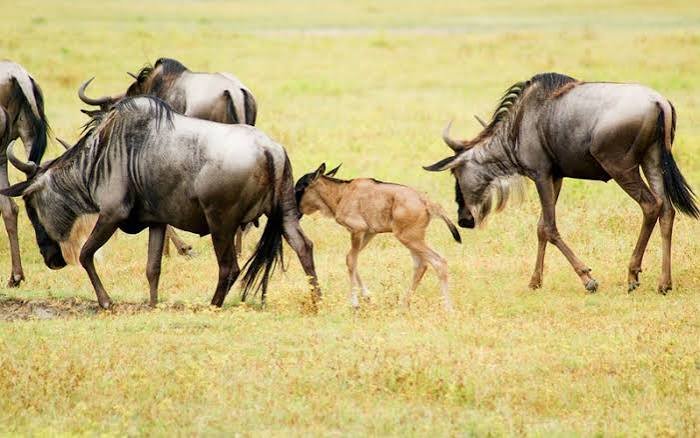
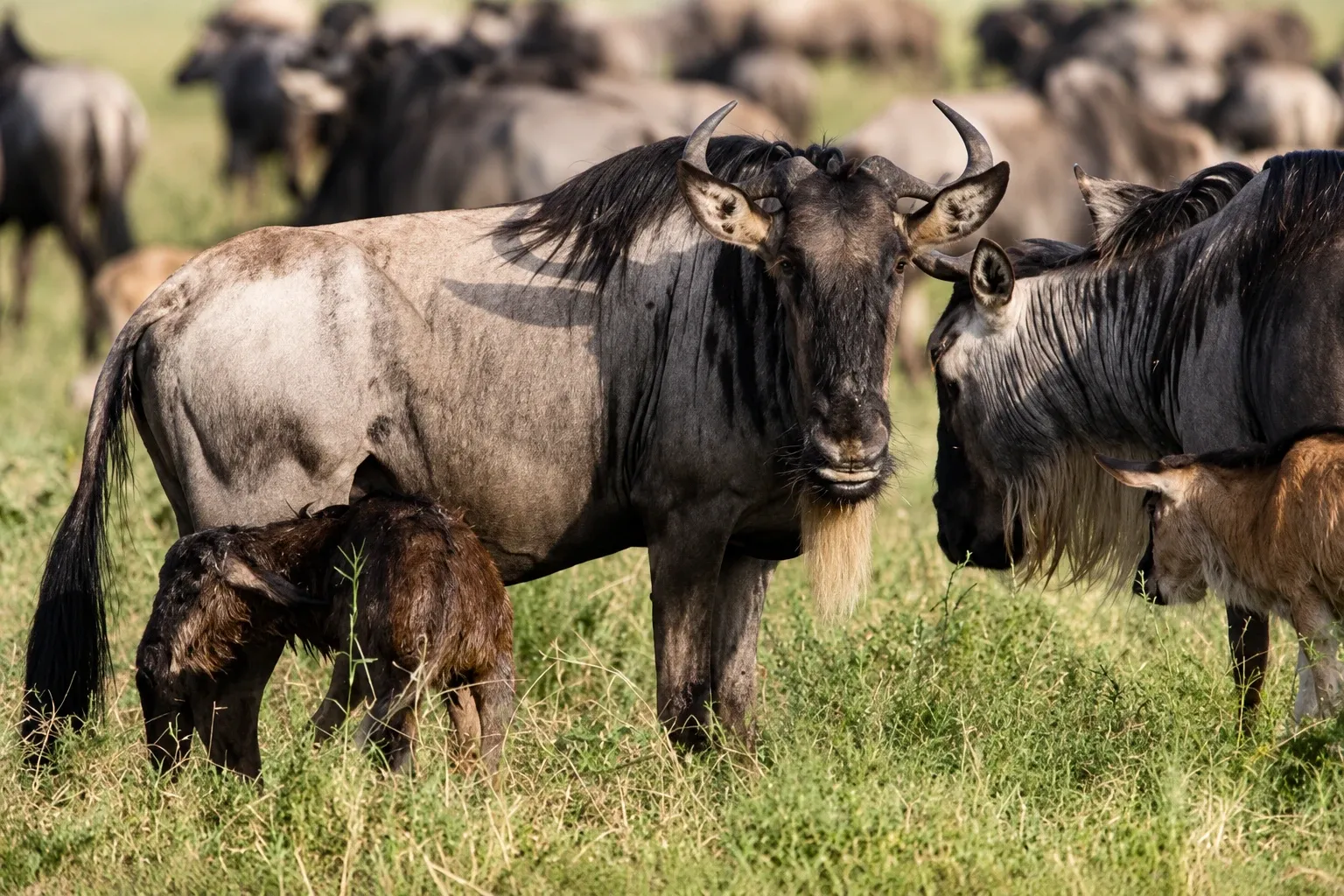
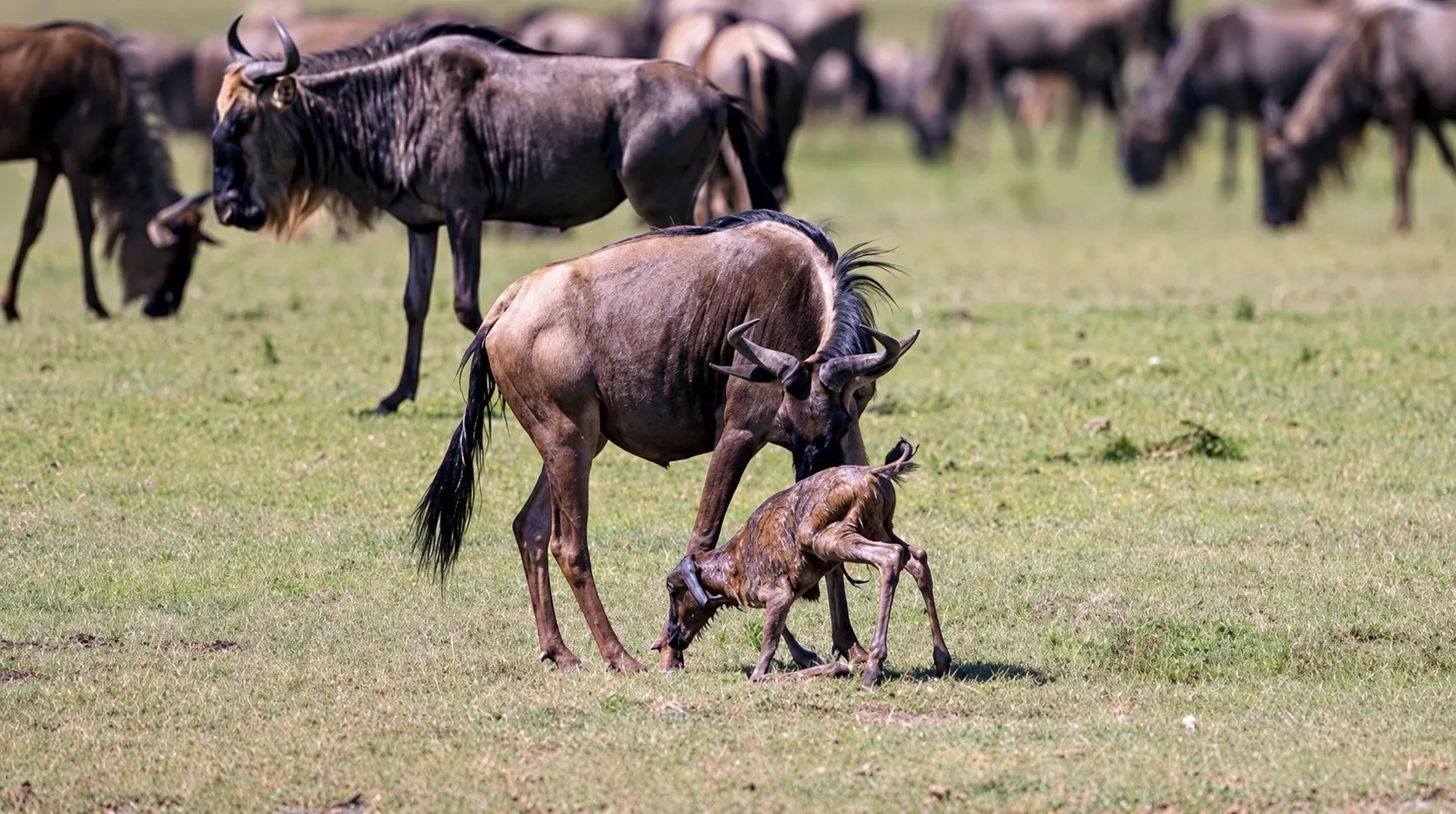
The wider Ndutu and southeastern Serengeti area normally has its highest concentration of migratory wildlife between December and April. February is generally associated with the main calving period, although the exact distribution of the herds depends on seasonal rainfall. The complete Ndutu and Southern Serengeti calving season guide explains the season, wildlife movement and safari-planning considerations in greater detail.
Ndutu Safari Lodge
Ndutu Safari Lodge is one of the area’s established permanent properties. It is located near Lake Ndutu, within the Ngorongoro Conservation Area, and uses solid cottages rather than seasonal canvas tents.
Why choose Ndutu Safari Lodge?
Its principal advantage is location. Travellers can reach the Lake Ndutu woodland, nearby plains and Lake Masek areas without beginning every morning with a long transfer from outside Ndutu.
It is particularly suitable for travellers who prefer:
- A permanent lodge rather than a mobile camp
- A traditional safari atmosphere
- Solid walls and cottage-style rooms
- Convenient access to the central Ndutu game-drive areas
- A property that does not relocate after the calving season
What are the possible disadvantages?
The lodge is well known and can be heavily requested during January and February. Travellers seeking highly contemporary interiors, private plunge pools or an exclusive boutique-camp atmosphere may prefer one of the higher-end tented options.
Best for: Traditional safari travellers, photographers and visitors who value location over elaborate luxury.
Lake Masek Tented Lodge
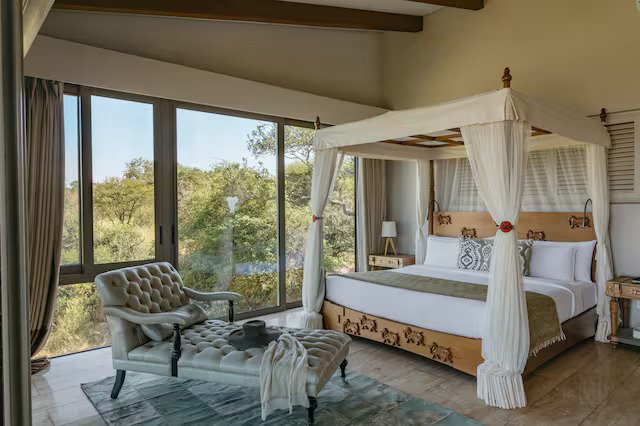
Lake Masek Tented Lodge offers permanent tented accommodation overlooking Lake Masek in the Ngorongoro Conservation Area. Its tented suites provide more substantial facilities than a simple mobile camp while retaining a close connection to the surrounding landscape.
Why choose Lake Masek?
Lake Masek provides access to several important habitats, including woodland, lakeshore and open plains. This makes the lodge a useful base when wildlife is distributed around the wider Ndutu ecosystem rather than concentrated in only one area.
The lodge generally suits travellers looking for:
- Spacious tented accommodation
- En-suite bathroom facilities
- A permanent camp with an under-canvas atmosphere
- Lake views
- A comfortable option for couples or families
- Convenient access to both Lake Masek and Lake Ndutu
What should travellers consider?
A lakefront setting does not mean the migration will always be visible from the property. Game-drive routes must still be adjusted daily according to reports, road conditions and herd movements.
Best for: Couples, families and travellers wanting comfortable permanent tented accommodation.
Lemala Ndutu Mobile Tented Camp
Lemala Ndutu is a seasonal camp established in the Ndutu area for the southern stage of the Great Migration. Seasonal camps are designed to operate near productive wildlife areas during particular months and are then removed or relocated.
Why choose Lemala Ndutu?
The mobile-camp format appeals to travellers who want an immersive safari setting without giving up comfortable beds, private bathrooms and attentive camp service.
It can be a strong choice for:
- Wildlife photographers
- Couples
- Travellers spending 3 or more nights in Ndutu
- Visitors who prefer fewer permanent structures
- Guests seeking a more intimate camp than a large lodge
What are the trade-offs?
Mobile camps use temporary infrastructure. Water, power, internet access and bathroom arrangements may work differently from those in a permanent lodge. Travellers should ask for precise information about charging facilities, hot water and connectivity before booking.
Best for: Wildlife-focused travellers who value location and atmosphere.
[KiliPori expert input required: Confirm Lemala Ndutu’s operating dates, current exact seasonal position and latest family-room configuration before publication.]
Olakira Migration Camp
Olakira Migration Camp changes location to follow different stages of the Great Migration. According to the camp operator, it is positioned in Ndutu within the Ngorongoro Conservation Area from approximately December to March.
Why choose Olakira?
Olakira is aimed at travellers seeking a high-comfort mobile safari. It combines an under-canvas environment with the service and furnishings expected from an upper-level tented camp.
It is particularly relevant for:
- Honeymooners and couples
- Luxury safari travellers
- Guests who want a small camp atmosphere
- Travellers combining Ndutu with another migration camp
- Visitors who prefer an intimate property over a larger lodge
What should travellers consider?
This level of accommodation normally carries a higher nightly cost. Travellers should compare the added comfort with the total safari budget, especially when park fees, conservation fees, private transport and domestic flights are included.
Best for: Couples and luxury travellers seeking a refined mobile-camp experience.
Nyikani Migration Camp Ndutu
Nyikani Migration Camp moves between seasonal locations in the Serengeti ecosystem. During the southern season, it operates in the Ndutu area with access to wildlife zones around Lakes Ndutu and Masek.
Why choose Nyikani?
The camp offers the atmosphere of a seasonal tented safari and is positioned specifically for migration-focused itineraries. It can work well as part of a private safari that also visits Ngorongoro Crater or Central Serengeti.
Consider Nyikani when you want:
- A seasonal migration camp
- Access to the Lake Ndutu and Lake Masek areas
- A small-camp environment
- An accommodation option suitable for a multi-night stay
- A balance between safari authenticity and comfort
What are the trade-offs?
Its precise location and operating period must be confirmed for each season. As with other mobile camps, facilities should be evaluated as those of a remote tented camp rather than compared directly with a conventional hotel.
Best for: Couples, small groups and travellers taking a private calving-season safari.
Ubuntu Migration Camp
Ubuntu Migration Camp operates seasonally in different parts of the Serengeti ecosystem. The operator currently describes its southern-season location as Kusini in the Southern Serengeti from around mid-December to mid-March.
Why choose Ubuntu?
Kusini can provide good access to the wider southern plains while offering a different setting from camps clustered immediately around Lakes Ndutu and Masek.
It may suit travellers who want:
- A small seasonal camp
- A quieter bush atmosphere
- Access to the Southern Serengeti plains
- A location that works well with Central Serengeti
- An authentic under-canvas experience
What should travellers consider?
Kusini is part of the wider Southern Serengeti experience, but it is not always the same as staying beside Lake Ndutu. Travellers whose itinerary specifically requires daily access to Lake Ndutu should compare expected driving times before confirming.
Best for: Repeat safari travellers, photographers and visitors combining Southern and Central Serengeti.
Sanctuary Kusini
Sanctuary Kusini is a permanent tented camp in the Southern Serengeti. Its position makes it useful for safaris focused on the wider short-grass plains, particularly when the herds are distributed farther inside Serengeti National Park.
Why choose Sanctuary Kusini?
Unlike a seasonal mobile camp, the property remains established in the Southern Serengeti. It offers an intimate setting and can fit itineraries continuing north towards Central Serengeti.
It can be suitable for:
- Couples and honeymooners
- Luxury or upper-mid-range travellers
- Guests combining Ndutu and Central Serengeti
- Travellers who prefer a permanent camp
- Visitors wanting a quieter location away from the busiest Lake Ndutu routes
What are the possible disadvantages?
If the herds are concentrated deep inside the Ngorongoro Conservation Area, reaching them may require longer drives than staying close to Lake Ndutu. Location should therefore be judged against anticipated seasonal movement rather than the property’s name or luxury level.
Best for: High-comfort Southern Serengeti itineraries.
Serengeti Under Canvas
Serengeti Under Canvas is a high-end mobile camp designed to follow the migration through different parts of the Serengeti ecosystem.
Why choose it?
The camp is intended for travellers who want a small-scale mobile safari with a high level of comfort and personal service.
It generally appeals to:
- Luxury travellers
- Couples and honeymooners
- Guests seeking privacy
- Travellers combining several premium camps
- Visitors who prefer a mobile camp over a permanent lodge
What should travellers consider?
The exact seasonal location must be checked carefully. A camp marketed around the Great Migration is not automatically located in the central Ndutu area on every date.
Best for: Luxury travellers who prioritize exclusivity and a mobile safari atmosphere.
How Do Ndutu Camps and Lodges Compare?
Where to Stay in Ndutu
| Traveller priority | Strong options to consider | Important consideration |
|---|---|---|
| Central Ndutu location | Ndutu Safari Lodge, Lake Masek, Lemala Ndutu, Nyikani | Confirm precise camp coordinates for your dates |
| Permanent accommodation | Ndutu Safari Lodge, Lake Masek, Sanctuary Kusini | Usually has more established infrastructure |
| Mobile-camp atmosphere | Lemala Ndutu, Olakira, Nyikani, Ubuntu, Serengeti Under Canvas | Facilities and locations change seasonally |
| Luxury stay | Olakira, Sanctuary Kusini, Serengeti Under Canvas | Compare the extra comfort with total trip cost |
| Traditional lodge experience | Ndutu Safari Lodge | Less contemporary than some luxury camps |
| Family safari | Lake Masek or selected family-configured camps | Confirm minimum ages and room arrangements |
| Photography safari | A camp close to the expected herd location | Location and guiding matter more than décor |
| Ndutu and Central Serengeti combination | Kusini-area camps or mobile migration camps | Can reduce unnecessary backtracking |
Ndutu Permanent Lodge or Mobile Camp: Which Is Better?
Neither format is automatically better. The choice depends on the traveller.
Choose a permanent lodge when you prefer:
- Established buildings and infrastructure
- Conventional bathrooms
- Easier movement around the property
- A lodge that operates beyond the migration season
- More separation between your sleeping area and the natural environment
Choose a seasonal mobile camp when you prefer:
- A small and intimate camp
- An under-canvas safari atmosphere
- A camp positioned for a particular migration period
- Fewer permanent structures
- Closer contact with the sounds and atmosphere of the bush
Mobile does not necessarily mean basic. Some of the most expensive camps in the Serengeti are seasonal tented camps with proper beds, private bathrooms, hot showers and carefully prepared meals.
However, mobile camps may rely on solar power, generator schedules, bucket showers or limited internet. Facilities vary considerably and should be checked property by property.
What Is the Best Location for a Calving-Season Safari?
For most first-time travellers, a property with practical access to Lake Ndutu, Lake Masek and the surrounding plains is the safest all-round choice. This allows the guide to explore different habitats without using a large part of each day for transfers.
The best location can change within the same season:
- December: The herds may still be arriving from the north.
- January: Herds often spread across the Southern Serengeti and Ndutu plains when sufficient rain has fallen.
- February: Calving activity is usually at its strongest, but exact herd concentrations still depend on grazing and rainfall.
- March: The herds may remain around Ndutu or begin moving as local conditions change.
- April: Some camps close or relocate as the migration starts moving away from the southern plains.
These are seasonal patterns, not fixed schedules. Wildebeest movement cannot be guaranteed for a particular lodge or date.
How Many Nights Should You Stay in Ndutu?
A minimum of 3 nights is recommended for most calving-season safaris. This gives travellers 2 full days for game drives and enough flexibility to search different sections of the plains.
| Length of stay | What it allows |
|---|---|
| 2 nights | 1 full day plus arrival and departure game viewing |
| 3 nights | 2 full days and better flexibility |
| 4 nights | Strong choice for photographers and migration-focused travellers |
| 5 nights or more | Suitable for slow-paced photography or specialist wildlife trips |
A 2-night stay can work in a short itinerary, but it leaves little room for changing road conditions, scattered herds or wildlife activity occurring farther from the camp.
How Do You Reach Ndutu?
Most road safaris approach Ndutu from Arusha or Moshi through the Ngorongoro Conservation Area.
Approximate road timings vary with gate procedures, weather, stops and road conditions:
| Starting point | Estimated travel time to Ndutu | Typical arrangement |
|---|---|---|
| Arusha | 5–7 hours | Direct road transfer or safari via Ngorongoro |
| Moshi | 6–8 hours | Road transfer through Arusha and Karatu |
| Karatu | 3–5 hours | Via the Ngorongoro Conservation Area |
| Central Serengeti | 3–5 hours | Game drive between wildlife areas |
| Zanzibar | Varies by flight schedule | Flight to a northern Tanzania airstrip, followed by transfer |
These durations are planning estimates, not guaranteed transfer times.
Seasonal scheduled or charter flights may serve airstrips used for the Ndutu area. Routes and flight schedules can change, and luggage allowances on light aircraft are normally stricter than those on international flights. The exact airstrip and transfer duration should be confirmed before booking.
What Does Ndutu Accommodation Cost?
Prices vary widely according to travel month, property category, meal plan, nationality or residency status, room configuration and whether conservation fees are included.
| Accommodation category | Relative price | General experience |
|---|---|---|
| Simple seasonal camp | Lower to moderate | Essential facilities and wildlife-focused stay |
| Mid-range tented camp | Moderate | En-suite accommodation and full-board meals |
| Permanent comfort lodge | Moderate to upper | Established facilities and convenient location |
| Luxury seasonal camp | High | Small camp, enhanced service and premium furnishings |
| Premium mobile camp | Very high | Exclusive setting and highly personalized service |
Accommodation rates alone do not represent the complete safari cost. A full quotation may also include:
- Private 4×4 Land Cruiser
- Professional driver-guide
- Ngorongoro Conservation Area entry fees
- Serengeti National Park fees, when applicable
- Concession or camping fees
- Meals and drinking water
- Airport transfers
- Domestic flights
- Government taxes
- Accommodation before or after the safari
Exact prices should be requested for specific dates because seasonal rates and statutory fees can change.
What Should Families Check Before Booking?
Families should not choose a camp based only on photographs or its luxury category. They should confirm:
- Minimum permitted age
- Whether children can share with adults
- Availability of family tents or connected rooms
- Maximum room occupancy
- Extra-bed arrangements
- Meal flexibility
- Distance between family rooms and the main area
- Whether children may join all game drives
- Whether the camp has unfenced grounds
- Nighttime escort procedures
Most camps in Ndutu are unfenced. Wildlife may move through the area, so children must be supervised and guests normally require an escort when walking between their room and the main camp after dark.
What Should Photographers Look For?
For photography, location and safari arrangements are often more important than luxury facilities.
Photographers should prioritize:
- At least 4 nights in Ndutu
- A private vehicle
- A guaranteed window position
- A guide experienced with photography
- Space for camera equipment
- Charging facilities
- Early departures
- Flexible meal arrangements
- Permission to remain at sightings without following a group schedule
A beautiful camp cannot compensate for restrictive game-drive times or a shared vehicle that must satisfy travellers with different priorities.
Common Mistakes When Choosing an Ndutu Camp
Choosing only by luxury level
A more expensive property is not necessarily better positioned for the herds during your dates. Compare location before room design.
Assuming every Southern Serengeti camp is beside Lake Ndutu
Kusini, Ndutu, Lake Masek and the southeastern Serengeti are connected wildlife areas, but they are not the same location. Driving times matter.
Booking only 1 or 2 nights
Short stays leave little time to respond to changing wildlife locations.
Ignoring the park boundary
Some camps operate in the Ngorongoro Conservation Area, while others are inside Serengeti National Park. Your route and applicable fees can differ depending on where you stay and drive.
Assuming the migration follows exact dates
Rainfall determines the availability of water and fresh grass. The herds respond to these conditions rather than a human calendar.
Booking the room before designing the route
Choose the itinerary first. Accommodation should support efficient game drives and onward travel rather than create unnecessary backtracking.
Not checking seasonal closure dates
Mobile camps may relocate or close between seasons. A camp listed online as a migration property may be operating hundreds of kilometres away during another month.
Responsible Travel in Ndutu
Calving season attracts both wildlife and safari vehicles. Responsible game viewing helps reduce pressure on animals and preserves the quality of the experience.
Travellers and guides should:
- Maintain a respectful distance from wildlife
- Never surround or block an animal
- Avoid separating mothers from calves
- Keep noise low at sensitive sightings
- Remain on permitted routes
- Follow instructions from conservation authorities
- Avoid pressuring a guide to approach too closely
- Take all litter out of the protected area
Predator sightings can quickly attract multiple vehicles. A responsible guide should assess whether joining a crowded sighting is worthwhile or whether searching another area would provide a better and less disruptive experience.
KiliPori Expert Recommendation
For a first Ndutu calving-season safari, stay at least 3 nights in one well-located camp instead of changing properties within the Ndutu area. Moving between camps uses valuable game-viewing time and rarely improves the experience unless the second property serves a clearly different part of the itinerary.
For photographers or travellers whose main interest is the calving season, 4 nights provide better flexibility. Select a private vehicle and let the guide adjust each day according to current herd reports, rainfall and road conditions.
Combine Ndutu with Ngorongoro Crater when you have 5–6 safari days. Add Central Serengeti when you have approximately 7 days or more and want a broader range of habitats and resident wildlife.
Before confirming any lodge, KiliPori should verify:
- The camp’s exact seasonal position
- Room and family configurations
- Child policies
- Current rates and compulsory supplements
- Applicable conservation and concession fees
- Airstrip and road-transfer arrangements
- Generator, charging and internet availability
- Any seasonal minimum-stay requirement
Frequently Asked Questions
What is the best lodge in Ndutu for the calving season?
Ndutu Safari Lodge is a strong choice for travellers wanting a permanent lodge in the central Ndutu area. Lake Masek Tented Lodge offers a more spacious permanent tented experience, while Olakira, Lemala Ndutu and similar seasonal camps suit travellers who prefer an intimate mobile-camp atmosphere.
Is it better to stay in Ndutu or Central Serengeti in February?
Ndutu is generally the better base when the main objective is the wildebeest calving season. Central Serengeti is valuable for its resident wildlife and varied habitats, but travelling from Central Serengeti to Ndutu every day would be inefficient. A split stay works well when time permits.
Are Ndutu camps inside Serengeti National Park?
Some are inside Serengeti National Park, while others are in the Ndutu section of the Ngorongoro Conservation Area. Travellers should verify the precise location because it affects routes, driving times and applicable fees.
How early should I book a Ndutu lodge?
For travel between late January and February, booking 9–12 months ahead is sensible, particularly for family rooms, small camps and high-demand lodges. Availability may remain closer to departure, but the choice of properties can be limited.
Are mobile camps safe?
Properly operated mobile camps use established safety procedures, trained staff and nighttime escorts. However, they are located in unfenced wildlife areas. Guests must follow camp instructions and should never walk outside their tents alone after dark.
Can children stay at camps in Ndutu?
Yes, many camps accept children, but minimum ages, room-sharing policies and game-drive restrictions vary. Families should obtain written confirmation of the relevant policy before paying a deposit.
Can I see the wildebeest from my lodge?
It is possible, but it cannot be guaranteed. The herds move according to rain, water and grazing conditions. The purpose of a private game drive is to search the areas where wildlife is concentrated each day.
Is Wi-Fi available in Ndutu camps?
Some properties provide Wi-Fi in rooms or common areas, but connections may be slow or intermittent. Ndutu is remote, so travellers should not depend on continuous internet access for important work or calls.
Do Ndutu camps have electricity?
Most camps provide electricity through solar systems, generators or a combination of both. Charging may be available only during certain hours or in a central area. Travellers with several cameras should confirm charging arrangements and carry additional batteries.
How many nights are enough in Ndutu?
Three nights are recommended for most travellers, while 4 nights are better for photographers and visitors who want the calving season to be the main focus of their safari.

KiliPori Safaris Travel Team
A local Tanzania team helping travellers plan wildlife safaris, Kilimanjaro climbs and Zanzibar holidays with clear routing and direct destination support.
Published September 17, 2026. Travel conditions, fees and schedules can change; confirm time-sensitive details before departure.