Explore this guide
Our guides combine current planning research with practical knowledge from arranging safaris, Kilimanjaro climbs and Zanzibar holidays.
Ndutu Calving Season Safari Guide: Best Time, Wildlife and Trip Planning
The best period for a Ndutu calving season safari is usually from late January through February, although wildebeest movements depend on rainfall and fresh grazing. Spend at least 3 nights in Ndutu for 2 full days of game viewing. A well-balanced itinerary can combine Ndutu with Central Serengeti, Ngorongoro Crater or Tarangire National Park.
What Is the Ndutu Calving Season?
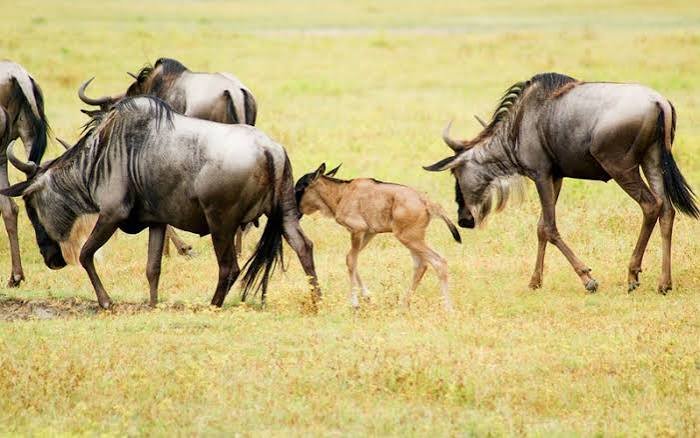
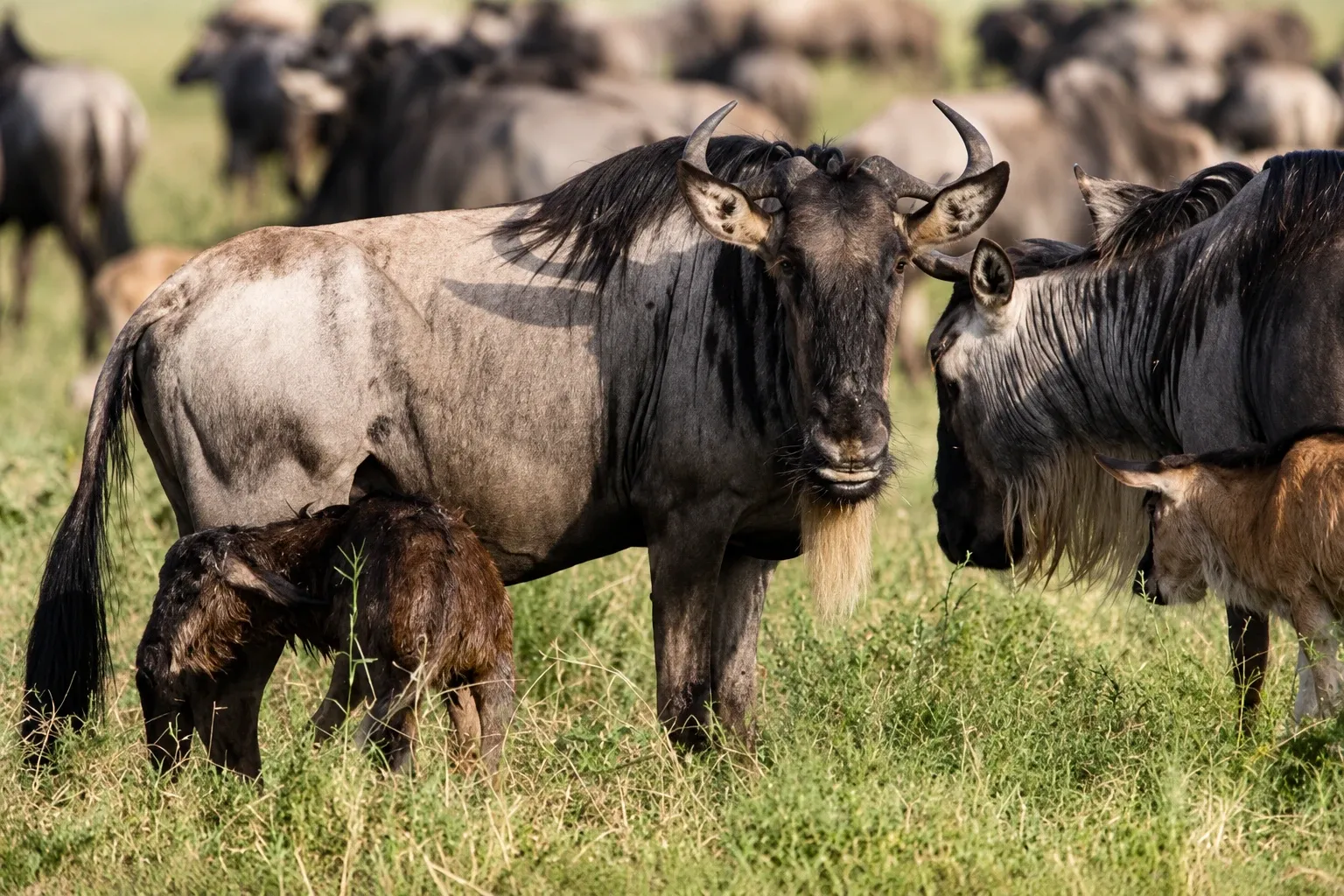
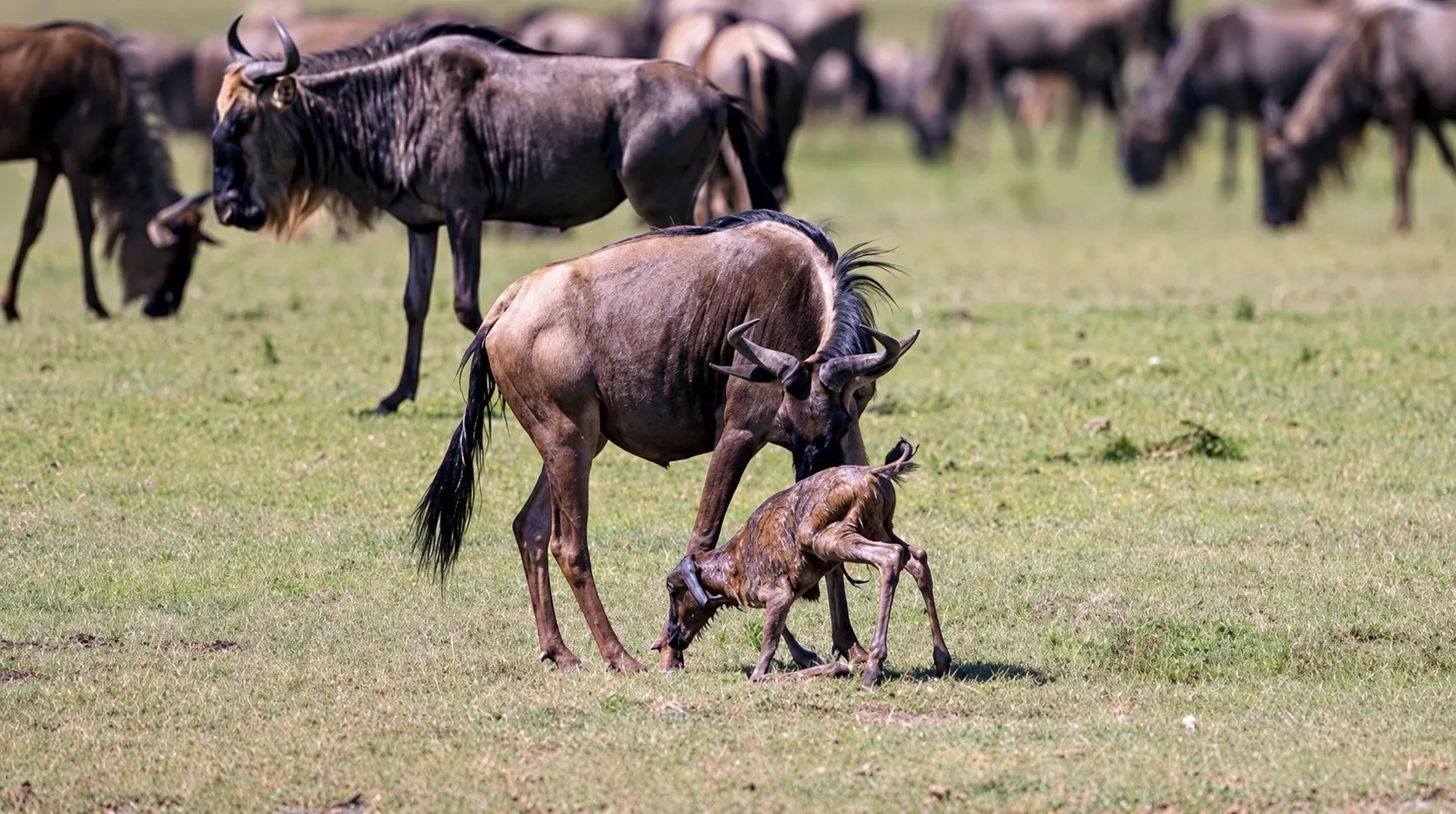
The Ndutu calving season is the period when large concentrations of migratory wildebeest gather on the short-grass plains of the southern Serengeti ecosystem to give birth.
The wider Great Migration involves wildebeest, zebras and gazelles moving through the Serengeti–Mara ecosystem in search of water and fresh grazing. UNESCO describes it as an annual circular movement involving more than 1 million wildebeest and hundreds of thousands of other grazing animals.
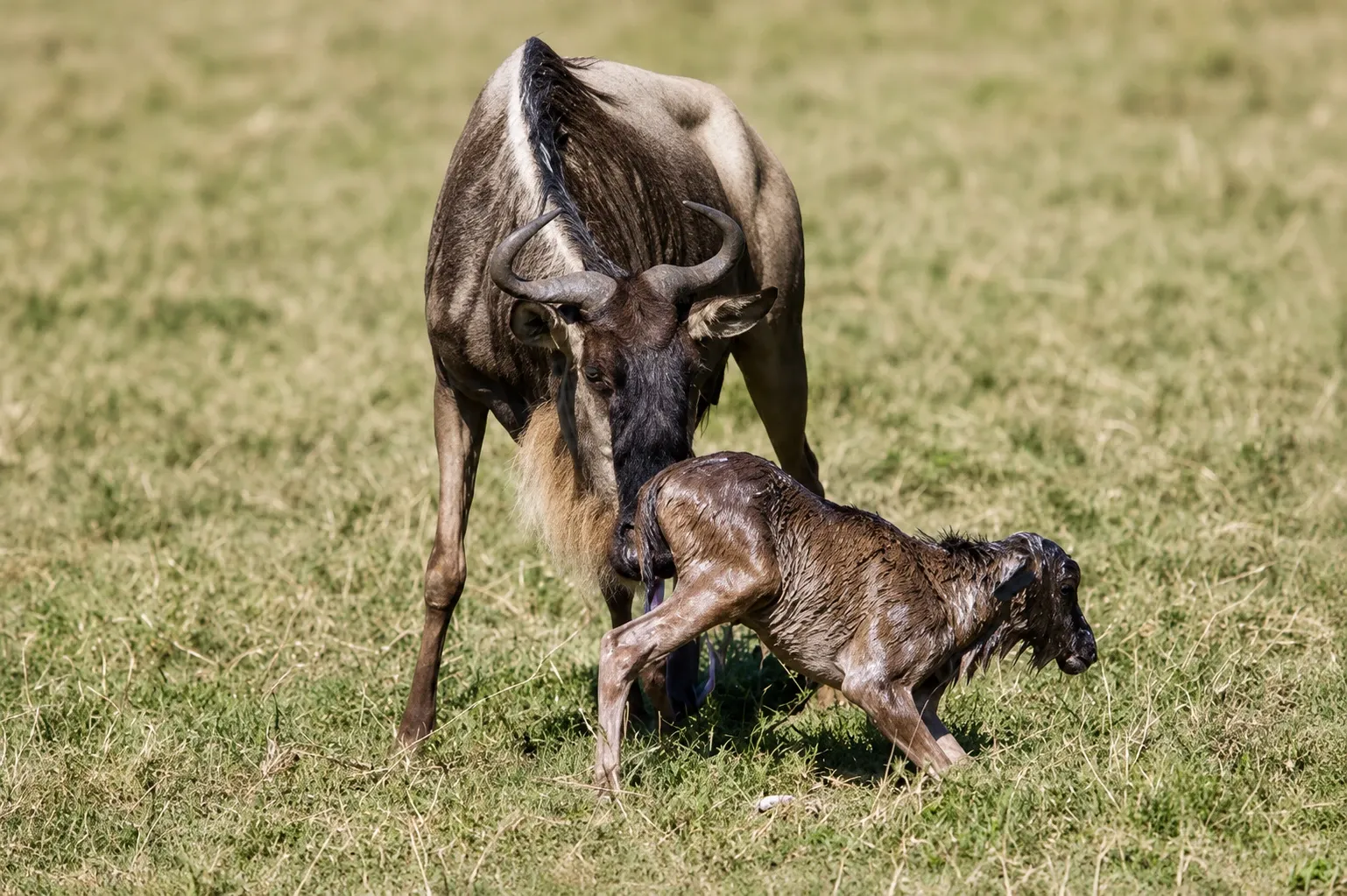
During the main calving period, many births occur within a relatively short number of weeks. TANAPA information indicates that more than 250,000 wildebeest calves are born annually, with a large proportion arriving during a concentrated period around February.
This abundance of vulnerable young animals also attracts predators. Lions, cheetahs, hyenas and jackals may be seen following the herds, while leopards are more commonly searched for around woodland and riverine habitats.
Wildlife sightings and live births can never be guaranteed. The location of the herds changes according to rainfall, water and the condition of the grass.
Where Is Ndutu in Tanzania?
Ndutu lies within the southern Serengeti ecosystem in northern Tanzania, close to the boundary between Ngorongoro Conservation Area and Serengeti National Park.
Lake Ndutu and nearby Lake Masek are shallow, saline lakes surrounded by short-grass plains and woodland. According to the Ngorongoro Conservation Area Authority, the lakes collect water from surrounding higher ground, while the combination of plains and woodland provides food and cover for wildlife during the migration.
Ndutu is commonly included in Tanzania’s Northern Safari Circuit alongside:
- Ngorongoro Crater
- Central Serengeti
- Tarangire National Park
- Lake Manyara National Park
- Oldupai Gorge
- Arusha and Moshi
Because parts of the Ndutu wildlife area fall within different protected zones, the permits and conservation charges required can depend on the exact route and location of the accommodation.
When Is the Best Time for a Ndutu Calving Season Safari?
For travellers primarily interested in calving, late January and February normally provide the strongest opportunity. However, the migration does not follow fixed calendar dates.
| Period | Typical conditions | Planning advice |
|---|---|---|
| December | Rains may encourage herds to move toward the southern plains | Suitable for green scenery, but the main calving concentration may not yet have formed |
| January | Herd numbers generally increase around Ndutu and the southern plains | A good combination of migration viewing and fewer peak-February pressures |
| February | Principal calving period and strong predator activity | Recommended for travellers whose main priority is the calving season |
| March | Herds may remain in the south if grazing and water are still favourable | Good potential, but herd location becomes increasingly dependent on rainfall |
| April–May | The migration generally begins moving away as conditions change | Ndutu should not be selected solely for calving-season concentrations |
Tanzania’s rainfall varies from year to year. The country’s principal long-rain period generally begins around March and continues into May, while the shorter rains usually occur later in the year.
For this reason, travellers should select an experienced guide who can respond to current wildlife reports instead of following an inflexible daily driving plan.
What Wildlife Can You See in Ndutu?
The main attraction is the gathering of migratory wildebeest with zebras and gazelles across the open plains. The exact density and location of the animals vary throughout the season.
Potential sightings include:
- Wildebeest and newborn calves
- Plains zebras
- Thomson’s and Grant’s gazelles
- Lions
- Cheetahs
- Spotted hyenas
- Golden and black-backed jackals
- Elephants
- Giraffes
- Elands
- Bat-eared foxes
- Secretary birds and other grassland birds
The Lake Ndutu area is particularly associated with lion and cheetah habitat, while woodland sections can provide opportunities to search for giraffes, elephants and leopards. The Ngorongoro Conservation Area Authority identifies significant cheetah and lion populations in the wider Ndutu area.
Predator encounters can include hunting or feeding scenes. Families travelling with young children should be aware that some sightings may be graphic.
How Many Days Should You Spend in Ndutu?
We recommend a minimum of 3 nights in Ndutu, providing 2 full days for game drives.
| Time in Ndutu | Experience |
|---|---|
| 1 night | Too rushed for most calving-focused safaris |
| 2 nights | Provides 1 full day, but limited flexibility if the herds are farther away |
| 3 nights | Recommended balance of viewing time, cost and route flexibility |
| 4 nights | Well suited to photographers and travellers strongly focused on animal behaviour |
| 5 or more nights | Appropriate for specialist photography or a slower safari pace |
A longer stay does not guarantee particular sightings, but it gives your guide more time to locate the herds and explore different habitats.
Travellers building a complete northern Tanzania itinerary can also read KiliPori’s guide to planning a Tanzania safari.
What Is the Best Ndutu Safari Itinerary?
A strong calving-season itinerary should protect sufficient time in Ndutu before adding other parks. Two routes work particularly well.
Option 1: Ndutu, Central Serengeti and Ngorongoro Crater
This route is best for travellers who want to remain within the greater Serengeti ecosystem and experience different wildlife habitats.
| Day | Route and experience |
|---|---|
| 1 | Arusha to Ndutu, followed by an afternoon game drive if time permits |
| 2 | Full-day Ndutu calving-season game drive |
| 3 | Full-day Ndutu calving-season game drive |
| 4 | Ndutu to Central Serengeti with game viewing en route |
| 5 | Central Serengeti to Ngorongoro or Karatu |
| 6 | Ngorongoro Crater game drive and return to Arusha |
Main advantage: More time within the Serengeti ecosystem and a wider range of habitats.
Main trade-off: The route includes several long overland journeys and normally costs more than visiting Ndutu alone.
Option 2: Tarangire, Ndutu and Ngorongoro Crater
This itinerary is suited to travellers who want greater destination variety without adding Central Serengeti.
| Day | Route and experience |
|---|---|
| 1 | Arusha to Tarangire for a game drive, followed by an overnight stay near the park or in Karatu |
| 2 | Travel to Ndutu with an afternoon game drive where timing permits |
| 3 | Full-day Ndutu calving-season game drive |
| 4 | Full-day Ndutu calving-season game drive |
| 5 | Ndutu to Ngorongoro or Karatu with game viewing en route |
| 6 | Ngorongoro Crater game drive and return to Arusha |
Main advantage: Combines Tarangire’s baobab landscape and elephant habitat with Ndutu and the crater.
Main trade-off: It does not include the Central Serengeti area around Seronera.
For first-time visitors, KiliPori’s Tanzania safari planning guide for 2027 explains practical considerations before choosing a final route.
How Do You Reach Ndutu?
Most travellers reach Ndutu by road in a private 4×4 safari vehicle or by scheduled bush flight.
Travelling by road
Approximate journey times for itinerary planning are:
| Route | Estimated driving time |
|---|---|
| Arusha to Ndutu | Approximately 6–8 hours |
| Moshi to Ndutu | Approximately 7–9 hours |
| Karatu to Ndutu | Approximately 3–4 hours |
| Ndutu to Central Serengeti | Approximately 2.5–4 hours |
These are planning estimates rather than guaranteed transfer times. Actual journeys depend on the selected gate, road conditions, weather, wildlife stops, permit procedures and the location of the camp.
A 4×4 is important because many roads and tracks are unpaved, and wet-season conditions can become muddy. The Ngorongoro Conservation Area Authority advises that a 4×4 is essential when leaving the main gravel roads in the conservation area and Serengeti.
Travelling by air
Scheduled light-aircraft services may connect Arusha Airport or other safari airstrips with Ndutu Airstrip during the operating season.
Flying reduces road-transfer time, but travellers should consider:
- The flight schedule may include intermediate stops
- Soft-sided luggage is normally preferred
- Weight limits depend on the airline and fare
- Road transfers are still required between the airstrip and camp
- Seasonal schedules may change
Flight availability, timings, luggage allowances and fares should be reconfirmed for the actual travel dates.
What Is the Weather Like During Calving Season?
Ndutu is generally green during the calving period, with warm daytime conditions, cooler mornings and the possibility of afternoon or overnight rain.
Travellers should prepare for:
- Cool early-morning game drives
- Warm or sunny periods during the day
- Short, heavy rain showers
- Muddy tracks after rainfall
- Dust when conditions become temporarily dry
- Strong sunlight at altitude
Rain should not automatically be viewed as a disadvantage. It supports fresh grass, creates green photographic backgrounds and influences the herds’ presence on the southern plains. However, heavy rainfall can slow journeys and make some tracks difficult.
Pack layered clothing, a lightweight waterproof jacket, sun protection and suitable covers for cameras and electronics.
Where Should You Stay in Ndutu?
Accommodation ranges from seasonal mobile camps to permanent tented camps and lodges.
| Accommodation type | Main advantage | Important consideration |
|---|---|---|
| Seasonal migration camp | Positioned to serve the calving-season area | May have fewer permanent facilities |
| Permanent tented camp | Good balance of comfort and safari atmosphere | Location should be checked carefully |
| Safari lodge | More solid facilities and established common areas | Availability can be limited during peak dates |
| Luxury camp | Larger rooms and higher service level | Higher cost does not automatically mean a better game-drive location |
Location is often more important than decorative luxury. A less expensive camp positioned close to the season’s main game-viewing area may reduce daily driving and provide more time with wildlife.
Before confirming accommodation, check:
- Exact protected-area location
- Distance from the desired game-drive zone
- Whether conservation or park fees apply
- Family or triple-room availability
- Electricity and charging arrangements
- Dietary requirements
- Accessibility for children or older travellers
- Whether the camp is seasonal or permanent
Availability during February can change quickly, so accommodation should be reconfirmed when the client is ready to book.
Private Safari or Small-Group Departure?
Both formats can work well, but they suit different priorities.
| Feature | Private safari | Small-group departure |
|---|---|---|
| Vehicle | Reserved for your party | Shared with other confirmed travellers |
| Daily flexibility | Highest flexibility | Follows an agreed group schedule |
| Photography | Easier to remain at selected sightings | Viewing time must suit the group |
| Family travel | Easier to arrange rest breaks | Better for children comfortable with full safari days |
| Price | Usually higher for 1–2 travellers | Costs can be shared among participants |
| Social experience | Private atmosphere | Opportunity to travel with other safari guests |
For a special group departure, KiliPori recommends a maximum of 6 guests in the safari vehicle, with an allocated window seat for each traveller. The final group conditions, departure dates and pricing should be explained clearly before booking.
What Does a Ndutu Safari Usually Include?
A professionally organized private safari commonly includes:
- Private 4×4 Land Cruiser with a pop-up roof
- Professional driver-guide
- Accommodation and meals stated in the itinerary
- Park and conservation fees
- Ngorongoro Crater service fee when the crater is included
- Bottled drinking water during the safari
- Airport or hotel transfers stated in the itinerary
- Applicable tourism taxes
Common exclusions include:
- International flights
- Tanzania visa
- Travel and medical insurance
- Tips
- Alcoholic and personal drinks
- Laundry
- Optional balloon safari
- Additional accommodation before or after the itinerary
- Personal purchases
- Bank or card-processing charges
- Activities not stated in the quotation
Protected-area tariffs and accommodation prices can change. Request a dated quotation based on the actual travel dates, group size, accommodation standard and route instead of relying on a general online estimate.
Who Is a Ndutu Calving Safari Best Suited To?
A Ndutu safari is particularly suitable for:
- Travellers interested in the Great Migration
- Wildlife photographers
- Visitors hoping to observe predator behaviour
- Repeat safari travellers seeking a seasonal experience
- Couples and honeymooners
- Families whose children are comfortable with longer drives
- Small groups willing to follow fixed departure dates
It may be less suitable for travellers who:
- Want guaranteed live-birth sightings
- Prefer short driving days throughout
- Dislike muddy roads or variable weather
- Are uncomfortable seeing natural predator-prey interactions
- Have only 2 or 3 days available from Arusha
- Want to visit Tanzania outside the southern migration season
Travellers with limited time can consider flying into or out of Ndutu rather than completing the entire journey by road.
Common Ndutu Safari Planning Mistakes
Spending only 1 night in Ndutu
The region is large, and wildlife locations change. One night provides little flexibility and can result in more time travelling than observing wildlife.
Assuming the migration follows fixed dates
Rainfall determines fresh grazing and herd movement. February is historically the principal calving period, but nature does not operate according to a guaranteed timetable.
Selecting accommodation by luxury level alone
A beautiful camp far from the day’s wildlife concentration may require longer drives. Compare location, access and included fees—not only room photographs.
Adding too many parks
Trying to include Tarangire, Lake Manyara, Ndutu, Central Serengeti and Ngorongoro within a short itinerary can make the safari tiring. For a 6-day calving safari, choose either Central Serengeti or Tarangire rather than forcing every destination into the route.
Ignoring seasonal road conditions
Wet tracks can increase transfer times. Build reasonable flexibility into arrival and departure days, especially when connecting with flights.
Booking accommodation before confirming the route
Some camps are located within the Ngorongoro Conservation Area, while others fall inside or near Serengeti National Park. The location can affect both logistics and fees.
Responsible Wildlife Viewing in Ndutu
The calving season is a sensitive period. Guests and guides should avoid placing pressure on animals, blocking their direction of movement or crowding a hunt.
Responsible behaviour includes:
- Remaining on authorized tracks where required
- Following guide and ranger instructions
- Keeping an appropriate distance from wildlife
- Avoiding loud voices around animals
- Never feeding wildlife
- Taking all litter out of the protected area
- Limiting congestion around predators, births and kills
- Avoiding requests that encourage unsafe or prohibited driving
Within the Ngorongoro Conservation Area, visitors must follow official rules concerning authorized roads, speed limits, wildlife viewing and licensed guides.
KiliPori Expert Recommendation
For a first Ndutu calving season safari, KiliPori recommends 3 nights in Ndutu, giving travellers 2 complete game-drive days. This provides a better balance than a rushed 1- or 2-night visit.
For a 6-day itinerary, choose between:
- Ndutu, Central Serengeti and Ngorongoro Crater for a migration-focused safari; or
- Tarangire, Ndutu and Ngorongoro Crater for more varied landscapes and wildlife habitats.
Where the budget allows, select accommodation based on its location and access to the seasonal game-viewing area. Travellers who want maximum flexibility for photography, rest breaks or children should choose a private safari. A small-group departure works well for guests comfortable with fixed dates and a shared daily schedule.
Frequently Asked Questions
Is February the best month for a Ndutu safari?
February is generally the strongest month for travellers specifically interested in wildebeest calving. However, herd locations depend on rainfall, so sightings cannot be guaranteed for a particular camp or date.
Can I see an actual wildebeest birth?
It is possible during the main calving period, but it cannot be promised. Many calves are born within a concentrated period, yet births happen across a wide landscape and can occur very quickly.
Is Ndutu inside Serengeti National Park?
The wider Ndutu ecosystem extends around the boundary of the Ngorongoro Conservation Area and Southern Serengeti. Your accommodation and daily route determine which protected-area permits and fees apply.
Are 2 nights in Ndutu enough?
Two nights provide only 1 full day and may work for a short itinerary. Three nights are preferable because they allow 2 full days and greater flexibility to follow current wildlife information.
Can Ndutu be combined with Ngorongoro Crater?
Yes. Ndutu and Ngorongoro Crater form a practical safari combination, particularly when the route includes an overnight stay near the crater or in Karatu before the crater game drive.
Should I combine Ndutu with Central Serengeti or Tarangire?
Choose Central Serengeti for more time in the wider Serengeti ecosystem. Choose Tarangire for different scenery, baobab woodlands and elephant habitat. Within a 6-day trip, trying to include both may make the itinerary too rushed.
Is Ndutu suitable for children?
Yes, provided the itinerary includes realistic travel times, flexible stops and suitable family accommodation. A private vehicle is preferable for families with young children because game-drive hours can be adjusted.
Is a hot-air balloon safari available in Ndutu?
Seasonal balloon operations may be available, subject to operator schedules, weather, minimum age requirements and space. The departure area and current price should be verified for the exact date.
Can I fly from Ndutu to Zanzibar?
Some seasonal scheduled services may connect the safari circuit with Zanzibar, sometimes with intermediate stops or a change of aircraft. Schedules, baggage limits and fares must be confirmed for the travel date.
Plan Your Trip With KiliPori Safaris
KiliPori Safaris can arrange a private or special small-group Ndutu calving season safari from Arusha, Moshi or Kilimanjaro International Airport.
Your itinerary can combine Ndutu with Central Serengeti, Ngorongoro Crater or Tarangire and can be customized around your dates, group size, accommodation preference, children’s ages and budget.
To ask a question, request a personalized itinerary or receive an accurate quotation, contact:
WhatsApp: +255 755 287 311
Final Recommendation
Plan your Ndutu calving season safari for late January or February if newborn wildebeest and seasonal predator activity are your main interests. Allow at least 3 nights in Ndutu rather than trying to cover the area in a single day.
For the strongest 6-day migration-focused route, combine Ndutu with Central Serengeti and Ngorongoro Crater. Travellers seeking more landscape variety can replace Central Serengeti with Tarangire National Park. Choose accommodation according to its location, not simply its luxury category, and keep in mind that rainfall determines the exact position of the herds. The next step is to request a date-specific itinerary and availability check.
Sources and Fact-Checking
- Tanzania National Parks Authority: Serengeti National Park and Great Migration information.
- Ngorongoro Conservation Area Authority: Lake Ndutu, protected-area access and visitor regulations.
- UNESCO World Heritage Centre: Serengeti National Park and Ngorongoro Conservation Area.
- Tanzania Meteorological Authority: Tanzania seasonal rainfall information.
- Current park and conservation tariffs should be verified with TANAPA and the Ngorongoro Conservation Area Authority before publishing a price.

KiliPori Safaris Travel Team
A local Tanzania team helping travellers plan wildlife safaris, Kilimanjaro climbs and Zanzibar holidays with clear routing and direct destination support.
Published September 13, 2026. Travel conditions, fees and schedules can change; confirm time-sensitive details before departure.