Explore this guide
Our guides combine current planning research with practical knowledge from arranging safaris, Kilimanjaro climbs and Zanzibar holidays.
Best Hiking Boots for Kilimanjaro Climbing and How to Break Them In
The best hiking boots for Kilimanjaro are comfortable, well-fitted boots with good traction, reliable support and enough weather protection for long days on varied mountain terrain. A mid-cut or supportive hiking boot is a practical choice for many climbers, while the exact model should be selected according to your foot shape, hiking experience and the conditions you expect to encounter.
More important than choosing the most expensive boot is choosing one that fits your feet properly and breaking it in before arriving in Tanzania. Even an excellent boot can cause discomfort if it is too tight, too loose or worn for the first time on Kilimanjaro.
What Makes a Good Kilimanjaro Hiking Boot?
A good Kilimanjaro boot should combine:
-
Comfortable fit
-
Good grip
-
Stable sole
-
Reliable ankle support
-
Weather protection
-
Enough room for your toes
-
Comfortable cushioning
-
Suitable weight
-
Compatibility with your hiking socks
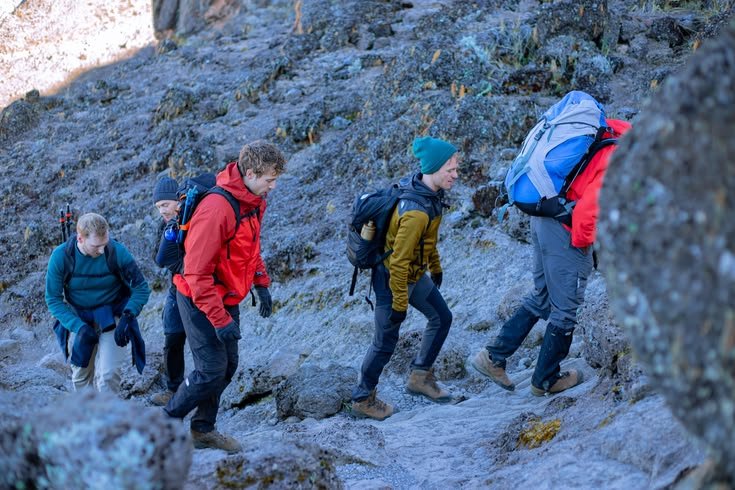
Kilimanjaro involves long days of walking across forest trails, rocky terrain, loose ground and higher mountain sections. Your footwear therefore needs to remain comfortable over many consecutive days.
You do not need an extreme mountaineering boot for a normal Kilimanjaro trekking route. A good three-season hiking or backpacking boot is generally a more practical choice for this type of climb.
Should You Choose Hiking Boots or Hiking Shoes for Kilimanjaro?
For most first-time Kilimanjaro climbers, supportive hiking boots are a straightforward choice, particularly if you are accustomed to wearing boots on long hikes.
However, footwear choice ultimately depends on the climber and the specific boot.
Modern hiking shoes and trail shoes are lighter and more flexible, while hiking boots generally provide more protection and support. The terrain, pack weight, personal preference and fit should all be considered.
If you already have extensive experience hiking long distances in trail shoes and know that they work well for your feet, you may prefer that style. The important point is to use footwear that you have already tested extensively.
What Type of Hiking Boot Is Best for Kilimanjaro?
A mid-cut, waterproof hiking boot with a durable outsole is a practical option for many Kilimanjaro climbers.
Look for:
-
Mid-height ankle collar
-
Good heel hold
-
Firm but comfortable sole
-
Deep traction lugs
-
Waterproof or weather-resistant construction
-
Comfortable toe box
-
Secure lacing system
-
Durable upper
-
Moderate weight
Full mountaineering boots are usually unnecessary for standard Kilimanjaro trekking routes. Very heavy boots can add unnecessary weight over long hiking days.
Best Hiking Boot Features for Kilimanjaro
Good Traction
Look for an outsole with well-defined lugs that can grip dirt, rock and uneven terrain.
Good traction becomes particularly useful when the trail is wet or loose.
Waterproof Protection
A waterproof boot can be useful because Kilimanjaro passes through areas where rain is possible, particularly on the lower mountain.
However, waterproof boots can be less breathable than non-waterproof footwear, so consider the climate and your own preference.
Comfortable Ankle Support
A mid-cut boot can provide a useful balance between support and flexibility.
The boot should hold your heel securely without squeezing your ankle.
Stable Sole
The sole should provide enough stability for uneven rocky terrain without being unnecessarily stiff.
Comfortable Toe Box
Your toes need enough space to move naturally.
This becomes especially important on descents, when your feet move forward inside the boot if the fit or lacing is not correct.
Suitable Weight
A lighter boot can reduce fatigue over long hiking days, while a more substantial boot can provide additional protection and stability.
Choose the lightest boot that still gives you the support and protection you personally need.
Recommended Hiking Boot Models for Kilimanjaro
There is no single boot model that is perfect for every climber because feet differ in length, width, volume and shape.
Popular hiking-boot families that climbers may consider include:
-
Salomon Quest 4 GTX
-
Merrell Moab 3 Mid Waterproof
-
Scarpa Rush TRK GTX
-
KEEN Targhee Mid Waterproof
-
La Sportiva Ultra Raptor II Mid GTX
-
Lowa Renegade GTX Mid
These models represent different approaches to hiking footwear, from relatively lightweight designs to more supportive boots.
The important step is to try the boot on with the socks and insoles you plan to use on Kilimanjaro rather than choosing a model simply because another climber recommends it.
Salomon Quest 4 GTX
The Salomon Quest 4 GTX is a supportive hiking boot designed for demanding hikes and backpacking.
It can be considered by climbers who want:
-
Strong support
-
Waterproof protection
-
A secure fit
-
Good traction
-
A boot suitable for long hiking days
Its relatively substantial construction means it may feel more supportive than lightweight hiking shoes.
Merrell Moab 3 Mid Waterproof
The Merrell Moab 3 Mid Waterproof is a popular hiking boot option for climbers looking for a more comfortable and versatile hiking boot.
It can suit hikers who prefer:
-
Moderate weight
-
Comfortable cushioning
-
A familiar hiking-boot feel
-
Waterproof protection
-
Versatility beyond Kilimanjaro
The most important consideration is whether the shape of the boot matches your feet.
Scarpa Rush TRK GTX
The Scarpa Rush TRK GTX is another option for climbers looking for a supportive hiking boot with a balance between hiking comfort and stability.
It can be considered by hikers who prefer a more structured boot for longer mountain days.
KEEN Targhee Mid Waterproof
The KEEN Targhee Mid Waterproof is worth considering for hikers who need a roomier toe area.
Foot shape varies considerably, so a boot that feels comfortable to one climber may not work for another.
Try the boot with your actual hiking socks before deciding.
La Sportiva Ultra Raptor II Mid GTX
The La Sportiva Ultra Raptor II Mid GTX offers a more athletic approach to hiking footwear.
It may appeal to climbers who prefer a lighter, more responsive feel while still wanting a mid-cut boot and weather protection.
Lowa Renegade GTX Mid
The Lowa Renegade GTX Mid is a long-established hiking boot option with a supportive mid-cut design.
It can be suitable for climbers who prefer a traditional hiking boot feel and want a boot that can also be used for future hiking trips.
How Should Kilimanjaro Boots Fit?
Your hiking boots should feel snug and secure without being tight.
You should have enough room to move your toes, while your heel should remain relatively stable inside the boot.
When trying boots:
-
Wear your actual hiking socks.
-
Use your hiking insoles if you have them.
-
Try the boots later in the day.
-
Walk on an incline if possible.
-
Walk downhill if possible.
-
Check your heel movement.
-
Check your toe space.
-
Pay attention to pressure points.
Feet can swell during the day, so trying boots later in the day can provide a more realistic fit.
How Much Toe Room Should Kilimanjaro Boots Have?
Your toes should not touch the front of the boot when walking downhill.
A useful fitting approach is to stand on the removable insole and check that you have approximately a thumb's width between your longest toe and the end of the insole, although the exact amount depends on your foot and the boot design.
The key test is practical: your toes should remain comfortable while descending, and your heel should not slide excessively.
Should Kilimanjaro Boots Be Waterproof?
Waterproof boots are a practical choice for many Kilimanjaro climbers, particularly when hiking through wet conditions.
However, waterproof membranes can reduce breathability compared with more ventilated footwear. If your feet become very warm during hiking, a breathable non-waterproof boot may feel more comfortable in certain conditions.
For Kilimanjaro, the decision should therefore consider both weather protection and personal comfort.
Do You Need Heavy Mountaineering Boots for Kilimanjaro?
For normal trekking routes, heavy mountaineering boots are generally unnecessary.
Kilimanjaro's standard trekking routes do not require technical climbing boots with crampon-compatible mountaineering construction.
A supportive hiking or backpacking boot is usually more practical for the long approach and trekking sections.
Specialised mountaineering boots are designed for environments such as technical snow and ice climbing and are substantially different from ordinary hiking boots.
Do Kilimanjaro Boots Need to Be High-Cut?
A high-cut boot is not automatically better.
A mid-cut hiking boot can provide a useful combination of ankle coverage, flexibility and comfort.
Choose the height based on:
-
Your ankle preference
-
Foot shape
-
Hiking experience
-
Boot weight
-
Terrain
-
Personal comfort
The boot should support your walking style rather than restrict natural movement.
How Long Does It Take to Break In Kilimanjaro Boots?
The break-in period varies according to the boot.
Light synthetic boots may feel comfortable relatively quickly, while heavier leather boots can take considerably longer. REI recommends gradually increasing the amount of time and distance you spend wearing new boots rather than taking them straight onto a major trip.
As a practical approach, start breaking in your boots several weeks before your Kilimanjaro climb.
This gives you enough time to discover whether the boot actually works for your feet.
How to Break In Kilimanjaro Boots: Step-by-Step
Step 1: Wear Them at Home
Start by wearing the boots indoors for short periods.
Use:
-
Your normal hiking socks
-
Your normal insoles
-
Your normal lacing system
Walk around the house and pay attention to pressure points.
Step 2: Walk Around Your Neighborhood
Once they feel comfortable indoors, take short walks outside.
Start with approximately 20-30 minutes.
Do not immediately turn your new boots into your longest training session.
Step 3: Increase the Distance
Gradually increase your walking distance.
For example:
Week 1: 20-30 minute walks
Week 2: 45-60 minute walks
Week 3: 1-2 hour walks
Week 4: Longer hikes with your normal hiking socks and daypack
The exact timeline can be shorter or longer depending on the boot.
Step 4: Add Your Training Backpack
Once the boots feel comfortable on normal walks, use them during your hiking training.
Start with a lighter backpack and gradually increase the distance and pack weight.
This lets you test the boots under conditions that are closer to your Kilimanjaro climb.
Step 5: Take Them on Long Hikes
Before travelling to Tanzania, complete several longer hikes in the boots.
Include:
-
Uphill sections
-
Downhill sections
-
Uneven terrain
-
Longer walking days
A long hike is useful because some fit problems only become noticeable after several hours.
Step 6: Test Your Summit Socks
Use the same socks you intend to wear on Kilimanjaro.
If you plan to use thicker socks on summit night, test them with the boots before travelling.
This is important because changing sock thickness can significantly change the fit.
How Do You Know Your Boots Are Properly Broken In?
Your boots are ready when:
-
You can wear them for several hours comfortably.
-
You do not have persistent pressure points.
-
Your heel remains reasonably secure.
-
Your toes do not hit the front on descents.
-
You can walk uphill comfortably.
-
You can walk downhill comfortably.
-
You know which socks work best with them.
-
You know how to lace them for your feet.
The goal is not necessarily to make the boot feel extremely soft. The goal is to make sure you and the boots work comfortably together.
What If Your Boots Cause a Hot Spot?
Do not ignore a hot spot during training.
Stop and identify the cause.
It could be:
-
Heel movement
-
Sock wrinkles
-
Incorrect lacing
-
Pressure from the boot
-
Excess moisture
-
Poor fit
Adjust the socks or lacing first. If the problem continues repeatedly, reconsider the boot.
A break-in process cannot turn a fundamentally poor-fitting boot into a well-fitting one.
Should You Soak New Hiking Boots to Break Them In?
No. Avoid shortcuts such as soaking new boots and then taking a long hike in them.
Gradual wear is a better approach, and manufacturers' care instructions should be followed for the specific boot material.
How Should You Lace Kilimanjaro Boots?
Your lacing should provide a secure fit without creating uncomfortable pressure.
For uphill walking, you may prefer a slightly different tension from downhill walking.
During descents, securing the heel can help prevent your foot from sliding forward.
Test different lacing techniques during training rather than waiting until Kilimanjaro.
What Socks Should You Wear With Kilimanjaro Boots?
Choose hiking socks that manage moisture and fit comfortably inside your boots.
Good options include:
-
Merino wool hiking socks
-
Synthetic hiking socks
-
Wool-synthetic blends
Avoid wearing socks that are so thick that they make your boots tight.
Most importantly, test your socks with your boots before the climb.
Should You Buy Kilimanjaro Boots in Tanzania?
You can look for hiking footwear in Tanzania, but buying your main hiking boots before travelling is generally more practical.
This gives you time to:
-
Find the right size
-
Compare different models
-
Break them in
-
Test your socks
-
Test your insoles
-
Identify pressure points
Do not plan to arrive in Moshi and buy completely unfamiliar boots immediately before your climb.
Can You Rent Hiking Boots in Moshi?
Some Kilimanjaro gear rental providers offer hiking boots, but bringing your own properly fitted boots is preferable.
Boot fit is highly personal, and a rental boot that feels acceptable for a few minutes may feel very different after several hours of hiking.
If you must rent boots, test them thoroughly before starting your trek.
Do Different Kilimanjaro Routes Need Different Boots?
The basic footwear requirements are similar across the main routes because they all eventually reach the same summit environment.
| Route | Recommended Boot Approach |
|---|---|
| Marangu | Comfortable waterproof hiking boot with good traction |
| Machame | Supportive hiking boot with reliable grip and rain protection |
| Lemosho | Durable hiking boot suitable for longer trekking days |
| Rongai | Comfortable waterproof or weather-resistant hiking boot |
| Umbwe | Supportive boot with good traction for steeper terrain |
| Northern Circuit | Comfortable boot suitable for a longer multi-day trek |
The most important difference is not the boot model but how well the boot fits you and how thoroughly you have tested it.
What Is the Best Boot for a First Kilimanjaro Climb?
For a first Kilimanjaro climb, choose a comfortable mid-cut hiking boot with good traction, suitable weather protection and enough room for your toes.
Do not choose a boot simply because it is marketed as a mountaineering boot.
A comfortable boot that you have already tested on long hikes is generally more useful than an expensive boot that you have never worn.
What Is the Best Kilimanjaro Boot for Beginners?
Beginners should prioritise:
-
Fit
-
Comfort
-
Traction
-
Weather protection
-
Stability
-
Reasonable weight
-
Proven performance during training
Beginners should also avoid buying the stiffest or heaviest boot available simply because Kilimanjaro is a high mountain.
Your footwear should match the trek, not just the mountain's elevation.
What Boots Should You Use for Summit Night?
Use the same boots you have already broken in during training.
Do not introduce new footwear on summit night. Your summit socks, thermal layers and other clothing can change how your boots feel, so test the complete combination before travelling.
What Should You Do Before Flying to Tanzania?
Before leaving home:
-
Wear your boots on several long hikes.
-
Test your hiking socks.
-
Test your insoles.
-
Test your lacing.
-
Clean and dry your boots.
-
Check the outsole.
-
Check the laces.
-
Check the waterproofing.
-
Pack them in your carry-on if practical.
Keeping your main hiking boots with you during air travel can also be useful because your most important footwear remains available even if checked luggage is delayed.
KiliPori Safaris Recommendation: Choosing Kilimanjaro Hiking Boots
At KiliPori Safaris, we recommend choosing Kilimanjaro boots based on fit and proven comfort rather than brand name alone.
A good mid-cut hiking boot with reliable traction and suitable weather protection works well for many climbers. Models from brands such as Salomon, Merrell, Scarpa, KEEN, La Sportiva and Lowa can all be considered, but your own feet should make the final decision.
Most importantly, buy your boots early and break them in gradually. Wear them during your Kilimanjaro training, test them on hills and longer hikes, and make sure your socks and lacing system work comfortably before travelling to Tanzania.
Plan Your Kilimanjaro Climb With KiliPori Safaris
From choosing the right route to preparing your equipment, KiliPori Safaris can help you prepare for your Kilimanjaro adventure.
WhatsApp KiliPori Safaris: +255 755 287 311
Choose Your Kilimanjaro Route | Prepare Your Gear | Request Your Custom Climb
FAQs About Kilimanjaro Hiking Boots
What are the best hiking boots for Kilimanjaro?
A comfortable, supportive and well-broken-in hiking boot with good traction and suitable weather protection is a practical choice. Popular models to consider include Salomon Quest 4 GTX, Merrell Moab 3 Mid Waterproof, Scarpa Rush TRK GTX, KEEN Targhee Mid Waterproof, La Sportiva Ultra Raptor II Mid GTX and Lowa Renegade GTX Mid.
Do I need waterproof boots for Kilimanjaro?
Waterproof boots can be useful because some sections of Kilimanjaro can be wet. However, waterproof footwear can be less breathable, so choose according to your hiking conditions and personal preference.
Should Kilimanjaro boots be high-cut?
Not necessarily. A mid-cut hiking boot can provide a useful balance of support and flexibility. Fit and comfort are more important than simply choosing the highest boot.
How long should I break in Kilimanjaro boots?
Start several weeks before your climb and gradually increase your walking time and distance. Heavier leather boots may need more time than lightweight synthetic boots.
Can I climb Kilimanjaro with brand-new boots?
It is better not to. Your boots should be tested and comfortably broken in before the climb.
Can I use trail-running shoes on Kilimanjaro?
Some experienced hikers use lightweight hiking shoes or trail shoes, but footwear choice depends on personal experience, fit, terrain and weather. A supportive hiking boot is a straightforward option for many first-time climbers.
Do I need mountaineering boots for Kilimanjaro?
No. Standard Kilimanjaro trekking routes generally do not require specialised technical mountaineering boots.
Can I rent Kilimanjaro hiking boots in Moshi?
Some rental providers may offer hiking boots, but bringing your own properly fitted and broken-in boots is preferable.
What socks should I wear with Kilimanjaro boots?
Use comfortable hiking socks made from moisture-managing materials such as merino wool or synthetic blends. Test the exact socks with your boots before the climb.
How should Kilimanjaro boots fit?
They should feel secure without being tight, with enough toe room for comfortable movement. Your heel should remain reasonably stable, especially when walking downhill.
Should I buy Kilimanjaro boots one size bigger?
Do not automatically size up. Try the boots with your actual hiking socks and check toe room, heel hold and overall comfort. Foot shape varies, so the correct size is the one that gives you a secure and comfortable fit.
Can I break in hiking boots by soaking them?
No. Gradual wear is the better approach. Avoid shortcuts such as soaking new boots and immediately taking long hikes in them.

KiliPori Safaris Travel Team
A local Tanzania team helping travellers plan wildlife safaris, Kilimanjaro climbs and Zanzibar holidays with clear routing and direct destination support.
Published October 2, 2026. Travel conditions, fees and schedules can change; confirm time-sensitive details before departure.