Explore this guide
Our guides combine current planning research with practical knowledge from arranging safaris, Kilimanjaro climbs and Zanzibar holidays.
Climbing Kilimanjaro in September: Weather and Route Choice
Climbing Kilimanjaro in September gives you dry-season trekking conditions, generally clear skies, good mountain visibility and a wide choice of established routes. September falls within Kilimanjaro's dry season, which runs from late June to September, with cool nights and clearer days providing good climbing conditions.
At KiliPori Safaris, September is a strong month for choosing a Kilimanjaro route around your preferred number of days, scenery, accommodation and acclimatization plan. The main routes remain available, from the 5-6 day Marangu Route to longer 8-9 day options such as the Northern Circuit. TANAPA confirms that Kilimanjaro can be climbed through several established routes and that longer itineraries provide more time for acclimatization.
What Is the Weather Like When Climbing Kilimanjaro in September?
September is generally dry, cool and clear on Kilimanjaro. It is part of the mountain's main dry period, with lower rainfall than the March-May wet season and good conditions for trekking.
The weather changes significantly as you climb through Kilimanjaro's different ecological zones:
-
Lower slopes: mild and relatively warm
-
Rainforest: cool, green and sometimes damp
-
Heath and moorland: cooler and more exposed
-
Alpine desert: dry, rocky and cold
-
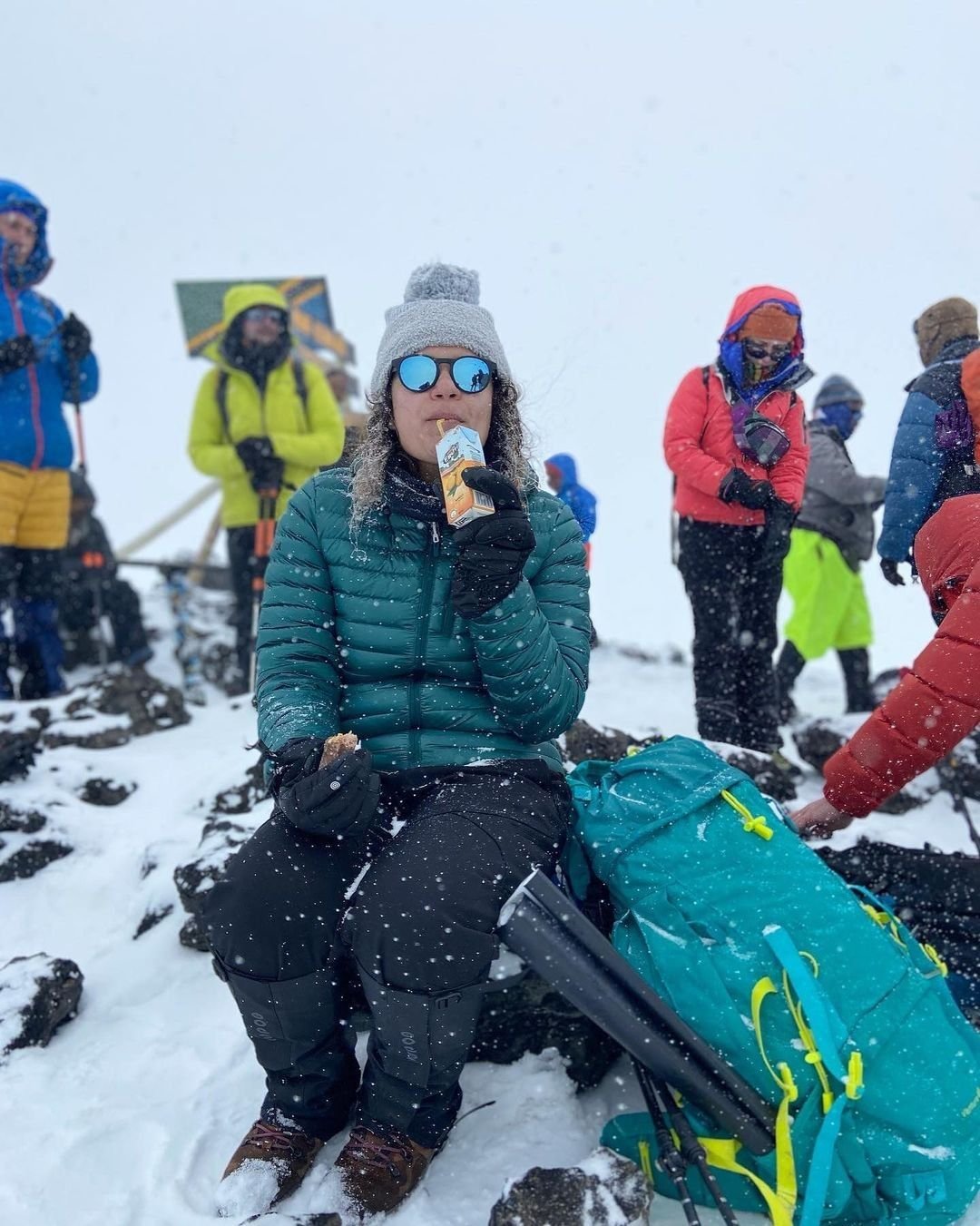
Summit zone: freezing, especially during the night
TANAPA describes the dry season as providing cool nights and clear days with good climbing conditions.
Is September a Good Month to Climb Kilimanjaro?
Yes. September provides one of the main dry-season windows for climbing Kilimanjaro, with generally favourable trekking conditions and clear mountain views.
The combination of drier trails and clearer skies makes September suitable for climbers who want to spend several days on the mountain without planning around the wetter March-May period.
September also works well for travelers who want to combine Kilimanjaro with a Tanzania safari after the climb.
What Temperature Should You Expect on Kilimanjaro in September?
Temperature decreases as altitude increases, so September feels very different at the base compared with Uhuru Peak.
A practical guide is:
| Kilimanjaro Zone | Typical September Conditions |
|---|---|
| Moshi and lower slopes | Around 15-25°C |
| Rainforest | Around 10-20°C |
| Heath and moorland | Around 5-15°C |
| Alpine desert | Around 0-10°C |
| High camps | Around -5 to 5°C |
| Summit zone | Around -10°C to -20°C during cold periods |
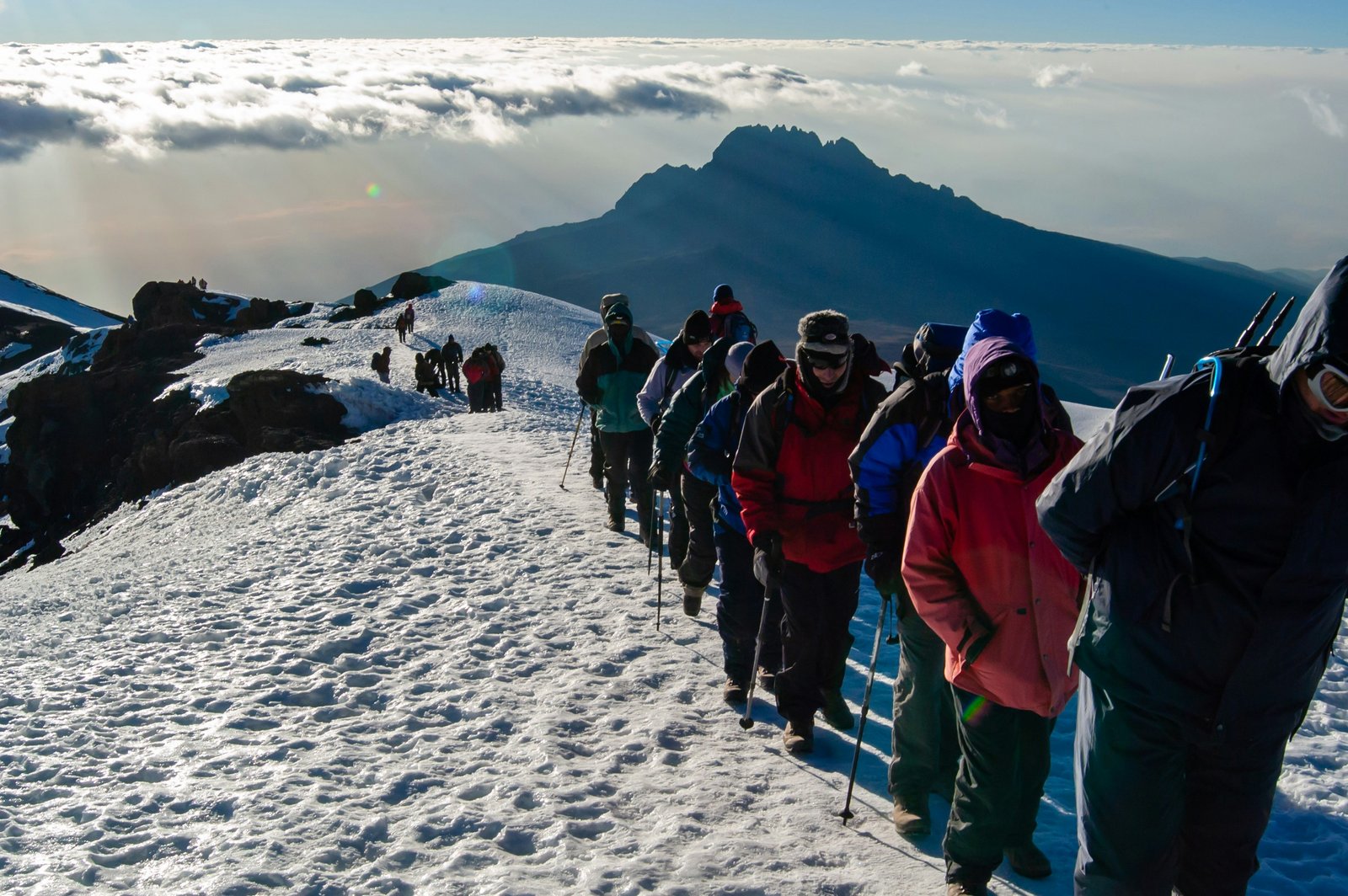
The coldest conditions occur during the summit attempt, when climbers normally begin walking during the night.
This is why September should be treated as a dry-season climb with freezing summit conditions, rather than a warm-weather trek.
What Are the Trail Conditions in September?
Kilimanjaro trails are generally dry and firm in September, particularly compared with the main rainy season.
The forest section can still be damp in places because of shade and local moisture, but conditions become progressively drier as you climb higher.
The trail changes from:
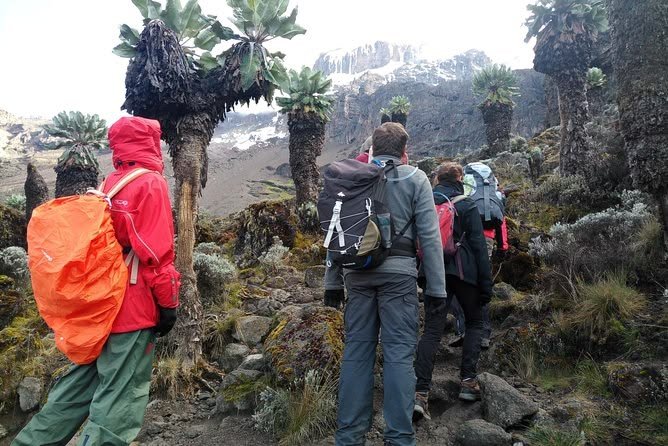
Forest - green vegetation and cooler conditions.
Heath and moorland - open landscapes, giant heather and wider views.
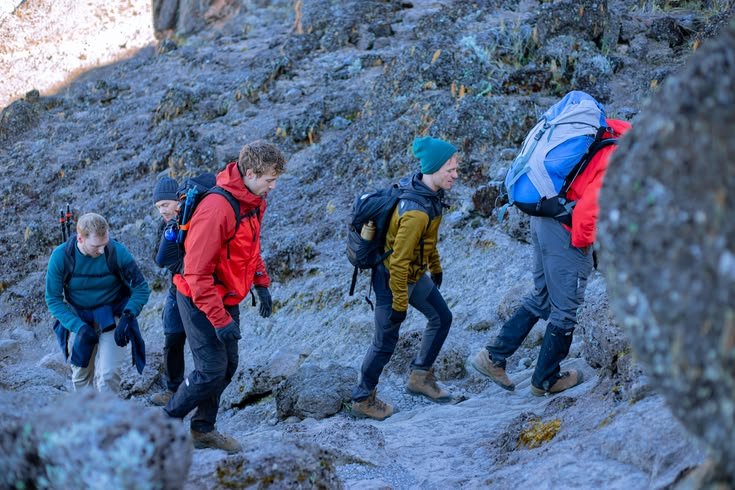
Alpine desert - dry, rocky and exposed terrain.
Summit zone - cold volcanic terrain with rock, ice and snow depending on conditions.
TANAPA confirms that Kilimanjaro contains distinct climatic and ecological zones as the route rises toward Kibo's summit at 5,895 metres.
Which Kilimanjaro Route Should You Choose in September?
The right Kilimanjaro route in September depends mainly on the number of days you have, accommodation preference, scenery and the amount of time you want for gradual acclimatization.
Our main September route choices are:
| Route | Typical Days | Accommodation | September Character |
|---|---|---|---|
| Marangu | 5-6 days | Huts | Direct route with hut accommodation |
| Machame | 6-7 days | Camping | Scenic southern approach |
| Rongai | 6-7 days | Camping | Northern approach |
| Lemosho | 7-8 days | Camping | Longer scenic approach |
| Umbwe | About 6 days | Camping | Steeper approach |
| Northern Circuit | 8-9 days | Camping | Longest route with gradual progression |
TANAPA currently identifies Marangu, Machame, Lemosho and Rongai among the main access routes and notes that route choice and the number of days affect the climbing experience.
Is September Better for Machame or Lemosho?
For climbers choosing between Machame and Lemosho in September, the main difference is the itinerary length and route experience.
Machame Route
The Machame Route usually takes 6-7 days and approaches Kilimanjaro from the southern side.
It is suitable for climbers who want:
-
Scenic landscapes
-
Camping
-
A 6-7 day itinerary
-
A well-established route
-
A shorter option than Lemosho
KiliPori's 2027 planning range for Machame is approximately US$1,800-2,200.
Lemosho Route
The Lemosho Route usually takes 7-8 days and begins from the western side of the mountain.
It is suitable for climbers who want:
-
A longer approach
-
More time for gradual acclimatization
-
Varied scenery
-
Camping
-
A 7-8 day itinerary
KiliPori's 2027 planning range for Lemosho is approximately US$2,000-2,800.
Is Marangu a Good Route for September?
Marangu is a practical September choice for climbers who prefer mountain huts and a shorter 5-6 day itinerary.
Unlike the camping routes, Marangu uses permanent mountain huts at Mandara, Horombo and Kibo. TANAPA confirms that Marangu uses alpine huts while the other main climbing routes use designated tented camps.
The KiliPori 2027 planning range for Marangu is approximately US$1,400-1,800.
Marangu works particularly well for climbers whose priority is hut accommodation and a shorter mountain itinerary.
Is Lemosho a Good Route for September?
Lemosho is a strong September option for climbers who want a longer route with more time on the mountain.
The route approaches from the western side before joining the southern circuit toward the summit.
Its 7-8 day structure provides more time for gradual progression compared with the shortest Kilimanjaro itineraries.
For September climbers who have enough time, the longer itinerary also creates more room for acclimatization.
Is the Northern Circuit a Good Route in September?
The Northern Circuit is the longest main Kilimanjaro route and is particularly suitable for climbers who want more time for acclimatization and an extended mountain experience.
The route takes approximately 8-9 days and explores the northern side of Kilimanjaro before joining the summit approach.
KiliPori's 2027 planning range is approximately US$2,500-3,000.
The Northern Circuit is therefore a route for climbers who can dedicate more time to the mountain rather than trying to complete Kilimanjaro as quickly as possible.
Is Rongai a Good Route for September?
Rongai is a good September option for climbers who want to approach Kilimanjaro from the northern side.
The route provides a different perspective of the mountain from the southern approaches and uses camping accommodation.
Typical itineraries take around 6-7 days, while longer private arrangements can be extended.
KiliPori's 2027 planning range for Rongai is approximately US$1,890-2,800, depending on itinerary and travel arrangements.
What About the Umbwe Route in September?
Umbwe is the direct and steeper route option for experienced or physically prepared trekkers who want a more demanding approach.
The route climbs quickly through the southern side of the mountain before joining the Southern Circuit.
KiliPori's 2027 planning range for Umbwe is approximately US$2,300-3,000.
For climbers choosing Umbwe, the focus should be on appropriate preparation and a suitable itinerary rather than simply selecting the shortest possible climb.
Which Kilimanjaro Route Has the Best Scenery in September?
September provides good conditions for enjoying scenery across all major Kilimanjaro routes, but each route offers a different landscape.
Lemosho provides broad western landscapes and the Shira Plateau.
Machame offers varied southern scenery and the Barranco area.
Rongai provides the northern perspective of Kilimanjaro.
Marangu passes through forest, moorland and the Kibo approach using mountain huts.
Northern Circuit provides the longest exploration of the mountain, including extensive northern landscapes.
TANAPA highlights Kilimanjaro's forest, moorland, alpine desert and summit environments as distinct parts of the mountain experience.
Which Kilimanjaro Route Gives You More Time to Acclimatize?
Longer routes provide more time for gradual ascent and acclimatization.
For September climbs, our main choices are:
7-day Machame - a balanced camping itinerary.
8-day Lemosho - more time on the mountain.
9-day Northern Circuit - the longest standard option and more gradual progression.
TANAPA advises climbers to choose itineraries with acclimatization days, ascend slowly and stay hydrated.
Is Kilimanjaro Crowded in September?
September remains a popular dry-season month, so the main routes can be busy, particularly on popular departure dates.
Crowding varies according to the route, date and camp schedule.
Marangu and Machame generally receive strong demand, while longer routes such as the Northern Circuit provide a different trail experience because of their route design and extended itinerary.
For a September climb, booking early allows KiliPori Safaris to organize your preferred route and departure date.
How Early Should You Book a September Kilimanjaro Climb?
Book your September climb several months in advance, particularly if you have fixed international flights or want a specific route and start date.
Early planning helps secure:
-
Your preferred route
-
Your preferred climbing dates
-
Private departure arrangements
-
Pre-climb accommodation
-
Post-climb accommodation
-
Safari extensions
-
Zanzibar extensions
-
Equipment arrangements
Kilimanjaro is open year-round, and all summit climbs must be conducted with a licensed operator.
What Should You Wear for Climbing Kilimanjaro in September?
September requires clothing for both dry daytime conditions and freezing summit temperatures.
Pack:
-
Moisture-wicking base layers
-
Thermal underwear
-
Fleece
-
Insulated jacket
-
Waterproof and windproof jacket
-
Waterproof trousers
-
Hiking trousers
-
Warm socks
-
Summit socks
-
Warm gloves
-
Summit mittens
-
Warm hat
-
Buff or neck gaiter
-
Sunglasses
-
Headlamp
The most important clothing should remain accessible throughout the climb so that you are ready for changing temperatures.
What Sleeping Bag Do You Need for September?
For climbing Kilimanjaro in September, KiliPori Safaris recommends a sleeping bag with a comfort rating around -15°C or colder for typical high-altitude camping conditions.
The sleeping bag should provide adequate insulation around the body and head and have a reliable zipper.
If you do not want to carry a bulky sleeping bag internationally, KiliPori Safaris can arrange suitable equipment rental in Moshi.
Can Beginners Climb Kilimanjaro in September?
Yes, beginners can climb Kilimanjaro in September with proper preparation and a route that allows enough time for gradual acclimatization.
For first-time climbers, KiliPori commonly plans:
7-day Machame
8-day Lemosho
9-day Northern Circuit
These itineraries provide more time on the mountain than the shortest 5-day options.
What Is the Best September Kilimanjaro Route for Different Travelers?
For the shortest itinerary
Marangu 5-6 days
Choose this when hut accommodation and a shorter itinerary are the priority.
For a classic camping experience
Machame 6-7 days
Choose this for a scenic southern approach with camping.
For more acclimatization time
Lemosho 7-8 days
Choose this when you want a longer approach and more gradual progression.
For the northern approach
Rongai 6-7 days
Choose this when you want to experience Kilimanjaro from the northern side.
For the longest itinerary
Northern Circuit 8-9 days
Choose this when you want the most extended standard route and more time on the mountain.
How Much Does Climbing Kilimanjaro in September Cost?
KiliPori Safaris' 2027 planning ranges for the main routes are:
| Route | 2027 Planning Range |
|---|---|
| Marangu | US$1,400-1,800 |
| Machame | US$1,800-2,200 |
| Rongai | US$1,890-2,800 |
| Lemosho | US$2,000-2,800 |
| Umbwe | US$2,300-3,000 |
| Northern Circuit | US$2,500-3,000 |
The final package is organized around the route, number of days, accommodation, private or group arrangements and additional services.
Can You Combine a September Kilimanjaro Climb With a Safari?
Yes. September is an excellent month for combining Kilimanjaro with a Tanzania safari.
A popular combination is:
Kilimanjaro → Serengeti → Ngorongoro → Zanzibar
You can also create a shorter itinerary:
Kilimanjaro → Tarangire → Ngorongoro → Zanzibar
TANAPA also notes that Kilimanjaro can be combined with other Tanzania travel experiences, including safari destinations.
KiliPori Safaris' September Route Approach
At KiliPori Safaris, we match the September climb to the experience you want rather than putting every climber on the same route.
For a shorter climb, we plan Marangu or Machame.
For more time on the mountain, we plan Lemosho.
For a northern approach, we plan Rongai.
For the longest standard climbing experience, we plan the Northern Circuit.
Every climb includes a route plan, professional mountain crew, accommodation, transfers and the mountain logistics required for your selected itinerary.
What Should You Expect When Climbing Kilimanjaro in September?
Expect dry trails, cool lower slopes, cold nights, clear mountain views and freezing conditions near the summit.
September gives you a strong dry-season climbing window, while the route you select determines how long you spend on the mountain and the type of landscape you experience.
The most important route decision is therefore not simply the month. It is choosing an itinerary that gives you enough time for the mountain experience you want.
Plan Your September Kilimanjaro Climb With KiliPori Safaris
Ready for climbing Kilimanjaro in September?
KiliPori Safaris can arrange your preferred route, professional mountain crew, accommodation, transfers, equipment and optional Tanzania safari or Zanzibar extension.
WhatsApp KiliPori Safaris: +255 755 287 311
Choose Your September Route | Request Your Kilimanjaro Itinerary | Plan Your Tanzania Adventure
FAQs About Climbing Kilimanjaro in September
Is September a good month to climb Kilimanjaro?
Yes. September falls within Kilimanjaro's dry season, with cool nights and generally clear days providing good climbing conditions.
What is the weather like when climbing Kilimanjaro in September?
September is generally dry and clear, with temperatures becoming progressively colder as you gain altitude.
Is September cold on Kilimanjaro?
Yes. Lower slopes can be mild, but temperatures drop sharply at altitude, with freezing conditions around the summit.
Which Kilimanjaro route is best in September?
The right route depends on your priorities. Marangu suits hut accommodation and shorter itineraries, Machame provides a classic camping route, Lemosho offers a longer approach, Rongai approaches from the north, and the Northern Circuit provides the longest standard itinerary.
Is Lemosho good for September?
Yes. Lemosho's 7-8 day itinerary provides a longer approach and more time for gradual acclimatization.
Is Machame good for September?
Yes. Machame's 6-7 day camping itinerary works well during the dry September period.
Is Marangu good for September?
Yes. Marangu is suitable for climbers who prefer permanent mountain huts and a 5-6 day itinerary.
Is Rongai good for September?
Yes. Rongai provides a northern approach and a different route experience from the southern routes.
Is the Northern Circuit good in September?
Yes. The 8-9 day Northern Circuit provides the longest standard itinerary and more time for gradual ascent.
Is Kilimanjaro crowded in September?
September remains a popular dry-season month, so popular routes can be busy. Route and departure-date selection can affect the amount of trail traffic you experience.
How much does Kilimanjaro cost in September?
KiliPori Safaris' 2027 planning ranges start at approximately US$1,400-1,800 for Marangu and extend to approximately US$2,500-3,000 for the Northern Circuit, depending on the route and itinerary.
Can beginners climb Kilimanjaro in September?
Yes. Beginners can climb in September with proper preparation and an itinerary that provides sufficient time for gradual acclimatization.
Can I combine Kilimanjaro with a safari in September?
Yes. A September climb can be combined with Serengeti, Ngorongoro, Tarangire and Zanzibar.
How many days should I choose for a September climb?
KiliPori commonly plans 7-day Machame, 8-day Lemosho and 9-day Northern Circuit itineraries for climbers who want more time for gradual ascent and acclimatization.

KiliPori Safaris Travel Team
A local Tanzania team helping travellers plan wildlife safaris, Kilimanjaro climbs and Zanzibar holidays with clear routing and direct destination support.
Published October 3, 2026 · Last updated October 31, 2026. Travel conditions, fees and schedules can change; confirm time-sensitive details before departure.