Explore this guide
Our guides combine current planning research with practical knowledge from arranging safaris, Kilimanjaro climbs and Zanzibar holidays.
How Many Days Do You Need for an Ndutu Safari?
Most travelers should plan a five- to seven-day safari with at least three or four nights in the Ndutu area. This provides enough time for several calving-season game drives while allowing for changing weather, wildlife movement and different areas of the Southern Serengeti plains.
A three-day Ndutu safari can work for travelers with limited time, especially when flights reduce long road transfers. A five-day safari offers the best balance for many visitors, while a seven-day itinerary allows Ndutu to be combined comfortably with Ngorongoro Crater, Central Serengeti or Tarangire.
Quick Answer: Recommended Ndutu Safari Duration
| Safari duration | Recommended Ndutu nights | Best for |
|---|---|---|
| 3 days | 2 nights | Short trips and fly-in safaris |
| 4 days | 2–3 nights | Focused calving-season experience |
| 5 days | 3 nights | Best balance of time, cost and wildlife |
| 6 days | 3–4 nights | Ndutu with Ngorongoro or Central Serengeti |
| 7 days | 3–4 nights | Complete northern Tanzania experience |
| 8 days or more | 4+ nights | Photography, relaxed travel and wider combinations |
For travelers whose main objective is the wildebeest calving season, three to four nights in or near Ndutu is generally the strongest recommendation.
Why Safari Duration Matters in Ndutu
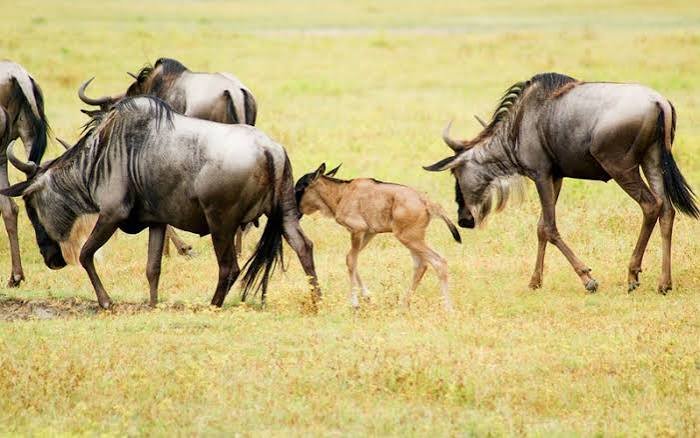
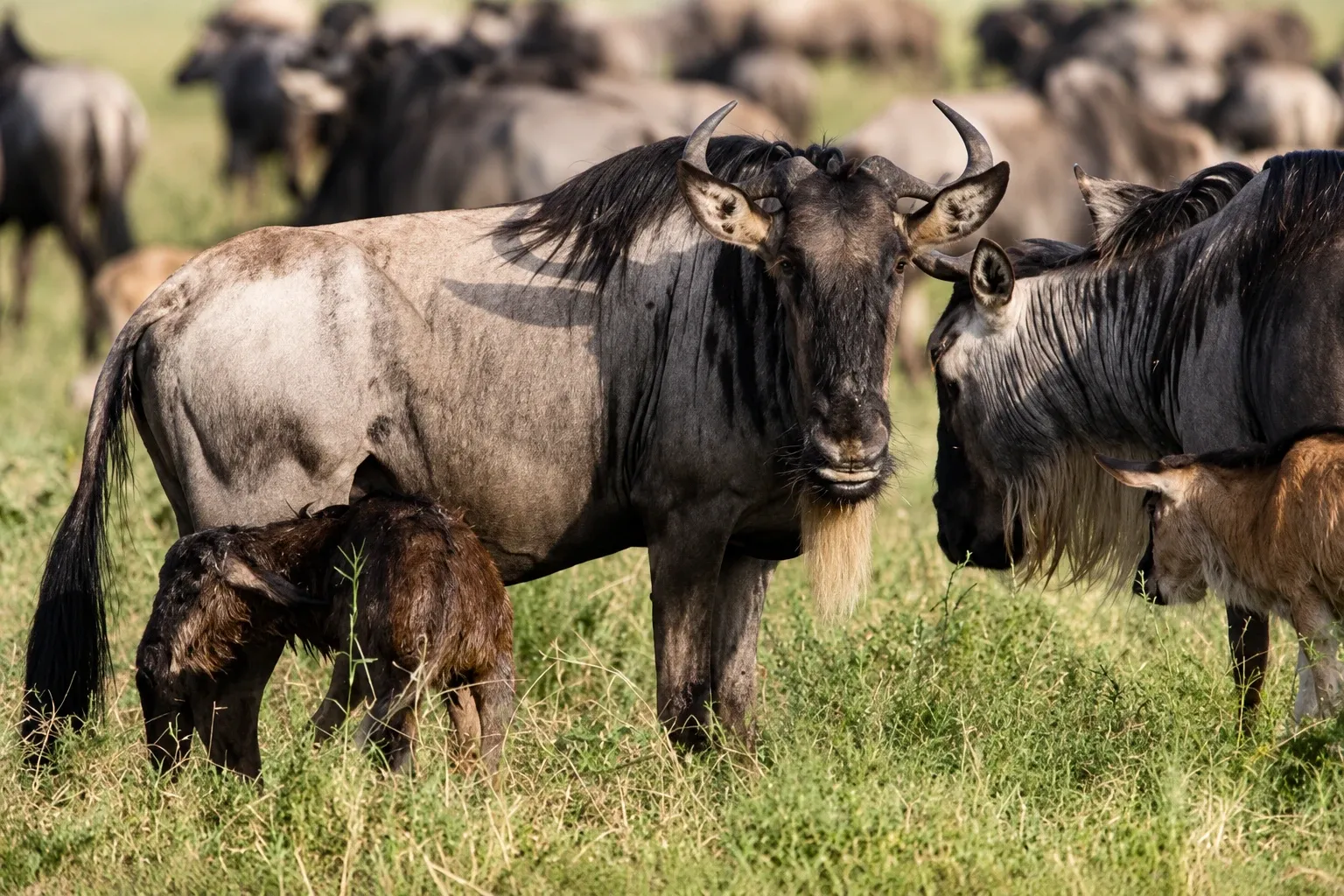
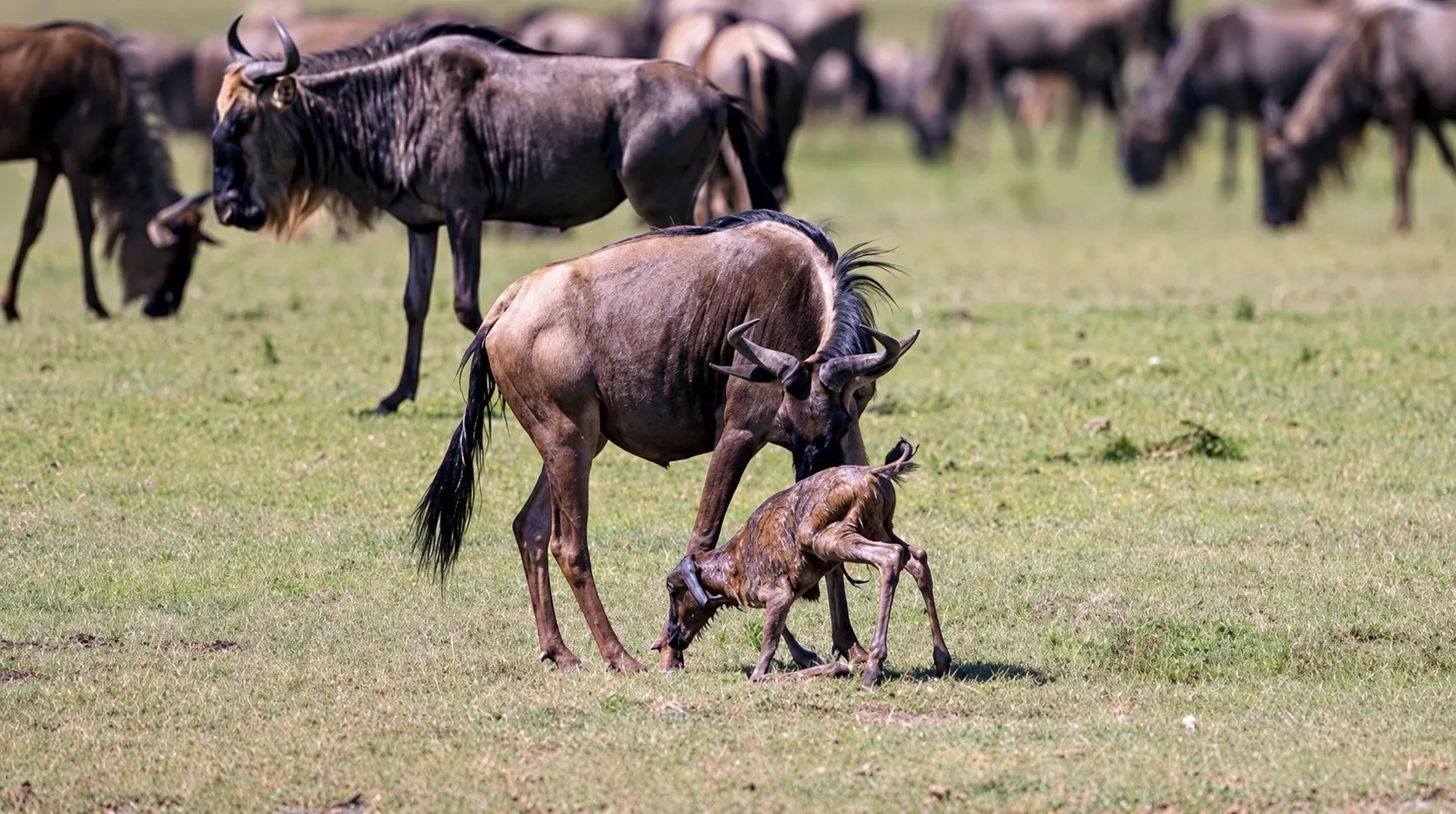
Ndutu is a seasonal wildlife area within the wider Serengeti ecosystem. From approximately January through March, the wildebeest migration may concentrate across the nutrient-rich southern plains as the herds follow rainfall and fresh grazing.
The herds are not confined to one fixed location. Wildlife conditions can vary between:
- Lake Ndutu
- Lake Masek
- Kusini
- Gol Mountains
- Hidden Valley
- The wider Southern Serengeti plains
- Areas within the Ngorongoro Conservation Area
- Nearby areas inside Serengeti National Park
A longer stay gives your guide more opportunities to respond to recent wildlife information, rainfall, road conditions and herd movement.
Spending only a few hours in Ndutu can result in a rushed experience. Three or four nights allow time to explore different areas without depending entirely on conditions during one game drive.
How Many Nights Should You Spend in Ndutu?
For most travelers, the number of nights in Ndutu matters more than the total number of days shown in the package title.
A seven-day safari may include only two nights in Ndutu if several other destinations are added. A five-day safari focusing primarily on the calving area may provide three nights in Ndutu and therefore more concentrated migration viewing.
Before booking, check:
- Total number of safari days
- Number of nights actually spent near Ndutu
- Arrival time on the first day
- Departure time on the final day
- Driving distances
- Camp location
- Whether full-day game drives are included
- Whether other destinations are being added
Two Nights in Ndutu
Two nights normally provide:
- An arrival-day game drive
- One full day of wildlife viewing
- A departure-day game drive or transfer
This can work for a short safari, but it provides limited flexibility if wildlife is dispersed or travel delays reduce game-drive time.
Three Nights in Ndutu
Three nights generally provide:
- An arrival-day game drive
- Two substantial game-drive days
- A final morning or transfer game drive
This is a good minimum for travelers who want a meaningful calving-season experience.
Four Nights in Ndutu
Four nights allow:
- More extensive exploration
- Additional time for predator sightings
- Greater flexibility around rainfall
- A slower travel pace
- More photography opportunities
- A better balance between full-day and shorter game drives
Four nights are particularly suitable for photographers, repeat safari travelers and guests whose primary interest is the Great Migration calving season.
Five or More Nights in Ndutu
Five or more nights can suit specialist travelers, but it is not necessary for everyone.
A longer Ndutu stay is most valuable for:
- Wildlife photographers
- Filmmakers
- Birdwatchers
- Travelers interested in animal behavior
- Guests preferring a relaxed pace
- Visitors who do not want to change camps frequently
Other travelers may prefer to spend three or four nights in Ndutu and use the remaining days for Central Serengeti or Ngorongoro Crater.
Is Three Days Enough for an Ndutu Safari?
Three days can be enough for a focused introduction to Ndutu, but the route must be planned carefully.
A three-day itinerary works best when:
- The traveler has limited time
- Domestic flights reduce road travel
- Accommodation is well located
- The safari focuses primarily on Ndutu
- Arrival and departure times allow useful game drives
- The traveler accepts a faster pace
A typical three-day structure may include:
Day 1: Arrival and Afternoon Game Drive
Fly or drive into the Ndutu area and begin wildlife viewing after arrival.
Day 2: Full-Day Ndutu Game Drive
Spend a full day exploring the calving plains with your private guide.
Day 3: Morning Game Drive and Departure
Complete a final game drive before flying out or continuing toward Ngorongoro.
The 3-Day February Tanzania Private Ndutu Safari is designed for travelers seeking a short private calving-season experience.
Limitations of a Three-Day Safari
A three-day itinerary may provide only one complete day in the wildlife area. It also offers less flexibility if:
- Flights are delayed
- Road conditions are difficult
- The herds are farther from the camp
- Rain affects accessibility
- Wildlife activity is quieter on the full day
Three days should therefore be considered the practical minimum rather than the ideal duration.
Is Four Days Enough for Ndutu?
Four days provide a more comfortable short safari than three days.
Depending on the route, travelers may receive:
- Two or three nights near Ndutu
- One or two full game-drive days
- More time to follow current sightings
- The possibility of adding Ngorongoro Crater
- A less rushed arrival and departure
Four days can work particularly well for travelers flying from Zanzibar or Arusha who want to focus on the calving season.
For families, four days can also provide a manageable safari length without requiring children to spend a full week on game drives.
Is Five Days the Best Ndutu Safari Length?
For many travelers, five days is the best balance between safari cost, travel time and wildlife viewing.
A five-day itinerary can include:
- Three nights around Ndutu
- Two or more substantial game-drive days
- Ngorongoro Crater
- Road transport from Arusha
- A possible fly-out option
- A comfortable pace without unnecessary camp changes
The 5-Day Private Ndutu Calving Season Safari is suitable for travelers who want a more complete Great Migration experience than a short three-day safari.
Possible Five-Day Structure
Day 1: Arusha to Karatu or Ngorongoro area
Day 2: Transfer to Ndutu with game viewing
Day 3: Full-day Ndutu calving-season safari
Day 4: Full-day Ndutu safari
Day 5: Final game drive and onward transfer
The exact route can be adjusted according to transport arrangements, accommodation and whether Ngorongoro Crater is included.
When Should You Choose a Six-Day Safari?
Six days are suitable when travelers want to explore Ndutu properly while adding another destination without rushing.
A six-day safari can include:
- Three or four nights near Ndutu
- Ngorongoro Crater
- Central Serengeti
- Tarangire
- An arrival night in Arusha
- A domestic flight at the beginning or end
However, trying to include Tarangire, Ngorongoro, Ndutu and Central Serengeti in only six days can create a fast-moving itinerary. The route should reflect the traveler’s main priority.
If the calving season is the main objective, it is usually better to protect at least three nights in Ndutu rather than adding too many parks.
Is Seven Days Better for an Ndutu Safari?
Seven days provide enough time for a broader northern Tanzania safari while maintaining a strong calving-season focus.
A seven-day itinerary can include:
- Three or four nights in Ndutu
- Ngorongoro Crater
- Central Serengeti
- Tarangire
- A balloon safari
- An arrival or departure flight
- A slower pace for couples or families
The 7-Day February Private Couples Ndutu Safari offers couples more time for private game viewing and a less rushed safari experience.
Advantages of Seven Days
- More time to respond to changing herd locations
- Better opportunity to see different predators
- Additional Big Five viewing in Central Serengeti or Ngorongoro
- Less pressure to leave productive sightings quickly
- Greater flexibility for photography
- More route options
- A more complete first-time Tanzania safari
Possible Disadvantage
A poorly planned seven-day itinerary can still feel rushed if it includes too many destinations and frequent one-night stays.
More days do not automatically create a better safari. The location of each night and the efficiency of the route remain important.
When Are Eight or More Days Recommended?
An eight- to ten-day itinerary is suitable for travelers who want to combine Ndutu with several destinations or continue to Zanzibar.
A longer trip may include:
- Tarangire National Park
- Ngorongoro Crater
- Ndutu
- Central Serengeti
- Zanzibar
- Cultural experiences
- A balloon safari
- Domestic flights
Eight or more days are particularly valuable for:
- First-time Tanzania visitors
- Families wanting a slower pace
- Photographers
- Honeymooners
- Travelers combining safari and beach time
- Guests avoiding frequent long drives
The additional days should provide meaningful experiences rather than unnecessary transfers.
Recommended Duration by Traveler Type
Couples
Couples should consider five to seven days.
This allows time for:
- Private game drives
- Comfortable camps
- Ngorongoro or Central Serengeti
- Optional balloon safari
- A relaxed travel pace
- Possible Zanzibar extension
Families With Children
Families should normally consider five to seven days, depending on the children’s ages and previous safari experience.
A private vehicle makes it easier to arrange:
- Shorter game drives
- Rest periods
- Flexible meal times
- Child-friendly camps
- Fewer accommodation changes
A shorter three- or four-day safari may work for younger children, while families with teenagers may enjoy a longer itinerary.
Wildlife Photographers
Photographers should consider seven to nine days, with at least four nights near Ndutu.
Longer stays provide more opportunities for:
- Early-morning light
- Late-afternoon light
- Predator behavior
- Calving activity
- Changing weather
- Different wildlife locations
- Repeated visits to productive areas
Solo Travelers
Solo travelers can choose any duration, but five or six days often provide a good balance.
A small-group departure may reduce costs, while a private safari provides complete control over photography and game-drive schedules.
Senior Travelers
Senior travelers may prefer six to eight days with:
- Fewer long road transfers
- At least three nights in the same camp
- Domestic flights where practical
- Comfortable accommodation
- Flexible private game drives
First-Time Safari Travelers
First-time visitors should consider six or seven days. This provides enough time to experience Ndutu and at least one contrasting destination such as Ngorongoro Crater or Central Serengeti.
How Travel Method Affects the Number of Days
Road Safari
A road itinerary from Arusha normally requires more time because travel between destinations forms part of the safari.
Driving works particularly well when combining:
- Tarangire
- Lake Manyara
- Ngorongoro
- Ndutu
- Central Serengeti
A road-based Ndutu safari should normally be at least four or five days.
Fly-In Safari
Flying reduces travel time and makes a three- or four-day safari more practical.
Fly-in safaris are useful for:
- Travelers starting in Zanzibar
- Short holidays
- Families avoiding long road transfers
- Luxury travelers
- Guests continuing elsewhere after Ndutu
Drive-In, Fly-Out Safari
Driving into Ndutu and flying out from Serengeti can provide an efficient balance.
Travelers experience the changing landscapes of northern Tanzania without repeating the same return road journey.
Fly-In, Fly-Out Safari
Flying in and out provides the most concentrated wildlife experience, but it normally costs more.
This arrangement is best for travelers prioritizing safari time over overland travel.
How Camp Location Affects the Required Duration
A camp located close to productive game-viewing areas can reduce daily travel time. A property farther from Ndutu may require longer drives before the wildlife experience begins.
Camp location can affect:
- Morning departure times
- Daily driving distance
- Fuel use
- Access to seasonal wildlife areas
- Park and conservation fees
- Time available at sightings
- Ability to return to camp for lunch
Travelers should understand whether the camp lies inside the Ngorongoro Conservation Area, inside Serengeti National Park or outside the main protected wildlife areas.
Read the guide to Ndutu camps inside vs outside the Ngorongoro Conservation Area before comparing accommodation solely by price.
How the Travel Month Affects Safari Duration
Ndutu in January
January can provide green landscapes, migrating herds and the beginning of significant calving activity.
Three nights in Ndutu are recommended, although wildlife distribution depends on rainfall.
Ndutu in February
February is widely associated with concentrated calving activity and high predator interest.
Because demand is high and wildlife viewing is the main objective for many travelers, three to four nights are recommended.
Ndutu in March
March can continue to offer calving-season wildlife, although herd distribution becomes increasingly dependent on rainfall and fresh grazing.
Four nights can provide additional flexibility if the herds are more dispersed across the southern plains.
No particular date can guarantee wildlife location or a specific natural event.
Should You Stay in One Ndutu Camp or Change Camps?
For most three- to five-night stays, remaining at one strategically selected camp is more efficient than moving repeatedly.
Changing camps can involve:
- Packing and unpacking
- Luggage logistics
- Check-in and check-out time
- Additional driving
- Reduced relaxation time
Using one camp as a base allows the guide to explore different wildlife areas each day.
A camp change can make sense when combining Ndutu with Central Serengeti or another distinct area. It is less useful when both properties serve essentially the same wildlife region.
Ndutu Alone or Combined With Other Destinations?
Ndutu and Ngorongoro Crater
This is one of the strongest combinations for a four- to six-day safari.
Ndutu provides seasonal migration and predator viewing, while Ngorongoro offers a concentrated wildlife experience in a dramatically different landscape.
Ndutu and Central Serengeti
This combination works well for six- to eight-day safaris.
Central Serengeti provides:
- Year-round resident wildlife
- Big cats
- River valleys
- Rocky kopjes
- Different landscapes
- Convenient flights from Seronera
Ndutu and Tarangire
This combination normally requires at least six or seven days if Ngorongoro is also included.
Tarangire adds elephants, baobab landscapes and a contrasting ecosystem.
Ndutu and Zanzibar
A short Ndutu safari can be followed by several nights in Zanzibar.
Travelers can:
- Fly from Serengeti to Zanzibar
- Return to Arusha and fly onward
- Begin in Zanzibar and fly to the safari area
- Combine five to seven safari days with four to six beach nights
Common Duration-Planning Mistakes
Counting arrival and departure days as full safari days
A package may be described as five days even though the first and final days contain airport transfers or partial game drives.
Check the actual number of full wildlife-viewing days.
Including too many destinations
Trying to visit Tarangire, Ngorongoro, Ndutu and Central Serengeti in four or five days can create excessive driving.
Spending only one night in Ndutu
One night normally provides very limited time to explore a seasonal wildlife area.
Choosing distant accommodation
A lower camp price may be offset by additional driving and reduced game-viewing time.
Ignoring flight schedules
Domestic flights operate at scheduled times and may include intermediate stops. The arrival and departure schedule affects the amount of safari time available.
Changing camps every night
Frequent camp changes can make the itinerary feel rushed and consume time that could be used for game drives.
Assuming more parks always create a better safari
A focused itinerary with sufficient time in each area can provide a stronger experience than a checklist of many destinations.
Recommended Ndutu Safari Length by Priority
| Main priority | Recommended total duration | Recommended Ndutu stay |
|---|---|---|
| Short calving-season visit | 3–4 days | 2–3 nights |
| Best overall balance | 5 days | 3 nights |
| Ndutu and Ngorongoro | 5–6 days | 3 nights |
| Ndutu and Central Serengeti | 6–8 days | 3–4 nights |
| Family safari | 5–7 days | 3–4 nights |
| Couples safari | 5–7 days | 3–4 nights |
| Photography safari | 7–9 days | 4–5 nights |
| Complete northern circuit | 7–10 days | 3–4 nights |
| Safari and Zanzibar | 10–14 days | 3–4 nights |
Frequently Asked Questions
What is the minimum number of days for an Ndutu safari?
Three days is the practical minimum, particularly for a fly-in safari. It normally provides one full day plus partial game drives on the arrival and departure days.
Is two days enough for Ndutu?
Two days are generally too rushed unless flights and camp location provide exceptionally efficient access. The traveler may receive less than one complete day of game viewing.
Are three nights in Ndutu enough?
Three nights provide a good minimum and normally allow two substantial game-drive days plus arrival and departure wildlife viewing.
Are four nights in Ndutu too many?
No. Four nights are particularly useful for photographers, wildlife enthusiasts and travelers wanting flexibility around changing herd locations.
Is five days enough for Ndutu and Ngorongoro?
Yes. A carefully planned five-day itinerary can combine approximately three nights near Ndutu with Ngorongoro Crater.
How many days do I need for Ndutu and Central Serengeti?
Approximately six to eight days are recommended, depending on the route, accommodation and transport arrangements.
How many days should families spend in Ndutu?
Families should normally consider three or four nights near Ndutu within a five- to seven-day safari. The ideal duration depends on the children’s ages and tolerance for long game drives.
How many days should photographers spend in Ndutu?
Photographers should consider at least four nights in the Ndutu area. A seven- to nine-day total itinerary provides additional flexibility.
Should I spend more time in Ndutu or Central Serengeti?
During the January-to-March calving period, travelers whose main priority is the migration should generally allocate more nights to Ndutu. Those seeking broader Big Five viewing can divide their time between Ndutu and Central Serengeti.
Does a balloon safari require an extra day?
Not always, but adding sufficient time prevents the balloon experience from replacing too much ground-based game viewing. A balloon safari fits most comfortably into itineraries of five days or longer.
Is a longer Ndutu safari guaranteed to provide better sightings?
No. Wildlife sightings are natural and cannot be guaranteed. A longer stay simply provides more opportunities to explore different areas and respond to changing conditions.
KiliPori Safaris Recommendation
For most travelers, KiliPori Safaris recommends:
- A minimum of three nights in Ndutu
- Four nights for photographers and migration-focused travelers
- A five-day itinerary for Ndutu and Ngorongoro
- A six- to eight-day itinerary for Ndutu and Central Serengeti
- A seven- to ten-day itinerary for the complete northern circuit
The ideal route should prioritize meaningful wildlife time rather than the largest possible number of destinations.
Plan the Right Number of Safari Days
When requesting an itinerary, provide:
- Preferred travel dates
- Total available days
- Number of travelers
- Ages of children
- Departure and final destination
- Preferred accommodation level
- Road or flight preference
- Wildlife interests
- Other parks you want to visit
- Approximate budget per person
KiliPori Safaris can then recommend the right number of Ndutu nights and the most efficient route for your trip.

KiliPori Safaris Travel Team
A local Tanzania team helping travellers plan wildlife safaris, Kilimanjaro climbs and Zanzibar holidays with clear routing and direct destination support.
Published September 17, 2026. Travel conditions, fees and schedules can change; confirm time-sensitive details before departure.