Explore this guide
Our guides combine current planning research with practical knowledge from arranging safaris, Kilimanjaro climbs and Zanzibar holidays.
The best way to combine Ndutu with Central Serengeti is to spend 3 nights in Ndutu and 2 nights in Central Serengeti, using the journey between them as a game-drive transfer. During the January–March calving season, begin in Ndutu and finish in Central Serengeti if you plan to fly from Seronera to Arusha or Zanzibar. Allow at least 5–6 safari days for the combination.
How to Combine Ndutu With Central Serengeti
Ndutu and Central Serengeti complement each other because they provide different landscapes, wildlife patterns and safari experiences.
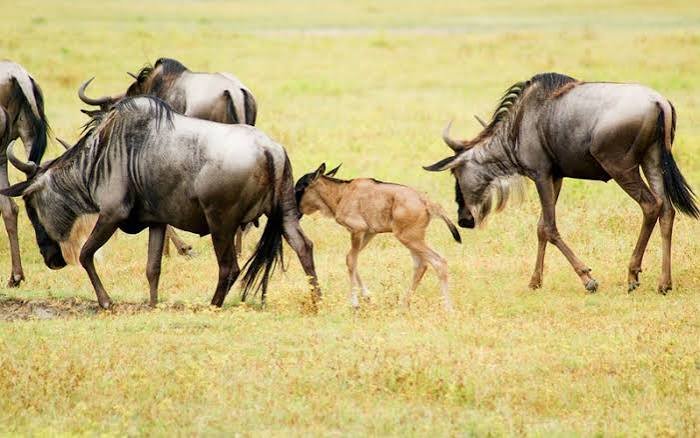
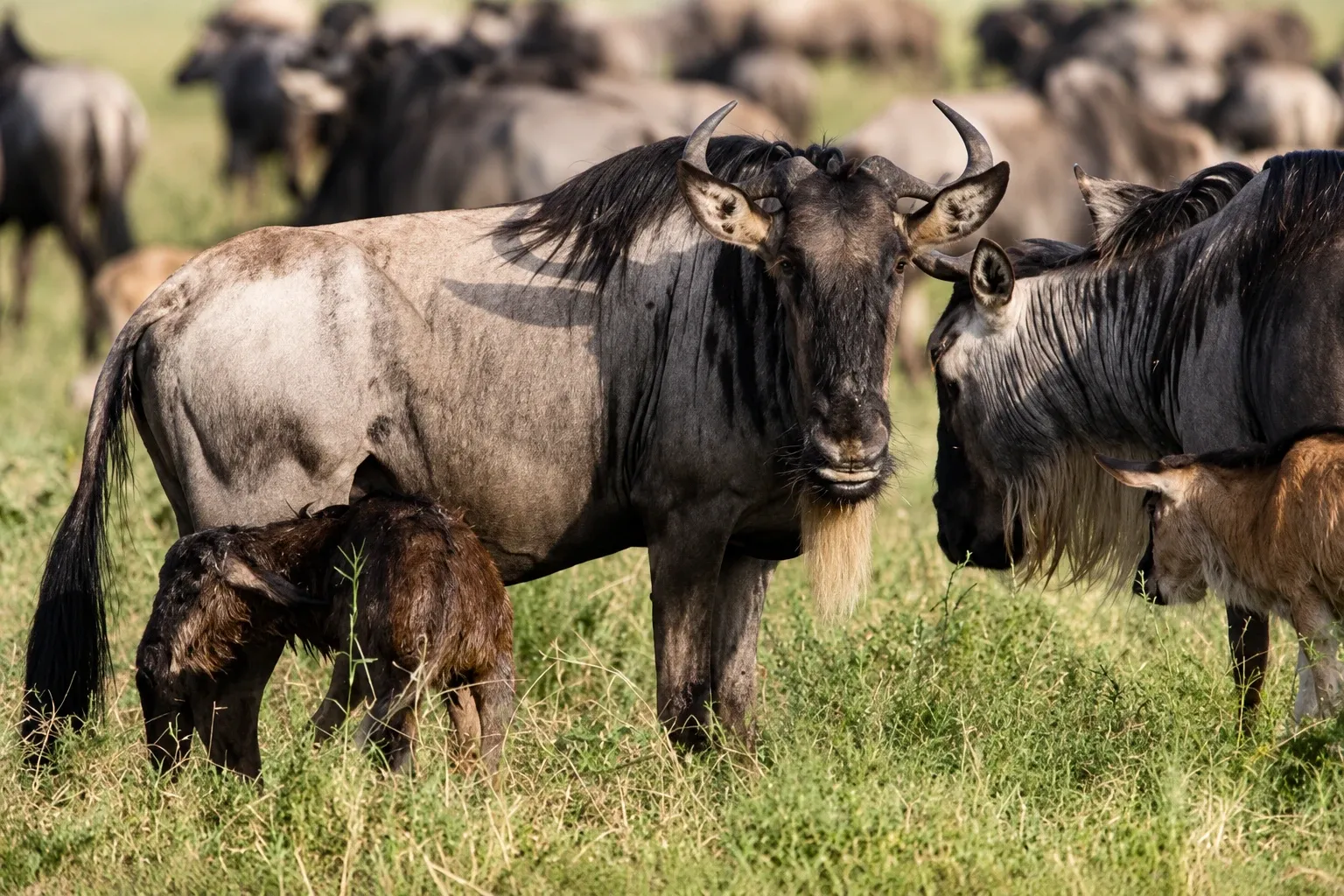
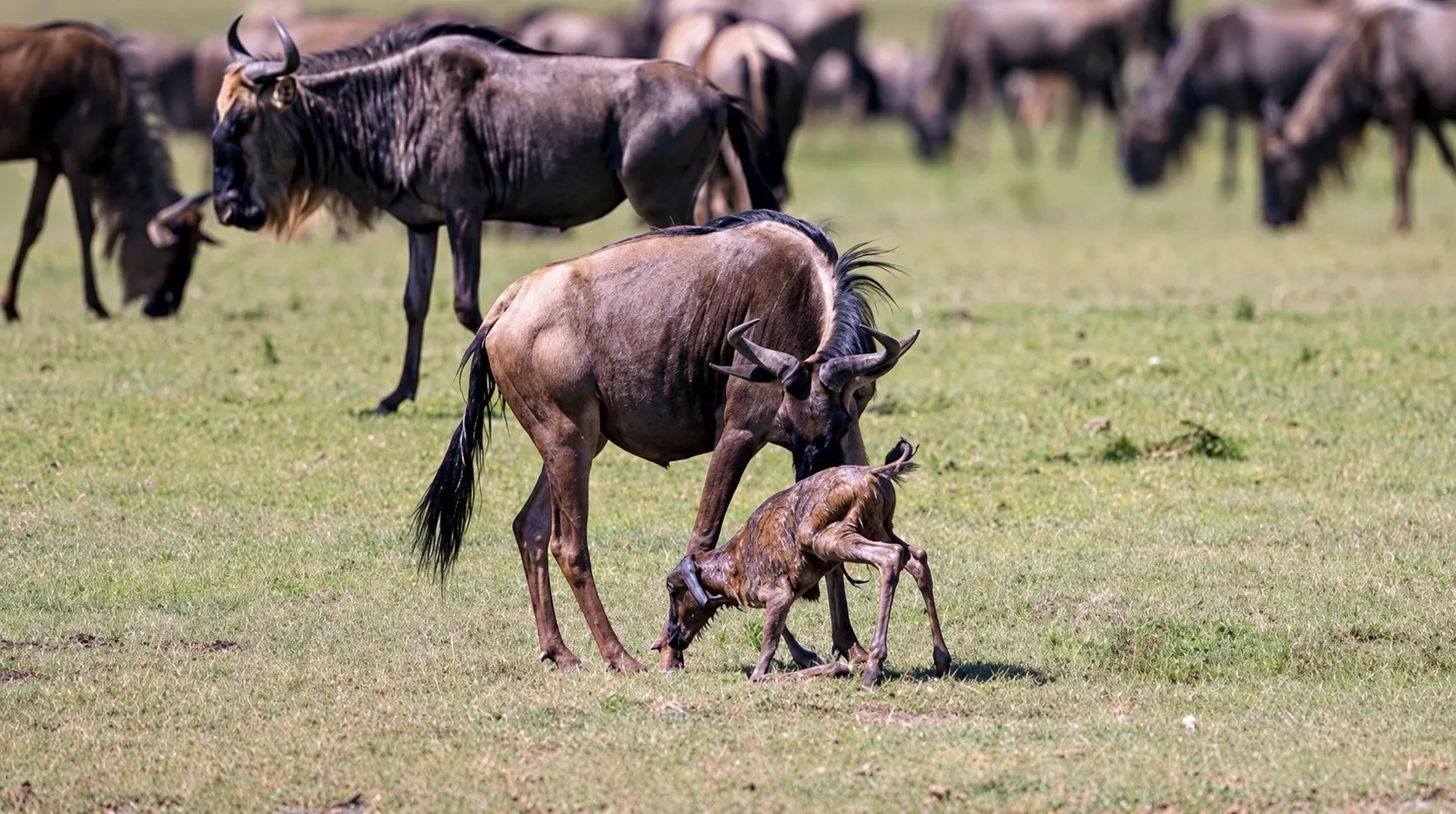
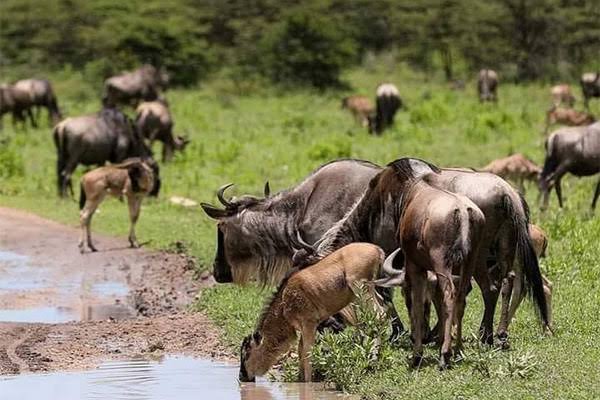
Ndutu is most valuable during the Great Migration calving season, when wildebeest and zebras gather on the short-grass plains following seasonal rainfall. Central Serengeti, centred around the Seronera area, supports strong resident wildlife throughout the year.
A well-planned combination provides:
- Seasonal migration viewing in Ndutu
- Resident wildlife in Central Serengeti
- Open-plains photography and woodland habitats
- Opportunities to look for different predator species
- A scenic game-drive transfer between the regions
- Convenient access to Seronera Airstrip
- Greater protection against unpredictable migration movements
For most travellers, the ideal allocation is 3 nights in Ndutu followed by 2 nights in Central Serengeti.
Are Ndutu and Central Serengeti in the Same Protected Area?
No. Although they are part of the same unfenced Serengeti ecosystem, most of Ndutu lies within the Ngorongoro Conservation Area, while Central Serengeti is inside Serengeti National Park.
Wildlife can move naturally between them, but safari vehicles cross an administrative boundary. Different conservation fees, accommodation fees and regulations may therefore apply.
| Area | Official administration | Main safari region |
|---|---|---|
| Ndutu | Ngorongoro Conservation Area Authority | Ndutu Plains and Southern Serengeti ecosystem |
| Central Serengeti | Tanzania National Parks | Seronera and surrounding valleys, plains and kopjes |
This distinction matters when calculating fees, selecting camps and deciding how many nights to allocate to each protected area.
Ndutu and Central Serengeti Compared
| Feature | Ndutu | Central Serengeti |
|---|---|---|
| Main protected area | Ngorongoro Conservation Area | Serengeti National Park |
| Main attraction | Great Migration calving season | Reliable resident wildlife |
| Strongest period | Approximately December–March | Year-round |
| Landscape | Short-grass plains, lakes and woodland | River valleys, savannah, kopjes and woodland |
| Typical stay | 2–4 nights | 2–3 nights |
| Main wildlife focus | Migratory herds and predators | Resident predators and diverse herbivores |
| Primary airstrip | Seasonal Ndutu Airstrip | Seronera Airstrip |
| Safari character | Seasonal and migration-focused | Varied and dependable |
| Recommended allocation | 3 nights | 2 nights |
Why Combine Ndutu and Central Serengeti?
Greater wildlife variety
Ndutu and Central Serengeti contain different habitats. The open plains around Ndutu favour wildebeest, zebras, gazelles and cheetahs, while Central Serengeti’s rivers, kopjes and woodland support a broader mixture of resident animals.
Central Serengeti may offer opportunities to look for:
- Lions
- Leopards
- Cheetahs
- Elephants
- Buffaloes
- Giraffes
- Hippos
- Topis
- Impalas
- Crocodiles
- Numerous bird species
Ndutu is particularly associated with:
- Calving wildebeest
- Large zebra herds
- Thomson’s and Grant’s gazelles
- Cheetahs on open plains
- Lions
- Spotted hyenas
- Jackals
- Vultures and other scavenging birds
Wildlife encounters are never guaranteed in either location.
Protection against migration uncertainty
The Great Migration follows rainfall and fresh grazing rather than fixed calendar dates. The herds may be concentrated around Lake Ndutu, spread across the wider southern plains or begin moving toward other parts of the ecosystem.
Including Central Serengeti provides strong general wildlife viewing even if the migration is scattered or farther from the selected Ndutu camp.
A more varied safari
Spending the entire safari in one region can limit the range of landscapes and animal communities encountered. Combining both areas provides a clearer understanding of the wider Serengeti ecosystem.
Convenient flight connections
Seronera Airstrip has scheduled light-aircraft connections to destinations such as Arusha, Kilimanjaro and Zanzibar. Exact schedules and routes vary by airline and travel date.
Finishing in Central Serengeti can therefore be more convenient than driving back to Arusha after a multi-day safari.
How Far Is Ndutu From Central Serengeti?
The journey from the Ndutu area to Seronera in Central Serengeti generally takes approximately 3–5 hours, depending on:
- The exact locations of the camps
- The route selected by the guide
- Wildlife stops
- Road and weather conditions
- Park-entry procedures
- Seasonal water and mud
- The time spent game driving
The distance should not be treated as a normal road transfer. The route passes through wildlife country, and the journey can become a half-day or full-day game drive.
An early departure allows time to search for animals along the way and reach the Central Serengeti lodge or camp before sunset.
What Is the Best Order for Visiting the 2 Areas?
Option 1: Ndutu First, Central Serengeti Second
This is the most practical order for many January–March itineraries:
Arusha or Ngorongoro → Ndutu → Central Serengeti → fly from Seronera
Advantages:
- Places the main calving-season focus early in the safari
- Creates a natural northbound route
- Avoids driving back through Ndutu
- Finishes close to Seronera Airstrip
- Connects conveniently with flights to Arusha or Zanzibar
- Allows the transfer day to operate as a game drive
This order works particularly well when the trip begins with Tarangire National Park or Ngorongoro Crater.
Option 2: Central Serengeti First, Ndutu Second
The reverse order can work when travellers:
- Fly into Seronera from Zanzibar or Arusha
- Need to finish closer to Ngorongoro or Karatu
- Plan to visit Ngorongoro Crater after Ndutu
- Have accommodation availability that favours this direction
- Are following current migration reports southward
A practical route is:
Fly to Seronera → Central Serengeti → Ndutu → Ngorongoro Crater → Karatu or Arusha
This arrangement can be ideal for travellers beginning in Zanzibar and finishing on Tanzania’s northern safari circuit.
How Many Nights Should You Spend in Each Area?
The recommended allocation depends on the length and main purpose of the safari.
| Available time | Ndutu | Central Serengeti | Assessment |
|---|---|---|---|
| 3 nights | 2 nights | 1 night | Too rushed for most travellers |
| 4 nights | 2 nights | 2 nights | Good short option |
| 5 nights | 3 nights | 2 nights | Recommended balance |
| 6 nights | 3 nights | 3 nights | Comfortable and flexible |
| 7 nights | 4 nights | 3 nights | Strong choice for photographers |
For a first calving-season safari, 5 nights across the 2 regions is the strongest general recommendation.
Three nights in Ndutu provide 2 full game-drive days. Two nights in Central Serengeti provide 1 full day plus wildlife viewing during the arrival and departure days.
Recommended 6-Day Ndutu and Central Serengeti Itinerary
Day 1: Arusha to Ndutu
Depart Arusha after an early breakfast and travel through the Ngorongoro Conservation Area toward Ndutu.
This is a long driving day. Depending on the route, road conditions and departure time, you may have a short afternoon game drive before continuing to your camp.
Travellers who prefer less road time can take a seasonal light-aircraft flight to Ndutu, subject to flight schedules and luggage restrictions.
Day 2: Full-Day Ndutu Calving Season Safari
Spend the day exploring the short-grass plains, woodland and areas surrounding Lake Ndutu and Lake Masek.
Your guide will use current wildlife information, rainfall patterns and road conditions to determine the most productive area. During the calving season, large herds may be present, but they can also be widely dispersed.
Day 3: Second Full-Day Ndutu Safari
A second full day gives the guide time to explore a different part of the calving grounds.
It also improves the chances of observing natural animal behaviour without rushing from sighting to sighting. Wildlife may include wildebeest calves, zebras, gazelles, cheetahs, lions, hyenas, jackals and numerous birds.
Births, hunts and particular predator sightings cannot be guaranteed.
Day 4: Ndutu to Central Serengeti
Leave Ndutu after breakfast and travel toward Central Serengeti. The transfer is conducted as a game drive, with wildlife stops along the route.
As the landscape changes, the short-grass plains gradually give way to kopjes, river valleys, woodland and savannah. After entering the Seronera region, continue with wildlife viewing before arriving at your lodge or tented camp.
Day 5: Full-Day Central Serengeti Safari
Spend the day exploring the Seronera Valley and surrounding wildlife areas.
The Seronera River and its tributaries provide water and habitat for resident animals. Rocky kopjes can serve as resting or observation points for lions, while riverine trees provide suitable habitat for leopards.
Your guide may use a picnic lunch to maximize time in the field or return to camp for a hot lunch, depending on the location and your preferred pace.
Day 6: Central Serengeti Game Drive and Departure
Take an early morning game drive before transferring to Seronera Airstrip for a scheduled flight to Arusha, Kilimanjaro or Zanzibar.
Travellers continuing by road can return toward Ngorongoro and Karatu, but this requires substantially more driving and may need an additional night.
Recommended 7-Day Route Including Ngorongoro Crater
Travellers with an extra day can create a more complete northern Tanzania safari:
| Day | Route and experience | Overnight |
|---|---|---|
| Day 1 | Arusha to Karatu | Karatu |
| Day 2 | Ngorongoro Crater game drive; continue toward Ndutu | Ndutu |
| Day 3 | Full-day Ndutu safari | Ndutu |
| Day 4 | Full-day Ndutu safari | Ndutu |
| Day 5 | Ndutu to Central Serengeti | Central Serengeti |
| Day 6 | Full-day Central Serengeti safari | Central Serengeti |
| Day 7 | Morning safari and flight from Seronera | Tour ends or continues |
This arrangement combines the resident wildlife of Ngorongoro Crater, the calving plains of Ndutu and the varied habitats of Central Serengeti.
Can You Combine the Areas in Only 4 Days?
Yes, but the itinerary must be planned carefully.
A possible 4-day arrangement is:
- Day 1: Fly from Arusha to Ndutu; afternoon game drive
- Day 2: Full-day Ndutu safari
- Day 3: Game-drive transfer to Central Serengeti
- Day 4: Morning safari; fly from Seronera
This route is suitable for travellers with limited time, but it provides only one full day in Ndutu and no full day in Central Serengeti.
A stronger short itinerary uses 5 days:
- 2 nights in Ndutu
- 2 nights in Central Serengeti
- Fly into Ndutu or out from Seronera
Should You Drive or Fly?
Road safari
A road safari provides:
- A private vehicle and guide throughout
- More luggage flexibility
- Wildlife viewing between destinations
- Easier combination with Ngorongoro and Tarangire
- A continuous view of the changing landscape
The main disadvantage is the long journey from Arusha or Moshi to Ndutu.
Fly-in or fly-out safari
Flying can:
- Reduce long return drives
- Save time for game viewing
- Connect the safari with Zanzibar
- Make a shorter itinerary practical
- Suit families and travellers who find long drives difficult
Light-aircraft flights usually have stricter luggage allowances than international flights. Travellers may be required to use soft-sided bags, and exact weight limits vary by airline.
A particularly efficient arrangement is to drive into Ndutu, continue by road to Central Serengeti and fly out from Seronera.
Is Central Serengeti Worth Adding During Calving Season?
Yes, especially if you have at least 5 safari nights.
Although the principal calving concentrations are normally farther south, Central Serengeti remains valuable because it supports resident wildlife throughout the year. Its habitats are different from Ndutu, which increases the variety of the safari.
Central Serengeti is particularly useful when:
- The migration herds are widely dispersed
- You want to search for leopards
- You want to see elephants, giraffes and resident antelopes
- You prefer varied landscapes
- You plan to fly from Seronera
- This is your first Tanzania safari
Travellers with only 3 safari days and a strong calving-season priority may obtain more value by concentrating on Ndutu rather than including Central Serengeti.
What Wildlife Differences Can Travellers Expect?
Ndutu wildlife experience
Ndutu’s main seasonal attraction is the concentration of migratory grazers on the southern short-grass plains.
The experience may include:
- Large, mobile wildebeest herds
- Newborn wildebeest calves
- Zebra and gazelle herds
- Cheetahs using open terrain
- Lions following migratory prey
- Hyenas, jackals and vultures
- Seasonal wetland and grassland birds
Central Serengeti wildlife experience
Central Serengeti offers a more varied mix of resident wildlife and habitats.
The experience may include:
- Lions around kopjes and plains
- Leopards in riverine woodland
- Cheetahs in open areas
- Elephants and giraffes
- Hippos in pools
- Buffaloes
- Crocodiles
- Impalas, topis and other antelopes
Neither region guarantees specific species or sightings. Your guide will plan each day using recent reports and local conditions.
Where Should You Stay?
Accommodation in Ndutu
Ndutu has a combination of permanent lodges and seasonal migration camps. Seasonal camps are positioned to operate during the southern migration period, but locations and opening dates vary.
When selecting a camp, consider:
- Exact position within the Ndutu area
- Distance from likely game-drive zones
- Whether it is inside the Ngorongoro Conservation Area or Serengeti National Park
- Seasonal opening and closing dates
- Road access
- Family-room availability
- Comfort category
- Applicable conservation and concession fees
Read Ndutu Camps Inside vs Outside the Ngorongoro Conservation Area before comparing locations.
Accommodation in Central Serengeti
Central Serengeti offers a wide selection of:
- Permanent lodges
- Permanent tented camps
- Seasonal camps
- Public and special campsites
Staying near the Seronera Valley provides relatively convenient access to several game-drive circuits and Seronera Airstrip. However, the best property depends on budget, room configuration, preferred comfort and onward route.
What Fees Apply?
Because the 2 destinations are under different administrations, the itinerary may include:
- Ngorongoro Conservation Area entry fees
- Serengeti National Park entry fees
- Accommodation or concession fees
- Vehicle entry charges
- Camping fees, where applicable
- Transit fees, depending on the route
- Taxes and statutory levies
If Ngorongoro Crater is included, a separate crater service fee may apply to the safari vehicle.
Government fees and rules can change. The final quotation should be based on the traveller’s dates, nationality or residency, age, accommodation and exact route.
What Does the Final Safari Price Depend On?
The cost of combining Ndutu with Central Serengeti is affected by:
- Travel season
- Number of travellers
- Number of safari nights
- Accommodation category
- Camp locations
- Private or shared vehicle arrangement
- Road or flight transfers
- Adult and child ages
- Park and conservation fees
- Whether Ngorongoro Crater or Tarangire is added
- Arrival and departure airports
A private safari may cost more per person for 2 travellers, but the per-person vehicle cost generally decreases as more people share the same Land Cruiser.
An exact KiliPori quotation should be prepared using confirmed dates and a proposed accommodation plan.
Advantages of Combining Ndutu and Central Serengeti
- Combines migration-focused and year-round wildlife viewing
- Provides more habitat and species variety
- Reduces dependence on the herds being in one exact location
- Works naturally with a flight from Seronera
- Allows the transfer to function as a game drive
- Suits families, couples and photographers
- Can be extended to Ngorongoro Crater or Tarangire
- Provides a stronger first-time Tanzania safari than either region alone
Possible Disadvantages
- Separate protected-area fees increase the price
- The journey between camps can take most of a day
- Peak-season accommodations may be expensive
- Wet roads can increase travel times
- A rushed itinerary may provide insufficient time in both regions
- Seronera can be busy around well-known sightings
- Domestic flights add cost and have restricted baggage allowances
Common Planning Mistakes
Spending only 1 night in each region
One-night stays create repeated packing and limited game-drive time. Plan at least 2 nights in each region.
Treating the transfer as wasted time
The route between Ndutu and Central Serengeti passes through wildlife habitat. Plan it as a game-drive day rather than a simple transfer.
Driving back to Arusha from Central Serengeti
The road journey is long. If the budget allows, flying from Seronera can save most of a day.
Assuming Ndutu and Central Serengeti use the same fees
They are administered separately. Ask for a quotation that clearly includes all protected-area and accommodation fees.
Selecting camps without checking their locations
A camp’s location affects driving time and access to wildlife areas. A less expensive camp can become inconvenient if it is far from the main game-drive zones.
Adding too many destinations
For a 5-day safari, 3 nights in Ndutu and 2 nights in Central Serengeti are usually more useful than adding several parks with only 1 night in each.
Expecting the migration to follow exact dates
Rainfall determines the availability of water and grazing. Herd locations can vary from year to year.
For a complete seasonal overview, read the Ndutu Calving Season Safari Guide.
Who Should Combine Ndutu and Central Serengeti?
This combination is particularly suitable for:
- First-time visitors to Tanzania
- Couples seeking a private safari
- Families wanting wildlife and landscape variety
- Photographers
- Travellers visiting from January to March
- Visitors continuing to Zanzibar
- Travellers with at least 5 safari nights
- Guests who want both migration and resident wildlife
It may not be necessary for travellers who have only 3 safari days and want to focus entirely on the calving herds. In that case, a fly-in and fly-out Ndutu safari may use the available time more efficiently.
Responsible Travel Considerations
The calving grounds and Central Serengeti are sensitive wildlife environments. Travellers and guides should:
- Maintain a safe distance from animals
- Avoid surrounding predators or newborn calves
- Follow protected-area driving regulations
- Remain on authorized routes
- Avoid loud behaviour near wildlife
- Never feed animals
- Keep all waste inside the vehicle
- Avoid pressuring guides to drive too close
- Respect other vehicles at sightings
- Choose authorized accommodation
A responsible safari accepts that wildlife behaviour should not be disturbed for photographs.
KiliPori Expert Recommendation
For a January–March safari, KiliPori Safaris recommends 3 nights in Ndutu and 2 nights in Central Serengeti. Begin in Ndutu if travelling from Arusha, Tarangire or Ngorongoro, then continue north to Central Serengeti and fly out from Seronera.
This route reduces backtracking and gives you 2 full days on the calving grounds, followed by a full day among Central Serengeti’s resident wildlife.
If your itinerary begins in Zanzibar, consider flying to Seronera, visiting Central Serengeti first and continuing south to Ndutu. You can then travel through Ngorongoro to Karatu and Arusha.
Travellers focused heavily on photography should consider 4 nights in Ndutu and 3 nights in Central Serengeti.
Frequently Asked Questions
Can Ndutu and Central Serengeti be combined in one safari?
Yes. They are connected by road within the wider Serengeti ecosystem. A private guide can turn the journey between them into a game-drive transfer.
How many days do I need for Ndutu and Central Serengeti?
Allow at least 5–6 safari days. The recommended allocation is 3 nights in Ndutu and 2 nights in Central Serengeti.
How long is the drive from Ndutu to Central Serengeti?
Allow approximately 3–5 hours, depending on camp locations, road conditions and wildlife stops. Many itineraries use most of the day for the transfer and game drive.
Should I visit Ndutu or Central Serengeti first?
Visit Ndutu first if travelling from Arusha or Ngorongoro and flying out from Seronera. Visit Central Serengeti first if flying into Seronera and finishing through Ngorongoro or Karatu.
Is Central Serengeti worth visiting in February?
Yes. Ndutu is the main calving-season focus, but Central Serengeti provides varied habitats and strong resident wildlife, including lions, leopards, elephants and giraffes.
Can I see the Great Migration in Central Serengeti during February?
Some migratory animals may be present, but the largest concentrations are normally associated with Ndutu and the southern plains during the calving period. Their exact distribution depends on rainfall.
Can I fly from Central Serengeti to Zanzibar?
Scheduled light-aircraft services commonly connect Seronera with Zanzibar, sometimes with intermediate stops. The schedule, fare and baggage allowance must be confirmed for your travel date.
Do Ndutu and Central Serengeti have separate park fees?
Yes. Most of Ndutu is administered by the Ngorongoro Conservation Area Authority, while Central Serengeti is administered by Tanzania National Parks. Fees for both areas may apply.
Is 2 nights in Ndutu enough?
Two nights provide 1 full game-drive day and can work for a short itinerary. Three nights are recommended for better flexibility during the calving season.
Can I include Ngorongoro Crater as well?
Yes. A well-paced safari combining Ngorongoro Crater, Ndutu and Central Serengeti generally requires at least 7 days, including travel and departure arrangements.
Plan Your Trip With KiliPori Safaris
KiliPori Safaris can create a private Ndutu and Central Serengeti safari based on your dates, preferred accommodation, group size and budget.
Your itinerary can begin in Moshi or Arusha, include Ngorongoro Crater or Tarangire and finish with a flight from Seronera to Zanzibar, Arusha or Kilimanjaro.
For a ready-made starting point, view the 5-Day Private Ndutu Calving Season Safari or the 7-Day Private Couples’ Ndutu Safari. The route can be customized around your travel dates and preferred comfort level.
Contact us to request a personalized itinerary or an accurate quotation including accommodation, private transportation and applicable conservation fees.
WhatsApp: +255 755 287 311
Final Recommendation
The most effective way to combine Ndutu with Central Serengeti is to spend 3 nights in Ndutu and 2 nights in Central Serengeti. Use the journey between them as a game drive rather than treating it as lost travel time.
For travellers arriving by road from Arusha or Ngorongoro, visit Ndutu first and finish in Central Serengeti, where you can fly from Seronera to Arusha or Zanzibar. Reverse the route if flying into Seronera and finishing through Ngorongoro.
This combination offers a more balanced Tanzania safari than relying on one region: Ndutu provides seasonal calving and migration activity, while Central Serengeti contributes varied landscapes and dependable resident wildlife.
Sources and Fact-Checking
- Tanzania National Parks – Serengeti National Park
- Ngorongoro Conservation Area Authority – Ndutu Plains
- UNESCO World Heritage Centre – Serengeti National Park
- UNESCO World Heritage Centre – Ngorongoro Conservation Area
- Park fees, concession fees, flight schedules, luggage allowances and protected-area regulations must be reconfirmed for the traveller’s exact dates.

KiliPori Safaris Travel Team
A local Tanzania team helping travellers plan wildlife safaris, Kilimanjaro climbs and Zanzibar holidays with clear routing and direct destination support.
Published September 17, 2026. Travel conditions, fees and schedules can change; confirm time-sensitive details before departure.