Explore this guide
Our guides combine current planning research with practical knowledge from arranging safaris, Kilimanjaro climbs and Zanzibar holidays.
Kilimanjaro Marangu Route Guide: Huts, Itinerary and Cost
The Kilimanjaro Marangu Route is a 5-6 day trekking route that approaches Mount Kilimanjaro from the southeastern side and uses mountain huts for overnight accommodation. The route passes through Mandara Hut, Horombo Hut and Kibo Hut before the summit attempt to Uhuru Peak at 5,895 metres. For 2027, KiliPori Safaris' indicative Marangu Route climbing cost is approximately US$1,400–1,800 per person, depending on the number of days, group size, accommodation arrangements and package inclusions.
Marangu is often called the “Coca-Cola Route” and is known for its hut accommodation, established trail and relatively direct route to the summit. Unlike Machame, Lemosho and several other Kilimanjaro routes where climbers sleep in tents, Marangu provides sleeping huts along the mountain.
What Is the Kilimanjaro Marangu Route?
The Marangu Route starts at Marangu Gate on the southeastern side of Kilimanjaro and climbs through rainforest, moorland and the high-altitude zone before reaching Kibo Hut and continuing to Uhuru Peak. It is the only major Kilimanjaro route with permanent mountain hut accommodation. TANAPA confirms that Mandara, Horombo and Kibo are the designated huts used on the Marangu Route.
The route normally takes 5 or 6 days, although the 6-day itinerary includes an additional acclimatization day at Horombo Hut. A longer itinerary provides more time for the body to adjust to altitude before the summit attempt.
What Huts Are Used on the Marangu Route?
The three main huts on the Marangu Route are Mandara Hut, Horombo Hut and Kibo Hut. Each hut serves a different stage of the climb.
Mandara Hut – 2,700m
Mandara Hut is the first overnight stop after entering Kilimanjaro National Park through Marangu Gate.
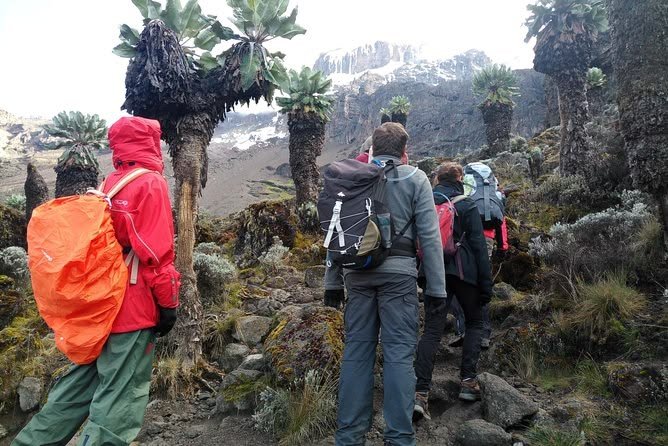
The climb to Mandara passes through the montane rainforest, where vegetation is dense and the trail is generally shaded. The hut area provides a transition between the lower forest zone and the higher moorland environment.
Mandara Hut is normally used on the first night of the climb.
Horombo Hut – 3,720m
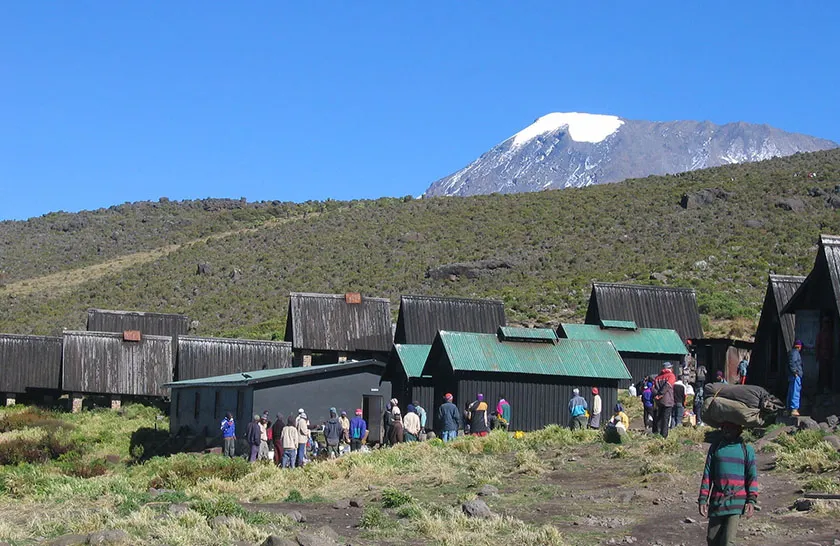
Horombo Hut is the main acclimatization point on the Marangu Route and is normally used for one or two nights depending on the itinerary.
The surroundings become more open as the trail leaves the rainforest behind. Climbers can see the distinctive peaks of Mawenzi and Kibo from the Horombo area.
On the 6-day itinerary, an additional acclimatization day is spent around Horombo before continuing toward Kibo Hut.
Kibo Hut – 4,700m
Kibo Hut is the final overnight stop before the summit attempt.
It is located in the high-altitude zone between Kibo and Mawenzi. The environment becomes considerably more barren, with little vegetation compared with the lower sections of the mountain.
Climbers normally arrive at Kibo Hut during the afternoon, rest and prepare for the summit attempt, which usually begins around midnight.
Marangu Route Hut Accommodation
The Marangu huts provide shared indoor sleeping accommodation rather than tent camping. The huts are basic mountain facilities designed for climbers and should not be compared with hotel accommodation.
The hut system is one of the main differences between Marangu and routes such as Machame and Lemosho, where camping is used throughout the trek.
The basic hut arrangement is:
| Hut | Elevation | Typical Night |
|---|---|---|
| Mandara Hut | 2,700m | Night 1 |
| Horombo Hut | 3,720m | Night 2 and/or 3 |
| Kibo Hut | 4,700m | Night before summit |
Exact sleeping arrangements can depend on mountain operations and availability.
How Many Days Does the Marangu Route Take?
The Marangu Route can be completed in 5 or 6 days, with the 6-day itinerary providing an additional acclimatization day at Horombo.
TANAPA notes that Kilimanjaro climbs generally take 5–8 days depending on the route, while current Marangu itineraries commonly operate as 6-day climbs.
For climbers concerned about altitude acclimatization, adding a day at Horombo creates a slower schedule before the trek reaches Kibo's high-altitude zone.
6-Day Marangu Route Itinerary
The 6-day Marangu Route itinerary includes a dedicated acclimatization day at Horombo Hut and is a common way to structure the climb.
Day 1: Marangu Gate to Mandara Hut
The trek begins at Marangu Gate, where registration and park entry procedures are completed before starting the hike. The trail enters the montane rainforest and gradually climbs toward Mandara Hut at approximately 2,700 metres. The day's hike is around 8 km and takes roughly 3-4 hours depending on walking pace and conditions. Overnight at Mandara Hut.
Day 2: Mandara Hut to Horombo Hut
The trail continues upward from the rainforest into the moorland zone. As elevation increases, the landscape becomes more open and views toward Mawenzi and Kibo become possible. The route covers approximately 12 km and takes around 5-6 hours. Overnight at Horombo Hut.
Day 3: Horombo Acclimatization Day
Day 3 is used for acclimatization rather than progressing to another hut. A shorter hike around the Horombo area allows climbers to spend time at a higher elevation before returning to the hut to rest. Depending on conditions, the acclimatization walk may include areas around Zebra Rocks or toward higher terrain. Overnight at Horombo Hut.
Day 4: Horombo Hut to Kibo Hut
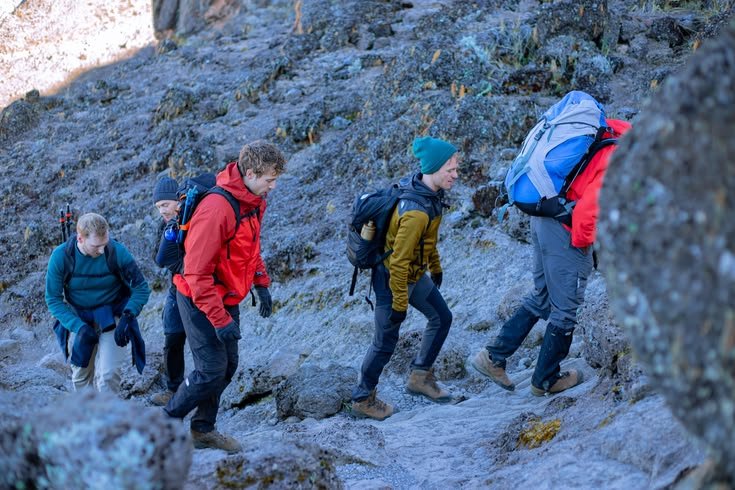
The trail leaves Horombo and crosses the high-altitude saddle between Mawenzi and Kibo. Vegetation becomes increasingly sparse as the route approaches Kibo Hut at approximately 4,700 metres. After reaching Kibo, climbers have an early dinner and rest before the midnight summit attempt. Overnight at Kibo Hut.
Day 5: Kibo Hut to Uhuru Peak and Horombo Hut
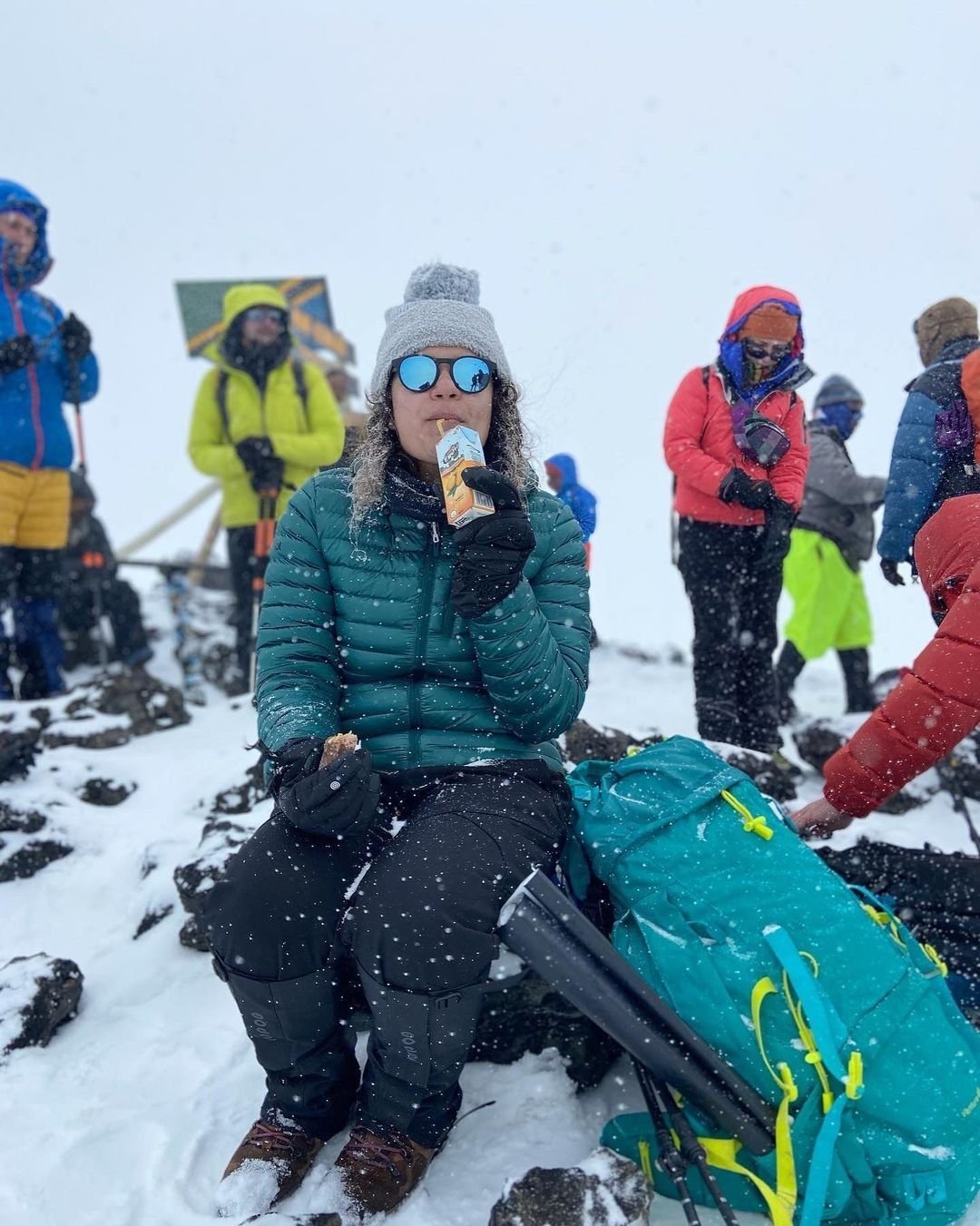
The summit day begins during the night. Climbers ascend through the steep upper slopes toward Gilman's Point, continue along the crater rim and then proceed toward Uhuru Peak at 5,895 metres, the highest point in Africa.
After reaching the summit, the group descends toward Kibo Hut before continuing down to Horombo Hut. This is the longest and most demanding day of the trek, with a long ascent followed by a substantial descent.
Overnight at Horombo Hut.
Day 6: Horombo Hut to Marangu Gate
The final day follows the trail back through the moorland and rainforest toward Marangu Gate. After completing the descent, climbers check out of the park and receive their summit certificates where applicable. From the gate, KiliPori Safaris can arrange transportation back to Moshi or another agreed destination.
5-Day Marangu Route Itinerary
The 5-day Marangu Route removes the additional acclimatization day at Horombo and follows a faster schedule.
Day 1: Marangu Gate to Mandara Hut
Begin at Marangu Gate and trek through the rainforest to Mandara Hut at approximately 2,700 metres. Overnight at Mandara Hut.
Day 2: Mandara Hut to Horombo Hut
Continue through the moorland zone toward Horombo Hut at approximately 3,720 metres. Overnight at Horombo Hut.
Day 3: Horombo Hut to Kibo Hut
Cross the alpine desert between Mawenzi and Kibo before reaching Kibo Hut at approximately 4,700 metres. Rest and prepare for the summit attempt.
Day 4: Kibo Hut to Uhuru Peak and Horombo Hut
Begin the summit attempt around midnight, reach Uhuru Peak, descend through Kibo and continue to Horombo Hut for the night.
Day 5: Horombo Hut to Marangu Gate
Descend through the moorland and rainforest to Marangu Gate, complete the trek and transfer back to Moshi.
Which Marangu Route Itinerary Should You Choose: 5 or 6 Days?
The main difference between the 5-day and 6-day Marangu Route is the extra acclimatization day at Horombo.
| Feature | 5-Day Marangu | 6-Day Marangu |
|---|---|---|
| Mandara Hut | ✓ | ✓ |
| Horombo Hut | ✓ | ✓ |
| Extra acclimatization day | No | Yes |
| Kibo Hut | ✓ | ✓ |
| Summit attempt | ✓ | ✓ |
| Overall pace | Faster | More gradual |
| KiliPori 2027 planning range | $1,400–1,650 | $1,550–1,800 |
The final price depends on the exact package, group size, dates and inclusions.
How Much Does the Marangu Route Cost in 2027?
The Kilimanjaro Marangu Route costs approximately US$1,400–1,800 per person with KiliPori Safaris in 2027 as an indicative planning range.
| Marangu Route Package | Indicative 2027 Cost Per Person |
|---|---|
| 5-Day Marangu Route | US$1,400–1,650 |
| 6-Day Marangu Route | US$1,550–1,800 |
| Overall Marangu Planning Range | US$1,400–1,800 |
The final quotation depends on the number of climbers, travel dates, route duration, private or group arrangement, transfers, accommodation before and after the climb and other services included in the package.
What Is Included in a Marangu Route Package?
A standard Marangu climbing package normally includes the main services required to complete the mountain trek.
Depending on the package, inclusions can include:
-
Kilimanjaro National Park fees
-
Hut accommodation on the mountain
-
Professional mountain guide
-
Porters
-
Cook and mountain meals
-
Drinking water during the trek
-
Park entry and applicable mountain fees
-
Airport or hotel transfers where included
-
Pre-climb briefing
-
Emergency mountain support arrangements
-
Accommodation before or after the climb where specified
Exact inclusions should always be confirmed in the quotation before booking.
What Is Not Included in the Marangu Route Cost?
Items commonly excluded from a Kilimanjaro climbing package include:
-
International flights
-
Tanzania visa
-
Travel insurance
-
Personal climbing equipment
-
Sleeping bag rental where applicable
-
Tips for guides, porters and support staff
-
Personal expenses
-
Alcohol and other additional drinks
-
Optional hotel nights
-
Medical or evacuation expenses not covered by the package or insurance
KiliPori Safaris provides a detailed quotation so climbers can see which services are included before confirming the trek.
Why Does the Marangu Route Cost Less Than Some Other Kilimanjaro Routes?
The Marangu Route can have a lower package price than longer or more operationally demanding routes because it is generally shorter and uses established hut accommodation.
KiliPori Safaris' 2027 planning ranges place Marangu at approximately US$1,400–1,800, compared with higher ranges for longer routes such as Lemosho, Umbwe and Northern Circuit.
The price difference does not mean that the mountain itself is inexpensive to operate. Park fees, guides, porters, food, transportation, hut accommodation and other operational costs remain part of the package.
Is the Marangu Route Difficult?
The Marangu Route is physically demanding, particularly at high altitude and during the summit attempt. The trail itself is relatively straightforward compared with some steeper sections on other routes, but altitude remains a major challenge.
The most demanding part is the summit day, when climbers ascend from Kibo Hut at approximately 4,700 metres to Uhuru Peak at 5,895 metres before descending to lower elevation.
The additional acclimatization day on the 6-day itinerary provides more time at Horombo before moving to Kibo.
What Is the Summit Day Like on the Marangu Route?
Summit day usually begins around midnight from Kibo Hut. The climb is made in darkness, with headlamps used to illuminate the trail.
The route climbs gradually but continuously toward the crater rim. After reaching Gilman's Point, climbers continue along the crater rim toward Stella Point and then Uhuru Peak.
After taking time at the summit, the group begins the descent toward Kibo Hut and later Horombo Hut.
Because summit day combines a major altitude gain with a long descent, climbers should conserve energy, follow their guide's pace and communicate any symptoms of altitude sickness immediately.
Is Marangu Route Good for Beginners?
The Marangu Route can be suitable for first-time Kilimanjaro climbers, but previous mountain-climbing experience is not the only factor that determines readiness.
The biggest challenge is altitude rather than technical climbing. A climber should prepare through regular walking, hiking, cardiovascular exercise and longer uphill training before the trek.
For beginners choosing between the 5-day and 6-day itineraries, the 6-day schedule provides an additional acclimatization day at Horombo.
Marangu Route vs Machame Route
The main difference is accommodation and route style.
| Feature | Marangu Route | Machame Route |
|---|---|---|
| Accommodation | Mountain huts | Tented camps |
| Typical duration | 5–6 days | 6–7 days |
| Starting point | Marangu Gate | Machame Gate |
| Landscape | Forest, moorland, alpine desert | Forest, Shira Plateau, Barranco, alpine desert |
| Extra acclimatization option | Horombo | Built into longer itinerary |
| Route character | More direct | More varied and longer |
Marangu is particularly suitable for climbers who prefer hut accommodation, while Machame provides a camping-based experience with a more varied route profile.
Marangu Route vs Lemosho Route
Marangu and Lemosho provide very different trekking experiences.
Marangu uses huts and normally takes 5–6 days, while Lemosho generally takes 7–8 days and uses camping accommodation.
Lemosho approaches Kilimanjaro from the western side and crosses the Shira Plateau before joining the southern circuit. Marangu approaches from the southeast and follows a more direct path toward Kibo.
For climbers comparing the two, accommodation preference, available time, route scenery and acclimatization schedule are important considerations.
What Is the Best Time to Climb the Marangu Route?
The Marangu Route can be climbed throughout the year, but weather conditions vary considerably between seasons.
The drier periods are generally popular for Kilimanjaro climbing because trekking conditions can be more favorable. Wet periods can bring rain and cloud, particularly in the lower forest sections.
Regardless of the season, climbers should be prepared for rapidly changing mountain weather and cold conditions near the summit.
What Should You Pack for the Marangu Route?
A Marangu Route packing list should include equipment for warm, wet rainforest conditions as well as freezing temperatures near the summit.
Clothing
-
Moisture-wicking base layers
-
Hiking trousers
-
Warm fleece
-
Insulated jacket
-
Waterproof jacket
-
Waterproof trousers
-
Warm hat
-
Gloves
-
Hiking socks
-
Thermal layers
Hiking Equipment
-
Comfortable hiking boots
-
Headlamp
-
Trekking poles
-
Backpack
-
Water bottles or hydration system
-
Sunglasses
-
Sunscreen
-
Sleeping bag
-
Personal toiletries
-
Personal medication
Your KiliPori Safaris team can provide a detailed packing checklist before departure.
What Are the Marangu Route Huts Like?
The huts are basic mountain shelters rather than luxury accommodation. Climbers sleep in shared rooms, and facilities are designed for practical mountain use.
The three main hut areas are:
Mandara Hut: first overnight stop in the rainforest zone.
Horombo Hut: larger hut area and the main acclimatization base.
Kibo Hut: high-altitude hut used before the summit attempt.
Because the huts are shared, climbers should be prepared for a communal mountain environment rather than private hotel-style rooms.
What Is the Marangu Route Elevation?
The Marangu Route begins at approximately 1,800 metres at Marangu Gate and climbs to 5,895 metres at Uhuru Peak.
| Location | Approx. Elevation |
|---|---|
| Marangu Gate | 1,800m |
| Mandara Hut | 2,700m |
| Horombo Hut | 3,720m |
| Kibo Hut | 4,700m |
| Uhuru Peak | 5,895m |
The substantial elevation gain is why gradual acclimatization, hydration, pacing and guide supervision are important throughout the climb.
Can You Combine the Marangu Route With a Tanzania Safari?
Yes. A Marangu Route and Tanzania safari combination can be arranged before or after the mountain climb.
A typical combination could include:
Kilimanjaro Marangu Route - Moshi - Serengeti - Ngorongoro - Arusha
Another option is: Tanzania Safari - Kilimanjaro Marangu Route - Zanzibar
The exact order depends on your travel dates, available time and preferred activities.
Can You Combine Marangu Route With Zanzibar?
Yes. Marangu Route and Zanzibar can be combined into one Tanzania holiday.
A typical journey could include six days climbing Kilimanjaro, followed by a domestic flight to Zanzibar for several days of beach relaxation.
This combination allows you to experience Mount Kilimanjaro, Tanzania's wildlife and the Indian Ocean within one extended trip.
Why Choose KiliPori Safaris for the Marangu Route?
KiliPori Safaris is a local Tanzania tour operator based in Moshi, offering private Kilimanjaro climbs, Tanzania safaris, Zanzibar holidays and customized East Africa journeys.
For the Marangu Route, we organize the mountain logistics, professional guiding, hut accommodation, porters, meals, transfers and other services required for the climb.
Our team can also combine your Kilimanjaro trek with a Tanzania safari or Zanzibar holiday, creating one itinerary around your travel dates and interests.
KiliPori Safaris Recommendation for the Marangu Route
For climbers with enough time, we recommend considering the 6-day Marangu Route because it adds an acclimatization day at Horombo before continuing to Kibo.
The 5-day itinerary is available for travelers with tighter schedules, while the 6-day option provides a more gradual progression through the mountain's elevation zones.
For 2027, KiliPori Safaris' indicative Marangu Route price is US$1,400–1,800 per person, with the final cost confirmed according to your group size, dates and selected package.
Book Your Kilimanjaro Marangu Route With KiliPori Safaris
The Kilimanjaro Marangu Route combines established mountain huts, a direct southeastern approach and access to Uhuru Peak at 5,895 metres. With Mandara, Horombo and Kibo huts providing overnight accommodation, it offers a different experience from the camping routes on Kilimanjaro.
KiliPori Safaris can arrange your 5-day or 6-day Marangu Route climb, including mountain logistics, professional guides, porters, meals, hut accommodation and applicable park services.
You can also combine your climb with a Tanzania safari or Zanzibar holiday.
WhatsApp KiliPori Safaris: +255 755 287 311
Plan Your Kilimanjaro Climb | Request a Quote | Chat With Our Travel Experts
Kilimanjaro Marangu Route FAQs
How many days is the Marangu Route?
The Marangu Route normally takes 5 or 6 days. The 6-day itinerary includes an additional acclimatization day at Horombo Hut.
What huts are used on the Marangu Route?
The main huts are Mandara Hut at approximately 2,700m, Horombo Hut at approximately 3,720m and Kibo Hut at approximately 4,700m.
How much does the Marangu Route cost in 2027?
KiliPori Safaris' indicative 2027 Marangu Route price is approximately US$1,400–1,800 per person, depending on itinerary, group size and package inclusions.
Is there a 5-day Marangu Route?
Yes. The 5-day itinerary reaches the summit without an additional acclimatization day at Horombo.
Is there a 6-day Marangu Route?
Yes. The 6-day itinerary adds a dedicated acclimatization day at Horombo before continuing to Kibo Hut.
Does Marangu Route use tents?
No. Marangu is the Kilimanjaro route known for using mountain huts. Mandara, Horombo and Kibo provide the main overnight accommodation.
What is the highest point on the Marangu Route?
The highest point is Uhuru Peak at 5,895 metres, the summit of Mount Kilimanjaro.
Is Marangu Route suitable for first-time climbers?
Yes, first-time climbers can undertake the Marangu Route with appropriate physical preparation, gradual pacing and professional mountain guiding.
Can I combine Marangu Route with a safari?
Yes. KiliPori Safaris can combine a Marangu Route climb with destinations such as Serengeti and Ngorongoro.
Can I combine Marangu Route with Zanzibar?
Yes. A Kilimanjaro climb can be followed by a Zanzibar beach holiday using domestic air connections.
How do I book the Marangu Route with KiliPori Safaris?
Send your preferred travel dates, number of climbers, preferred 5- or 6-day itinerary and any safari or Zanzibar plans. KiliPori Safaris will prepare a customized itinerary and quotation.

KiliPori Safaris Travel Team
A local Tanzania team helping travellers plan wildlife safaris, Kilimanjaro climbs and Zanzibar holidays with clear routing and direct destination support.
Published October 2, 2026. Travel conditions, fees and schedules can change; confirm time-sensitive details before departure.