Explore this guide
Our guides combine current planning research with practical knowledge from arranging safaris, Kilimanjaro climbs and Zanzibar holidays.
Kilimanjaro Safety: What Every Climber Should Know
Climbing Mount Kilimanjaro is a remarkable adventure, and good preparation is one of the best ways to make the experience comfortable and enjoyable.
For many travelers, safety is one of the first things they think about when planning the climb.
Questions such as these are completely normal:
-
Is Kilimanjaro safe to climb?
-
What happens if I become sick on the mountain?
-
What happens if I cannot continue?
-
Is there a rescue service?
-
Does travel insurance cover Kilimanjaro?
-
What happens during a mountain emergency?
-
Who arranges evacuation?
-
Do I need special trekking insurance?
The good news is that Kilimanjaro climbs are organized with professional guides and established park procedures.
TANAPA states that all Kilimanjaro climbs must be conducted with licensed operators and that solo trekking is not permitted. Its current visitor guidance also recommends gradual ascent, hydration, reporting symptoms promptly to your guide, carrying appropriate clothing and medication, staying on designated paths and following guide instructions.
At Kilipori Safaris, we believe that understanding the safety system before your trek gives you confidence and helps you prepare properly.
Is Climbing Kilimanjaro Safe?
Kilimanjaro can be climbed safely by many people when the trek is properly planned and the climber follows the guidance of the professional mountain crew.
Safety depends on several factors, including:
-
Choosing an appropriate itinerary
-
Allowing sufficient time for acclimatization
-
Ascending at a sensible pace
-
Staying hydrated
-
Using appropriate clothing and equipment
-
Listening to your guide
-
Reporting symptoms early
-
Following park regulations
-
Having suitable travel insurance
-
Knowing what to do in an emergency
Kilimanjaro is a high-altitude mountain, so preparation matters.
The objective is not to rush to the summit. A well-planned climb gives your body time to adjust while allowing the crew to monitor your progress.
What Are the Main Safety Considerations on Kilimanjaro?
There are several things your guide and mountain crew monitor throughout the trek.
Altitude
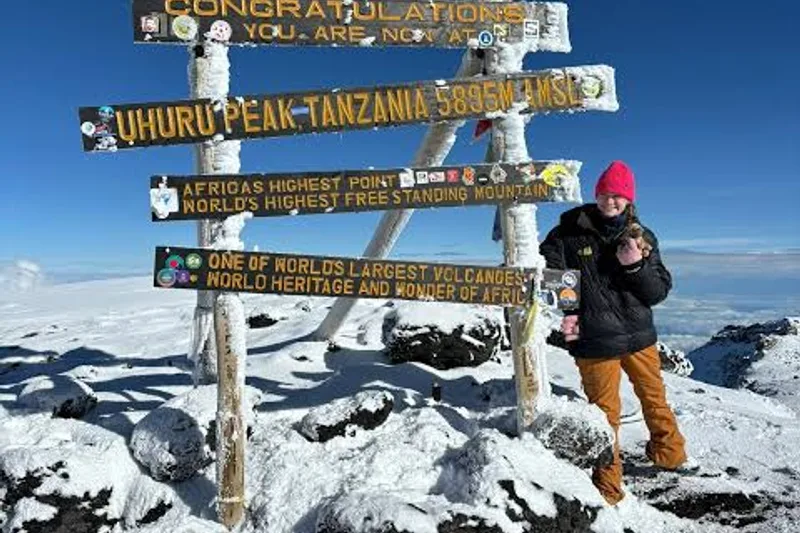
Altitude is one of the most important considerations because the summit of Kilimanjaro reaches 5,895 metres (19,341 feet).
Your body needs time to adjust as you gain elevation.
This is why longer itineraries with appropriate acclimatization can be valuable.
Weather
Kilimanjaro passes through several climatic zones, and conditions can change as you climb.
You may experience:
-
Warm conditions at lower elevations
-
Cooler temperatures in the forest
-
Cold conditions at higher elevations
-
Wind
-
Rain or snow depending on altitude and season
Your guide monitors conditions and can adjust the day's pace or plans when necessary.
Terrain
Mountain trails vary throughout the climb.
You may encounter:
-
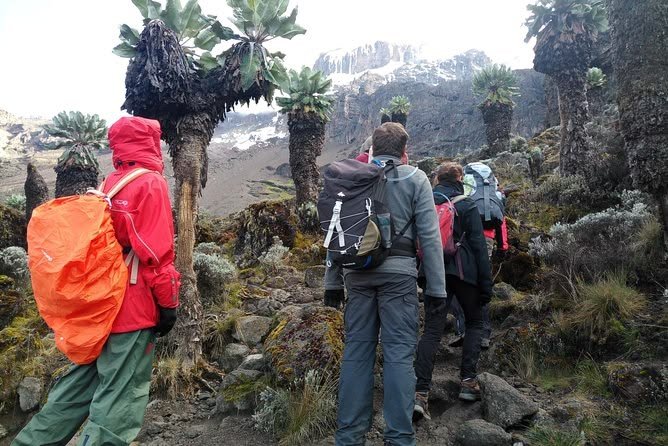
Forest trails
-
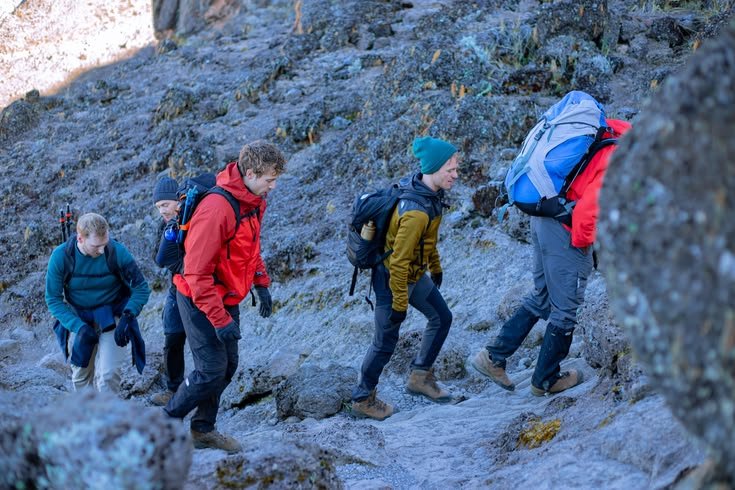
Rocky paths
-
Loose volcanic terrain
-
Steep sections
-
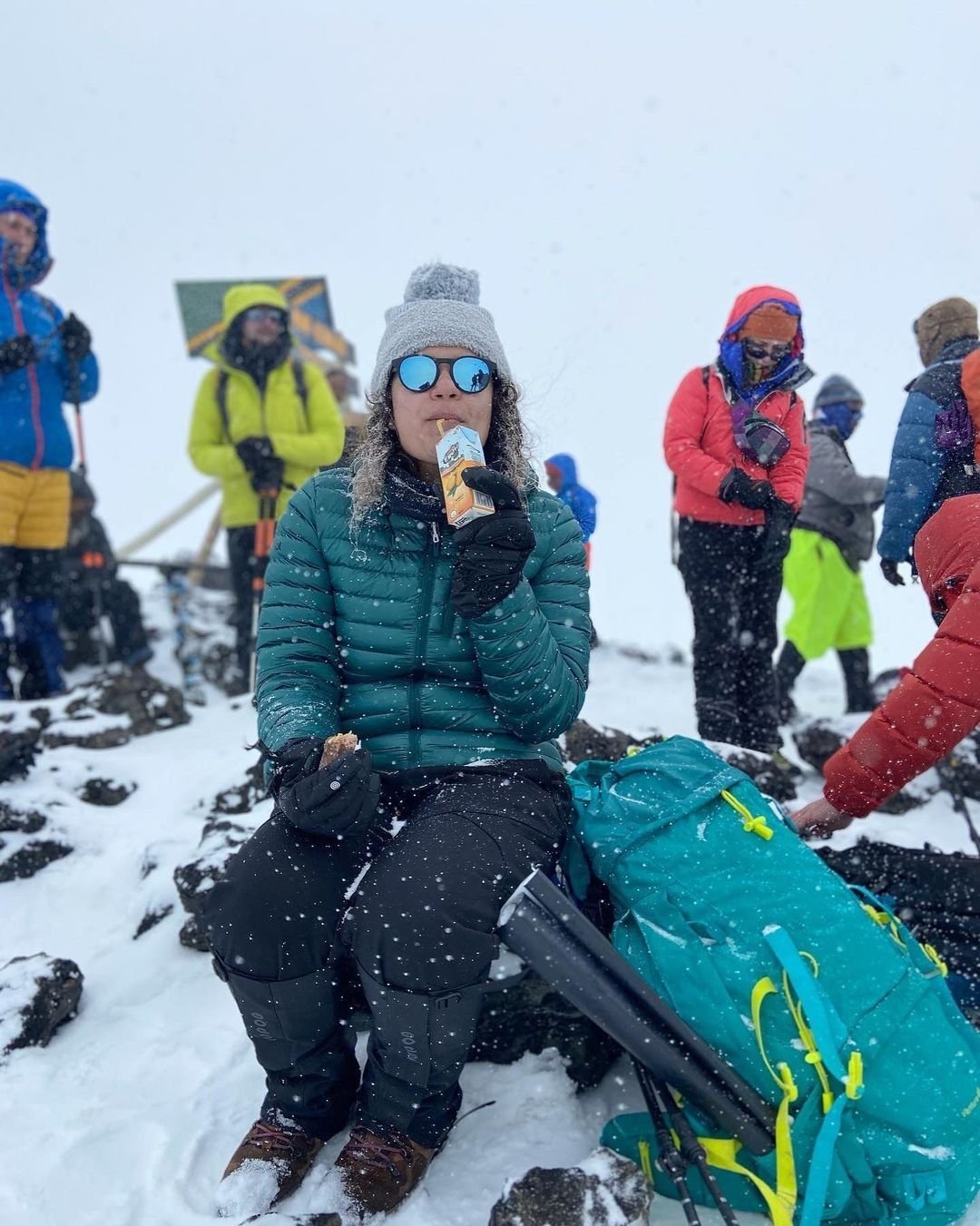
Snow or ice near the summit depending on conditions
Proper footwear and a sensible pace make the journey much more manageable.
How Do Kilimanjaro Guides Help With Safety?
Your mountain guide is one of your most important safety resources.
Guides are responsible for much more than showing you the trail.
They monitor the group, manage the trekking pace, communicate with the crew and help identify when a climber may need additional attention.
Your guide may regularly ask questions such as:
“How are you feeling?”
“How is your breathing?”
“Do you have a headache?”
“Are you eating and drinking?”
These simple conversations are part of responsible mountain guiding.
TANAPA specifically advises visitors to report symptoms promptly to their guide.
Why Is “Pole Pole” Important on Kilimanjaro?
You will often hear the Swahili phrase:
“Pole pole.”
It means “slowly, slowly.”
The phrase is closely associated with Kilimanjaro because maintaining a controlled pace helps climbers manage the physical demands of the mountain.
You are not racing against the mountain.
The goal is to move steadily, conserve energy and give your body time to adjust to increasing altitude.
What Happens If I Feel Unwell on Kilimanjaro?
The most important thing is to tell your guide.
Do not feel embarrassed about speaking up.
Your guide can assess how you are doing and determine the appropriate next step.
Depending on the situation, this may involve:
-
Resting
-
Slowing the pace
-
Taking fluids
-
Eating
-
Monitoring symptoms
-
Returning to a lower elevation
-
Ending the climb
-
Arranging further assistance
The earlier your guide knows that something is wrong, the more options the team has for responding appropriately.
What Happens If I Cannot Continue Climbing?
Not every climber reaches Uhuru Peak, and that is okay.
If continuing is not appropriate for your condition, your guide can help arrange a safe descent.
The priority is your wellbeing—not forcing you to continue.
Depending on where you are on the mountain and your condition, the descent may be made on foot with guide support or may require additional assistance.
Your operator should have an emergency-response procedure for situations requiring evacuation or additional support.
What Is a Kilimanjaro Rescue?
A rescue refers to assistance provided when a climber cannot safely continue without additional support.
The response depends on the situation.
For example, a climber who simply needs to descend because they are struggling may be assisted down the mountain by the guide team.
A more serious situation may require coordination with park authorities and appropriate rescue or medical resources.
TANAPA's national-park policy states that the authority will make reasonable efforts to coordinate rescue and evacuation emergencies with tour operators and qualified search-and-rescue organizations or agencies.
How Does Emergency Evacuation Work on Kilimanjaro?
The exact evacuation procedure depends on the location, weather, medical situation and available resources.
In a typical emergency-response process:
-
The guide identifies the problem.
-
The climber is assessed.
-
The guide communicates with the relevant support team.
-
The safest evacuation option is determined.
-
The climber is moved toward an appropriate lower point or medical facility.
-
Further medical assistance is arranged when required.
The response is therefore not necessarily an immediate helicopter evacuation.
Many situations can be managed through controlled descent and ground assistance.
Is Helicopter Rescue Available on Kilimanjaro?
Helicopter evacuation may be possible in certain emergency circumstances, but climbers should not assume that every situation will result in helicopter evacuation.
Weather, altitude, terrain, aircraft availability, operational restrictions and the exact location of the climber can all affect what type of evacuation is practical.
This is one reason comprehensive travel insurance is important.
Your insurance should specifically address mountain rescue and medical evacuation, rather than simply being a standard holiday policy.
Does Kilimanjaro Have Rescue Procedures?
Yes.
TANAPA has established procedures and policies concerning visitor safety, emergency response and rescue coordination.
Its current visitor guidance tells climbers to follow guide instructions, remain on designated routes and report symptoms promptly.
TANAPA's national-park policy also states that parks should make reasonable efforts to coordinate rescue and evacuation emergencies with tour operators and qualified search-and-rescue organizations or agencies.
This provides an important framework for emergency response.
Is There a Rescue Fee on Kilimanjaro?
TANAPA has a specific rescue fee for Mount Kilimanjaro and Mount Meru in its published tariff documentation.
An older official TANAPA tariff document lists a rescue fee payable per person per trip, but because park tariffs can change, travelers should confirm the current applicable fee with their operator or TANAPA before travel rather than relying on an old tariff figure.
Your climbing package should clearly explain which official park fees are included in your booking.
Why Do You Need Travel Insurance for Kilimanjaro?
Travel insurance is an important part of preparing for a Kilimanjaro climb.
TANAPA's general trip-planning guidance strongly recommends travel insurance for visitors.
For a Kilimanjaro climb, however, you should look beyond ordinary travel insurance.
Your policy should specifically cover the activities and altitude involved in your trip.
What Should Kilimanjaro Travel Insurance Cover?
Before purchasing a policy, check the wording carefully.
Ideally, your insurance should provide appropriate cover for:
-
Medical treatment
-
Emergency medical expenses
-
Mountain rescue
-
Emergency evacuation
-
Repatriation
-
Trip cancellation
-
Trip interruption
-
Lost or delayed baggage
-
Personal belongings
-
Travel delays
Most importantly, check whether the policy explicitly covers trekking on Mount Kilimanjaro up to the altitude you will reach.
Do not assume that every travel insurance policy automatically covers high-altitude trekking.
Does Normal Travel Insurance Cover Kilimanjaro?
Not necessarily.
Some travel insurance policies exclude:
-
High-altitude trekking
-
Mountaineering
-
Technical climbing
-
Rescue operations
-
Medical evacuation
-
Activities above a specified altitude
Read the policy's exclusions before purchasing it.
If the policy says trekking is covered only up to a particular altitude and your Kilimanjaro itinerary goes above that limit, the policy may not provide the protection you expect.
What Does “Adventure Activity Cover” Mean?
Some insurers offer additional adventure-sports or adventure-travel coverage.
This type of coverage may include activities that ordinary travel policies exclude.
However, the exact definition varies between insurance companies.
Before purchasing, ask the insurer specifically:
“Does this policy cover trekking Mount Kilimanjaro to 5,895 metres, including emergency medical evacuation and mountain rescue?”
Ask for the answer in writing and keep the policy documents with you.
What Is Medical Evacuation?
Medical evacuation means transporting a traveler from a location where appropriate medical treatment is not available to a facility where they can receive the necessary care.
For Kilimanjaro, evacuation can involve different forms of transport depending on the situation.
This could include:
-
Assisted descent
-
Vehicle transport after reaching an accessible location
-
Ambulance
-
Air evacuation where appropriate and available
The actual method depends on the emergency.
What Is Repatriation?
Repatriation generally refers to transporting an insured traveler back to their home country when medically necessary after an emergency.
This can be especially important for international travelers because serious medical situations can involve significant transportation costs.
Check whether your insurance includes medical repatriation and what conditions apply.
How Much Travel Insurance Coverage Do You Need?
There is no single universal amount that is appropriate for every traveler.
Instead of choosing a policy based only on the headline price, look at the actual limits.
Pay particular attention to:
-
Emergency medical expenses
-
Evacuation limits
-
Repatriation limits
-
Search-and-rescue coverage
-
Altitude limits
-
Activity exclusions
-
Deductibles or excess
-
Pre-existing-condition rules
-
Cancellation limits
A cheap policy is not necessarily useful if it excludes the activity you are travelling to Tanzania to undertake.
Does Insurance Cover Altitude Sickness?
This depends entirely on the policy.
Some policies cover medical treatment associated with altitude-related conditions, while others may have exclusions.
Do not assume.
Read the policy wording and ask the insurer directly if you are unsure.
What Happens if I Need to Descend Because of Altitude?
Your guide will assess your condition and determine the appropriate response.
If descending is the safest option, the mountain team can help organize your descent.
The important principle is simple:
Your summit attempt should never be more important than your wellbeing.
A well-run Kilimanjaro expedition treats reaching the summit as the goal, but safety remains the priority.
What Are the Common Safety Practices on Kilimanjaro?
A few simple habits can make your climb more comfortable and organized.
Choose Enough Days
Avoid choosing an itinerary purely because it is the shortest available option.
Additional days can provide more time for acclimatization.
Walk Slowly
Follow your guide's pace.
Drink Regularly
Stay hydrated throughout the trek.
Eat Regularly
Maintain your energy with meals and snacks.
Dress in Layers
Mountain conditions change as you gain elevation.
Protect Yourself From the Sun
Sun exposure can be significant at altitude.
Tell Your Guide How You Feel
Even small changes are worth mentioning.
Stay With Your Group
Do not walk away from the designated route or group without informing your guide.
Follow Park Regulations
TANAPA requires visitors to follow park rules and guide/ranger instructions.
What Safety Equipment Should You Bring?
Your exact packing list depends on your route and season, but important safety-related items include:
-
Proper hiking boots
-
Warm layers
-
Waterproof jacket
-
Waterproof trousers
-
Warm hat
-
Gloves
-
Headlamp
-
Sunglasses
-
Sunscreen
-
Reusable water bottles
-
Personal medication
-
Basic personal first-aid supplies
-
Trekking poles
-
Appropriate sleeping equipment
Your operator should provide guidance about equipment before departure.
What Medical Information Should You Tell Your Operator?
Before your climb, communicate any relevant medical information that could affect your trek.
This may include:
-
Current medications
-
Allergies
-
Previous altitude-related problems
-
Dietary requirements
-
Important medical conditions
-
Emergency contact information
Do not hide relevant information because you are worried it might affect your booking.
Your mountain team needs accurate information to support you properly.
Should I Have a Medical Check Before Climbing Kilimanjaro?
It can be useful to discuss your planned Kilimanjaro climb with a healthcare professional before travelling, particularly if you have existing health concerns or have questions about high-altitude trekking.
A healthcare professional can advise you based on your individual circumstances.
This article is general travel information and does not replace professional medical advice.
What Happens During a Kilimanjaro Emergency?
If an emergency occurs, your guide's first responsibility is to assess the situation and coordinate an appropriate response.
Depending on the circumstances, the team may:
-
Stop the trek temporarily.
-
Assess the climber.
-
Provide appropriate immediate assistance.
-
Contact the relevant support personnel.
-
Arrange descent or evacuation.
-
Coordinate medical treatment if necessary.
TANAPA's risk-management framework also describes emergency-response protocols and continuous staff training as components of park resilience and safety planning.
What Should I Do Before My Kilimanjaro Climb?
A few weeks before your trip, make sure you have:
-
Confirmed your route and itinerary
-
Checked your travel insurance
-
Verified high-altitude trekking coverage
-
Confirmed emergency medical and evacuation coverage
-
Checked your passport and travel documents
-
Prepared your medications
-
Tested your hiking boots
-
Prepared your clothing
-
Discussed dietary requirements
-
Provided your emergency contact details
-
Asked your operator about its emergency procedures
This preparation can make your trip much more relaxed.
Questions to Ask Your Kilimanjaro Operator
Before booking, ask:
-
Is your company licensed to operate Kilimanjaro climbs?
-
What emergency procedures do you follow?
-
How do your guides communicate during an emergency?
-
What happens if a climber needs to descend?
-
What rescue support is available?
-
What medical equipment does the mountain team carry?
-
Which emergency costs are included in the package?
-
What insurance do you recommend?
-
What happens if I need to stop the climb?
-
How do you coordinate evacuation when necessary?
A professional operator should be comfortable explaining these procedures.
Kilimanjaro Safety by Route
The main Kilimanjaro routes have different camp systems and trail characteristics, but the same fundamental safety principles apply.
Machame Route
Machame is a camping route with varied terrain and several days of altitude gain.
A suitable itinerary should allow climbers enough time to adjust.
Lemosho Route
Lemosho is generally planned as a longer trek, which can provide additional time for acclimatization depending on the itinerary.
Marangu Route
Marangu uses mountain huts rather than the tented camp system used on most other major routes. TANAPA identifies Mandara, Horombo and Kibo as the principal hut camps.
Rongai Route
Rongai approaches Kilimanjaro from the northern side and follows a different landscape from the southern routes.
Northern Circuit
The Northern Circuit is a longer itinerary that provides more time on the mountain and a gradual approach around Kibo.
Regardless of route, your guide remains an important part of your safety system.
Is Kilimanjaro Suitable for First-Time Mountain Climbers?
Many people climb Kilimanjaro without previous technical mountaineering experience.
Kilimanjaro's standard trekking routes do not require advanced technical climbing skills.
However, the mountain should still be taken seriously because of its altitude.
First-time climbers should focus on:
-
Choosing a sensible itinerary
-
Preparing physically
-
Walking slowly
-
Staying hydrated
-
Following their guide
-
Having suitable equipment
-
Understanding altitude awareness
-
Getting appropriate insurance
You do not need to be an experienced mountaineer to prepare properly for Kilimanjaro.
Why Choosing the Right Itinerary Matters
One of the most useful safety decisions you can make happens before you arrive in Tanzania.
Do not select your itinerary based only on the number of days or the cheapest price.
Consider:
-
Acclimatization
-
Daily elevation gain
-
Distance
-
Sleeping altitude
-
Summit schedule
-
Rest opportunities
-
Your previous trekking experience
A good itinerary gives you a structured and manageable progression toward the summit.
Kilipori Safaris: Safety Comes First
At Kilipori Safaris, we believe that a great Kilimanjaro adventure starts with responsible preparation.
Our approach is built around professional mountain support, sensible trekking practices, clear communication and preparation for changing mountain conditions.
We want our guests to enjoy the beauty of Kilimanjaro while understanding what to expect throughout the journey.
Safety is not about worrying throughout your trek.
It is about being prepared, listening to your mountain team and making sensible decisions when conditions change.
Plan Your Kilimanjaro Climb With Kilipori Safaris
Planning to climb Mount Kilimanjaro?
Kilipori Safaris can help you plan your route, trekking schedule, equipment, mountain logistics and pre-climb preparation.
We can also help you understand the practical questions you should ask about travel insurance, emergency procedures and evacuation arrangements before travelling to Tanzania.
WhatsApp: +255 755 287 311
Prepare well, travel confidently and give yourself the best opportunity to enjoy one of Africa's most memorable mountain experiences.
Frequently Asked Questions
Is Kilimanjaro safe to climb?
Kilimanjaro can be climbed safely by many travelers when the trek is properly planned, conducted with a licensed operator and supported by appropriate mountain procedures. TANAPA requires Kilimanjaro climbs to be guided and advises climbers to ascend gradually, stay hydrated and report symptoms to their guide.
Is there rescue on Kilimanjaro?
Yes. TANAPA has procedures and policies for coordinating rescue and evacuation emergencies with tour operators and qualified search-and-rescue organizations or agencies.
Do I need travel insurance for Kilimanjaro?
Travel insurance is strongly recommended. For Kilimanjaro, make sure your policy specifically covers high-altitude trekking, medical treatment, rescue, evacuation and repatriation where applicable. TANAPA's trip-planning guidance also recommends travel insurance.
Does normal travel insurance cover Mount Kilimanjaro?
Not always. Some policies exclude high-altitude trekking or mountain activities. Check the policy wording carefully and confirm coverage directly with the insurer.
Does travel insurance cover Kilimanjaro rescue?
It depends on the policy. Look specifically for search-and-rescue, mountain rescue and emergency evacuation coverage rather than assuming they are included.
What happens if I cannot reach Uhuru Peak?
Your guide can assess your situation and, when appropriate, arrange a descent. Reaching the summit is never more important than your wellbeing.
Can I be evacuated from Kilimanjaro?
Yes, evacuation can be arranged when necessary, but the exact method depends on the location, weather, medical situation and available resources. It may involve assisted descent, ground transport or air evacuation where appropriate.
Is helicopter evacuation guaranteed?
No. A helicopter should never be assumed to be automatically available for every emergency. Weather, terrain, aircraft availability and operational considerations can affect evacuation options.
What altitude is Mount Kilimanjaro?
Uhuru Peak reaches 5,895 metres (19,341 feet) above sea level.
What should I do if I feel sick on Kilimanjaro?
Tell your guide immediately. Do not try to hide symptoms or continue without informing your mountain team. TANAPA specifically advises climbers to report symptoms promptly to their guide.
Do I need previous mountain-climbing experience?
Technical mountaineering experience is not normally required for the standard trekking routes, but climbers should prepare physically and understand that Kilimanjaro is a high-altitude mountain.
Does Kilipori Safaris provide emergency support?
Your Kilipori Safaris mountain crew forms part of the support structure during your trek. Before booking, ask the team about the specific emergency procedures, crew arrangements, insurance requirements and evacuation process applicable to your itinerary.
What is the most important Kilimanjaro safety rule?
Listen to your guide, move at an appropriate pace, stay hydrated, report symptoms early and follow the park's rules and designated routes. Good preparation makes the mountain experience more organized and enjoyable.

KiliPori Safaris Travel Team
A local Tanzania team helping travellers plan wildlife safaris, Kilimanjaro climbs and Zanzibar holidays with clear routing and direct destination support.
Published October 3, 2026. Travel conditions, fees and schedules can change; confirm time-sensitive details before departure.