Explore this guide
Our guides combine current planning research with practical knowledge from arranging safaris, Kilimanjaro climbs and Zanzibar holidays.
Kilimanjaro Summit Night: Timeline, Temperature and Preparation
Kilimanjaro summit night is the final overnight climb to Uhuru Peak at 5,895 metres, usually beginning around 11:00 PM or midnight from high camp and continuing through the early morning until sunrise. The climb is deliberately slow, with climbers walking through the night and aiming to reach Stella Point and then Uhuru Peak around sunrise.
The summit night is different from the previous days because you climb in darkness, temperatures are at their lowest, and the final ascent combines a long uphill walk with high altitude. Good preparation makes the experience much more comfortable.
At KiliPori Safaris, we prepare climbers for summit night by planning the right pace, clothing, equipment, meals, rest and guide support before the final ascent.
What Time Does Kilimanjaro Summit Night Start?
Kilimanjaro summit night usually starts between 11:00 PM and midnight, depending on the route, high camp location, weather conditions and the planned summit schedule.
On routes such as Machame, Lemosho, Umbwe and Northern Circuit, climbers commonly begin from Barafu Camp, while Marangu climbers normally begin the summit ascent from Kibo Hut. The final destination is Uhuru Peak at 5,895 metres.
The early departure is planned so that the main ascent takes place during the cooler hours of the night and the final section toward the summit coincides with the first morning light.
Kilimanjaro Summit Night Timeline
A typical summit night follows a schedule similar to this:
| Time | What Happens |
|---|---|
| 6:00-7:00 PM | Early dinner and preparation |
| 8:00-10:00 PM | Rest and sleep if possible |
| 10:30-11:00 PM | Wake-up, dress and final gear check |
| 11:00 PM-12:00 AM | Light meal and preparation to leave |
| 12:00-1:00 AM | Begin summit ascent |
| 2:00-3:00 AM | Continue steadily with short rest breaks |
| 3:00-5:00 AM | Continue toward the crater rim |
| Around sunrise | Reach Stella Point or continue toward Uhuru Peak |
| 5:30-7:00 AM | Typical Uhuru Peak arrival window |
| After summit | Photos, then begin descent |
| Late morning/afternoon | Return toward high camp and continue to the lower camp |
These times are approximate. The actual summit schedule changes according to route, walking pace, weather, trail conditions and the group’s progress. Recent Kilimanjaro summit-night accounts commonly place the ascent at around 5-9 hours from high camp to Uhuru Peak.
What Happens Before Summit Night?
Summit night actually begins several hours before you leave camp.
After arriving at high camp, you normally have an early dinner and prepare your summit clothing and equipment. The goal is to have everything ready before you rest.
Before sleeping, keep your:
-
Summit jacket
-
Warm layers
-
Gloves
-
Hat
-
Headlamp
-
Water
-
Trekking poles
-
Camera
-
Snacks
within easy reach.
You may not sleep deeply because of the altitude, excitement and the early wake-up time. This is normal. Resting quietly in your tent still gives you valuable recovery before the summit ascent.
What Happens at Midnight?
When your guide wakes you, you dress in your summit layers, have a light meal or hot drink and complete the final equipment check.
Your guide will normally check that you are comfortable and ready before the group leaves.
The first part of the climb is usually taken at a slow, steady pace. The objective is not to walk quickly but to maintain a rhythm that you can continue for several hours.
The traditional Kilimanjaro approach of “pole pole” - slowly, slowly is particularly useful during the summit ascent.
How Long Does the Kilimanjaro Summit Take?
From high camp to Uhuru Peak, the summit ascent commonly takes around 5–9 hours, although individual times vary considerably.
From Barafu Camp at approximately 4,673 metres to Uhuru Peak at 5,895 metres, the elevation gain is about 1,200 metres. From Kibo Hut on the Marangu Route, the elevation gain is similar.
Some climbers reach the summit earlier, while others arrive later depending on their pace and how their body is adapting to the altitude.
The important thing is to follow your guide's pace rather than comparing your progress with another group.
What Time Do You Reach Uhuru Peak?
Many climbers reach Uhuru Peak around sunrise, often between approximately 5:30 AM and 7:00 AM, although this can vary.
TANAPA identifies Uhuru Peak as the summit of Kibo at 5,895 metres, and the sunrise views from the summit are one of the defining experiences of climbing Kilimanjaro.
The final approach from Stella Point to Uhuru Peak can take additional time, so reaching Stella Point does not necessarily mean the summit is immediately ahead.
What Is the Temperature During Kilimanjaro Summit Night?
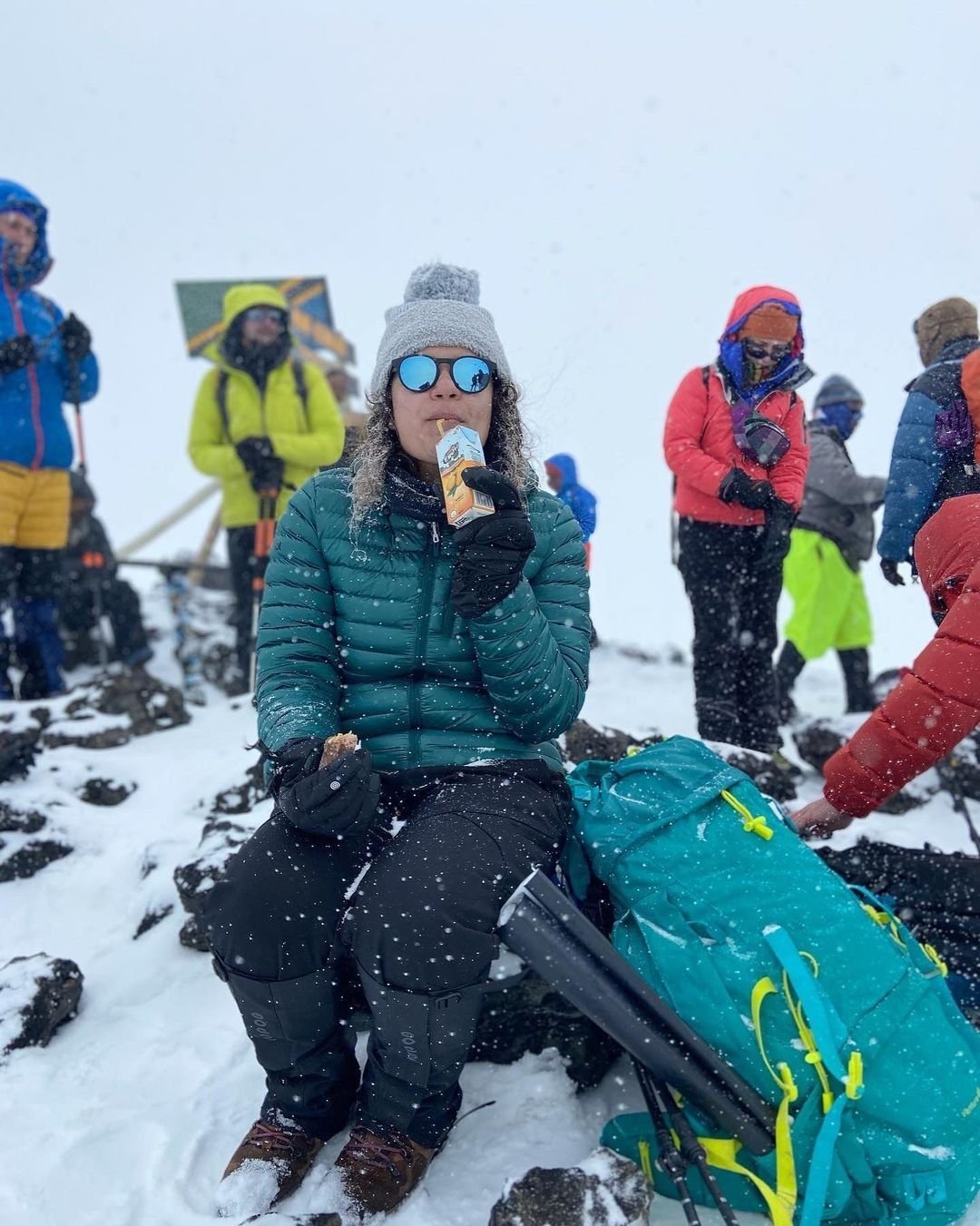
Temperatures during summit night can fall to approximately -10°C to -20°C in the summit zone, with wind making conditions feel colder.
The exact temperature varies according to altitude, season, wind, cloud cover and weather conditions. Recent summit-night observations from Kilimanjaro guides have recorded temperatures around -9°C at Barafu and approximately -10°C to -15°C near Stella Point during clear July conditions, while colder conditions can occur higher on the mountain.
This is why summit clothing needs to be prepared differently from the clothing used during the warmer lower sections of Kilimanjaro.
What Should You Wear on Summit Night?
The best approach is to use layers that can be adjusted during the climb.
A practical summit-night clothing system includes:
-
Moisture-wicking base layer
-
Warm fleece or mid-layer
-
Insulated/down jacket
-
Waterproof or windproof outer jacket
-
Warm trekking trousers
-
Thermal leggings
-
Warm hiking socks
-
Insulated gloves or mittens
-
Warm hat
-
Buff or neck gaiter
-
Headlamp
-
Comfortable hiking boots
Your clothing should keep you warm while still allowing comfortable movement.
Avoid putting on every heavy layer too early if you are already warm. Your guide can help you adjust layers as the temperature and your activity level change.
What Is the Best Sleeping Bag for Summit Night?
A sleeping bag is important during the nights before the summit, particularly when staying at high camps.
For a Kilimanjaro climb, we recommend a sleeping bag with a comfort rating around -15°C or colder, depending on the season, route and individual preference.
A suitable four-season sleeping bag can also be rented in Moshi, which is useful for travelers who do not want to purchase a specialist cold-weather sleeping bag.
Your sleeping bag is not normally used while walking during summit night, but it helps you stay comfortable and rested during the high-camp overnight period before the summit.
What Should You Eat Before Summit Night?
Your final meal should provide energy without leaving you feeling overly full.
A practical pre-summit meal may include:
-
Rice
-
Pasta
-
Potatoes
-
Vegetables
-
Soup
-
Bread
-
Fruit
-
Tea
-
Water
Because the wake-up time is very early, a small meal or hot drink before departure can be easier to manage than a heavy breakfast.
During the ascent, carry easy-to-eat snacks such as:
-
Energy bars
-
Chocolate
-
Dried fruit
-
Biscuits
-
Sweets
-
Small sandwiches
Your guide and mountain crew can help you maintain regular food and fluid intake during the climb.
How Much Water Should You Carry on Summit Night?
Carry enough water for the planned ascent and keep it accessible throughout the climb.
Cold temperatures can make drinking feel less appealing, but maintaining regular fluid intake is important. An insulated bottle or hydration system designed for cold conditions can help keep water accessible.
It is also useful to protect drinking tubes from freezing temperatures if you are using a hydration bladder.
KiliPori guides encourage climbers to drink regularly rather than waiting until they feel very thirsty.
Why Is Acclimatization Important Before Summit Night?
Acclimatization gives your body time to adjust to the lower oxygen availability at higher elevations. This is one reason longer Kilimanjaro itineraries are valuable.
CDC guidance recommends gradual ascent and notes that additional time on Kilimanjaro can facilitate acclimatization. TANAPA also advises climbers to choose itineraries that allow appropriate acclimatization time.
For this reason, a well-planned summit night starts with the days that came before it. Your route, number of climbing days, rest opportunities and walking pace all contribute to your preparation for the final ascent.
Which Kilimanjaro Routes Have a Summit Night?
Most standard summit routes involve an overnight or early-morning summit push.
| Route | Summit Starting Area | Typical Summit Style |
|---|---|---|
| Marangu | Kibo Hut | Night/early-morning ascent |
| Machame | Barafu Camp | Night ascent |
| Lemosho | Barafu Camp | Night ascent |
| Rongai | Kibo area | Night/early-morning ascent |
| Umbwe | Barafu Camp | Night ascent |
| Northern Circuit | High camp near summit approach | Night/early-morning ascent |
TANAPA lists multiple climbing routes to Kilimanjaro's highest point, with the route determining the camps and approach used before the summit.
How Should You Prepare Physically for Summit Night?
Preparation should focus on walking endurance, leg strength and the ability to stay active for several hours.
Before your climb, include:
-
Long walks
-
Hill walking
-
Stair climbing
-
Hiking on uneven terrain
-
Squats
-
Lunges
-
Step-ups
-
Core exercises
-
Back-to-back walking days
You do not need to train by walking through the entire night. Instead, build enough endurance that several hours of steady uphill walking feels manageable.
A structured 8-12 week training programme can be particularly useful for first-time climbers.
How Should You Prepare Mentally for Summit Night?
Mental preparation is mainly about understanding the rhythm of the night.
You will walk slowly.
You will spend several hours in darkness.
You will take regular short breaks.
You will gradually move toward the summit.
Instead of thinking about the entire distance at once, focus on the next section of trail, the next rest point or the next elevation marker.
Your guide will also help maintain a steady pace throughout the ascent.
What Should You Put in Your Summit Day Backpack?
Keep your summit-day daypack practical and light.
Your essential items include:
-
Water
-
Snacks
-
Insulated jacket
-
Waterproof jacket
-
Extra gloves
-
Hat
-
Buff
-
Headlamp
-
Spare batteries
-
Sunglasses
-
Sunscreen
-
Camera or phone
-
Personal medication
-
Small personal items
Avoid carrying unnecessary equipment because you will be walking for many hours.
What Is the Hardest Part of Summit Night?
For many climbers, the combination of darkness, cold, altitude and several hours of continuous uphill walking makes the summit ascent feel very different from the previous trekking days.
The pace is intentionally slow, and the terrain becomes increasingly rocky as you approach the crater rim.
The section toward Stella Point can require patience because the elevation increases gradually while you continue walking for several hours.
Once the sky begins to brighten, the changing scenery provides a welcome sense of progress.
What Happens at Stella Point?
Stella Point sits at approximately 5,756 metres on the crater rim. From there, climbers continue around the crater rim toward Uhuru Peak at 5,895 metres.
For many climbers, reaching Stella Point is an important milestone because the summit is now much closer.
Your guide will continue to monitor your pace and comfort as you make the final approach to Uhuru Peak.
What Happens After Reaching Uhuru Peak?
After reaching Uhuru Peak, climbers normally spend a short time enjoying the summit, taking photographs and appreciating the views before beginning the descent.
The descent is an important part of the summit day because you still have several hours of walking ahead.
Depending on the route, climbers return toward high camp before continuing to a lower camp such as Mweka Camp.
This is why summit day should be viewed as a complete day of activity rather than only the hours spent reaching the summit.
How Long Is the Entire Summit Day?
The complete summit day can take approximately 12-18 hours, depending on the route, summit pace, rest stops and descent schedule.
A typical Machame, Lemosho or similar route can involve:
Midnight: Start climbing
5:30-7:00 AM: Reach Uhuru Peak
Morning: Begin descent
Late morning/early afternoon: Return to high camp
Afternoon: Continue toward the lower camp
Recent Kilimanjaro summit-night accounts report total summit-day movement extending well into the afternoon.
What Should You Do the Day Before Summit Night?
The day before the summit should be focused on rest, hydration, food and preparation.
Avoid unnecessary walking around camp and make sure your equipment is organised before dinner.
Prepare your:
-
Summit clothing
-
Boots
-
Gloves
-
Headlamp
-
Water
-
Snacks
-
Camera
-
Backpack
Try to rest as much as possible during the afternoon and evening.
Your guide will normally explain the wake-up time, departure schedule and what to expect before you go to sleep.
Can You Prepare for Summit Night With Training at Night?
You do not need to regularly train by hiking through the night.
Instead, prepare your body through regular hiking, hill walking, strength training and longer endurance sessions.
What matters most is arriving on Kilimanjaro with good walking endurance and then allowing the mountain itinerary to provide the necessary acclimatization.
CDC guidance emphasizes gradual ascent and adequate acclimatization time for high-altitude travel.
Does the Summit Night Feel Colder Than the Rest of the Climb?
Yes, the summit section is normally much colder than the lower sections of Kilimanjaro.
As elevation increases, temperatures decrease, and the summit zone can reach approximately -10°C to -20°C, depending on conditions. Wind can make it feel colder.
This is why your summit clothing should include a warm insulated layer, windproof outer layer, warm gloves and proper head protection.
How KiliPori Safaris Prepares You for Summit Night
At KiliPori Safaris, summit preparation begins before the final evening.
We help you prepare through:
-
Appropriate route selection
-
Gradual itineraries
-
Professional mountain guides
-
Summit-night briefing
-
Clothing and equipment guidance
-
Proper walking pace
-
Regular rest breaks
-
Hydration and meal planning
-
Support throughout the ascent
-
Careful coordination of the descent
Our approach is to make summit night organised, steady and comfortable so you can focus on the experience of reaching Uhuru Peak.
KiliPori Safaris Recommendation for Kilimanjaro Summit Night
For a more comfortable summit experience, choose an itinerary that gives your body enough time to acclimatize, prepare your cold-weather clothing before summit night, rest during the afternoon, eat a light but energy-rich meal, and follow your guide's slow and steady pace during the ascent.
Do not judge your progress by how quickly another climber is moving. Summit night is about maintaining a sustainable rhythm from high camp to Uhuru Peak.
At KiliPori Safaris, we recommend preparing for the summit as a complete experience—from the afternoon rest period and evening meal to the midnight departure, sunrise at Uhuru Peak and descent to the lower camp.
Plan Your Kilimanjaro Summit With KiliPori Safaris
Ready to prepare for your climb to Uhuru Peak at 5,895 metres?
KiliPori Safaris can help you choose the right Kilimanjaro route, climbing duration, equipment and summit itinerary according to your travel plans.
WhatsApp KiliPori Safaris: +255 755 287 311
Plan Your Kilimanjaro Climb | Request Your Custom Itinerary | Talk to Our Mountain Team
FAQs About Kilimanjaro Summit Night
What time does Kilimanjaro summit night start?
Most summit attempts begin around 11:00 PM to midnight, depending on the route, high camp and planned summit schedule.
How cold is Kilimanjaro summit night?
The summit zone can reach approximately -10°C to -20°C, with wind making it feel colder. Conditions vary by season and weather.
How long does it take to reach Uhuru Peak?
The ascent from high camp commonly takes around 5–9 hours, depending on pace, route and conditions.
What time do you reach Uhuru Peak?
Many climbers reach Uhuru Peak around sunrise, commonly between 5:30 AM and 7:00 AM, although actual arrival times vary.
What should I wear for summit night?
Wear warm layers including thermal clothing, fleece, an insulated jacket, windproof outerwear, warm gloves, a hat, warm socks and suitable hiking boots.
Do I need a special sleeping bag for Kilimanjaro?
Yes. A warm four-season sleeping bag with a comfort rating around -15°C or colder is a practical choice for high camps.
Do I need to train for summit night?
Yes. Focus on hiking endurance, hill walking, leg strength and the ability to walk for several consecutive hours.
Can beginners complete Kilimanjaro summit night?
Yes. Beginners can prepare for the summit with appropriate training, a suitable route, gradual acclimatization and professional guide support.
What happens after Uhuru Peak?
After spending a short time at the summit, you begin the descent toward high camp and then continue toward a lower camp depending on your route.
Is summit night the same on every Kilimanjaro route?
No. The starting camp, distance, terrain and schedule vary by route, although most summit itineraries involve an overnight or early-morning ascent.
Why do climbers start at midnight?
The early departure allows climbers to make the main ascent during the night and aim for the summit around sunrise.
What is the most important preparation for summit night?
Good acclimatization, appropriate clothing, adequate rest, hiking endurance, proper hydration and a steady pace are among the most important preparations.

KiliPori Safaris Travel Team
A local Tanzania team helping travellers plan wildlife safaris, Kilimanjaro climbs and Zanzibar holidays with clear routing and direct destination support.
Published October 2, 2026. Travel conditions, fees and schedules can change; confirm time-sensitive details before departure.