Explore this guide
Our guides combine current planning research with practical knowledge from arranging safaris, Kilimanjaro climbs and Zanzibar holidays.
Overview
An Ndutu family safari can be highly rewarding for children, especially from approximately 6 years old, when they can understand wildlife behaviour and tolerate longer drives. Younger children can also travel, but the itinerary should use a private vehicle, family accommodation, shorter flexible game drives and regular breaks. Parents must also prepare children for bumpy roads, early mornings and possible predator hunts during the calving season.
Is Ndutu Suitable for a Family Safari?
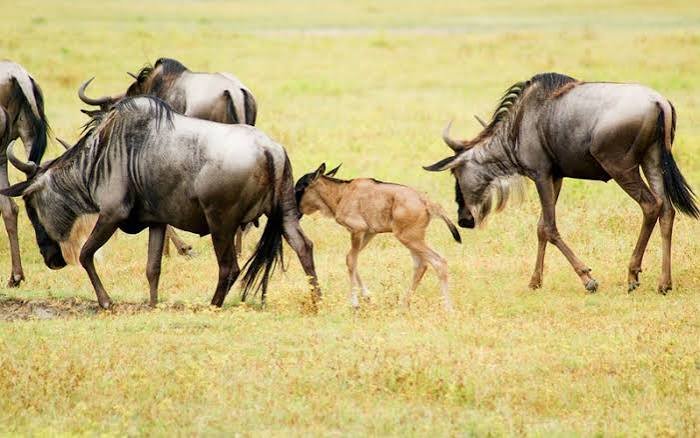
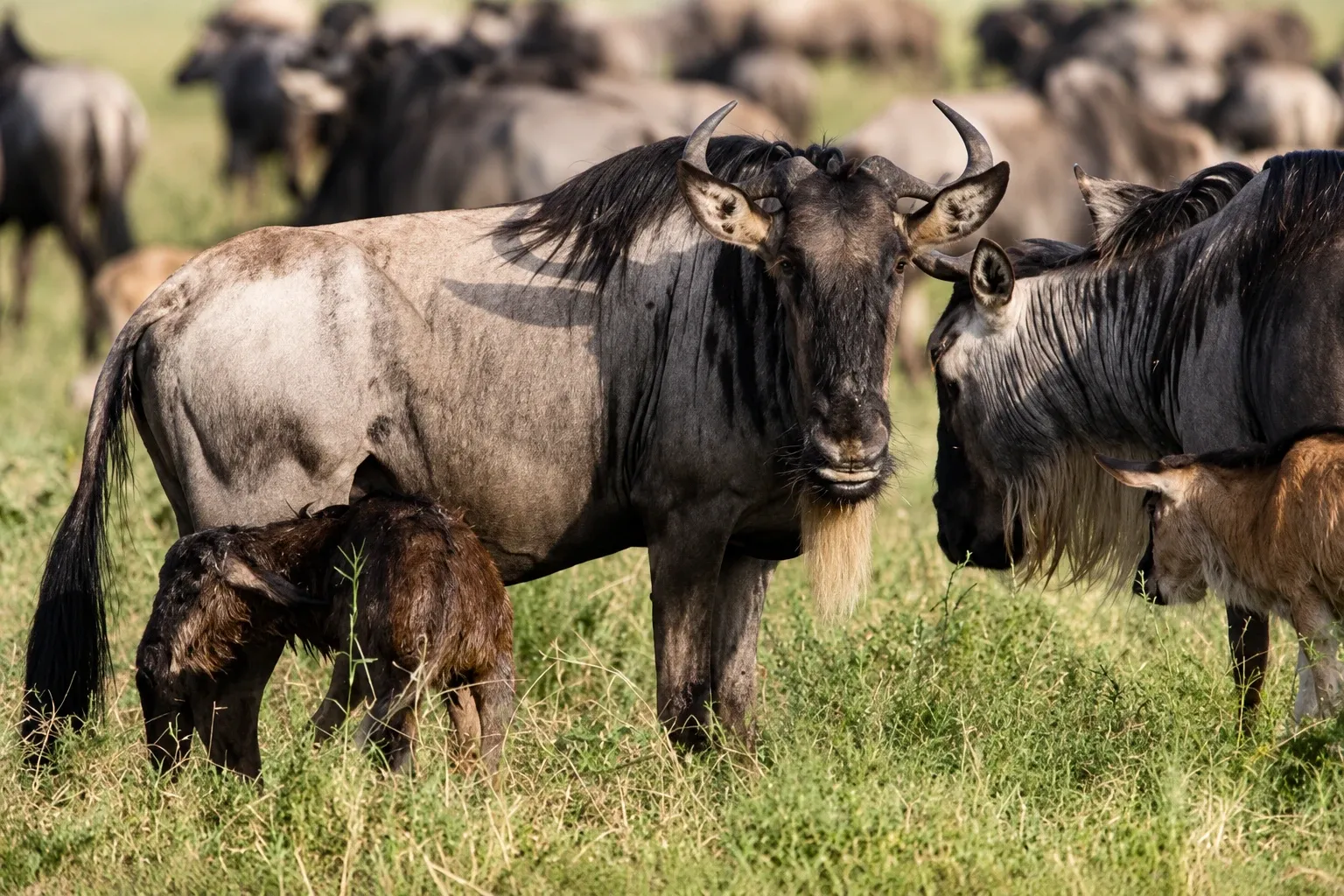
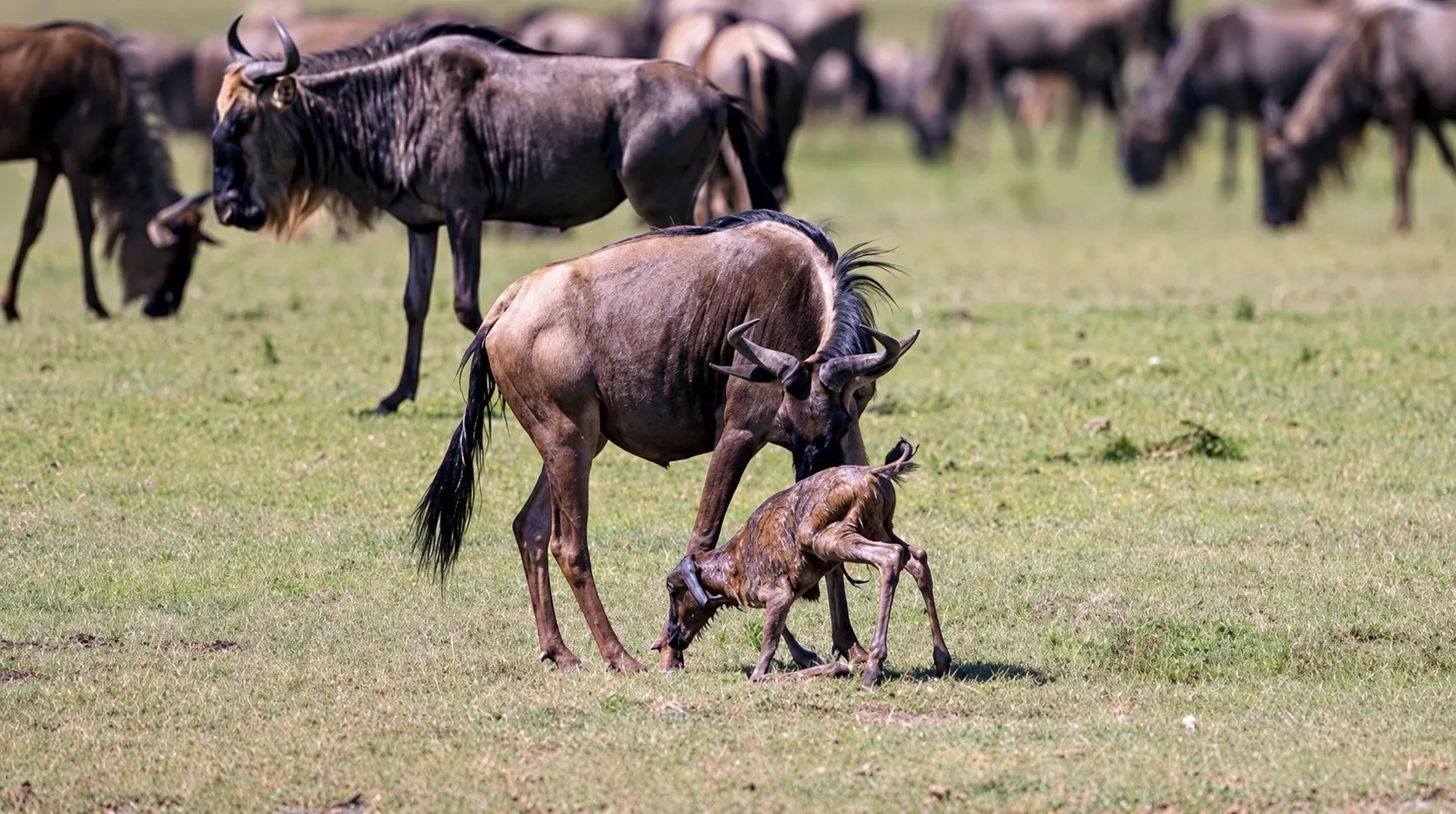
Yes. Ndutu can work well for families because the calving season provides clear, engaging wildlife stories that children can follow: newborn wildebeest learning to walk, zebras protecting their foals, cheetahs watching the plains and lions interacting within their prides.
The open landscape can also make animals easier for children to see than in dense woodland.
A successful family safari depends on more than wildlife. Parents should consider:
- The ages and personalities of the children
- Total safari length
- Daily driving time
- Whether the vehicle is private
- Camp location
- Family-room configuration
- Food requirements
- Health preparation
- Bathroom access
- The child’s reaction to predation
- Time to rest and play
Ndutu is remote. It does not offer the convenience of a city hotel, and travel between camps, airstrips and wildlife areas can involve rough roads.
What Age Is Best for an Ndutu Safari?
There is no universal minimum age for a standard vehicle safari. The best age depends on the child, camp rules, itinerary and parents’ expectations.
| Child’s age | General suitability | Main considerations |
|---|---|---|
| Under 2 | Possible but demanding | Feeding, nappies, car seat, dust, sleep schedule and medical access |
| 2–5 | Possible with major adjustments | Short drives, frequent breaks and close supervision |
| 6–9 | Generally suitable | Flexible schedule, wildlife activities and rest periods |
| 10–12 | Very suitable | Better concentration and understanding of animal behaviour |
| 13–17 | Excellent | Can manage longer drives, photography and detailed guiding |
These are planning guidelines, not admission rules.
Some lodges and tented camps impose their own minimum ages, particularly for:
- Shared game drives
- Walking activities
- Balloon safaris
- Separate tents
- Unfenced properties
- Certain room categories
Families should obtain the child policy in writing before paying a deposit.
Can Babies and Toddlers Go to Ndutu?
Yes, but a safari with a baby or toddler requires careful preparation and realistic expectations.
Parents should consider:
- Whether a suitable child seat can be secured
- The child’s ability to tolerate long and bumpy drives
- Feeding and milk-storage requirements
- Safe drinking water
- Nappies and waste disposal
- Heat and sun protection
- Mosquito-bite prevention
- Distance from medical facilities
- Sleep schedules
- Noise around wildlife
- Nighttime movement within an unfenced camp
A baby cannot communicate discomfort clearly, and ordinary game-drive conditions may involve heat, dust, vehicle vibration and several hours away from a bathroom.
A private vehicle is essential for most families travelling with a baby or toddler. It allows the family to return to camp whenever necessary.
[KiliPori expert input required: Confirm the child’s exact age, weight and car-seat requirements before designing the itinerary.]
What Makes the Calving Season Interesting for Children?
The calving season gives children the opportunity to observe animal families and survival behaviour in a natural environment.
Possible sightings include:
- Newborn wildebeest
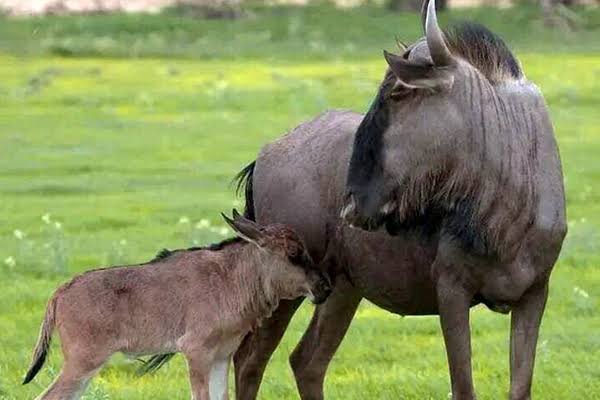
- Wildebeest mothers nursing calves
- Zebra mares with foals
- Young gazelles
- Lion prides
- Cheetah mothers with cubs
- Spotted hyenas
- Black-backed jackals
- Elephants and giraffes
- Ostriches and secretary birds
- Vultures and other birds of prey
Children can learn about:
- Migration
- Food chains
- Predator and prey relationships
- Animal communication
- Camouflage
- Habitats
- Rainfall and grass growth
- Conservation
- Responsible wildlife viewing
The experience becomes more engaging when the guide explains behaviour through short stories and questions rather than long technical lectures.
For more detail about the animals, read our guide to Southern Serengeti calving season wildlife and predators.
Will Children See Predator Hunts or Kills?
They might. Lions, cheetahs, hyenas and jackals are active around the herds, and families may encounter:
- A chase
- A carcass
- A predator feeding
- An injured animal
- A separated calf
- Competition between predators
- Vultures around a carcass
These events are natural, but some children may find them upsetting.
Parents should explain before the safari that predators need to eat and that death is part of the natural ecosystem. The explanation should be appropriate for the child’s age.
Tell the driver-guide if:
- The child is sensitive to predation
- The family does not want to watch a kill
- The child becomes distressed
- The family prefers to leave a feeding sighting
A private vehicle allows the family to leave without affecting other travellers.
When Is the Best Time for a Family Calving Safari?
The wider Ndutu season normally extends from December through March. February is generally the main calving month.
| Period | Family experience | Important consideration |
|---|---|---|
| December | Green landscapes and arriving herds | Herd location can be unpredictable |
| January | Increasing births and fresh grass | Good balance of wildlife and scenery |
| February | Main calving period | High accommodation demand |
| March | Older, active calves and changing herd movement | Rain and road conditions can vary |
| April | Fewer visitors and green scenery | Some seasonal camps close or relocate |
For families tied to school holidays, travel dates may not align exactly with peak calving. Ndutu can still provide rewarding wildlife viewing outside the most concentrated birth period, but herd locations must be treated as variable.
How Many Nights Should a Family Spend in Ndutu?
Three nights is a practical minimum. Families with children who enjoy wildlife may prefer 4 nights, allowing a slower daily pace.
| Length of stay | Suitability |
|---|---|
| 1 night | Too rushed for most families |
| 2 nights | Suitable for a short itinerary but limited |
| 3 nights | Recommended family minimum |
| 4 nights | Best balance of wildlife and flexibility |
| 5 nights or more | Good for wildlife-focused families and teenagers |
Moving camps every night can be tiring for children. It is usually better to remain at one well-located Ndutu camp and explore from there.
Why Is a Private Vehicle Important?
A private 4×4 is strongly recommended for families.
It provides control over:
- Departure time
- Length of each drive
- Bathroom stops
- Snack breaks
- Which sightings to visit
- How long to remain at a sighting
- When to return to camp
- Window and seating arrangements
- Whether to leave a predator scene
- The pace of wildlife explanations
Children may become tired or restless without warning. A shared vehicle cannot always change its schedule because 1 child wants to return to camp.
Recommended seating
Each child should have:
- Their own seat
- Access to a window or roof view
- An appropriate seat belt
- Enough space for water and a small activity bag
- Adult supervision
Parents should confirm in advance whether a suitable child seat or booster seat is available and how it will be secured.
What Should the Family Safari Vehicle Carry?
A family vehicle should include:
- Drinking water
- Child-friendly snacks
- First-aid kit
- Spare tyre and recovery equipment
- Charging points
- Binoculars
- Wildlife reference book
- Rubbish bags
- Tissues and wet wipes
- Hand sanitizer
- Sun protection
- Warm layers
- Vomit or sickness bags
- Basic vehicle communication equipment
Families with babies may also need:
- Car seat
- Nappies
- Changing mat
- Formula or food
- Bottles
- Sterilizing supplies
- Insulated storage
- Spare clothing
- Baby-safe insect protection approved by their doctor
Full-Day or Split Game Drives With Children?
Split game drives
A morning drive followed by a break at camp and an afternoon drive is usually best for younger children.
Advantages include:
- Time to rest
- Access to a bathroom
- Regular meals
- Time for younger children to nap
- Less continuous driving
- A chance to clean up and change clothes
The disadvantage is losing wildlife time while returning to camp. Split drives work best when the camp is close to the game-viewing area.
Full-day game drives
Older children and teenagers may manage a full-day drive with a picnic lunch.
Advantages include:
- Reaching wildlife farther from camp
- Following changing herd locations
- Avoiding repeated travel back to camp
- More time in the field
Disadvantages include:
- Limited bathroom access
- Fatigue
- Long periods inside the vehicle
- Midday heat
- Fewer opportunities to rest
Do not schedule a full-day drive only because adults want to maximize wildlife viewing. The plan should suit the youngest traveller.
A Suggested Daily Schedule for Families
Early morning
Take a short or moderate game drive when predators are more active and temperatures are cooler.
Late morning
Return to camp for breakfast or an early lunch, depending on the family’s routine.
Midday
Rest, read, use the camp’s family facilities or allow younger children to sleep.
Afternoon
Take another game drive after the hottest part of the day.
Evening
Return before the required time, have dinner and prepare for the next morning.
This schedule is only an example. A private safari allows the guide and parents to adjust each day.
How Long Are the Drives to Ndutu?
Approximate road travel times vary with weather, gate procedures, stops and the exact camp.
| Starting point | Estimated driving time |
|---|---|
| Karatu | 3–5 hours |
| Arusha | 5–7 hours |
| Moshi | 6–8 hours |
| Central Serengeti | 3–5 hours |
| Ngorongoro area | Varies by lodge and route |
These journeys usually include rough or unpaved sections.
Families should avoid combining a long transfer with a full afternoon game drive unless the children already tolerate road travel well.
Road Safari or Fly-In Safari for Families?
Both options can work.
Road safari advantages
- Private guide remains with the family
- More luggage flexibility
- Easier to carry child equipment
- Opportunity to visit other parks
- No light-aircraft baggage restrictions
- Gradual introduction to the landscape
Road safari disadvantages
- Long travel time
- Rough roads
- Dust
- Possible motion sickness
- More time inside the vehicle
Fly-in safari advantages
- Less time on long road transfers
- Useful for a short itinerary
- Children may enjoy the small-aircraft experience
- More time available in Ndutu
Fly-in safari disadvantages
- Strict baggage limits
- Soft-sided bag requirements
- Restrictions on liquids and battery items
- Possible schedule changes
- Need to coordinate a vehicle at the airstrip
- Very young children may be uncomfortable with noise
- Child fares and infant policies vary by airline
Families carrying pushchairs, car seats, formula or large amounts of child equipment should confirm baggage arrangements before choosing a fly-in safari.
Which Family Itinerary Works Best?
5-day focused family safari
- Arrival at Kilimanjaro International Airport; transfer to Arusha
- Arusha to Ndutu
- Full-day or split Ndutu game drives
- Full-day or split Ndutu game drives
- Fly or drive back to Arusha
This option prioritizes the calving season but involves a long road transfer unless flights are used.
6-day Ndutu and Ngorongoro safari
- Arrival and overnight in Arusha
- Arusha to Karatu or Ngorongoro area
- Ngorongoro Crater game drive
- Transfer to Ndutu
- Full day in Ndutu
- Full day in Ndutu
- Depart Ndutu
Although often described as a 6-day safari depending on arrival-day treatment, this structure should be checked against actual nights and flight timings.
7-day Ndutu and Central Serengeti safari
- Arrival in Arusha
- Travel to Ndutu
- Full day in Ndutu
- Full day in Ndutu
- Ndutu to Central Serengeti
- Full day in Central Serengeti
- Fly to Arusha, Kilimanjaro or Zanzibar
This route suits older children and families wanting a wider variety of habitats.
Should Families Include Central Serengeti?
Central Serengeti can add valuable variety to an Ndutu family safari.
Ndutu provides:
- Calving-season herds
- Open short-grass plains
- Strong cheetah opportunities
- Seasonal wildlife concentrations
Central Serengeti provides:
- River valleys
- Kopjes
- Woodland
- Resident wildlife
- Better habitat for some leopard sightings
- Year-round lion and elephant opportunities
For a 7-day safari, combining approximately 3 nights in Ndutu with 2 nights in Central Serengeti can work well.
For a very young family or a shorter safari, remaining longer in Ndutu may be easier than changing camps.
How Should Families Choose a Camp?
Camp selection should begin with location and room configuration—not photographs of the swimming pool or dining area.
Ask:
- Does the camp accept children of their ages?
- Is there a family tent or suite?
- Are rooms connected?
- How far apart are the rooms?
- Can an adult and children share?
- Are extra beds available?
- Is there a minimum age for shared game drives?
- Can meals be served earlier?
- Are simple child-friendly dishes available?
- Is hot water available at all times?
- Are charging facilities available?
- Is there a pool, and is it supervised?
- How far is the camp from the main wildlife areas?
- Are children allowed in all common areas?
The best options vary by family composition. Review our guide to the best camps and lodges in Ndutu for the calving season.
Family Tent, Connected Rooms or Separate Tents?
Family tent or suite
Usually the most convenient option for parents with younger children. It keeps the family within one structure while providing more space than a standard room.
Connected rooms
Useful for families with older children who need some independence but remain directly accessible to parents.
Nearby separate tents
May suit teenagers, subject to camp policy. In unfenced camps, children should not walk between tents alone after dark.
Standard triple room
Can reduce cost but may feel cramped once luggage and extra beds are added.
Families should obtain the exact room layout. “Family accommodation” does not always mean connected bedrooms.
Are Ndutu Camps Fenced?
Most Ndutu and Southern Serengeti camps are unfenced. Wildlife may move through the camp at any time.
Families must follow rules such as:
- Never allow children to walk alone
- Use staff escorts after dark
- Do not leave food outside
- Remain inside the tent or room at night
- Do not approach animals
- Keep tent doors or zips secured
- Follow camp instructions during wildlife encounters
- Supervise children around decks and water
Wildlife outside a tent should be reported to camp staff rather than approached or photographed on foot.
What Food Is Available for Children?
Most established lodges and camps can provide simple meals when notified in advance.
Possible options include:
- Rice
- Pasta
- Potatoes
- Soup
- Chicken
- Eggs
- Bread
- Fruit
- Vegetables
- Porridge
- Pancakes
- Sandwiches
Parents should communicate:
- Allergies
- Intolerances
- Religious dietary requirements
- Vegetarian or vegan needs
- Texture sensitivities
- Preferred meal times
- Foods the child reliably accepts
Do not assume that specialized formula, baby food or allergy-safe packaged products will be available in Ndutu. Bring sufficient supplies where necessary.
How Are Bathroom Breaks Managed?
Bathroom availability is limited during game drives.
Possible options include:
- Camp bathrooms before departure
- Designated picnic sites
- Authorized public facilities
- A safe stop selected by the guide where permitted
Leaving the vehicle is not always safe or allowed. Wildlife may be nearby even when passengers cannot see it.
Parents should:
- Ask children to use the bathroom before departure
- Inform the guide early rather than waiting for an emergency
- Carry tissues, wipes and sanitizer
- Pack spare clothing for young children
- Use travel toilet products if appropriate and permitted
- Dispose of all waste responsibly
What Should Children Pack?
Clothing
- Lightweight long trousers
- Long-sleeved shirts
- Warm fleece or jacket
- Rain jacket
- Closed shoes
- Sun hat
- Comfortable sleepwear
- Spare clothing
- Neutral colours
Health and hygiene
- Prescription medicines
- Sunscreen
- Age-appropriate insect repellent
- Hand sanitizer
- Wet wipes
- Tissues
- Oral rehydration supplies recommended by a doctor
- Small personal first-aid items
- Copies of prescriptions
Safari activities
- Child-sized binoculars
- Wildlife checklist
- Notebook
- Pencils
- Camera
- Books
- Offline games
- Headphones for transfers
- Small soft toy
- Reusable water bottle
Avoid bringing noisy toys onto game drives.
Health Preparation for Children
Parents should consult a qualified travel-health professional well before departure. Medical advice must be individualized according to:
- Child’s age
- Weight
- Vaccination history
- Countries visited before Tanzania
- Length of stay
- Exact itinerary
- Existing health conditions
- Medication allergies
Tanzania has mosquito-borne disease risks, including malaria in many areas. A clinician should advise on suitable preventive medication and dosing for each child. Antimalarial medication is age- and weight-dependent.
Families should also discuss:
- Routine vaccinations
- Yellow fever requirements based on travel history
- Food and water safety
- Traveller’s diarrhoea
- Motion sickness
- Sun exposure
- Insect-bite prevention
- Medical insurance
- Emergency evacuation cover
No medication should be selected or dosed from a general travel article.
Preventing Mosquito and Insect Bites
Families can reduce bites by:
- Using age-appropriate insect repellent
- Wearing long sleeves and trousers
- Closing tent screens and zips
- Using mosquito nets correctly
- Avoiding exposed skin around dusk and dawn
- Following camp guidance
- Checking children before bedtime
Parents should ask a doctor which repellent ingredients and concentrations are suitable for each child’s age.
Managing Dust, Heat and Sun
Calving season conditions can include strong sun, dust, rain and rapid temperature changes.
Parents should:
- Encourage frequent water intake
- Apply sunscreen regularly
- Use hats and light long sleeves
- Carry lip balm
- Keep windows adjusted during dusty sections
- Store snacks in closed containers
- Clean hands before eating
- Bring eye drops only if medically appropriate
- Schedule rest during the warmest period
- Avoid leaving children inside a parked vehicle
Babies and young children can become dehydrated or overheated faster than adults.
Motion Sickness and Bumpy Roads
Ndutu roads can be rough, muddy or dusty. Children prone to motion sickness may struggle during long transfers.
Helpful measures include:
- A lighter meal before travel
- Good ventilation
- Looking toward the horizon
- Regular safe breaks
- Avoiding reading during rough driving
- Carrying sickness bags
- Keeping spare clothes accessible
- Discussing age-appropriate medication with a doctor
Do not store sickness supplies at the bottom of the luggage compartment.
What Medical Facilities Are Available?
Ndutu is remote, and advanced medical care is not immediately available.
Camps may have:
- Basic first-aid supplies
- Staff trained in first response
- Radio or telephone communication
- Access to evacuation services
Serious illness or injury may require road or air evacuation to a larger medical facility.
Families should carry travel insurance that covers:
- Children
- Safari activities
- Medical treatment
- Emergency evacuation
- Trip interruption
- Existing conditions, where applicable
Parents should request the camp’s emergency procedures and provide the operator with relevant medical information.
Can Children Join a Hot-Air Balloon Safari?
Possibly, but balloon operators apply minimum-age, height, mobility and safety rules.
Children must usually be able to:
- See over the basket
- Follow instructions
- Stand throughout the flight
- Adopt the required landing position
- Cope with the burner noise
- Manage a very early start
Very young children are generally unsuitable. Children accepted by one operator may be refused by another.
Read our guide to an Ndutu hot-air balloon safari during the calving season before considering this optional activity.
[Current verification required: Confirm the selected operator’s current minimum age, height and passenger requirements.]
Can Families Visit a Maasai Community?
A respectfully organized cultural visit can add educational value, especially for older children.
The visit should:
- Be arranged with community agreement
- Set clear expectations
- Avoid treating residents as exhibits
- Allow respectful questions
- Compensate hosts transparently
- Require permission before photography
- Avoid distributing sweets or money directly to children
- Support locally agreed community arrangements
Parents should explain that homes, clothing and customs may differ without presenting those differences as inferior or staged entertainment.
What Does an Ndutu Family Safari Cost?
Family safari prices depend on:
- Travel dates
- Number of adults and children
- Children’s exact ages
- Room configuration
- Private vehicle cost
- Camp category
- Road or flight arrangements
- Protected-area fees
- Length of stay
- Child policies and discounts
- Whether children share with adults
Children aged 5–15 may qualify for reduced statutory fees under some current protected-area tariff structures, while children below 5 may receive different treatment. Lodge child rates vary independently.
A child sharing an adult’s room is not necessarily free. Camps may charge for:
- Bed
- Meals
- Concession fees
- Transfers
- Laundry
- Flights
- Activities
[Current verification required: Confirm current NCAA, TANAPA, camp and airline child rates before preparing a quotation.]
Common Family Safari Mistakes
Planning too many parks
Frequent camp changes and long transfers can exhaust children. Choose fewer areas and stay longer.
Using a shared vehicle
A shared schedule rarely provides the flexibility a young family needs.
Choosing accommodation far from the wildlife area
Long access drives create unnecessary fatigue and reduce rest time.
Ignoring room configuration
A “family-friendly” camp may not have rooms suitable for the family’s exact ages and sharing requirements.
Scheduling every day from sunrise to sunset
Children need rest. One shorter day can improve the whole safari.
Bringing unfamiliar snacks only
Carry some food that the child already knows and accepts.
Failing to prepare children for predation
A carcass or hunt can be distressing when children have not been told what they might see.
Depending on continuous internet
Remote camps may have slow or intermittent connections. Download entertainment and educational materials before arrival.
Packing medicine in checked luggage
Essential medicine should remain accessible in hand luggage, with required documentation.
Assuming car seats are automatically provided
Request the correct seat in advance and confirm how it will be installed.
KiliPori Expert Recommendation
For a first Ndutu family safari, KiliPori Safaris recommends:
- At least 3 nights in Ndutu
- A fully private 4×4 Land Cruiser
- A camp close to Lake Ndutu, Lake Masek or the seasonal herd area
- A family tent, connected rooms or verified nearby rooms
- Split morning and afternoon drives for children under 10
- No more than 1 very long transfer on consecutive days
- Simple meals and dietary requirements arranged in advance
- A child seat confirmed before arrival
- One relaxed afternoon during a longer safari
- Advance preparation for possible predator sightings
For school-age children and teenagers, a 6–7-day safari combining Ndutu with Ngorongoro Crater or Central Serengeti provides good wildlife variety.
For babies and toddlers, the itinerary should prioritize proximity, privacy and flexibility rather than the number of destinations.
Frequently Asked Questions
Is Ndutu safe for children?
Ndutu can be visited safely when families use an experienced operator, follow guide and camp instructions, supervise children and prepare appropriately. Most camps are unfenced, so children must never walk alone.
What is the best age for an Ndutu safari?
Children from approximately 6 years old generally cope better with game drives and understand more of the wildlife experience. Younger children can travel, but the schedule requires greater adjustment.
Can I take a toddler to Ndutu?
Yes, but use a private vehicle, confirm a suitable car seat, stay close to the wildlife area and plan short drives. Parents must also consider dust, bumpy roads, feeding and access to medical care.
How many days should families spend in Ndutu?
Three nights is a practical minimum. Four nights provide more flexibility for shorter drives, rest and changing wildlife locations.
Will children see animals being killed?
They may see a hunt, carcass or predator feeding. Parents should prepare children beforehand and tell the guide if they prefer to leave such sightings.
Are family rooms available in Ndutu?
Some lodges and camps have family tents, suites or rooms that can be placed near one another. Availability is limited during the calving season and must be confirmed early.
Do camps provide children’s meals?
Many camps can prepare simple meals when informed in advance. Families with allergies, infants or highly specific needs should carry suitable backup food.
Are bathrooms available during game drives?
Bathrooms are available at camps and selected picnic areas, but not everywhere. The guide must choose a safe and permitted location for other stops.
Do children receive lower safari prices?
Children may qualify for reduced park, conservation, accommodation or flight rates, but policies vary. The child’s exact age at the time of travel is required for an accurate quotation.
Can children join balloon safaris?
Older children may be accepted if they meet the operator’s minimum age, height and mobility requirements. Very young children are generally unsuitable.
Plan Your Trip With KiliPori Safaris
KiliPori Safaris can design a private Ndutu family safari around your children’s ages, preferred pace, room requirements and total travel time.
A family itinerary can include:
- Private airport transfers
- Private 4×4 Land Cruiser
- Professional family-friendly driver-guide
- Suitable car or booster seats
- Family tents or nearby rooms
- Flexible game drives
- Child-friendly meals
- Ndutu and Southern Serengeti
- Ngorongoro Crater
- Central Serengeti
- Domestic flights where practical
- Zanzibar beach extension
To receive a personalized itinerary and accurate quotation, provide:
- Travel dates
- Number of adults
- Each child’s age at travel
- Preferred room arrangement
- Dietary or medical requirements
- Car-seat needs
- Safari length
- Accommodation level
- Whether the family prefers road travel or flights
WhatsApp: +255 755 287 311
Final Recommendation
An Ndutu family safari can be an educational and rewarding way for children to experience the calving season, but the trip should be designed around the youngest traveller.
Use a private vehicle, remain in Ndutu for at least 3 nights and select a camp with a verified family-room arrangement. Younger children usually benefit from split game drives, while older children and teenagers can manage longer wildlife-viewing days.
Prepare children for rough roads, early mornings, unfenced camps and the possibility of seeing predators hunt or feed. Confirm health requirements, child rates, car seats and accommodation policies before paying. A slower itinerary with fewer camp changes will usually provide a better family experience than trying to visit every northern Tanzania park.
Sources and Fact-Checking
- Tanzania National Parks Authority
- TANAPA Park Tariffs and Child Categories
- Ngorongoro Conservation Area Authority
- Official Tanzania Immigration Services
- TravelHealthPro – Tanzania Travel Health Guidance
- UK Government – Tanzania Health Advice
- UNESCO – Serengeti National Park
- Current child fees, lodge policies, airline baggage allowances, visa requirements and health recommendations should be reconfirmed for the family’s travel dates and nationality.

KiliPori Safaris Travel Team
A local Tanzania team helping travellers plan wildlife safaris, Kilimanjaro climbs and Zanzibar holidays with clear routing and direct destination support.
Published September 17, 2026. Travel conditions, fees and schedules can change; confirm time-sensitive details before departure.