Explore this guide
Our guides combine current planning research with practical knowledge from arranging safaris, Kilimanjaro climbs and Zanzibar holidays.
Ngorongoro Crater Safari Guide: Wildlife, Best Time and What to Expect
A Ngorongoro Crater safari offers concentrated wildlife viewing within the world’s largest unbroken caldera. The crater can be visited throughout the year and is commonly explored during a half- or full-day game drive. Stay on the crater rim for faster access or in Karatu for better-value accommodation. Ngorongoro combines naturally with Serengeti, Ndutu, Tarangire and Lake Manyara.
Ngorongoro Crater Safari: What You Need to Know
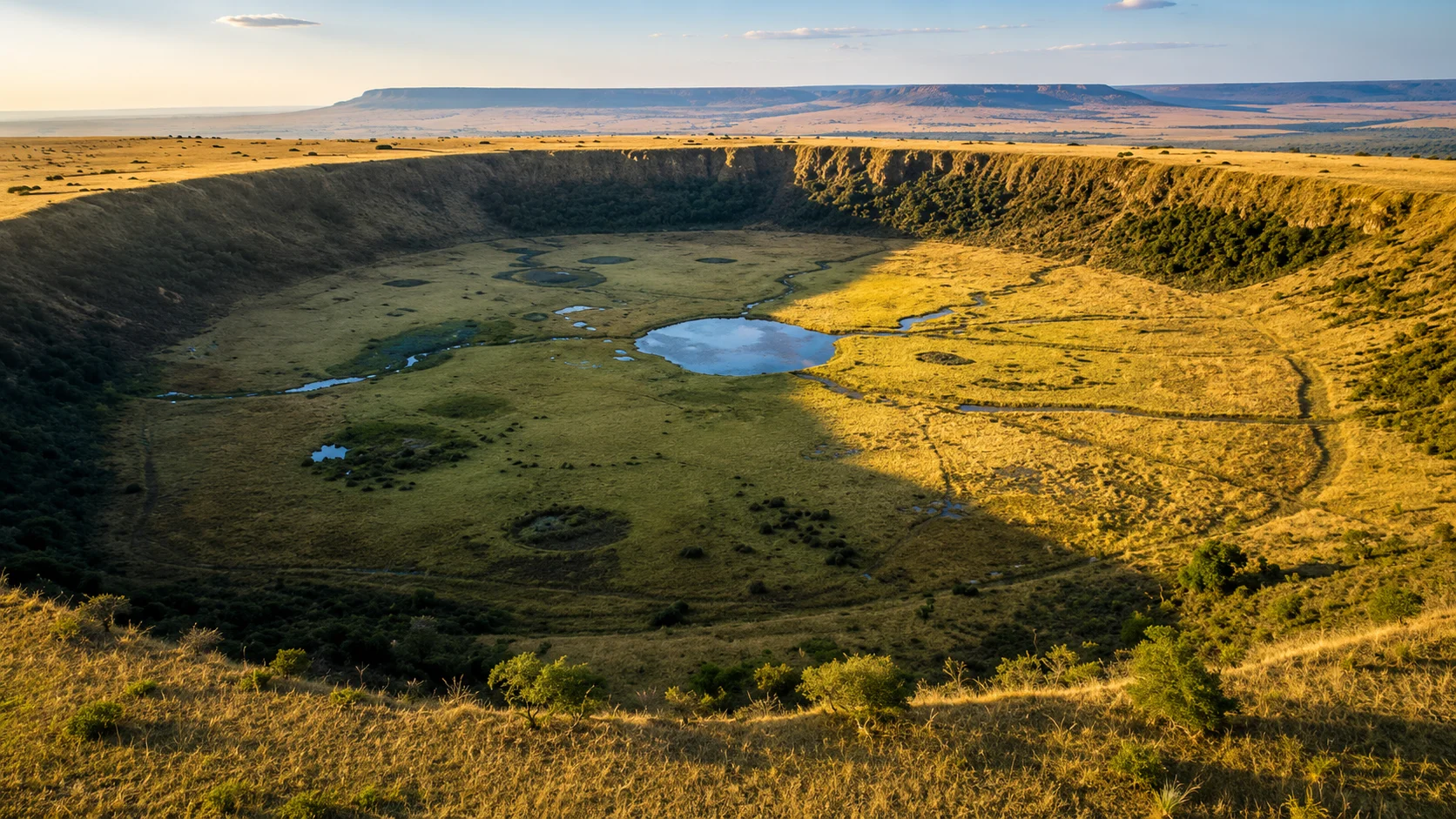
Ngorongoro Crater is a large volcanic caldera within the wider Ngorongoro Conservation Area in northern Tanzania. Its grasslands, wetlands, woodland and freshwater sources support a substantial concentration of resident wildlife.
The crater is approximately 20 km across, around 600 m deep and about 300 km² in area, according to information published by the Ngorongoro Conservation Area Authority.
A typical crater safari involves descending from the forested rim in a 4×4 safari vehicle, spending several hours exploring the crater floor and ascending by late afternoon.
Travellers visit Ngorongoro Crater for:
- Concentrated wildlife viewing
- The possibility of seeing the Big Five
- Black rhinoceroses
- Large lion and hyena populations
- Open grasslands and seasonal wetlands
- Views from the crater rim
- A convenient connection between Serengeti and Arusha
- Access to the wider Ngorongoro Conservation Area
Wildlife sightings are never guaranteed, including sightings of rhinoceroses or all members of the Big Five.
Is Ngorongoro Crater the Same as the Ngorongoro Conservation Area?
No. Ngorongoro Crater is one attraction within the much larger Ngorongoro Conservation Area.
The conservation area covers highland plains, savannah, forests, volcanic craters, archaeological sites and parts of the short-grass plains used by the Great Migration.
Important locations within the wider conservation area include:
- Ngorongoro Crater
- Ndutu and the southern plains
- Oldupai Gorge
- Empakaai Crater
- Olmoti Crater
- Lake Masek
- Gol Mountains
- Nasera Rock
- Parts of the Crater Highlands
The area was established in 1959 as a multiple-use landscape where wildlife conservation exists alongside Maasai pastoral traditions. It is recognized by UNESCO for both natural and cultural importance.
When planning a safari, check whether the itinerary refers specifically to a crater descent or only to travelling through or staying within the Ngorongoro Conservation Area.
Where Is Ngorongoro Crater?
Ngorongoro Crater is located in the Arusha Region of northern Tanzania, west of Lake Manyara and southeast of Serengeti National Park.
It forms part of Tanzania’s Northern Safari Circuit and is commonly reached from:
- Arusha
- Moshi
- Kilimanjaro International Airport
- Karatu
- Tarangire National Park
- Lake Manyara National Park
- Serengeti National Park
- Ndutu
The principal approach from Arusha is through Karatu and the Lodoare entrance gate. The official Ngorongoro information site places Lodoare approximately 160 km from Arusha.
How Long Does It Take to Reach Ngorongoro Crater?
Approximate road times for itinerary planning are:
| Route | Estimated driving time |
|---|---|
| Arusha to Karatu | Approximately 2.5–3 hours |
| Arusha to the crater rim | Approximately 3.5–4 hours |
| Moshi to Karatu | Approximately 3.5–4.5 hours |
| Moshi to the crater rim | Approximately 4–5 hours |
| Karatu to the crater rim | Approximately 45–60 minutes |
| Central Serengeti to the crater rim | Approximately 3–5 hours |
| Ndutu to the crater rim | Approximately 2.5–4 hours |
| Lake Manyara to Karatu | Approximately 30–60 minutes |
These are planning estimates rather than guaranteed transfer times. Weather, road conditions, gate procedures, wildlife stops and the exact accommodation location can change the journey.
The main approach from Arusha is paved as far as the Lodoare area, but crater and conservation-area roads require a properly equipped 4×4 safari vehicle.
What Wildlife Can You See in Ngorongoro Crater?
The crater supports a permanent concentration of large animals, particularly grazing species and their predators. The current NCAA website describes it as home to more than 25,000 animals, including members of the Big Five.
Potential sightings include:
- Lions
- Black rhinoceroses
- Cape buffalo
- African elephants
- Spotted hyenas
- Wildebeest
- Plains zebras
- Thomson’s and Grant’s gazelles
- Elands
- Warthogs
- Hippopotamuses
- Jackals
- Servals
- Flamingos and other waterbirds
- Secretary birds
- Crowned cranes
Can you see the Big Five?
The crater is one of Tanzania’s important areas for searching for the Big Five: lion, leopard, elephant, buffalo and rhinoceros.
However, seeing all 5 during a single game drive is not guaranteed. Leopards are generally less predictable within the crater, while black rhinoceroses may be seen at a considerable distance.
Are there giraffes in the crater?
Giraffes are generally not associated with the crater floor. They can be encountered elsewhere in the Ngorongoro Conservation Area and neighbouring parks. The steep descent roads and crater-floor habitat are not ideal for them.
Are there cheetahs in Ngorongoro?
Cheetahs may be encountered in the wider conservation area, particularly around open plains such as Ndutu. Sightings inside the crater itself are possible but less reliable than sightings of lions and hyenas.
What Is the Best Time to Visit Ngorongoro Crater?
Ngorongoro Crater can be visited throughout the year because much of its wildlife is resident rather than entirely dependent on migration movements.
| Period | Typical conditions | Planning considerations |
|---|---|---|
| January–February | Green landscapes and the wider southern migration season | Good for combining the crater with Ndutu |
| March–May | Wetter conditions and lush scenery | Some roads can be muddy; rain can affect visibility |
| June–October | Drier weather and easier road conditions | Popular travel period with potentially higher visitor numbers |
| November–December | Short rains and greener landscapes | Good photography conditions, with occasional wet roads |
Best time for wildlife viewing
Wildlife can be viewed throughout the year. The crater’s permanent water and grazing areas support resident animals across seasons.
Best time for photography
The green season provides fresh landscapes and more dramatic skies. During the dry season, shorter grass and animals gathering near water can make some sightings easier.
Best time for fewer vehicles
The crater is a popular attraction and can become busy, particularly during major holiday and dry-season periods. Entering near the opening time may provide cooler conditions and fewer vehicles during the first part of the game drive.
How Long Should You Spend at Ngorongoro Crater?
Most travellers need 1 crater game drive, usually completed within a single day.
| Time available | Recommended experience |
|---|---|
| A few hours | Possible, but may feel rushed |
| Half day | Suitable for travellers continuing to another destination |
| Most of 1 day | Recommended for a first visit |
| 2 separate visits | Useful mainly for specialist photography or slower itineraries |
Ngorongoro should not usually be treated as a quick roadside stop. Time is needed to descend, locate wildlife, stop for lunch and ascend from the crater.
The crater itself does not normally require multiple safari days in the same way as Serengeti National Park. Extra nights are more useful when they allow an early descent, reduce driving or include other attractions in the conservation area.
What Happens During a Ngorongoro Crater Game Drive?
A typical game drive begins early in the morning from a crater-rim lodge or accommodation in Karatu.
The day usually follows this pattern:
- Travel to the conservation-area entrance and crater rim.
- Complete permit and entry procedures.
- Descend into the crater in a 4×4 safari vehicle.
- Explore grassland, wetland, woodland and lake habitats.
- Stop at an authorized picnic area for lunch.
- Continue wildlife viewing.
- Ascend from the crater and travel to the next lodge or destination.
Official rules identify:
- Seneto Road as descent only
- Lerai Road as ascent only
- Lemala Road as usable for both descent and ascent
Official gates and barriers generally operate from 06:00 to 18:00, while Seneto Descent Gate closes at 16:00.
Schedules remain subject to official permits, road conditions and instructions from conservation authorities.
Where Should You Stay?
Travellers generally choose between accommodation on the crater rim, elsewhere within the conservation area or around Karatu.
| Location | Main advantage | Main trade-off |
|---|---|---|
| Crater rim | Fast access and crater views | Usually more expensive |
| Inside the conservation area | Convenient positioning for Ngorongoro and Serengeti | Conservation fees and access rules may affect cost |
| Karatu | Wider choice and generally better value | Requires additional driving before the descent |
| Lake Manyara area | Useful for multi-park itineraries | Longer morning journey to the crater |
Crater-rim accommodation
Staying on the rim is useful for:
- Early crater entry
- Shorter morning transfers
- Honeymoon and luxury itineraries
- Travellers continuing toward Serengeti
- Crater views, where the room or lodge position permits
Not every property described as “Ngorongoro” is located directly on the rim. Confirm the exact location.
Karatu accommodation
Karatu offers a broad range of lodges, farms and guest properties. It is particularly useful for:
- Mid-range itineraries
- Families
- Travellers arriving from Tarangire or Lake Manyara
- Safaris returning to Arusha after the crater
- Longer stays in the highlands
Karatu provides better-value choices but requires an earlier departure for the gate and crater descent.
How Much Does a Ngorongoro Crater Safari Cost?
The final price depends on more than the accommodation rate. A Ngorongoro safari may include several separate charges:
- Conservation-area entry fee per traveller
- Vehicle entry charge
- Crater service fee per vehicle
- Guide and safari vehicle costs
- Accommodation
- Concession or camping charges
- Meals and drinking water
- Transfers
- Applicable taxes
The crater service fee applies to the safari vehicle descending into the crater and is separate from individual conservation-area entry fees.
[Current verification required: insert the official NCAA tariffs valid for the intended travel period before publishing exact amounts.]
The official NCAA website maintains tariff information, but fees may change between financial or operational periods. Quotations should therefore state the rates applicable to the client’s actual dates.
What affects the final safari price?
| Factor | Effect on cost |
|---|---|
| Number of travellers | Vehicle and crater-service costs can be shared |
| Accommodation location | Rim properties generally cost more than Karatu |
| Accommodation category | Mid-range and luxury rates differ considerably |
| Number of conservation-area nights | Additional entry or concession fees may apply |
| Private or group safari | Private trips offer flexibility but cost more for small parties |
| Route | Adding Serengeti, Ndutu or flights increases the package cost |
| Season | Accommodation rates vary by travel period |
An exact quotation should specify whether all conservation fees, the crater service fee, taxes and vehicle expenses are included.
What Is Normally Included?
A professionally organized Ngorongoro safari commonly includes:
- Private 4×4 Land Cruiser with a pop-up roof
- Professional driver-guide
- Ngorongoro Conservation Area fees
- Crater service fee
- Accommodation stated in the itinerary
- Meals stated in the proposal
- Bottled drinking water during the safari
- Transfers listed in the itinerary
- Applicable tourism taxes
Common exclusions include:
- International flights
- Tanzania visa
- Travel and medical insurance
- Tips
- Alcoholic and personal drinks
- Laundry
- Optional cultural visits
- Oldupai Gorge admission unless listed
- Additional accommodation
- Bank or card-processing charges
- Items not stated in the quotation
Which Parks Should You Combine With Ngorongoro?
Ngorongoro’s position makes it a natural connection between Arusha, Karatu and Serengeti National Park.
Ngorongoro and Serengeti
This is the strongest combination for first-time travellers who want both concentrated crater wildlife and the extensive Serengeti landscape.
Allow at least:
- 1 crater game drive
- 2–3 nights in Central Serengeti
- Additional nights for a seasonal migration region
Ngorongoro and Ndutu
This combination is particularly suitable between late January and February.
A well-paced calving-season itinerary may include:
- 3 nights in Ndutu
- 1 night near Ngorongoro or in Karatu
- 1 crater game drive
Ngorongoro and Tarangire
This route provides contrasting habitats. Tarangire is associated with baobab woodland, elephants and the Tarangire River, while Ngorongoro provides a compact crater environment.
Ngorongoro and Lake Manyara
Lake Manyara can be added to a short northern circuit because it is close to Karatu. However, travellers with limited days may obtain more value by giving additional time to Tarangire, Ndutu or Serengeti, depending on the season.
For help comparing routes, read KiliPori’s guide to Tanzania safari costs, parks, seasons and itineraries.
Recommended Ngorongoro Safari Itineraries
3-Day Tarangire and Ngorongoro Safari
| Day | Destination |
|---|---|
| 1 | Arusha to Tarangire National Park |
| 2 | Tarangire or Karatu and transfer toward Ngorongoro |
| 3 | Ngorongoro Crater game drive and return to Arusha |
This is suitable for travellers with limited time, although the days can involve considerable driving.
5-Day Serengeti and Ngorongoro Safari
| Day | Destination |
|---|---|
| 1 | Arusha to Karatu or Ngorongoro |
| 2 | Ngorongoro Crater game drive |
| 3 | Travel to Central Serengeti |
| 4 | Full-day Central Serengeti game drive |
| 5 | Fly or drive toward Arusha |
6-Day Ndutu, Serengeti and Ngorongoro Safari
| Day | Destination |
|---|---|
| 1 | Arusha to Ndutu |
| 2 | Full-day Ndutu game drive |
| 3 | Full-day Ndutu game drive |
| 4 | Ndutu to Central Serengeti |
| 5 | Central Serengeti to Ngorongoro or Karatu |
| 6 | Ngorongoro Crater and return to Arusha |
6-Day Tarangire, Ndutu and Ngorongoro Safari
| Day | Destination |
|---|---|
| 1 | Arusha to Tarangire |
| 2 | Tarangire or Karatu to Ndutu |
| 3 | Full-day Ndutu game drive |
| 4 | Full-day Ndutu game drive |
| 5 | Ndutu to Ngorongoro or Karatu |
| 6 | Ngorongoro Crater and return to Arusha |
Is Ngorongoro Crater Suitable for Families?
Yes. The crater is suitable for families because it offers varied wildlife within a relatively compact area. However, the descent, game drive and transfer can still create a long day.
Families should consider:
- A private safari vehicle
- Flexible stops
- An early start
- Family-room availability
- Warm clothing for the crater rim
- Packed food suitable for the children
- A night in Karatu or on the rim
- Avoiding an unnecessarily long same-day transfer
Young children should remain supervised at viewpoints, picnic areas and lodges because the conservation area contains free-ranging wildlife.
What Should You Pack?
Pack for both the cool highlands and the warmer crater floor.
Useful items include:
- Warm fleece or light jacket
- Neutral-coloured clothing
- Sun hat and sunglasses
- Sunscreen
- Closed shoes
- Lightweight rain jacket
- Binoculars
- Camera and spare batteries
- Reusable day bag
- Prescribed medication
- Passport or identification required for permits
Early mornings on the rim can be cold, misty and windy, especially during wetter or cooler months.
Important Ngorongoro Rules
Visitors must follow official conservation-area regulations.
The NCAA rules state that visitors must:
- Use authorized roads and tracks
- Avoid off-road driving
- Follow the official speed limit
- Obey conservation officers
- Avoid damaging vegetation
- Leave no litter
- Keep noise low near wildlife
- Avoid collecting plants, rocks or animal products
- Use a licensed guide for the crater and Oldupai Gorge
The published rules also limit the number of vehicles gathering around an animal or kill.
Only suitably equipped safari vehicles should enter the crater.
Responsible Cultural Tourism
The Ngorongoro Conservation Area is not an empty wilderness. It is a complex living landscape with cultural, conservation and livelihood significance.
Travellers should:
- Visit communities only through properly arranged experiences
- Ask permission before photographing people
- Avoid staged or disrespectful interactions
- Pay agreed community fees through transparent channels
- Follow local guidance
- Avoid presenting Maasai culture as a tourist display rather than a living culture
- Purchase crafts directly where appropriate
- Respect restrictions around homes, livestock and sacred places
UNESCO recognizes Ngorongoro as a multiple-use landscape with important natural and cultural values.
Common Ngorongoro Safari Planning Mistakes
Confusing the crater with the conservation area
Passing through Ngorongoro Conservation Area does not necessarily include a crater descent.
Staying too far away before an early game drive
Accommodation location affects the departure time. A lower room price can be offset by additional driving.
Assuming all Big Five sightings are guaranteed
The crater provides strong wildlife opportunities, but leopards and black rhinoceroses remain unpredictable.
Forgetting the crater service fee
The vehicle crater-service charge is separate from individual conservation-area entry fees.
Planning the crater after an exhausting transfer
Travelling from a distant Serengeti camp and completing a crater game drive on the same day can create a rushed schedule.
Packing only warm-weather clothing
The crater rim can be considerably colder than Arusha or the crater floor, particularly early in the morning.
Treating Karatu and the crater rim as the same location
Karatu is convenient but requires additional travel to the conservation-area gate and descent road.
KiliPori Expert Recommendation
For most travellers, KiliPori recommends 1 well-planned Ngorongoro Crater game drive with an overnight stay either in Karatu or near the crater rim.
Choose a rim property when early access, views and reduced morning driving are more important than price. Choose Karatu when accommodation value, family facilities and a wider selection of lodges are the priority.
When travelling during the February calving season, combine Ngorongoro with at least 3 nights in Ndutu. For a year-round first safari, combine the crater with 2–3 nights in Central Serengeti and consider adding Tarangire if the itinerary has sufficient time.
Avoid attempting Tarangire, Ngorongoro and Central Serengeti in only 3 days. A slower itinerary provides more meaningful game-viewing time.
Travellers planning their first visit can also read KiliPori’s practical Tanzania safari planning guide.
Frequently Asked Questions
Is Ngorongoro Crater worth visiting?
Yes. It provides concentrated wildlife viewing, varied crater-floor habitats and the possibility of seeing lions, buffalo, elephants and black rhinoceroses during one game drive.
Can you visit Ngorongoro Crater in 1 day?
Yes. One crater game drive is sufficient for most travellers. A same-day return from Arusha is possible but long; staying in Karatu or near the rim creates a more comfortable schedule.
What is the best month for Ngorongoro Crater?
The crater is a year-round destination. June to October generally offers drier conditions, while the green season provides lush scenery. January and February are particularly useful when combining Ngorongoro with Ndutu.
Can you see the Big Five in Ngorongoro Crater?
It is possible, but not guaranteed. Lions, buffalo and elephants may be encountered, while black rhinoceroses and leopards are less predictable.
How long does a crater game drive take?
Most crater visits occupy approximately half a day to most of a day, including descent, wildlife viewing, a picnic stop and ascent. The exact schedule depends on permits and the wider itinerary.
Is Ngorongoro a national park?
No. Ngorongoro is a conservation area managed by the Ngorongoro Conservation Area Authority. Its multiple-use structure differs from a conventional national park.
Is it better to stay in Karatu or on the crater rim?
Stay on the rim for faster crater access and possible views. Stay in Karatu for a wider range of accommodation and generally better value.
Can I visit Ngorongoro from Zanzibar?
Yes, but not as a practical direct road trip. Travellers normally fly from Zanzibar to Arusha, Kilimanjaro or a northern safari airstrip and then continue by safari vehicle.
Are walking safaris allowed?
Guided walks are available in selected parts of the wider conservation area, including routes around Olmoti, Empakaai and other highland areas. Walking freely on the crater floor is not part of a standard crater game drive.
Can Ngorongoro be combined with Oldupai Gorge?
Yes. Oldupai Gorge can be included when travelling between Ngorongoro and Serengeti, subject to time and applicable admission arrangements. Visits to the archaeological areas require an official guide.
Plan Your Trip With KiliPori Safaris
KiliPori Safaris arranges private and special small-group Ngorongoro safaris from Moshi, Arusha and Kilimanjaro International Airport.
A customized itinerary can combine Ngorongoro Crater with:
- Serengeti National Park
- Ndutu calving season
- Tarangire National Park
- Lake Manyara National Park
- Zanzibar
- Mount Kilimanjaro
- Cultural experiences in northern Tanzania
To ask a question, request a personalized itinerary or receive an accurate quotation based on your dates and group size, contact:
WhatsApp: +255 755 287 311
Final Recommendation
A Ngorongoro Crater safari is best included as 1 carefully timed game-drive day within a wider northern Tanzania itinerary. Stay on the crater rim for quicker access or choose Karatu for greater accommodation choice and generally better value.
Combine Ngorongoro with Central Serengeti for a strong year-round safari, with Ndutu during the calving season or with Tarangire for contrasting landscapes and wildlife habitats. Confirm that the quotation includes conservation fees, the separate crater service fee, taxes, accommodation and vehicle costs. Most importantly, use realistic transfer times so the crater visit is not squeezed between long travel days.
Sources and Fact-Checking
- Ngorongoro Conservation Area Authority: Ngorongoro Crater information.
- Ngorongoro Conservation Area Authority: Official visitor regulations, access roads and opening times.
- Ngorongoro Conservation Area Authority: Access and road information.
- Ngorongoro Conservation Area Authority: Seasons and wildlife.
- UNESCO World Heritage Centre: Natural, cultural and geographic significance of Ngorongoro Conservation Area.
- Ngorongoro Conservation Area Authority: Oldupai Gorge and walking-safari guidance.

KiliPori Safaris Travel Team
A local Tanzania team helping travellers plan wildlife safaris, Kilimanjaro climbs and Zanzibar holidays with clear routing and direct destination support.
Published September 13, 2026. Travel conditions, fees and schedules can change; confirm time-sensitive details before departure.