Explore this guide
Our guides combine current planning research with practical knowledge from arranging safaris, Kilimanjaro climbs and Zanzibar holidays.
Solo Kilimanjaro Climb: Private vs Group Departure
Yes, you can climb Kilimanjaro solo — with a private crew devoted entirely to you. It costs more per person than sharing, but most solo trekkers call it the best money of the trip.
At Kilipori Safaris, around a third of our trekkers arrive alone. Some join scheduled group departures to split costs and meet people; others book private and get a guide, chef, and porters serving exactly one person. Both reach the same summit. This guide compares them honestly — costs, safety, company, and which suits you.
Can You Climb Kilimanjaro Alone?
Alone, yes. Unguided, no. Kilimanjaro National Park regulations require every trekker to climb with licensed guides — independent solo trekking without a crew is not permitted for anyone, local or foreign.
So "solo Kilimanjaro" always means one traveler plus a full professional crew. The real choice is whether that crew serves only you (private departure, any date you choose) or a mixed group of strangers (group departure, fixed dates, shared costs).
Private vs Group: Head-to-Head Comparison
| What matters | Private Solo Departure | Group Joining Departure |
|---|---|---|
| Who sets the pace | You and your guide — including rest days shaped to you | The group average, set by the fastest walkers |
| Your dates | Any date you choose, 2027 included | Fixed published departure dates only |
| Route choice | Any of the 6 routes, any duration | Usually Machame or Lemosho on standard itineraries |
| Guide attention | One lead guide devoted to one trekker | One lead guide shared across 6–12 trekkers |
| Health monitoring | Twice-daily checks tracking your personal baseline | Checks fitted around the whole group |
| Summit-night flexibility | Start time, pace, and turnaround call built around you | Group decision, group timetable |
| Company | Solitude plus deep conversation with your crew | Instant trail friends from around the world |
| Cost per person | Higher — fixed crew costs divided by one | Lower — crew and camp costs split across the group |
| Success odds | Highest — personal pacing is the decisive factor | Good on 7+ day routes, weaker on rushed ones |
Neither option is "better" in the abstract. The right choice depends on your budget, dates, personality, and how much you value going at exactly your speed.
What Does a Solo Climb Cost?
Crew costs on Kilimanjaro are largely fixed — the same guide team, cook, porters, and camp equipment serve 1 trekker or 4. Solo travelers therefore carry costs that groups split. Indicative 2027 patterns (estimates — your exact quote depends on route, days, and season):
| Option | How pricing works | Typical per-person pattern |
|---|---|---|
| Private solo, Marangu 6-day | Full private crew ÷ 1 trekker | Highest per-person rate; roughly 30–50% above the 2-person private rate |
| Private solo, Machame 7-day | Full private crew ÷ 1 trekker | Premium rate with maximum personal attention |
| Private solo, Lemosho 8-day | Full private crew ÷ 1 trekker | Best success odds; top per-person investment |
| Group joining, 6–7 days | Crew costs ÷ 6–12 trekkers | Lowest per-person rate; fixed dates and routes |
| Private couple (for reference) | Crew ÷ 2 | Our most-booked format — see couples trek pricing |
Published KiliPori 2027 starting ranges for context: Marangu US$1,400–1,800; Machame US$1,800–2,200; Lemosho US$2,000–2,800 per person (2-traveller private basis). Solo private quotes run above these — message us with dates for an exact figure, free and without obligation.
Is Kilimanjaro Safe for Solo Trekkers?
Yes — with the standard private-climb precautions, solo trekking is as safe as any format, and in some ways safer. Your guide's attention never divides. Health checks track your baseline alone. Pace, rest, and turnaround decisions revolve around one person.
Solo-specific safety notes:
- You are never actually alone — minimum crew is a lead guide plus porters, with an assistant guide on most itineraries.
- Satellite communication and emergency oxygen travel on every climb, solo or group.
- Camps are staffed and populated nightly; the mountain community watches out for single trekkers noticeably.
- Standard travel precautions apply in Moshi and Arusha: pre-arranged airport pickup (included in our packages), reputable hotels, no isolated night movement.
Solo Female Trekkers: What to Know
A large share of our solo trekkers are women, and their feedback shapes how we run private climbs: female guides available on request, private tent or a requested shared hut room, no forced mingling at group tables, and a direct WhatsApp line to the Moshi office from booking to summit. Tanzania's trekking industry is accustomed to solo women — you will be neither the first nor the hundredth this season.
Will I Be Lonely on a Private Solo Climb?
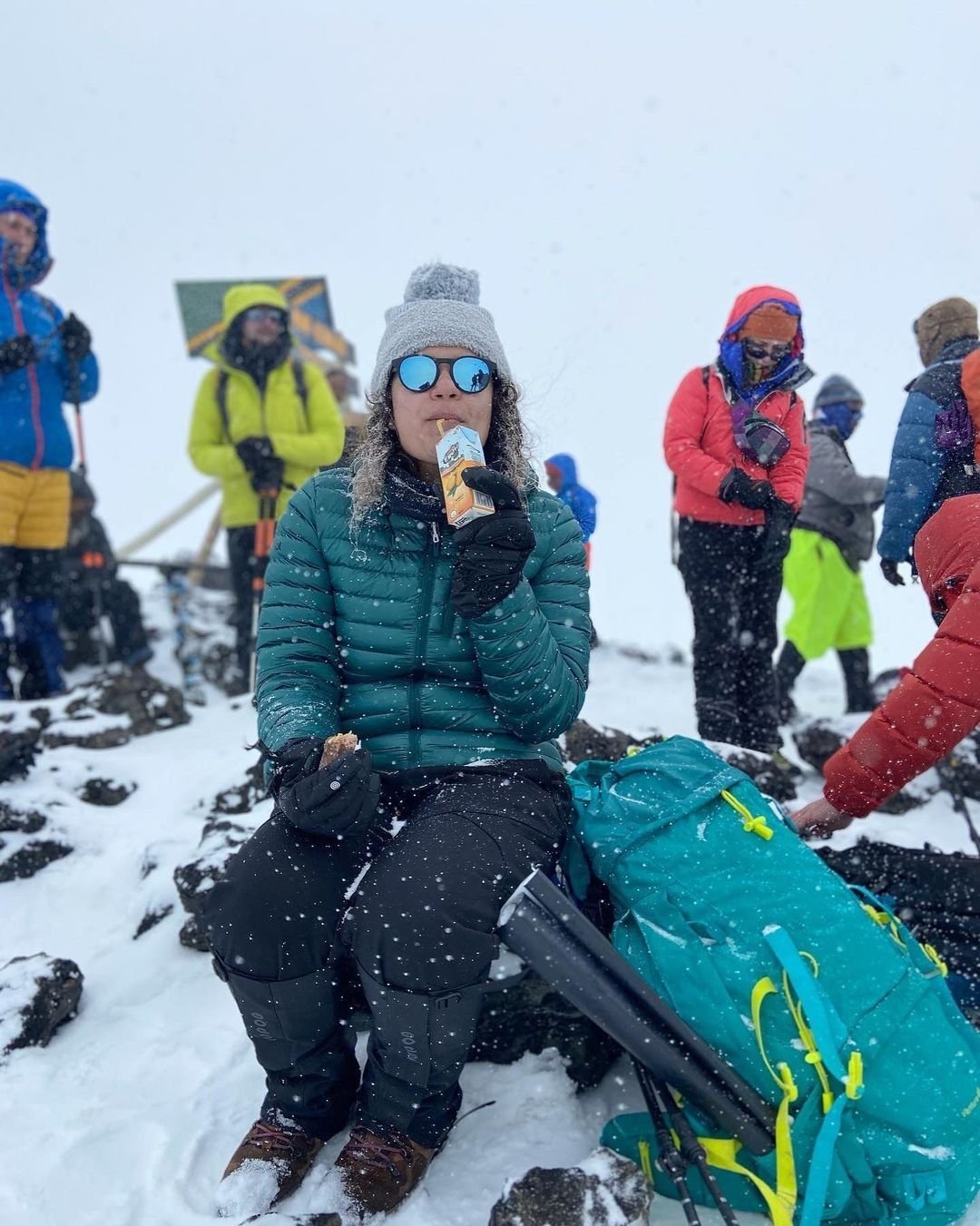
Honestly? Days 1 and 2 can feel quiet — then most solo trekkers report the opposite problem: not wanting to leave. Days are spent talking with guides who have summited hundreds of times, evenings in the mess tent over stories and Swahili lessons, and trail friendships form fast at camps regardless of booking format.
If guaranteed company matters more than anything, choose a group departure in peak season (January–March, June–October) when groups run fullest. If solitude with support sounds better, go private — loneliness is the complaint we almost never hear back.
Best Routes for Solo Trekkers
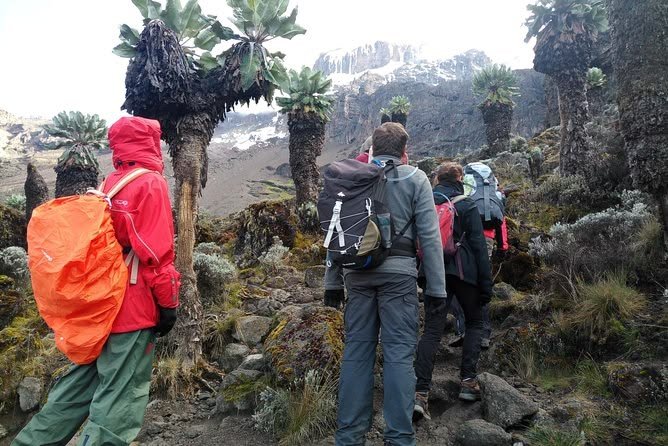
- Machame 7-day: the social solo choice — lively camps, classic scenery, easy to find group departures if you want them.
- Lemosho 8-day: the success-maximizing solo choice — quiet western start, best acclimatization, ideal private.
- Marangu 6-day: the comfort solo choice — hut beds, dining hall company in the evenings, lowest cost entry.
- Northern Circuit 9-day: the immersion choice for solo trekkers with time — remoteness that feels like a personal expedition.
- Rongai 6–7-day: the quiet choice — fewest footprints, drier northern skies.
Group Departures: Dates, Sizes, and Trade-Offs
Scheduled group climbs typically run 6–12 trekkers with fixed start dates, most often on Machame and Lemosho in dry-season months. Advantages: lowest cost, instant companions, fixed logistics. Trade-offs: fixed pace (ask how the operator handles slower walkers before booking — the honest ones have a clear answer), fixed route and duration, and summit-night timetables set for the group, not you.
Red flags in any group offer: no stated maximum group size, no assistant guide mentioned, 5-day "express" itineraries marketed to beginners, and prices far below published park-fee economics — someone is cutting crew pay or safety margins.
What Does Kilipori Safaris Recommend for Solo Trekkers?
If budget allows: go private, 7+ days. The per-person premium buys personal pacing, personal health tracking, free choice of dates and route — the four factors that most influence summits. Lemosho 8-day private is our most recommended solo itinerary; Machame 7-day private is the best-value alternative.
If budget is tight: join a group on a 7-day Machame departure in dry season, and ask us who else is booked before you commit — we will tell you honestly whether the group profile suits you.
Either way: arrive in Moshi 2 nights early, attend the briefing, and tell your guide on Day 1 exactly how you feel. Solo trekkers who communicate summit more.
Plan Your Solo Kilimanjaro Climb With Kilipori Safaris
Tell us your dates, fitness, budget, and whether you want solitude or company — we will quote private and group options side by side with exact figures, so the choice is yours on full information. Machame, Lemosho, Marangu, Rongai, Umbwe, Northern Circuit, private or joining.
WhatsApp Kilipori Safaris: +255 755 287 311
Plan Your Solo Climb | Compare Private vs Group | Start Your Adventure
FAQs About Solo Kilimanjaro Climbs
Can I climb Kilimanjaro completely alone without guides?
No. Park regulations require licensed guides on every trek. "Solo" means one traveler with a full professional crew.
How much more does solo private cost vs a group?
Solo private carries full crew costs alone, typically running well above per-person group rates. Exact figures depend on route and days — request a free side-by-side quote.
Is it safe for a woman to climb Kilimanjaro alone?
Yes. Female guides on request, private accommodation arrangements, staffed camps, and 24-hour office contact. Solo women trek every week of the season.
Will I get lonely on a private solo trek?
Rarely, per trekker feedback. Days fill with guide conversation and trail encounters; evenings bring mess-tent company. Choose group departures if guaranteed companionship matters most.
Which route is best for a first-time solo trekker?
Machame 7-day for sociability and scenery, or Lemosho 8-day for maximum success odds. Marangu 6-day suits budget-conscious solos wanting hut comfort.
Can I join a group as a solo traveler?
Yes — scheduled departures welcome singles, with single-tent supplements where applicable. Ask about current bookings and group size before committing.
Do I need a single supplement?
On private climbs, no supplement concept applies — you simply carry the crew cost. On group climbs, single tents may carry a small supplement; huts are dormitory-style.
What if I am slower than a group?
On private climbs this never arises — the pace is yours. On group climbs, ask the operator's slower-walker policy before booking; reputable operators add assistant guides rather than pressure.
Can solo trekkers propose, celebrate, or customize?
Absolutely — private solo treks are the easiest format to customize: birthday summits, photography goals, rest-day adjustments, safari and Zanzibar combinations.
How far ahead should a solo trekker book?
Private climbs: 1 to 3 months typically suffices, more in peak dry season. Group departures: align with published dates, so book once dates are announced.
What should I tell the operator before booking solo?
Your dates, fitness background, medical notes, dietary needs, accommodation preferences, and whether you want company or solitude. The more we know, the better the match.

KiliPori Safaris Travel Team
A local Tanzania team helping travellers plan wildlife safaris, Kilimanjaro climbs and Zanzibar holidays with clear routing and direct destination support.
Published October 3, 2026. Travel conditions, fees and schedules can change; confirm time-sensitive details before departure.