Explore this guide
Our guides combine current planning research with practical knowledge from arranging safaris, Kilimanjaro climbs and Zanzibar holidays.
What Is It Like to Reach Uhuru Peak? What the Summit Really Looks Like
Reaching Uhuru Peak feels like arriving in a completely different world. At 5,895 metres, the summit of Mount Kilimanjaro is a stark high-altitude landscape of dark volcanic rock, ice, the crater rim and wide-open views above the clouds. The famous Uhuru Peak sign stands on the summit, while the surrounding Kibo landscape reveals glaciers, crater formations and, when the weather is clear, an enormous horizon stretching across Tanzania.
The most memorable part is often the changing light. Most climbers reach the summit around sunrise, so the dark volcanic landscape gradually becomes illuminated by the first morning light, creating views across the crater, glaciers, Mawenzi and the plains far below.
What Does Uhuru Peak Actually Look Like?
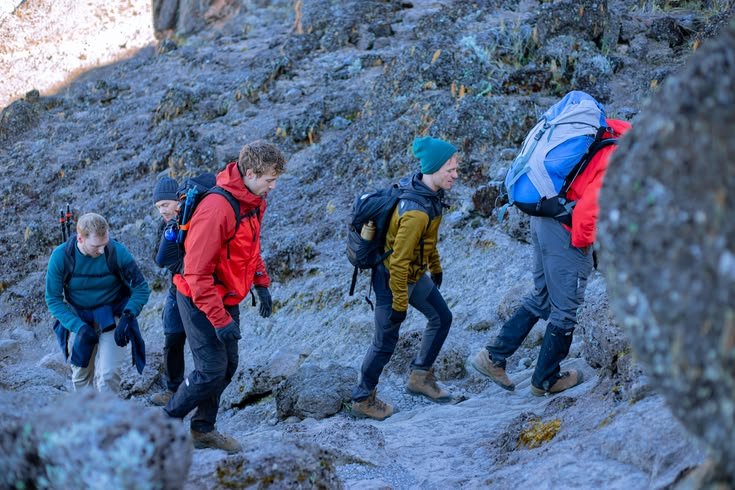
Uhuru Peak does not look like a conventional mountain summit covered in thick snow. Instead, the landscape around the top of Kilimanjaro is a high-altitude volcanic environment, with rocky ground, volcanic ash, ice and the broad rim of Kibo's crater.
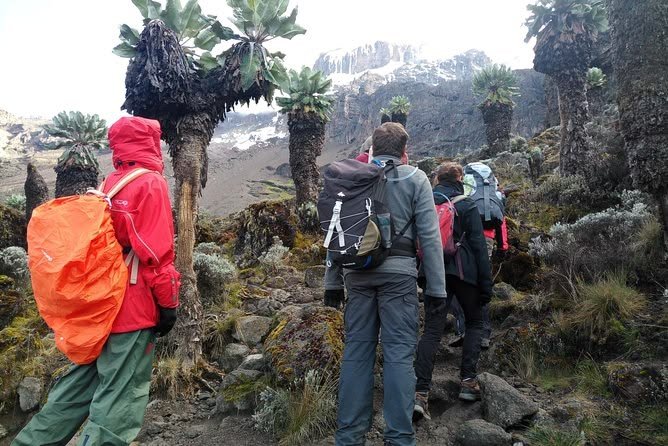
The summit area feels open and spacious, with very little vegetation. The familiar forests, giant plants and green landscapes from the lower parts of Kilimanjaro have disappeared completely by the time you reach the summit.
Instead, you see:
-
Dark volcanic rocks
-
Fine volcanic scree
-
Ice and remaining glaciers
-
The crater rim
-
The summit sign
-
Vast open sky
-
Clouds far below
-
Mawenzi Peak in the distance when visibility is good
-
The surrounding volcanic landscape of Kibo
Kilimanjaro National Park describes the summit attractions as including volcanic summits, glaciers, high-altitude landscapes, the Kibo crater and ash pit, and views toward Mawenzi.
What Does the Uhuru Peak Sign Look Like?
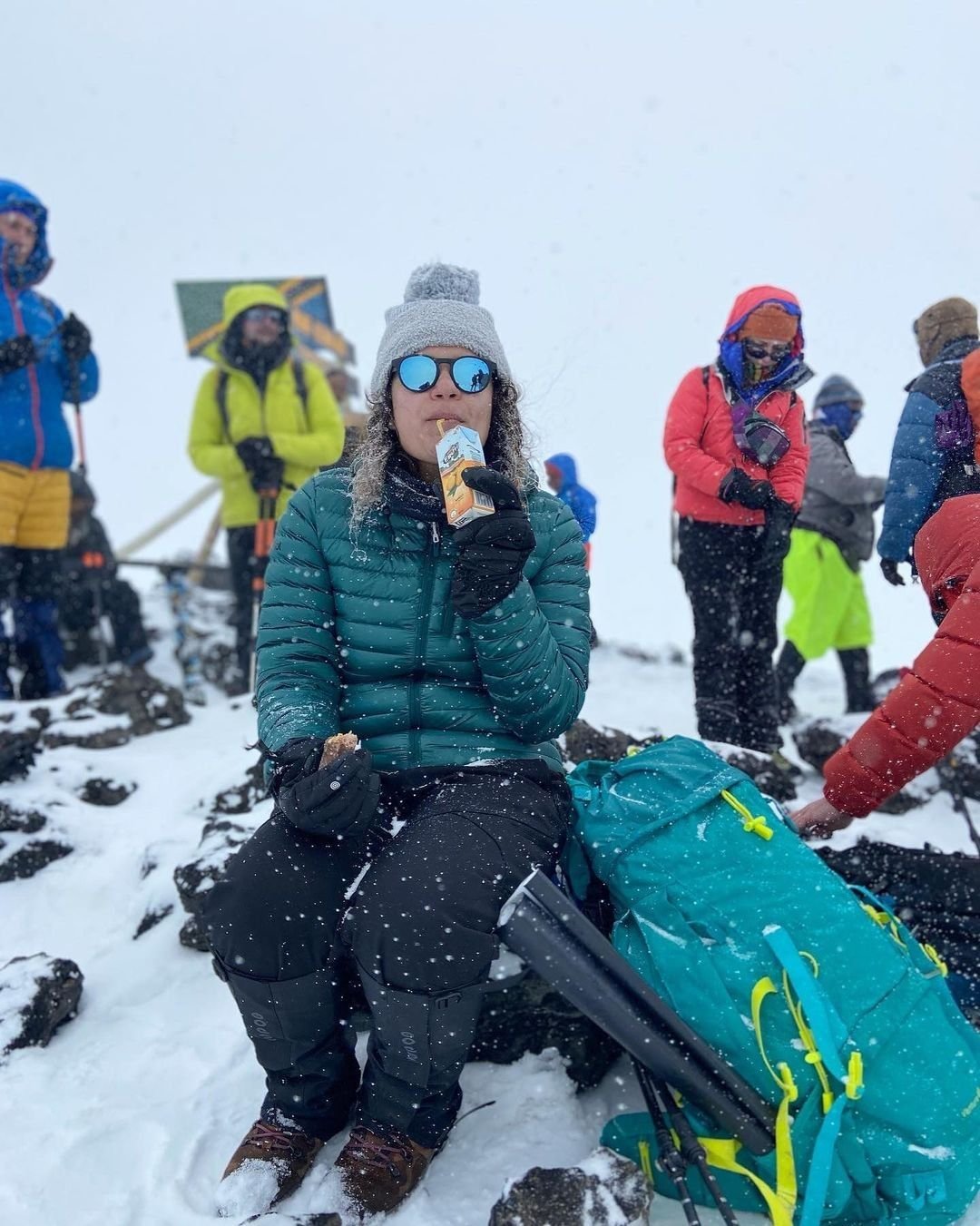
One of the first things most climbers notice is the Uhuru Peak summit sign.
The sign marks the highest point of Mount Kilimanjaro at 5,895 metres and is the place where many climbers stop for their summit photographs.
After walking through the darkness for several hours, seeing the summit sign can make the achievement feel real.
This is the photograph many climbers imagine before beginning their Kilimanjaro journey: standing beside the Uhuru Peak sign with the summit landscape behind them.
What Can You See Around Uhuru Peak?
The view around Uhuru Peak changes depending on weather and visibility, but the summit provides a remarkable perspective across the upper slopes of Kibo.
Looking around the summit area, you can see the crater landscape, ice formations and the broad volcanic summit. Looking outward, the mountain drops away toward the lower slopes and the Tanzanian landscape.
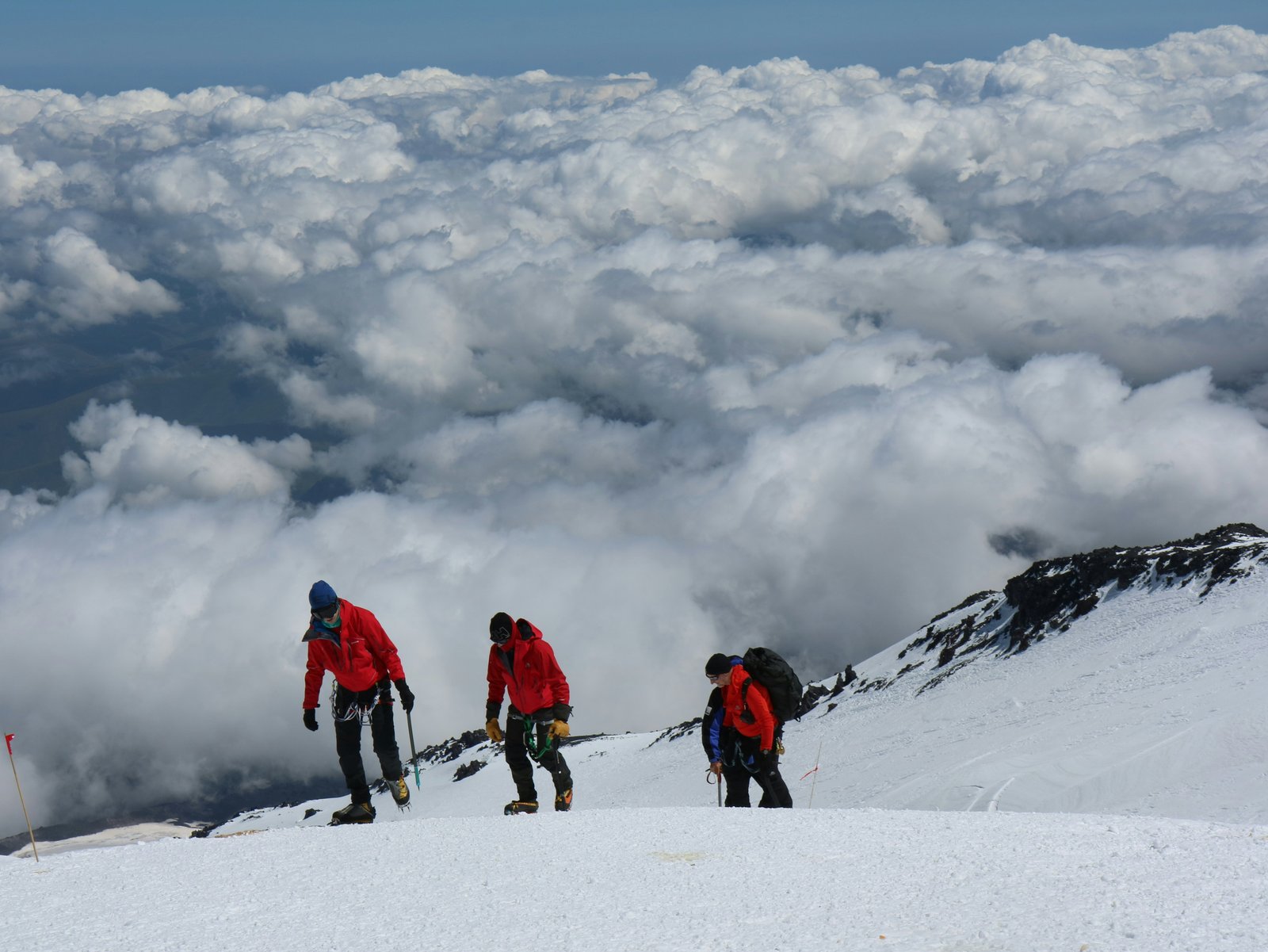
On a clear morning, clouds can appear far below the summit, creating the impression that you are standing above a vast white sea.
This combination of dark volcanic rock, white ice, blue sky and clouds below is one of the features that makes the summit visually different from the rest of the mountain.
What Does the Sunrise Look Like From Uhuru Peak?
Sunrise is one of the most beautiful parts of reaching Uhuru Peak.
After beginning the summit climb during the night, the sky slowly changes from darkness to deep blue. The horizon then begins to brighten, and the first sunlight reaches the summit landscape.
The light can illuminate the crater rim and remaining ice, while the clouds below begin to take on warmer colours.
Kilimanjaro National Park specifically highlights Uhuru Peak for its sunrises above a sea of cloud.
The exact colours and visibility depend on the weather, but the transition from darkness to daylight is one of the defining visual experiences of summit morning.
Can You See Glaciers From Uhuru Peak?
Yes. Ice and glaciers remain an important part of the summit landscape, although Kilimanjaro's glaciers have significantly reduced over time.
Depending on the route and conditions, climbers can see sections of the summit ice fields and glaciers around the crater rim and upper slopes.
The Southern Ice Field and its remaining glaciers are particularly visible from the southern summit approaches, while the Northern Ice Field occupies part of the northern summit plateau.
The sight of ice at the summit can feel surprising because Kilimanjaro rises near the equator.
What Does the Kibo Crater Look Like?
Uhuru Peak sits on the summit area of Kibo, one of Kilimanjaro's three volcanic cones.
The crater landscape gives the summit a distinctly volcanic appearance. Instead of seeing only a pointed mountain top, you encounter a broad high-altitude volcanic environment with crater formations and the surrounding rim.
Kilimanjaro National Park identifies the Kibo Crater and Ash Pit as one of the mountain's major natural attractions.
The crater landscape becomes especially impressive when morning light reaches the summit.
Can You See Mawenzi Peak From Uhuru Peak?
When visibility is good, Mawenzi Peak can be seen from the summit area.
Mawenzi is Kilimanjaro's second-highest volcanic cone and has a very different appearance from Kibo. Its sharp ridges and rugged volcanic peaks create a striking contrast with the broad summit landscape around Uhuru Peak.
Kilimanjaro National Park describes Mawenzi as a rugged group of spires and ridgelines that provides striking views from the mountain.
Seeing Mawenzi from the summit gives you another perspective on how large the Kilimanjaro volcanic massif really is.
What Does the Landscape Below Look Like?
From the summit, the landscape below can look incredibly distant.
On a clear morning, you may see clouds covering parts of the lower mountain while the plains of Tanzania extend toward the horizon.
The exact view depends heavily on cloud cover. Some mornings provide broad visibility, while others may have clouds or mist that limit what you can see.
This is why summit photographs can look very different from one climb to another.
Does Uhuru Peak Look Snowy?
Sometimes, but not necessarily in the way many first-time visitors imagine.
Kilimanjaro's summit can have ice and snow, but the amount varies according to current conditions. The summit is also characterised by volcanic rock, ash and exposed ground.
The remaining glaciers and ice fields are among the most distinctive features of the upper mountain, but the summit is not permanently covered by a thick blanket of snow.
Current Kilimanjaro National Park information identifies both volcanic summit landscapes and remaining glaciers as key features of the mountain.
What Does It Feel Like to Stand at 5,895 Metres?
Standing at Uhuru Peak feels very different from standing at the lower elevations of Kilimanjaro.
The air is thin, the environment is cold and the landscape is almost completely free of vegetation.
You have just spent several hours walking through the darkness, so reaching the summit can bring a strong sense of achievement.
For many climbers, the most memorable moment is simply stopping beside the summit sign, looking around and realising that they are standing at the highest point of Africa.
Is Uhuru Peak Always Clear?
No. The view from Uhuru Peak depends on the weather conditions on summit morning.
A clear morning can reveal the crater, glaciers, Mawenzi and distant landscapes.
Cloud, wind or mist can reduce visibility and create a completely different atmosphere.
This is important when planning your expectations: the mountain controls the view. Your guide can choose an appropriate pace and summit schedule, but nobody can guarantee a completely cloud-free summit.
How Cold Is It at Uhuru Peak?
Uhuru Peak is cold, especially around sunrise.
Pre-dawn summit temperatures commonly fall below freezing, with some current Kilimanjaro sources reporting typical ranges around -7°C to -20°C depending on conditions, while wind can make it feel colder.
This is why summit clothing should include:
-
Thermal base layers
-
Warm hiking trousers
-
Fleece or insulating mid-layer
-
Insulated/down jacket
-
Windproof outer layer
-
Warm gloves or mittens
-
Warm hat
-
Buff or neck gaiter
-
Warm hiking socks
-
Suitable hiking boots
Once the sun rises, the conditions can feel more comfortable, but the summit remains a cold environment.
What Time Do You Usually Reach Uhuru Peak?
Most climbers begin the final summit ascent around midnight and aim to reach the crater rim and Uhuru Peak around sunrise.
A typical summit morning may look like:
Around midnight: Leave high camp
Early morning: Continue slowly toward the crater rim
Around sunrise: Reach Stella Point or continue toward Uhuru Peak
Morning: Walk along the crater rim toward Uhuru Peak
Around 6:00–8:00 AM: Many climbers reach the summit, depending on pace and conditions
The exact timing varies between routes and climbers.
What Does the Final Walk to Uhuru Peak Look Like?
After reaching the crater rim, the landscape changes again.
The steep summit ascent gives way to a more gradual walk along the crater rim toward Uhuru Peak on the southern approach.
You can see the upper crater landscape, ice formations and the surrounding summit terrain as you continue toward the summit sign.
The final section can feel psychologically different because the destination is now clearly visible and the landscape opens around you.
Stella Point sits at approximately 5,756 metres, with the final route continuing along the crater rim toward Uhuru Peak at 5,895 metres.
What Is the Sky Like at Uhuru Peak?
The sky at the summit can appear remarkably deep and clear, particularly on a clear morning.
Because you are far above the lower cloud layers, you may see clouds below you rather than above you.
At night, before sunrise, the summit can also provide spectacular views of the stars when conditions are clear.
Then, as morning arrives, the sky gradually changes from dark blue to brighter shades before the sun appears above the horizon.
What Is the Most Beautiful Part of Uhuru Peak?
For many climbers, it is the combination of the sunrise, summit sign, crater, ice and clouds below that makes Uhuru Peak so special.
There is not just one view.
You can turn toward the crater and see the volcanic landscape.
You can look toward the glaciers and see the remaining ice.
You can look outward and see clouds and distant landscapes.
Then the sunlight changes the entire scene within minutes.
That changing landscape is one reason summit morning feels so different from simply looking at a photograph of Kilimanjaro.
How Should You Prepare to Enjoy the Summit View?
The best way to enjoy Uhuru Peak is to arrive prepared.
Before summit night:
-
Prepare your warmest clothing.
-
Charge your camera and phone.
-
Carry spare batteries or a power bank.
-
Keep your gloves and hat easily accessible.
-
Prepare snacks and water.
-
Rest during the afternoon and evening.
-
Follow your guide's recommended pace.
-
Keep your summit backpack light.
A camera is particularly useful because the landscape can change dramatically as daylight appears.
Can You Take Photos at Uhuru Peak?
Yes. Photography is one of the most popular things to do at the summit.
Most climbers take photographs beside the Uhuru Peak sign and capture the surrounding landscape.
Useful summit photographs include:
-
The Uhuru Peak sign
-
Sunrise
-
The crater
-
Glaciers and ice
-
Mawenzi Peak
-
Clouds below the summit
-
Your climbing group
-
The summit landscape
Cold temperatures can reduce battery performance, so keeping spare batteries warm inside an inner pocket can be useful.
How Long Should You Stay at Uhuru Peak?
Most climbers do not stay at the summit for a long period.
The summit is cold and the descent is still ahead, so your guide will normally encourage you to enjoy the view, take photographs and celebrate before beginning the descent.
A short, well-organised summit stop gives you time to experience the moment without unnecessarily extending your time in the cold.
What Happens After You Leave Uhuru Peak?
After enjoying the summit, you begin the descent.
The landscape looks different in daylight because you can now see the terrain that was hidden in darkness during the ascent.
You can appreciate the volcanic slopes, crater rim and surrounding landscape much more clearly.
Depending on your route, you descend toward the high camp and then continue to a lower camp.
The summit experience therefore does not end when you leave Uhuru Peak. The descent provides another opportunity to see the mountain in daylight.
Is Uhuru Peak Worth the Climb?
For climbers who want to reach the highest point of Africa, Uhuru Peak is the defining goal of the Kilimanjaro journey.
The attraction is not only the summit height.
It is the transformation of the landscape throughout the climb—from rainforest and moorland to alpine desert and finally the cold volcanic summit environment.
Standing at Uhuru Peak allows you to see that entire journey from the highest point.
How KiliPori Safaris Helps You Experience Uhuru Peak
At KiliPori Safaris, we prepare your climb around the complete summit experience rather than only the final photograph.
We help with:
-
Choosing a suitable Kilimanjaro route
-
Selecting an appropriate number of climbing days
-
Acclimatization planning
-
Summit-night preparation
-
Clothing and equipment guidance
-
Professional mountain guides
-
Summit photography opportunities
-
Pace management
-
Descent planning
Our goal is to help you reach Uhuru Peak prepared enough to appreciate the landscape, take your photographs and enjoy the achievement.
KiliPori Safaris Recommendation
If your dream is to see what Africa's highest point actually looks like, give yourself enough time on Kilimanjaro to arrive at Uhuru Peak prepared and comfortable.
The summit is not simply a sign at 5,895 metres. It is a high volcanic landscape surrounded by crater formations, ice, rocks, open sky and, when conditions allow, clouds and distant views across Tanzania.
The most memorable moment may be standing beside the Uhuru Peak sign, but look beyond the sign. Turn toward the crater. Look at the remaining ice. Watch the sunrise. Look down at the clouds. Then look toward Mawenzi.
That is what reaching Uhuru Peak really looks like.
Experience Uhuru Peak With KiliPori Safaris
Ready to see the summit of Mount Kilimanjaro for yourself?
KiliPori Safaris can organize your Kilimanjaro climb with professional mountain guides, route planning, accommodation, meals and summit support.
WhatsApp KiliPori Safaris: +255 755 287 311
Plan Your Kilimanjaro Climb | Choose Your Route | Request Your Custom Itinerary
FAQs About What Uhuru Peak Looks Like
What does Uhuru Peak look like?
Uhuru Peak is a high-altitude volcanic landscape with dark rock, volcanic scree, ice, crater formations and remaining glaciers. The summit is marked by the famous Uhuru Peak sign.
Is Uhuru Peak covered in snow?
Not always. Snow and ice can be present, but the summit also has extensive exposed volcanic rock and ash. The amount of snow and ice varies with conditions.
Can you see glaciers from Uhuru Peak?
Yes. Remaining summit glaciers and ice fields can be seen around the upper slopes and crater rim, depending on the route and conditions.
Can you see the crater from Uhuru Peak?
Yes. Uhuru Peak is located on the summit area of Kibo, and the crater landscape is one of the defining features of the summit environment.
Can you see Mawenzi from Uhuru Peak?
Mawenzi can be visible from the summit when weather and visibility are favourable.
Can you see clouds below Uhuru Peak?
Yes. On clear days, clouds can lie below the summit, creating the famous “sea of clouds” effect around Kilimanjaro.
What colour is the sunrise at Uhuru Peak?
The colours vary with weather and atmospheric conditions, but the sky can change from deep blue and purple tones to orange and golden light as the sun rises.
How cold is Uhuru Peak?
The summit is normally below freezing around the time most climbers arrive, with temperatures varying according to weather and wind. Current sources give approximate pre-dawn ranges of -7°C to -20°C.
What is the most famous photo at Uhuru Peak?
The most recognisable summit photograph is usually taken beside the Uhuru Peak 5,895-metre summit sign, often with the surrounding summit landscape in the background.
How long do you stay at Uhuru Peak?
Most climbers spend a relatively short time at the summit to take photographs, enjoy the views and celebrate before starting the descent.
Is Uhuru Peak beautiful?
The summit has a very different beauty from the lower parts of Kilimanjaro. Instead of forests and greenery, you experience volcanic rock, ice, crater landscapes, open sky and views above the clouds.
What makes Uhuru Peak special?
Uhuru Peak is the highest point of Mount Kilimanjaro at 5,895 metres and the highest point in Africa. Its summit landscape, sunrise and views make it the defining experience of a Kilimanjaro climb.

KiliPori Safaris Travel Team
A local Tanzania team helping travellers plan wildlife safaris, Kilimanjaro climbs and Zanzibar holidays with clear routing and direct destination support.
Published October 3, 2026 · Last updated October 31, 2026. Travel conditions, fees and schedules can change; confirm time-sensitive details before departure.