Explore this guide
Our guides combine current planning research with practical knowledge from arranging safaris, Kilimanjaro climbs and Zanzibar holidays.
A Great Migration map shows the wildebeest moving in a broad annual circuit from the Southern Serengeti and Ndutu to the Western Corridor, Northern Serengeti and Maasai Mara before returning south. The map below shows typical monthly locations, but it is not a live herd tracker: rainfall, fresh grazing and water determine the actual movement.
Great Migration Map at a Glance
This is a simplified route. The herds do not travel as one group or remain inside fixed regional boundaries.
Where Are the Wildebeest Each Month?
| Month | Typical wildebeest location | Suitable safari base | What the herds are usually doing |
|---|---|---|---|
| January | Southern Serengeti and Ndutu | Ndutu or nearby southern plains | Grazing on fresh short grass and gathering before the main calving period |
| February | Ndutu and Southern Serengeti | Ndutu | Calving and remaining spread across the short-grass plains |
| March | Southern and southeastern Serengeti | Ndutu or southern Serengeti | Calves gain strength while the herds follow remaining grass and water |
| April | Southern to Central Serengeti | Southern Serengeti, Moru or Seronera | Beginning the northward movement, often in scattered groups |
| May | Central Serengeti towards the Western Corridor | Seronera or western Serengeti | Forming longer columns while travelling northwest |
| June | Western Corridor and Grumeti area | Western Serengeti | Gathering around the western migration route; some Grumeti River crossings may occur |
| July | Western and Northern Serengeti | Western Serengeti or Kogatende | Moving north towards the Mara River; early crossings are possible |
| August | Northern Serengeti and Maasai Mara | Kogatende or Lamai | Spreading along both sides of the Mara River, with possible crossings |
| September | Northern Serengeti and Maasai Mara | Kogatende or Lamai | Grazing in the northern ecosystem and sometimes crossing the river in either direction |
| October | Northern and northeastern Serengeti | Kogatende, Lamai or Lobo | Remaining in the north or beginning the southward return |
| November | Eastern and Central Serengeti | Lobo, eastern Serengeti or Seronera | Following short rains south through the eastern and central areas |
| December | Central to Southern Serengeti | Seronera, southern Serengeti or Ndutu | Returning towards the short-grass plains for the next calving period |
UNESCO describes the migration as an annual circular movement across Tanzania and Kenya in search of pasture and water. The wider Serengeti ecosystem includes Serengeti National Park, the Ngorongoro Conservation Area, adjoining reserves and Kenya’s Maasai Mara. UNESCO’s Serengeti profile identifies the annual movement as a defining ecological process of the region.
January to March: Southern Serengeti and Ndutu
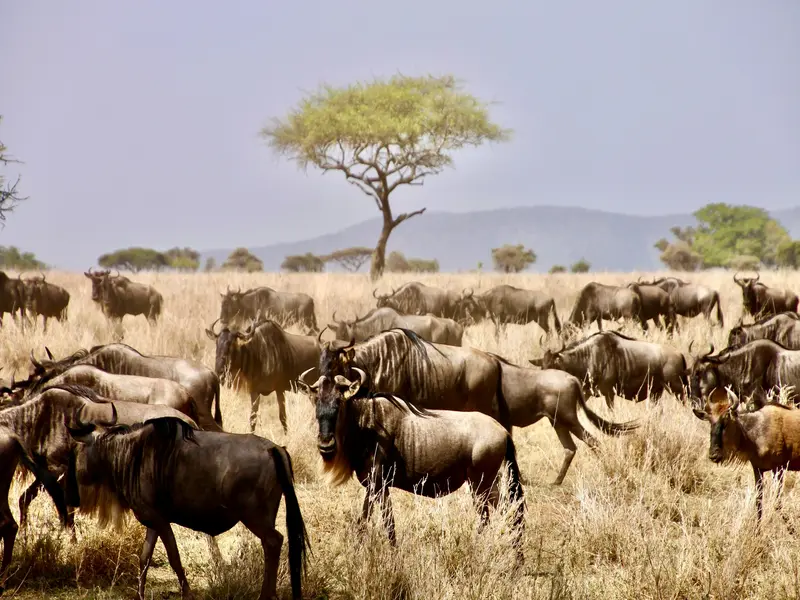
During the early months of the year, the herds usually spread across the short-grass plains around Ndutu and Southern Serengeti. Calving is generally concentrated within this period, particularly around February, although the timing varies.
Ndutu is not a single fenced location. The wider migration area extends across parts of the Ngorongoro Conservation Area and Southern Serengeti, so camp position affects daily access to the herds.
Travellers should normally allow at least three nights in the southern migration area. Rain can make some tracks muddy, but the green landscape, newborn calves and predator activity make this period suitable for wildlife photography and repeat game drives.
April to June: Central Serengeti and Western Corridor
As the southern plains begin drying, the wildebeest generally move through Moru, Seronera and neighbouring areas before turning towards the Western Corridor. The herds can spread widely during April and May because rain may produce suitable grazing in several directions.
By June, large groups are often found around Western Serengeti and the Grumeti River system. Grumeti crossings are possible, but they are smaller, more dispersed and less predictable than the crossings usually associated with the Mara River.
A combination of Central and Western Serengeti is safer than relying on only one camp during transitional weeks. It gives the guide more flexibility when recent herd reports show movement between regions.
July to October: Northern Serengeti and the Mara River
From July, many herds usually move into Northern Serengeti around Kogatende and Lamai. Some continue into Kenya’s Maasai Mara, while other groups remain on the Tanzanian side.
Mara River crossings can occur from July through October, but there is no fixed crossing schedule. Wildebeest may approach the river, wait for several days, move away or cross back in the opposite direction.
Travellers specifically interested in crossings should stay at least three or four nights in Northern Serengeti. Staying only in Central Serengeti creates long driving requirements and reduces the time available near the river.
October to December: The Return South
The southward movement usually begins when seasonal rain produces fresh grazing in northeastern, eastern and central Serengeti. Some groups travel through Lobo, while others move through different sections of the eastern plains.
By December, many wildebeest are normally approaching Southern Serengeti and Ndutu. Rainfall can delay, accelerate or temporarily reverse this movement.
For a broader explanation of what controls these movements, see how the Great Wildebeest Migration works.
How to Use a Great Migration Map
Use the map to select a general Serengeti region, not a particular riverbank or exact herd position. Confirm the camp’s actual location before booking because properties marketed as “Serengeti camps” can be many hours apart.
A map is most reliable when used alongside:
- Recent rainfall patterns
- Reports from guides and camps
- Camp opening dates
- Road conditions
- The number of nights available
- Whether the safari is drive-in or fly-in
For a comparison of seasonal experiences rather than locations alone, use KiliPori’s Great Migration calendar and best-time guide.
Drive-In or Fly-In by Migration Area
| Target area | Drive-in consideration | Fly-in consideration |
|---|---|---|
| Ndutu and Southern Serengeti | Works well with Ngorongoro and Central Serengeti | Useful for shorter calving-season trips |
| Central Serengeti | Practical on most Northern Circuit itineraries | Seronera provides convenient air access |
| Western Corridor | Requires careful routing and suitable overnight stops | Can reduce overland travel when regional airstrips are operating |
| Northern Serengeti | Long overland journey from Arusha, Moshi or Ngorongoro | Usually more practical for short Mara River-focused safaris |
Flight schedules, baggage limits, airstrip operations and road access should be confirmed for the intended travel dates.
Common Map-Reading Mistakes
Treating the Map as Live Tracking
A month-by-month map shows the usual pattern, not the present herd location. Wildebeest can change direction following local rainfall.
Assuming Every Herd Is in the Same Place
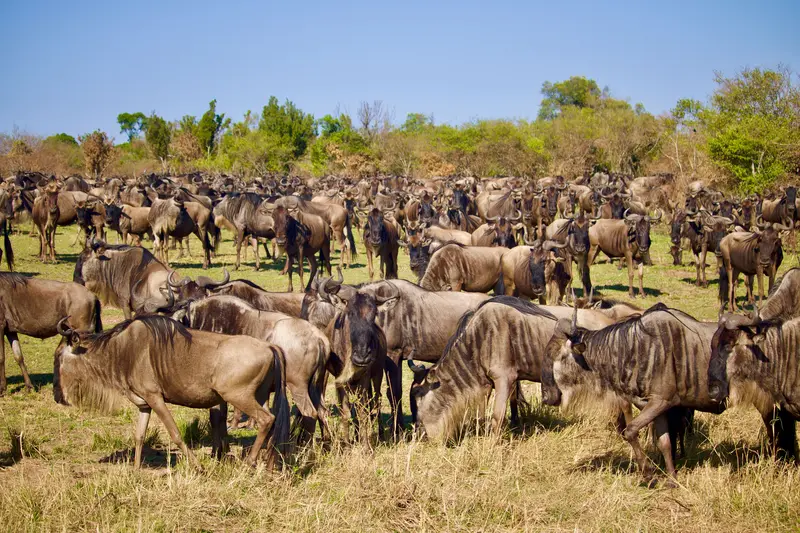
The migration consists of many groups spread across a large ecosystem. Herds may be present in Tanzania and Kenya during the same month.
Booking Central Serengeti for Every Season
Seronera offers dependable resident wildlife, but it is not always the closest base for Ndutu calving or Northern Serengeti river crossings.
Expecting a Guaranteed Crossing
A map can show the correct river region, but it cannot predict the day, time or crossing point. River crossings are natural events and cannot be guaranteed.
KiliPori Local Planning Advice
First choose the migration stage you want to see, then select the Serengeti region and camp. For January–March, prioritise Ndutu and the southern plains; for June, consider Central and Western Serengeti; for July–October, stay in Northern Serengeti near Kogatende or Lamai.
Allow at least three nights in the main migration area and avoid changing camps every night. KiliPori Safaris can use seasonal patterns and recent local reports to plan game-drive directions, but the itinerary should remain flexible because rainfall controls the herds.
Frequently Asked Questions
Is this Great Migration map accurate every year?
It is accurate as a general planning pattern, but not as a live location report. Rainfall, grazing and water availability can shift the herds earlier or later.
Where are the wildebeest in February?
They are usually spread across Ndutu and the Southern Serengeti short-grass plains. This is commonly the main calving period.
Where are the wildebeest in August?
Many herds are normally in Northern Serengeti and the Maasai Mara. Mara River crossings are possible, but their location and timing cannot be guaranteed.
Do all wildebeest enter Kenya?
No. Some herds enter the Maasai Mara, while others may remain in Northern Serengeti or move between different sides of the Mara River.
KiliPori Safaris can help you match your travel month with the correct Serengeti area, camp location and drive-in or fly-in route.

KiliPori Safaris Travel Team
A local Tanzania team helping travellers plan wildlife safaris, Kilimanjaro climbs and Zanzibar holidays with clear routing and direct destination support.
Published August 14, 2026. Travel conditions, fees and schedules can change; confirm time-sensitive details before departure.