Explore this guide
Our guides combine current planning research with practical knowledge from arranging safaris, Kilimanjaro climbs and Zanzibar holidays.
A successful Ndutu calving season photography safari requires at least 4 nights, a private vehicle, a guide who understands photography and accommodation close to the active wildlife areas. Late January through February generally provides the strongest opportunities for newborn wildebeest, large herds, cheetahs, lions and hyenas. Carry 2 camera bodies where possible, a telephoto zoom, a medium-range lens, spare batteries and a bean bag.
Why Is Ndutu Good for Wildlife Photography?
Ndutu combines open short-grass plains, acacia woodland, seasonal lakes, marshes and scattered kopjes. This range of habitats supports large migratory herds, resident wildlife and several predator species.
The open terrain creates opportunities to photograph:
- Large wildebeest and zebra herds
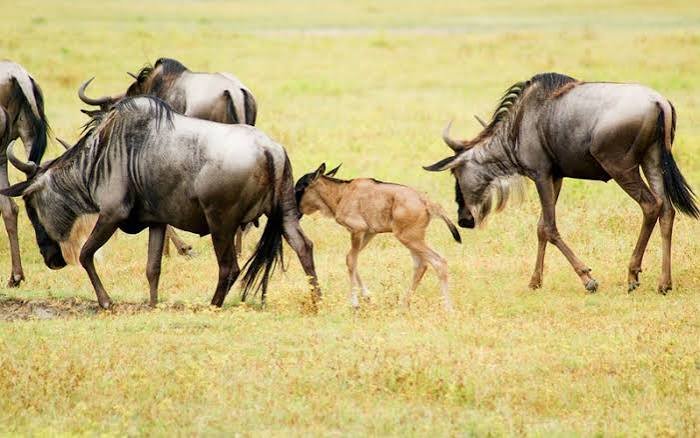
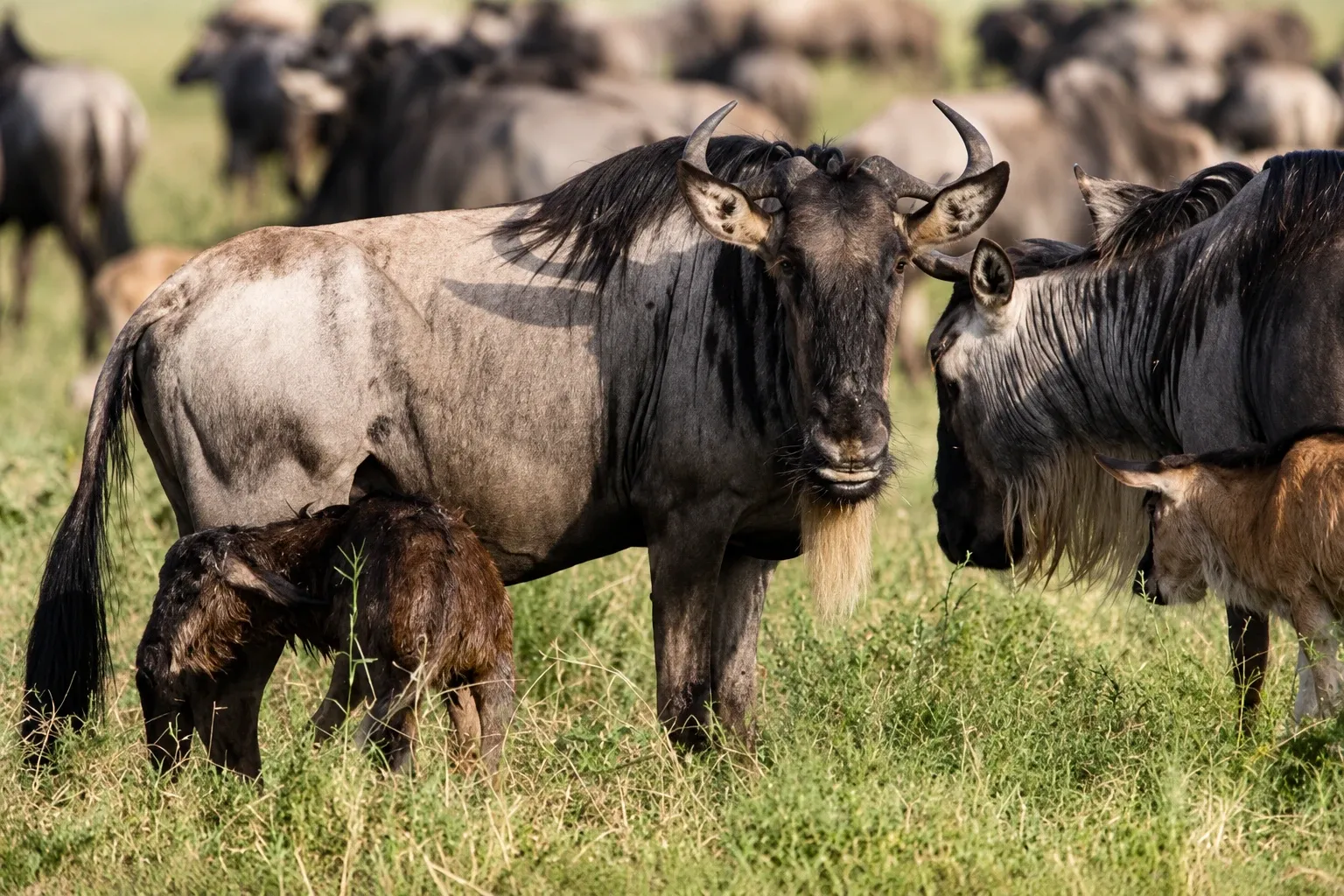
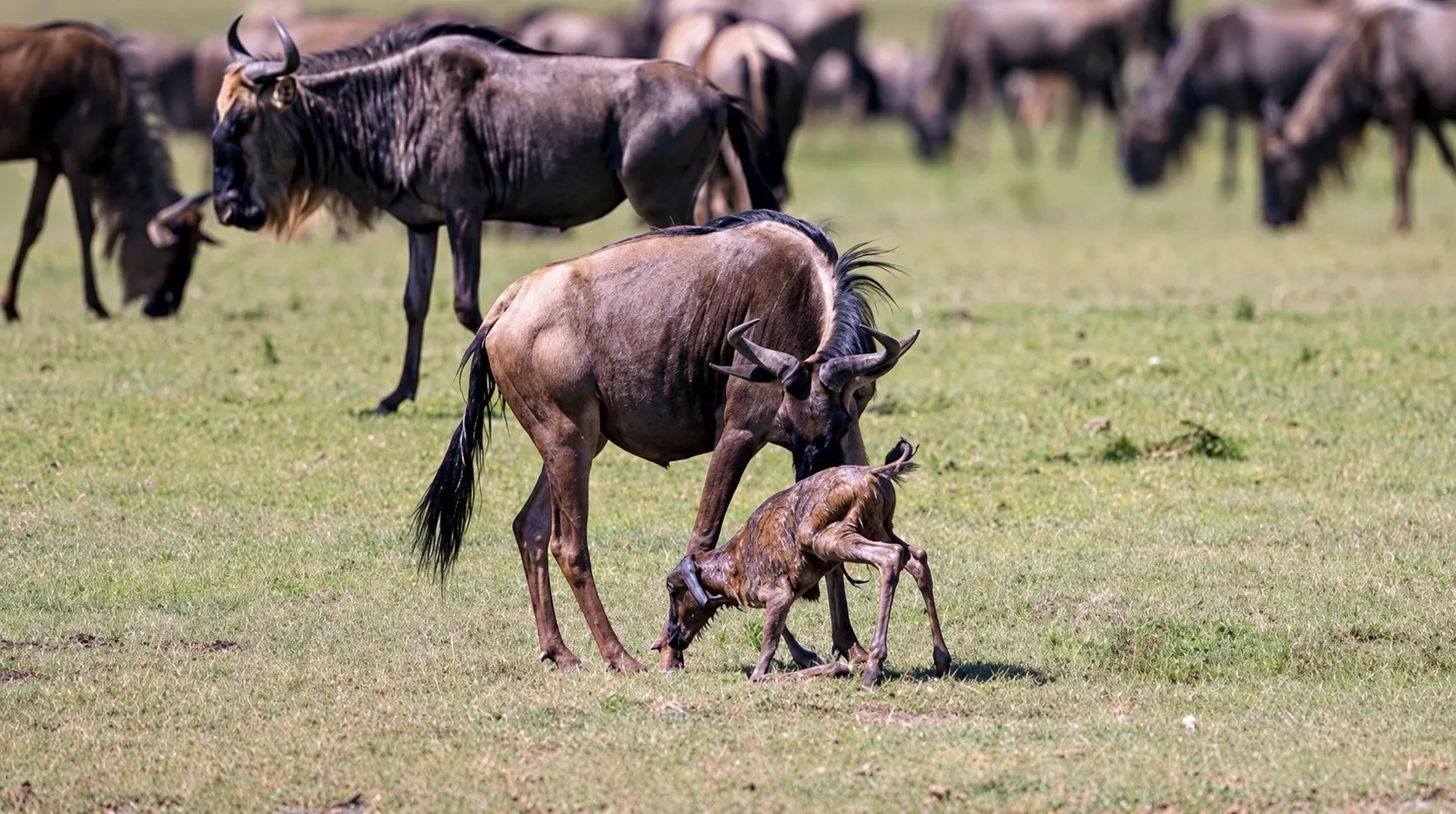
- Newborn wildebeest calves
- Mothers and calves interacting
- Cheetahs scanning or hunting
- Lions resting or moving across the plains
- Spotted hyenas and jackals
- Zebras and gazelles
- Elephants and giraffes in woodland
- Birds of prey and vultures
- Flamingos when lake conditions are suitable
- Storm clouds, rain shafts and open landscapes
- Dust, silhouettes and environmental portraits
The short grass often provides a cleaner view of animals than taller grassland. However, the same openness can produce harsh midday light, heat distortion and distant subjects, so timing and positioning remain important.
Where Is the Ndutu Photography Area?
Ndutu lies at the meeting point of 2 protected areas:
- The Ngorongoro Conservation Area, containing Lake Ndutu, Lake Masek and much of the traditional Ndutu safari area
- The Southern Serengeti, inside Serengeti National Park immediately north and west of the conservation-area boundary
Animals move freely between these protected areas. Wildebeest do not recognize the administrative boundary, and their daily position depends on rainfall, water and grazing.
Camp location affects how quickly photographers can reach productive areas each morning. Read our comparison of Ndutu camps inside vs outside the Ngorongoro Conservation Area when choosing accommodation.
When Is the Best Time for an Ndutu Photography Safari?
The wider Southern Serengeti migration season usually extends from December to March or early April. The most concentrated calving generally takes place from late January through February.
| Period | Photographic opportunities | Possible limitations |
|---|---|---|
| December | Herd arrivals, green landscapes and storm light | Herd locations can be difficult to predict |
| January | Pregnant wildebeest, increasing births and green plains | Calving may not yet have reached its peak |
| February | Newborn calves, large herds and strong predator activity | Popular camps and wildlife sightings can be busy |
| March | Older calves, herd movement and dramatic skies | Herds may begin moving away from central Ndutu |
| April | Green landscapes, rain and fewer vehicles | Some seasonal camps close or relocate |
For newborn calves and predator-prey behaviour, February is generally the strongest choice. January may provide greener backgrounds and fewer visitors, while March can produce active herds and dramatic weather.
These are broad patterns rather than guarantees. Rainfall controls the location and movement of the migration.
How Many Nights Do Photographers Need in Ndutu?
Wildlife photographers should plan at least 4 nights in Ndutu, providing 3 full days for photography. Five or 6 nights are better for specialist photographers who want time to observe behaviour rather than continually search for new subjects.
| Length of stay | Suitability |
|---|---|
| 2 nights | Too short for a dedicated photography safari |
| 3 nights | Reasonable minimum when total travel time is limited |
| 4 nights | Recommended for most photographers |
| 5–6 nights | Strong choice for behavioural and predator photography |
| 7 nights or more | Suitable for specialist projects and slower observation |
A longer stay provides flexibility when:
- The herds are spread across a wide area
- Rain affects road access
- Predator activity is quiet
- A promising subject requires several hours of observation
- Light or weather conditions are temporarily poor
- You want to revisit known territories
What Can You Photograph During the Calving Season?
Wildebeest calves
The main subjects include newborn calves, nursing behaviour, mothers locating their young and calves running with the herd.
Watching an actual birth is possible but uncommon. Photographers should not expect or pursue extremely close access to a female that is giving birth.
Large herds
Wide-angle and medium telephoto lenses can show the scale of the migration better than close portraits. Look for:
- Layers of animals across the plains
- Herds beneath storm clouds
- Repeating patterns
- Dust raised by movement
- Zebras mixed among wildebeest
- Small calves surrounded by adults
Cheetahs
The open Ndutu plains provide suitable cheetah habitat. Photographic opportunities may include:
- Cheetahs using termite mounds
- Mothers with cubs
- Territorial males
- Animals scanning the plains
- Resting, walking or grooming
- Hunting preparation and occasional chases
A chase or successful hunt cannot be guaranteed. Much of cheetah photography involves patient observation while the animal rests or watches prey.
Lions
Lions may be photographed on open plains, near woodland edges or around kopjes. Early morning can provide opportunities to see lions moving before temperatures rise.
Possible subjects include:
- Pride interaction
- Cubs playing
- Adults greeting or grooming
- Lions watching herds
- Animals resting on raised ground
- Backlit manes
- Silhouettes at sunrise or sunset
Spotted hyenas
Spotted hyenas are active hunters as well as scavengers. They can be photographed:
- Moving across the plains
- Interacting within a clan
- Hunting or feeding
- Resting near dens
- Competing with other predators
- Returning from nighttime activity
Jackals and smaller predators
Black-backed jackals, golden jackals, bat-eared foxes, servals and caracals may also be encountered. Caracals and servals are less predictable and should be considered fortunate sightings.
Birds
Ndutu is also productive for bird photography. Possible subjects include:
- Secretary birds
- Kori bustards
- Crowned cranes
- Ostriches
- Vultures
- Bateleurs
- Tawny and steppe eagles
- Martial eagles
- Southern ground hornbills
- Storks
- Lapwings
- Larks
- Fischer’s lovebirds
- Flamingos when lake conditions are suitable
For a detailed explanation of the species and predator activity, read our guide to Southern Serengeti calving season wildlife and predators.
Which Camera Equipment Should You Bring?
A practical wildlife photography kit should cover distant subjects, medium-range behaviour and wider environmental scenes.
Recommended camera bodies
Carrying 2 camera bodies is useful because it:
- Reduces lens changes in dusty conditions
- Keeps different focal lengths ready
- Provides backup if a camera fails
- Allows quick switching between portraits and wider scenes
One reliable camera body is still sufficient if weight or budget is limited.
Recommended lenses
| Lens range | Best use |
|---|---|
| 24–70 mm | Landscapes, vehicles, camps and very close subjects |
| 70–200 mm | Environmental portraits, larger animals and nearby action |
| 100–400 mm | Flexible all-round wildlife photography |
| 100–500 mm | General wildlife and distant subjects |
| 200–600 mm | Birds, small predators and distant behaviour |
| 300 mm or 400 mm prime | Fast, high-quality specialist wildlife work |
| 500 mm or 600 mm prime | Distant subjects and serious bird photography |
A zoom such as 100–400 mm, 100–500 mm or 200–600 mm is practical because animals may quickly move closer or farther away.
A fixed super-telephoto lens can produce excellent results but is heavier, less flexible and more difficult to manage inside a vehicle.
Should you bring a teleconverter?
A 1.4× teleconverter can be useful for birds or distant subjects when light is sufficient. It may reduce autofocus speed and the amount of light reaching the sensor.
A 2× converter is more demanding and may not be ideal in low light or during fast action unless paired with suitable professional equipment.
Is a Tripod Useful in a Safari Vehicle?
A conventional tripod is usually inconvenient inside a safari vehicle. Space is limited, and the legs restrict movement.
Better support options include:
- Bean bags
- Window mounts
- Monopods
- Roof-rail supports
- Lens rests with protective padding
A bean bag is normally the simplest option for a private 4×4. Confirm whether the safari operator provides one or whether you should carry an empty bag that can be filled locally.
Do not rest a lens directly on hard metal. Vehicle vibration can affect sharpness and damage equipment.
Why Is a Private Vehicle Important?
A private vehicle is one of the most valuable investments for an Ndutu photography safari.
It allows you to:
- Choose when to leave camp
- Remain with a subject for longer
- Wait for behaviour to develop
- Select the preferred side of the vehicle
- Avoid conflicting interests
- Adjust the roof and windows
- Carry additional camera equipment
- Return to camp when you choose
- Skip sightings that do not match your goals
- Spend time photographing landscapes or birds
In a shared vehicle, another traveller may want to leave just as the light, subject position or behaviour begins to improve.
How many photographers should share one vehicle?
For serious photography, 2 photographers per vehicle is ideal. A maximum of 3–4 can work when the vehicle has suitable access and everyone understands the photography plan.
With more photographers:
- Equipment space becomes limited
- Subjects may appear on only one side
- Repositioning becomes slower
- Window access must be shared
- Long lenses become difficult to handle
- Different photographic priorities create delays
KiliPori should confirm the exact vehicle configuration and seating arrangement before accepting a specialist photography group.
What Makes a Good Photography Guide?
A good wildlife guide and a good photography guide require overlapping but not identical skills.
A photography-aware guide should understand:
- The direction of light
- Background selection
- Vehicle positioning
- Likely animal movement
- Lens limitations
- The need to wait for behaviour
- When to switch off the engine
- How vehicle movement affects sharpness
- Why photographers may want low or eye-level angles
- Why approaching too closely can produce worse images
- Ethical distances and conservation regulations
The photographer should communicate clearly. Tell the guide whether you prefer portraits, action, landscapes, birds or behavioural sequences.
A guide cannot always position the vehicle exactly as requested. Wildlife location, other vehicles, road rules, terrain and animal welfare take priority.
Which Safari Vehicle Setup Is Best?
A private 4×4 Land Cruiser with a photographic setup should ideally provide:
- A pop-up roof
- Opening side windows
- Clear access on both sides
- No more than 2 photographers per seating row
- Charging points
- Space for camera bags
- Bean bags or padded supports
- A refrigerator or cool box for water
- Radio communication
- Recovery equipment for wet-season roads
Removing unnecessary seats can create extra working space, but this must be arranged in advance.
Photographers should secure cameras and lenses whenever the vehicle moves. Sudden braking, rough tracks and deep ruts can cause unsecured equipment to fall.
Recommended Camera Settings
There is no single setting for every wildlife situation. Light, subject speed, focal length and camera performance all matter.
Moving animals and predator action
A useful starting point is:
- Shutter speed: 1/1600 to 1/3200 second
- Aperture: as wide as needed for available light
- ISO: Auto ISO or adjusted to maintain shutter speed
- Focus: continuous autofocus
- Drive mode: high-speed burst
- Stabilization: enabled when suitable
Walking animals
A starting point may be:
- Shutter speed: 1/800 to 1/1600 second
- Continuous autofocus
- Short controlled bursts
Resting portraits
A starting point may be:
- Shutter speed: 1/500 to 1/1000 second
- Lower ISO where possible
- Single-point, expanded-area or animal-eye autofocus
Herds and landscapes
Consider:
- Aperture: f/8 to f/11
- Lower ISO when conditions permit
- Wider focal length
- Careful horizon placement
- Exposure compensation for bright skies
These are practical starting points, not fixed rules.
Exposure Challenges on the Plains
Bright sky and dark animals
Wildebeest have dark coats, while the sky and dry grass can be bright. Check the histogram and highlight warnings instead of judging exposure only from the rear screen.
Backlighting
Backlight can reveal:
- Dust
- Breath in cool morning air
- Hair around a lion’s mane
- Rain
- Edges of horns
- Silhouettes
Protect highlights and expose according to the desired effect.
White sky
Overcast conditions may produce a pale sky. Reduce the amount of sky in the composition or use the soft light for animal portraits.
Heat distortion
Midday heat can reduce sharpness when photographing subjects over long distances. Moving closer legally, changing angle or waiting until temperatures fall may help more than changing camera settings.
Should You Shoot RAW or JPEG?
RAW is recommended because it preserves more information for:
- Correcting exposure
- Recovering highlights and shadows
- Adjusting white balance
- Reducing noise
- Refining colour
- Cropping
RAW files require more storage and post-processing. Photographers who need immediately usable images can record RAW and JPEG simultaneously, provided enough memory cards are available.
How Much Storage Do You Need?
A photographer using high-speed burst mode can produce thousands of files per day.
Bring:
- Several high-capacity memory cards
- At least 2 cards per camera when possible
- A laptop or dedicated backup device
- 2 external drives for important projects
- Card readers
- Appropriate cables
- Dust-protected storage cases
Avoid keeping the only copy of every image on one memory card, laptop or drive.
A practical backup method is:
- Keep the original files on the memory card.
- Copy them to a laptop or primary drive.
- Create a second copy on another drive.
- Format the card only after confirming both copies.
Remote camps may not have internet fast enough for cloud backups.
Power and Charging in Ndutu Camps
Most camps use solar power, generators or a combination of both. Charging may be limited to particular hours or a central charging station.
Before booking, confirm:
- Whether charging is available in the room
- Socket type
- Voltage
- Generator hours
- Whether overnight charging is permitted
- Number of available outlets
- Whether high-capacity power banks are allowed
- Availability of secure charging stations
Bring:
- Multiple camera batteries
- Battery chargers
- A universal adapter
- A compact power strip
- USB charging cables
- A power bank that complies with airline rules
Lithium batteries and power banks generally need to travel in hand luggage rather than checked baggage. Confirm current requirements with every airline used.
Managing Dust and Rain
Ndutu can be dusty, wet or both during the same trip.
Protecting equipment from dust
- Minimize lens changes in the field
- Keep unused equipment inside closed bags
- Use a blower before wiping a lens
- Clean cameras inside the room or vehicle
- Use protective lens and body caps
- Carry microfibre cloths
- Avoid exposing the sensor unnecessarily
Protecting equipment from rain
- Carry fitted rain covers
- Keep dry bags or waterproof pouches inside the vehicle
- Pack absorbent cloths
- Do not seal damp equipment immediately without drying it
- Allow equipment to adjust gradually when moving between temperatures
Heavy rain can create dramatic images, but camera weather sealing should not be treated as complete waterproofing.
What Should You Pack for Photography?
Camera equipment
- 1–2 camera bodies
- Telephoto zoom
- Medium-range zoom
- Wide-angle lens
- Teleconverter if required
- Bean bag
- Lens cloths and blower
- Rain covers
- Spare batteries
- Chargers and adapters
- Memory cards
- Laptop or backup device
- 2 portable drives
- Camera manual or offline reference
- Basic cleaning kit
Personal items
- Neutral-coloured clothing
- Lightweight rain jacket
- Warm layer for early morning
- Hat
- Sunglasses
- Sunscreen
- Insect repellent
- Refillable water bottle
- Prescription medicine
- Small notebook
- Binoculars
Avoid camouflage clothing that resembles military dress and brightly coloured garments that reflect inside windows.
Domestic Flight Luggage Considerations
Small aircraft operating to safari airstrips normally have stricter luggage limits than international airlines. Soft-sided bags are often required because aircraft storage compartments are small and irregularly shaped.
Camera equipment can quickly exceed the standard allowance.
Before booking a flight, confirm:
- Total luggage allowance
- Hand-luggage allowance
- Treatment of camera equipment
- Whether weights include personal items
- Soft-bag requirements
- Maximum bag dimensions
- Excess-baggage charges
- Possibility of purchasing an additional seat or freight allowance
Do not assume that expensive camera equipment will automatically be accepted above the published limit.
[Current verification required: Confirm the operating airline’s baggage allowance and lithium-battery rules for every domestic flight.]
How Should You Choose a Camp?
For photography, location is generally more important than elaborate lodge facilities.
Compare:
- Distance from current herd locations
- Access to Lake Ndutu and Lake Masek
- Access to Southern Serengeti
- Seasonal camp position
- Charging facilities
- Early breakfast arrangements
- Packed breakfast and lunch availability
- Space for safely storing equipment
- Distance between the room and vehicle area
- Flexibility for early departures
- Nighttime escort procedures
A camp that saves 1 hour of driving each morning can provide substantially more useful time in good light.
Read our guide to the best camps and lodges in Ndutu for the calving season before choosing accommodation.
Full-Day or Split Game Drives?
Full-day game drive
Best for photographers who want to:
- Travel farther from camp
- Remain with a subject
- Avoid returning during productive conditions
- Follow shifting herds
- Carry a picnic lunch
- Maximize time in the field
The disadvantages are fatigue, limited access to camp facilities and photography during harsh midday light.
Split game drives
Morning and afternoon drives allow:
- A break during midday
- Battery charging
- Image backup
- Equipment cleaning
- Rest before afternoon photography
- Meals at camp
The disadvantage is losing time travelling back to camp. Split drives work best when the camp is close to the wildlife area.
A Suggested Daily Photography Schedule
Early morning
Leave camp near the permitted start time. Look for predators still active, soft light, cool colours and animals moving across the plains.
Mid-morning
Continue watching promising subjects. Calves may become more active, while cheetahs and lions may begin resting.
Midday
Use softer overcast light for portraits if available. In harsh sun, concentrate on behaviour, graphic compositions, birds or shaded subjects.
Afternoon
Search for predators becoming active and position for warm side light.
Late afternoon
Photograph backlit dust, rim light, silhouettes and wider landscapes before returning to camp within the permitted time.
Actual schedules must follow current protected-area regulations and the guide’s safety instructions.
Can You Use a Drone in Ndutu?
Do not bring or operate a drone on the assumption that recreational use is permitted.
Drone operation in Tanzania is regulated by the Tanzania Civil Aviation Authority. Additional authorization may be required from the authority responsible for the protected area, along with other government approvals depending on the operation.
Serengeti National Park and the Ngorongoro Conservation Area are protected environments with wildlife, visitors and aircraft using nearby airstrips. Unauthorized drone use may disturb animals and create aviation or security risks.
Anyone considering aerial photography must verify:
- Tanzania Civil Aviation Authority requirements
- Aircraft registration requirements
- Pilot or operator requirements
- Import authorization
- Protected-area permission
- Filming authorization
- Airspace restrictions
- Insurance requirements
- Required application time
For most leisure travellers, conventional ground-based photography is the practical option.
[Current verification required: Obtain written approval from all relevant authorities before bringing or operating a drone.]
Do Professional Photographers Need a Permit?
Ordinary personal holiday photography is different from professional commercial filming or organized media production.
Additional permits or fees may apply to:
- Commercial filming
- Documentary production
- Advertising
- Professional photographic assignments
- Live transmission
- Large crews
- Specialized equipment
- Drones
- Activities that affect ordinary visitor access
TANAPA states that photographic and cinematographic activities are governed by park legislation, regulations and applicable guidelines. Professional work should therefore be declared before arrival.
[KiliPori expert input required: Confirm the project’s purpose, crew size, equipment, distribution platform and protected areas so that the latest permit requirements can be checked.]
Ethical Wildlife Photography
A photograph is not worth disturbing wildlife.
Photographers and guides should:
- Maintain an appropriate distance
- Avoid surrounding animals
- Never block a predator or prey animal
- Avoid separating mothers and young
- Keep noise low
- Never use food or bait
- Avoid flash around sensitive wildlife
- Stay on authorized routes
- Follow ranger and guide instructions
- Leave crowded sightings when necessary
- Avoid publishing exact locations of dens
- Never pressure the guide to break regulations
Photographing a hunt
Do not ask the guide to move ahead of prey, block an escape path or place the vehicle inside the hunt.
Photographing cubs
Give mothers and cubs additional space. Crowding can interrupt nursing, movement or hunting and may expose young animals to danger.
Photographing people
Always request permission before photographing local residents, guides, camp staff or Maasai communities. Consent is necessary even when the photographer considers the image informal.
Common Photography Mistakes in Ndutu
Carrying only a very long lens
Animals can approach unexpectedly. A medium-range or wide lens is necessary for nearby subjects and environmental compositions.
Changing lenses in dusty conditions
Dust can enter the camera and settle on the sensor. Two bodies reduce lens changes.
Photographing every subject too tightly
Include habitat, weather and herd scale. These images explain the calving-season environment more effectively than portraits alone.
Using shutter speeds that are too slow
Vehicle vibration and animal movement can cause soft images even when subjects appear stationary.
Shooting long bursts without a plan
Use controlled bursts around meaningful behaviour. Continuous shooting fills cards quickly and creates unnecessary editing.
Ignoring the background
A small vehicle movement can replace another vehicle, bright sky or distracting branch with a cleaner background.
Spending too little time with a subject
Behaviour develops gradually. Constantly driving between sightings can produce many record images but few strong sequences.
Booking a shared vehicle
Shared game drives limit control over positioning, timing and subject choice.
Staying too far from Ndutu
Lower-priced accommodation can cost valuable morning and evening photography time.
Expecting constant predator action
Predators spend much of the day resting. Successful photography depends on patience and observation.
Advantages and Disadvantages of an Ndutu Photo Safari
| Advantages | Disadvantages |
|---|---|
| Large seasonal wildlife concentrations | Herd location changes with rainfall |
| Open terrain and clean backgrounds | Popular sightings can attract vehicles |
| Strong cheetah and lion opportunities | Predator action is not guaranteed |
| Newborn calves and family behaviour | Sensitive events require careful viewing |
| Green landscapes and dramatic skies | Rain can make some tracks difficult |
| Excellent bird photography | Dust and moisture affect equipment |
| Camps close to wildlife areas | Peak-season availability is limited |
| Suitable for behavioural sequences | Mobile camps may have limited charging |
KiliPori Expert Recommendation
For a dedicated Ndutu calving season photography safari, KiliPori Safaris recommends:
- Travel between late January and late February
- Spend at least 4 nights in Ndutu
- Use a fully private 4×4 Land Cruiser
- Limit the vehicle to 2 photographers where possible
- Carry 2 camera bodies
- Bring a telephoto zoom and a medium-range lens
- Stay near Lake Ndutu, Lake Masek or the current herd area
- Arrange packed meals for flexible full-day drives
- Confirm charging facilities before booking
- Add 2–3 nights in Central Serengeti for broader habitats
- Use a guide who understands light, backgrounds and animal behaviour
Do not select accommodation by luxury rating alone. A comfortable camp in the correct location usually offers better photographic value than a more elaborate property requiring long daily transfers.
Frequently Asked Questions
What is the best month for an Ndutu photography safari?
February is generally the strongest month for newborn wildebeest and predator activity. Late January can provide green landscapes and increasing births, while early March may offer active herds and older calves.
What is the best lens for Ndutu?
A 100–400 mm or 100–500 mm zoom is the most flexible single-lens choice. A 200–600 mm is useful for birds and distant subjects but should ideally be paired with a shorter lens.
Do I need 2 camera bodies?
Two bodies are recommended but not essential. They reduce lens changes in dusty conditions and keep both long and medium focal lengths ready.
Is a private safari vehicle necessary?
It is strongly recommended for serious photography. A private vehicle gives you control over departure time, subject selection, positioning and how long you remain at a sighting.
How many photographers should share a vehicle?
Two photographers per vehicle is ideal. Three or 4 can work with careful seating arrangements, but more people reduce space and clear shooting access.
Can I photograph a wildebeest giving birth?
It is possible but cannot be guaranteed. Births occur across a large area, and photographers must maintain a respectful distance.
Are predator kills common?
Predator activity is strong during the calving season, but witnessing a hunt or kill depends on timing and chance. No responsible operator should guarantee it.
Can I use a tripod in the vehicle?
A bean bag or window mount is normally more practical. A tripod takes up too much space and is difficult to reposition inside a safari vehicle.
Can I charge cameras at an Ndutu camp?
Most camps offer some charging, but power sources and operating hours vary. Confirm whether charging is available inside the room or only in a central area.
Can I fly a drone in Ndutu?
Not without the necessary written approvals. Drone use is regulated in Tanzania and protected areas may require additional permission. Unauthorized operation should not be attempted.
Plan Your Trip With KiliPori Safaris
KiliPori Safaris can design a private Ndutu photography safari around your equipment, preferred subjects, travel dates and level of experience.
A customized photography itinerary can include:
- A private 4×4 Land Cruiser
- Limited photographers per vehicle
- A photography-aware local guide
- Bean bags and charging access
- Flexible full-day game drives
- Carefully selected camps near the active wildlife areas
- 4 or more nights in Ndutu
- Central Serengeti or Ngorongoro Crater extensions
- Domestic flights where practical
- Zanzibar after the safari
To request a personalized itinerary and accurate quotation, share your dates, number of photographers, camera equipment, preferred wildlife subjects and desired accommodation level.
WhatsApp: +255 755 287 311
Final Recommendation
An Ndutu calving season photography safari works best when time, vehicle space and location are prioritized over the number of destinations visited. Plan at least 4 nights, use a private vehicle and stay close to the plains where the herds are expected during your dates.
Bring a flexible telephoto zoom, a shorter lens, spare batteries, sufficient storage and reliable rain and dust protection. Two camera bodies are useful but not compulsory.
February normally provides the strongest calving opportunities, while late January and early March can also produce excellent photographs. Approach every sighting patiently and responsibly. Strong images come from observing behaviour, understanding light and giving wildlife enough space—not from forcing a close encounter.
Sources and Fact-Checking
- Tanzania National Parks Authority
- TANAPA park planning, regulations and visitor guidance
- TANAPA photography and filming terms
- Tanzania Civil Aviation Authority – Drone Procedures
- Ngorongoro Conservation Area Authority
- UNESCO – Serengeti National Park
- UNESCO – Ngorongoro Conservation Area
- Protected-area rules, domestic-flight baggage allowances, drone requirements and professional filming permits should be verified for the traveller’s dates and project.

KiliPori Safaris Travel Team
A local Tanzania team helping travellers plan wildlife safaris, Kilimanjaro climbs and Zanzibar holidays with clear routing and direct destination support.
Published September 17, 2026. Travel conditions, fees and schedules can change; confirm time-sensitive details before departure.