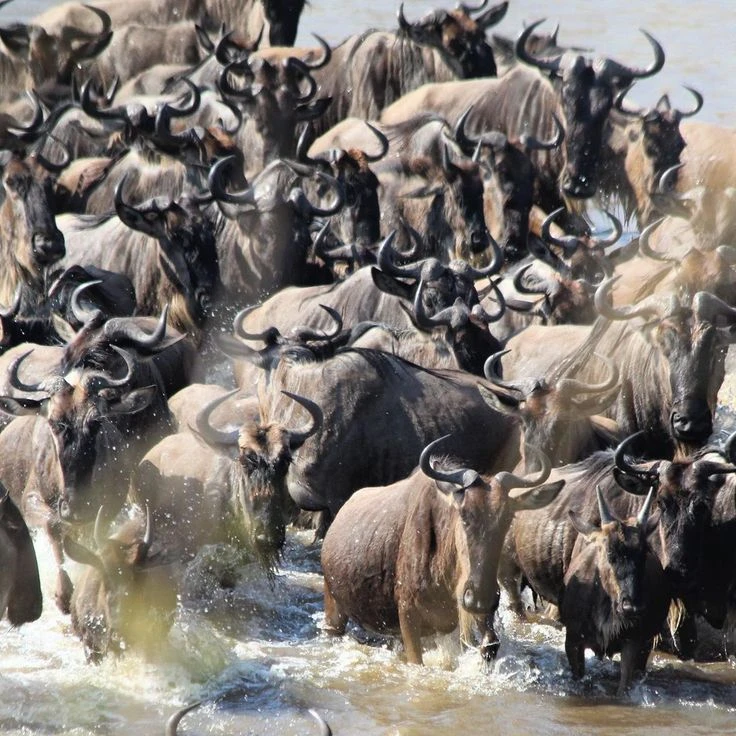
5-Day September Great Wildebeest Migration Private Safaris
5 Days September Great Wildebeest Migration Private Safaris focused on Serengeti Mara River crossings, with private 4x4 travel and dedicated driver-guide.
5-Day September Great Wildebeest Migration Safaris – Private Mara River Crossings and Northern Serengeti Wildlife
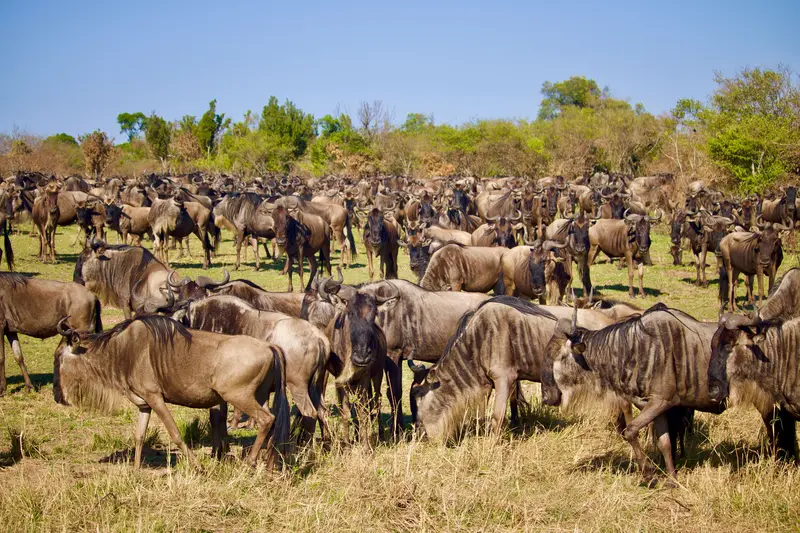
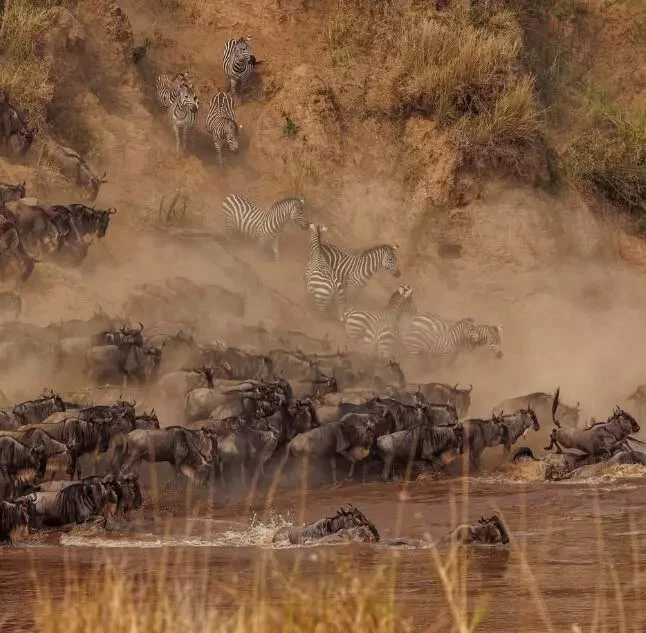
September is a remarkable time to follow the Great Wildebeest Migration in Northern Serengeti, when enormous herds may be moving between the Mara River's banks and the surrounding grasslands. Our 5 Days September Great Wildebeest Migration Private Safaris are designed for travellers who want more than a brief visit to the crossing areas. With five days available, you can devote several game drives to the Mara River while exploring the wider Kogatende region, where lions, cheetahs, leopards, elephants, and other wildlife inhabit a mixture of open plains and wooded landscapes. Wildebeest crossings are unpredictable, and some herds may spend days grazing or gathering near the river before attempting to cross. This makes an extended September safari particularly worthwhile for visitors interested in observing migration behaviour rather than simply reaching a famous viewing point. Our guide to the Great Migration's monthly movements explains why the northern Serengeti–Mara ecosystem is an important wildlife destination in September.
What makes our 5-day September private Serengeti Migration safaris appealing is the opportunity to shape the itinerary around current wildlife activity and your preferred travel style. You can spend four nights in Northern Serengeti for an in-depth Mara River experience or combine several nights near Kogatende with Central Serengeti to explore a broader variety of habitats and resident wildlife. Private game drives allow your guide to adjust daily routes, revisit productive wildlife areas, and organise extended observation periods at permitted crossing locations without following a shared tour schedule. Accommodation can include comfortable midrange tented camps or luxury safari lodges, with transport arranged by road or domestic flight according to your starting point and chosen itinerary. Travellers particularly interested in the migration can explore our responsible Mara River crossing safari guide for insight into observing the herds without disturbing their movements.
KiliPori Safaris offers 5-day private September Serengeti Mara River crossing safari packages for couples, honeymooners, families, photographers, and small private groups seeking additional wildlife-viewing time during the northern migration season. Your itinerary can begin from Arusha, include suitable Serengeti airstrip connections, or form part of a longer Tanzania holiday with Ngorongoro Crater or Zanzibar. We recommend choosing accommodation according to the areas you most want to explore, especially when concentrating on the Mara River, where unnecessary transfers can reduce time available for game drives. Our guide to Northern Serengeti migration camps can help you compare suitable locations. Explore our five-day September Great Wildebeest Migration private safari packages below to discover itineraries combining Mara River wildlife, personalised guiding, and the freedom to explore Northern Serengeti at your own pace.
✓Private planning by our Tanzania-based safari specialists
Choose the right package for you
Use the filters to narrow these KiliPori Packages. Every trip can be tailored to your dates, interests and preferred accommodation.
5 Days Great Migration Safari | Northern Serengeti and Mara River
Duration5 Days
Accommodation LevelMid Range Lodges
VisitsNorthern Serengeti, Arusha City
Join our 5-day private Great Migration safari to Northern Serengeti and the Mara River, with focused game drives during the July–October migration season.
5 Days Private Couples Serengeti Great Migration Safari
Duration5 Days
Accommodation LevelMid Range Lodges
VisitsCentral Serengeti, Northern Serengeti, Arusha City
Explore a 5 Days Private Couples Serengeti Great Migration Safari for an intimate wildlife experience during the migration season in Tanzania’s iconic Serengeti
Explore the 5 Days Tanzania Private Great Migration Safari with midrange lodges for an intimate wildlife experience during the iconic migration season.
5 Days Tanzania Serengeti Great Migration Safari in 2027
Duration5 Days
Accommodation LevelMid Range Lodges
VisitsSerengeti National Park, Central Serengeti
Experience an unforgettable 5-day Tanzania Serengeti Migration Safari through Ndutu and Central Serengeti. Enjoy luxury tented camps, sunrise game drives, predator tracking, Ngorongoro Crater safari, and close encounters with the Great Migration across Tanzania’s most iconic wildlife destinations.
5-Day Tanzania Great Migration Safari with Midrange Lodges
Duration5 Days
Accommodation LevelMid Range Lodges
VisitsCentral Serengeti, Northern Serengeti
Plan a 5-day Tanzania private safari in 2027 to follow the Serengeti wildebeest migration. Private 4×4, Northern Serengeti, possible Mara River crossing and mid
No packages match all selected filters. Clear a filter to see more options.
Best 5-Day September Serengeti Migration Safari Itineraries: Northern Serengeti Only vs Northern and Central Serengeti
5 days in Serengeti during September give you an important itinerary choice: spend all four nights in Northern Serengeti following the Great Migration, or divide your safari between the Mara River and Central Serengeti's wildlife-rich Seronera Valley. Both options offer rewarding experiences, but they serve different travel interests. A 5-day September Serengeti Migration private safari focused entirely on Kogatende is best for travellers prioritising wildebeest herds and possible Mara River crossings, while combining Northern and Central Serengeti introduces a wider variety of landscapes, predator habitats, and game-drive experiences. The right choice depends on whether you want to maximise your time around the migration or explore more of Serengeti National Park.
Which 5-Day September Serengeti Itinerary Should You Choose?
Safari Experience
Northern Serengeti Only
Northern + Central Serengeti
Overnight arrangement
4 nights in Northern Serengeti
3 nights Northern + 1 night Central
Main focus
September wildebeest migration and Mara River
Migration, big cats and varied wildlife habitats
Mara River viewing time
More opportunities over consecutive days
Three nights near the migration areas
Wildlife diversity
Migration herds, predators and northern wildlife
Northern migration plus Seronera's resident wildlife
Travel between camps
Minimal
One longer regional transfer
Best suited for
Migration enthusiasts and photographers
First-time safari travellers wanting more variety
Both arrangements include private game drives and can use suitable domestic flights to reduce long transfers from Arusha or Zanzibar.
Option 1: Five Days and Four Nights in Northern Serengeti – The Migration-Focused Safari
If witnessing the September Great Migration is your main reason for visiting Tanzania, we recommend concentrating all five days around Kogatende and the Mara River.
This arrangement avoids a lengthy transfer to Central Serengeti and provides three complete days between your arrival and departure flights.
Suggested 5-day Northern Serengeti itinerary
Day
Private Safari Experience
Day 1
Fly to Kogatende Airstrip, meet your private guide and enjoy wildlife viewing around the northern grasslands
Day 2
Explore accessible Mara River crossing areas, following wildebeest movements and river wildlife
Day 3
Private game drives around Kogatende, searching for migration herds, lions and other predators
Day 4
Another full day exploring the Mara River ecosystem, with opportunities to revisit active migration areas
Day 5
Final wildlife viewing where flight schedules permit, followed by your return flight
Overnight: Four nights at a selected midrange or luxury camp around Kogatende.
This itinerary gives you the freedom to explore different river-crossing locations, observe wildebeest gathering along the banks, and respond to changing wildlife activity.
September crossings are unpredictable. Spending additional nights in Northern Serengeti increases your opportunities to encounter migration activity, although no number of safari days can guarantee an actual crossing.
For travellers primarily interested in the Mara River, this is generally our preferred five-day option.
Option 2: Three Nights Northern Serengeti and One Night Central Serengeti – Migration and Big Cats
Some travellers want to see the September migration but also experience the classic landscapes and resident wildlife of Central Serengeti.
In this case, we recommend three nights around Kogatende and one night near Seronera.
Central Serengeti is particularly attractive for its year-round wildlife population, including lions, leopards, cheetahs, giraffes, and large herbivores.
The two regions also offer noticeably different landscapes, making this combination appealing to first-time visitors.
Suggested 5-day Northern and Central Serengeti itinerary
Day
Private Safari Experience
Day 1
Fly to Kogatende and enjoy an introductory Northern Serengeti wildlife drive
Day 2
Full-day private Mara River migration safari
Day 3
Continue exploring Kogatende and the northern migration areas
Day 4
Travel south towards Central Serengeti, enjoying game viewing along the route
Day 5
Morning Seronera wildlife drive if time permits, followed by a scheduled flight or onward transfer
Overnight: Three nights in Northern Serengeti and one night in Central Serengeti.
The journey between Kogatende and Seronera commonly takes approximately four to six hours or longer, depending on road conditions, stops, and your camp locations.
We recommend treating this transfer as a wildlife-viewing journey rather than attempting to complete it quickly.
For travellers interested in both migration and year-round wildlife, the combination provides an appealing introduction to two different Serengeti ecosystems.
Why September Makes the Northern Serengeti the Priority
During September, many wildebeest herds are typically found across the northern Serengeti–Mara ecosystem, with movements influenced by rainfall and grazing conditions.
This makes Kogatende the main destination for travellers hoping to observe Mara River crossings.
Central Serengeti, by contrast, is valuable for its resident wildlife rather than being the primary September river-crossing destination.
For this reason, we generally recommend spending at least three of your four safari nights in Northern Serengeti when combining both regions.
Should You Fly Between Kogatende and Seronera or Travel by Road?
For the combined itinerary, you can consider travelling between Northern and Central Serengeti by private safari vehicle or domestic aircraft, depending on available routes.
Travelling by road allows you to explore the landscapes between the two regions, with opportunities for wildlife encounters along the way. However, it occupies a substantial part of one safari day.
Flying between the regions may reduce travel time when a suitable connection is available, but it involves additional flight costs, airstrip transfers, and coordination with your private guide and vehicle.
For most five-day combination itineraries, we prefer travelling through Serengeti by road on the fourth day, particularly for travellers who enjoy observing wildlife during the journey.
Accommodation Choices for Both September Safari Routes
Your itinerary should determine where you stay, rather than selecting camps first and designing the route around them.
For the Northern Serengeti-only safari, four nights at one well-positioned migration camp around Kogatende can reduce packing and unnecessary transfers.
For the combined itinerary, we recommend choosing a suitable migration camp for the first three nights and a Central Serengeti lodge or tented camp near the Seronera wildlife areas for the final night.
Accommodation can range from comfortable midrange tented camps to luxury safari properties, depending on your preferred standard.
Our Recommendation: Which September Itinerary Offers the Best Experience?
For travellers whose main objective is witnessing the September Great Wildebeest Migration, we recommend spending all four nights in Northern Serengeti. This provides more time around the Mara River and greater flexibility when herds are moving unpredictably.
However, if this is your first Tanzania safari and you want to experience a broader variety of wildlife habitats, spending three nights in Northern Serengeti and one night in Central Serengeti can be an excellent alternative.
KiliPori Safaris offers 5-day September Great Wildebeest Migration private safari packages designed around both options, with private 4x4 game drives, midrange or luxury accommodation, and suitable fly-in or overland travel arrangements.
Explore our five-day September Serengeti Migration safari packages below to choose between an extended Mara River wildlife experience and a private journey combining Northern Serengeti's migration with Central Serengeti's big cats and resident wildlife.
5-Day September Serengeti Migration Safari Costs: Midrange vs Luxury Private Packages
When comparing 5-day September Serengeti Migration safari costs, one of the most important decisions is how to spend your four safari nights. Should you remain in Northern Serengeti, close to the Mara River migration areas, or combine Kogatende with Central Serengeti for additional big cat and resident wildlife viewing? Both options are available through our private safari packages, but they can have different accommodation, transport, and operating costs. September is a popular migration month, when seasonal camps around Kogatende and Lamai experience strong demand. Understanding how these expenses influence your quotation can help you choose between a comfortable midrange safari and a more exclusive luxury wildlife holiday.
How Much Does a 5-Day September Private Serengeti Safari Cost?
For a five-day, four-night private safari, the following ranges provide a general budgeting guide for two adults sharing accommodation and travelling together in one private safari vehicle.
Safari Category
Estimated Price Per Person
Total for 2 Travellers
Midrange Private Safari
USD 2,250–3,750
USD 4,500–7,500
Luxury Private Safari
USD 4,500–7,500
USD 9,000–15,000
Ultra-Luxury Private Safari
USD 7,500–11,000+
USD 15,000–22,000+
4 Nights in Northern Serengeti vs 3 Nights North and One Night Central: Which Costs More?
Not every five-day migration safari has the same overnight arrangement, and the difference affects both pricing and wildlife-viewing time.
Cost Consideration
4 Nights Northern Serengeti
3 Nights Northern + 1 Night Central
Accommodation
Four nights at a northern migration camp
Three nights at a northern camp and one at a Seronera property
Travellers wanting migration and year-round wildlife
Spending one night in Central Serengeti may reduce accommodation costs if the selected Seronera camp is less expensive. However, savings are not guaranteed, particularly when the route requires additional transfers, flights, or vehicle arrangements.
For a five-day September private Mara River crossing safari, we generally recommend four northern nights when migration observation is the main priority. Travellers seeking a broader wildlife experience may find the combined route more worthwhile.
Midrange September Serengeti Migration Safaris: Comfortable Camps Near Kogatende
A midrange package is often the most practical choice for travellers who want several days near the Mara River without paying for premium luxury accommodation.
Midrange migration camps generally provide furnished tents, private bathrooms, comfortable beds, hot showers, and meals throughout your stay.
Properties such as Nyikani Migration Camp and Gnu Mara River Camp may be considered, depending on September availability, the camp's exact location, and accommodation requirements.
With a midrange 5-day Serengeti Migration safari, your wildlife experience can still include private game drives around Kogatende, searches for lions and cheetahs, and opportunities to observe wildebeest gathering near the Mara River.
The accommodation may be less elaborate, but your guide, vehicle, wildlife-viewing time, and access to permitted national park roads remain central to the safari experience.
Luxury September Mara River Safaris: What Does the Higher Price Include?
The main appeal of a luxury safari is the quality of accommodation and personalised hospitality after each game drive.
Luxury Northern Serengeti properties may offer spacious tented suites, private verandas, premium dining, swimming pools, or additional guest services.
Accommodation such as Lemala Kuria Hills Lodge, Sayari Camp, or selected high-end migration camps can be considered according to the preferred style and available budget.
For couples and honeymooners, a luxury camp can provide a more intimate setting, while families may prioritise spacious suites and suitable room configurations.
However, expensive accommodation does not guarantee a Mara River crossing. A thoughtfully selected midrange camp near active wildlife areas may offer better value than a more luxurious property that requires extensive daily transfers.
The total price combines several expenses that should be clearly itemised in your quotation.
Cost Component
How It Affects Your Package
Four nights of accommodation
Peak September camp rates can represent a significant part of the total
Private safari Land Cruiser
Vehicle, fuel and guiding expenses are shared only by your travelling party
Serengeti conservation fees
Applicable park entry charges depend on visitor category and entry duration
Overnight concession fees
May apply to lodge and camp accommodation within the national park
Domestic flights
Fly-in or fly-out arrangements add airfare and transfer expenses
Regional transfers
Moving between Kogatende and Seronera requires additional travel time and operating arrangements
Group size
Fixed transport expenses are divided among the travellers using the vehicle
September generally falls within the higher-priced migration accommodation period, particularly in Northern Serengeti.
Serengeti Park Fees for a Five-Day September Safari
For international visitors, conservation fees and overnight concession charges are important components of the safari budget.
As a reference, TANAPA's published 2026/27 Serengeti tariffs list non-East African adult conservation fees at TZS 178,850 per 24-hour period during the applicable high season, while the non-resident adult concession fee for July–September 2026 is listed at TZS 153,300 per night for qualifying accommodation.
For a five-day safari with four nights inside Serengeti, these fees can amount to several hundred US dollars per adult, depending on the actual entry periods and fee categories.
These historical tariff figures should not be treated as confirmed September 2027 rates. KiliPori Safaris calculates the applicable charges using the official tariff valid for the booked travel dates.
Is Flying into Serengeti Worth the Additional Cost?
A five-day private safari provides more flexibility than a short two-night package, so both air and road transportation can be considered.
Fly-in safari: Flying from Arusha or Zanzibar to Kogatende reduces lengthy transfers and may provide additional wildlife-viewing time. It generally increases the price because of domestic airfare.
Drive-in safari: Travelling by private Land Cruiser can be more economical and allows you to explore the landscapes between Arusha, Ngorongoro and Serengeti. However, reaching Northern Serengeti requires considerable travel time, which can significantly reduce game-drive opportunities on a five-day itinerary.
Fly-in and drive-out safari: This arrangement may suit travellers combining Northern and Central Serengeti, although the final route and overall price need to be calculated carefully.
Travelling with more people can reduce the average cost per person because the private safari vehicle and guide are shared among members of the same group.
For example, four adults sharing a Land Cruiser may have a lower per-person operating cost than two adults travelling privately.
However, accommodation, park fees, and airline tickets are still charged individually or according to room occupancy.
Families travelling with children should provide their exact ages, while groups should confirm whether they prefer double, twin, triple, family, or interconnected rooms.
For larger groups, an additional safari vehicle may be necessary for comfort and wildlife viewing, so prices should be calculated using the actual rooming and vehicle arrangements.
What Should Be Included in Your Five-Day Private Safari Price?
Before booking, ensure that your quotation specifies the services being provided.
Typical package inclusions can include private 4x4 safari transportation, professional driver-guiding, four nights of selected accommodation, meals, park fees, game drives, and agreed transfers.
Domestic flights should be listed explicitly rather than assumed to be included. International flights, travel insurance, gratuities, alcoholic drinks, and optional activities are commonly excluded unless stated otherwise.
For additional information about how accommodation and transportation affect safari budgets, read our Great Migration safari cost guide.
Which September Private Serengeti Package Offers the Best Value?
For travellers primarily interested in the Mara River migration, we generally recommend allocating more of the budget to four nights in a well-positioned Northern Serengeti camp rather than choosing luxury accommodation at the expense of wildlife-viewing time.
If you want to explore both the northern migration and Central Serengeti's resident big cats, a three-night northern stay followed by one night around Seronera can provide a rewarding alternative.
KiliPori Safaris offers 5-day September Great Wildebeest Migration private safari packages with midrange and luxury accommodation, personalised game drives, and transport arrangements tailored to your travel dates and preferred destinations.
Explore our five-day September Serengeti Migration safari packages below or request a personalised quotation for two, three, four, or more travellers. We can compare different camp categories, overnight arrangements, and flight options to help you choose a private safari that offers the best value for your budget.
How Many Nights Should You Spend Near the Mara River on a 5-Day September Private Safari
For a 5-day September private Serengeti Migration safari, we recommend spending at least three nights near the Mara River, with four nights being the better choice when witnessing the wildebeest migration is your main priority. September is an important period for wildebeest movements in Northern Serengeti, particularly around Kogatende and the Mara River. However, the animals do not follow a fixed crossing schedule. Some herds gather near the river before retreating, while others move repeatedly between the Tanzanian and Kenyan sides. Choosing the right number of nights gives you more flexibility to explore these movements without spending too much of your holiday travelling between distant Serengeti regions.
3 Nights vs 4 Nights Near the Mara River
Both arrangements work for a five-day safari, but they provide different experiences.
Safari Arrangement
Migration Viewing Opportunities
Best Suited For
4 Nights Northern Serengeti
Three full days to explore the Mara River and surrounding migration areas
Travellers prioritising wildebeest migration, river crossings and photography
3 Nights Northern + 1 Night Central Serengeti
Two full northern safari days, followed by a wildlife-viewing journey to Seronera
First-time safari travellers wanting migration and varied wildlife habitats
2 Nights Northern + 2 Nights Central Serengeti
Less time around the Mara River, with more emphasis on Central Serengeti
Travellers prioritising general wildlife over river-crossing opportunities
For a September migration-focused holiday, we generally discourage limiting Northern Serengeti to only two nights unless your travel plans require it.
When Four Nights in Kogatende Are the Better Choice
If witnessing the Great Migration is the main reason for your Tanzania holiday, spending all four nights around Kogatende offers the strongest five-day itinerary.
This arrangement allows you to explore different accessible Mara River crossing locations over several days while also searching for migrating herds across the northern grasslands.
One morning, you may encounter thousands of wildebeest gathering near the river. The following day, the same animals might have moved elsewhere in search of fresh grazing.
With additional time, your private guide can adjust the game drives according to wildlife activity rather than trying to cover everything during a single visit to the river.
Four nights are particularly suitable for wildlife photographers, migration enthusiasts and travellers who have specifically chosen September for its Mara River crossing opportunities.
A three-night Northern Serengeti stay can provide a practical balance when you also want to explore Central Serengeti.
For example, you might fly into Kogatende, spend three nights exploring the migration areas, and then travel south to Seronera for your final night.
Central Serengeti offers opportunities to observe resident lions, leopards, cheetahs, giraffes and other wildlife throughout the year.
However, the journey between Kogatende and Seronera can take approximately four to six hours or longer, depending on road conditions, game-viewing stops and accommodation locations.
This means part of your fourth day will be dedicated to travelling rather than exploring the Mara River.
We recommend this option for first-time Tanzania safari travellers who want to experience different Serengeti habitats without extending their holiday beyond five days.
Does Staying Longer Guarantee a September Mara River Crossing?
No. Even a four-night stay cannot guarantee that wildebeest will cross the Mara River during your visit.
River crossings depend on natural herd movements, rainfall, grazing conditions and other environmental factors.
However, additional nights provide more opportunities to observe different herds and revisit productive wildlife areas.
For travellers visiting specifically to see a crossing, four nights near the Mara River offer greater scheduling flexibility than three nights, even though the wildlife remains unpredictable.
Should You Change Migration Camps During Your Five-Day Safari?
For most travellers, we recommend staying at one well-positioned Northern Serengeti camp rather than changing accommodation during a short migration safari.
A comfortable camp around Kogatende can serve as your base for exploring the Mara River, nearby grasslands and other wildlife habitats.
Changing camps may be worthwhile if you have a specific reason to explore a different part of Northern Serengeti, but it can also mean additional transfers and less time observing wildlife.
Travellers choosing between Kogatende, Lamai and other northern accommodation areas should consider the actual road access to their preferred game-drive locations.
Our Recommended Overnight Arrangement for September
At KiliPori Safaris, we generally recommend the following:
Choose 4 nights in Northern Serengeti if your priority is watching the September wildebeest migration, exploring Mara River crossing areas, or enjoying extended wildlife photography.
Choose 3 nights in Northern Serengeti and one night in Central Serengeti if you want a combination of migration activity, resident big cats and varied Serengeti landscapes.
For either arrangement, flying into Kogatende can reduce travel time and allow more of your five-day holiday to be spent enjoying wildlife.
KiliPori Safaris offers 5-day September Great Wildebeest Migration private safari packages with flexible overnight arrangements, private 4x4 game drives, and midrange or luxury accommodation.
Explore our five-day September Serengeti Migration safari packages below to choose a route that matches your wildlife interests, preferred camp locations and available travel time.
September Wildebeest Migration Behaviour: River Crossings, Herd Movements and Predator Encounters Over 5 Days
September's Great Wildebeest Migration is fascinating because the action extends far beyond the moment animals enter the Mara River. Across Northern Serengeti, wildebeest form enormous grazing herds, follow one another towards water, hesitate at steep riverbanks, and sometimes reverse direction without warning. Lions and hyenas take advantage of the concentration of prey, while Nile crocodiles occupy the river's deeper waters. A 5-day September private Serengeti Migration safari gives you time to observe these different behaviours around Kogatende rather than concentrating exclusively on river crossings. With four nights in the northern migration region, you can explore how the herds respond to their surroundings and discover why September is such an interesting month for wildlife enthusiasts.
How Wildebeest Herds Behave in Northern Serengeti During September
By September, many migrating wildebeest and zebras are typically distributed across Northern Serengeti and Kenya's Masai Mara ecosystem.
However, the migration does not move as one enormous herd following a single route. Animals gather in groups of different sizes, spread across grazing areas, and sometimes move considerable distances as local conditions change.
During private game drives around Kogatende, you may observe wildebeest grazing in relatively small groups in one area while thousands of others move together across nearby plains.
Their movements are influenced by rainfall, available grass, water, and the behaviour of surrounding animals.
This is one reason why September migration viewing can change significantly from one day to the next.
What Happens Before, During and After a Mara River Crossing?
The actual crossing is only one stage of a much longer sequence of animal behaviour.
Migration Stage
What You Might Observe
Approaching the river
Wildebeest and zebras moving in lines towards the riverbanks
Gathering and hesitation
Large groups stopping, turning around, or repeatedly approaching the water
Beginning a crossing
Some animals entering the river, potentially followed by others
Crossing the water
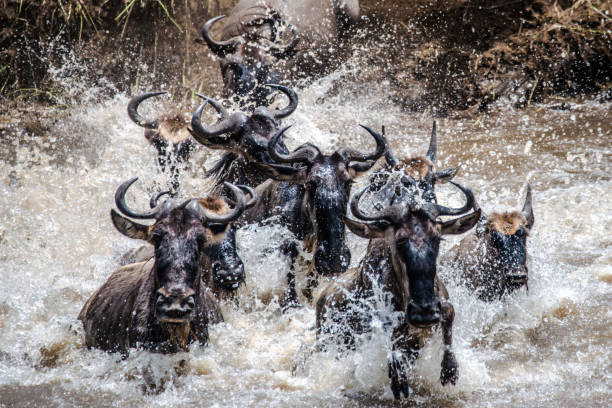
Herds negotiating currents, uneven riverbeds and steep banks
Reaching the opposite bank
Animals regrouping, moving away from the river or continuing towards grazing areas
Returning to the river
Herds potentially crossing again later as grazing conditions change
Wildebeest do not always cross immediately after gathering. Some groups may wait for hours or leave without entering the river.
Crossings also happen in both directions. Animals may move from Tanzania towards Kenya or return to the Serengeti side, depending on the location of suitable grazing.
For travellers interested in animal behaviour, these moments of hesitation, movement and regrouping can be as interesting as the crossing itself.
September Predator Encounters: Lions, Hyenas and Crocodiles
The seasonal concentration of migrating animals creates opportunities to observe interactions between predators and prey.
Lions on the Northern Serengeti plains
Lions may hunt wildebeest and zebras or rest near areas where prey animals are active. During September, travellers may observe prides monitoring herds, moving through grasslands, or feeding on a kill.
Spotted hyenas following wildlife activity
Spotted hyenas are important predators and scavengers within the Serengeti ecosystem. They may hunt smaller or vulnerable animals, investigate carcasses, and interact with other carnivores.
Nile crocodiles in the Mara River
Large Nile crocodiles inhabit the Mara River throughout the year. During the migration season, crossings can provide opportunities for crocodiles to attack animals entering the water.
However, crocodiles are not active at every crossing, and many wildebeest successfully reach the opposite bank.
Cheetahs and leopards
Cheetahs may be encountered hunting suitable prey on open grasslands, while leopards tend to use wooded habitats and riverine vegetation.
Their sightings add variety to a September safari, although neither species should be expected at every wildebeest concentration.
Predator hunts and river-crossing encounters are unpredictable, and some scenes can involve animal injury or death.
What Can You Learn About the Migration Over Five Days?
A five-day safari provides an opportunity to observe several aspects of September's wildlife activity rather than judging the experience by a single sighting.
For example, one day may be spent watching wildebeest grazing across the Kogatende plains. Another may reveal herds gathering along the Mara River, while a different game drive could provide opportunities to observe lions or hyenas near migrating animals.
Your private guide can explain why herds sometimes separate, how predators respond to available prey, and why migration activity may shift between different locations.
These observations help visitors understand that the Great Migration is a continuous ecological process, not simply a series of dramatic river crossings.
Why Four Nights Give You a Better Opportunity to Observe Wildlife Behaviour
On a 5-day September Mara River private safari, spending four nights around Kogatende allows three complete days between your arrival and departure.
This provides time to explore different wildlife habitats and revisit areas where interesting animal behaviour has been observed.
Rather than spending every day waiting at a river-crossing point, your guide can balance migration viewing with opportunities to observe predators, grazing herds, elephants and other resident wildlife.
The additional time is especially valuable for photographers and visitors interested in animal behaviour, since interesting encounters may develop gradually.
For example, observing a lion pride interacting throughout a game drive can be rewarding even when no hunt occurs. Similarly, watching wildebeest approach and retreat from a riverbank reveals how cautious and unpredictable their movements can be.
Responsible Wildlife Viewing During September's Migration
River crossings attract considerable attention from safari visitors, particularly during the popular September season.
However, animals must be allowed to approach and cross the river naturally.
Private safari vehicles should remain within authorised viewing areas, avoid obstructing migration routes, and follow the instructions of park rangers.
A responsible guide will not pressure animals towards the water or approach them in ways that interfere with their movement.
Experience September's Great Migration with KiliPori Safaris
KiliPori Safaris offers 5-day September Great Wildebeest Migration private safari packages for travellers who want to explore Northern Serengeti's migration behaviour in greater depth.
With a dedicated private driver-guide, four nights of selected midrange or luxury accommodation, and flexible game drives around Kogatende and the Mara River, your safari can concentrate on the wildlife activity that interests you most.
Whether you hope to photograph a river crossing, observe predators, or simply witness large wildebeest herds moving through the northern plains, September offers a varied wildlife experience.
Explore our five-day September Serengeti Migration safari packages below to discover a private journey focused on the animals, landscapes and natural behaviours that make the Great Migration remarkable.
September Serengeti Safari by Road vs Fly-In: Which Transport Option Works Best for 5 Days
The journey to Northern Serengeti can take up a substantial part of a five-day safari, making transport one of the most important decisions when planning a September Great Migration holiday. The Mara River migration areas around Kogatende lie far from Arusha, beyond the central wildlife plains of Serengeti National Park. While travelling by road introduces you to the landscapes of the Ngorongoro Highlands and Serengeti, flying allows you to reach the northern migration region much sooner. For a 5-day September private Serengeti Migration safari, the best transport option depends on whether your priority is spending more time near the Mara River, exploring several wildlife regions, or keeping the overall package cost manageable.
Comparing Road, Fly-In Fly-Out and One-Way Fly-In Safaris
Transport Option
Main Advantage
Main Consideration
Best For
Drive-In and Drive-Out
Explore the Northern Circuit entirely by road
Long journeys reduce time around the Mara River
Travellers prioritising overland exploration
Fly-In and Fly-Out
More time in Northern Serengeti
Higher domestic flight costs
September migration enthusiasts and photographers
Fly-In and Drive-Out
Combine Mara River wildlife with Central Serengeti landscapes
Requires time for the southbound journey
Travellers seeking migration and general wildlife
Drive-In and Fly-Out
Explore the Northern Circuit before reaching Kogatende
Northern migration time depends on the driving itinerary
Travellers who want an overland introduction and convenient departure
Each option can be arranged privately, with a dedicated driver-guide and safari vehicle. However, the number of nights available near the Mara River may differ considerably.
Driving from Arusha to Northern Serengeti in September
A road safari normally follows the route through Karatu, the Ngorongoro Conservation Area, Central Serengeti, and onwards towards Kogatende.
The journey introduces travellers to changing landscapes, from the highlands surrounding Ngorongoro to the open savannah and woodland habitats of Serengeti.
However, travelling from Arusha to Kogatende can require approximately 10–12 hours or more of driving, depending on the route, road conditions, park formalities, and stops. We generally recommend dividing such a journey across multiple days rather than attempting it in one continuous drive.
For a five-day safari, driving both ways leaves relatively little time for dedicated Mara River migration game drives.
Our recommendation: Choose a fully overland itinerary if experiencing the journey through Northern Tanzania is as important to you as the September migration itself.
Flying Directly to Kogatende: More Time for the Mara River
For travellers whose main objective is the September wildebeest migration, flying into and out of Kogatende is generally the strongest five-day option.
Scheduled bush flights from Arusha provide access to Northern Serengeti, with some services stopping at other airstrips along the way. Suitable flight connections may also be available from Zanzibar.
After landing at Kogatende Airstrip, your private guide meets you for game drives around the northern plains and accessible Mara River wildlife areas.
A five-day fly-in, fly-out safari allows you to spend four nights in Northern Serengeti, providing three complete days between your arrival and departure.
This is particularly valuable in September, when wildebeest may gather along the Mara River but crossings remain unpredictable.
You can use those full days to explore different migration areas, photograph large herds, and search for lions, leopards, cheetahs, elephants, and other resident wildlife.
The One-Way Flight Option: Northern and Central Serengeti in Five Days
A combination of flying and driving can be a good alternative for travellers who want the September migration alongside Central Serengeti's resident wildlife.
For example, you could fly from Arusha or Zanzibar to Kogatende, spend three nights in Northern Serengeti, and then travel south by private safari vehicle towards Seronera.
The journey between Kogatende and Central Serengeti commonly requires approximately four to six hours or longer, particularly when wildlife-viewing stops are included.
After spending the fourth night near Seronera, you can fly out from the central airstrip on Day 5.
This option avoids returning north and provides opportunities to explore different Serengeti habitats.
However, it should not automatically be considered cheaper than flying both ways. The cost of positioning your safari vehicle and guide, additional fuel, flights, and accommodation arrangements must be considered.
How Does Transport Affect Your September Safari Budget?
Flying generally increases the direct transport cost because scheduled domestic tickets are charged per passenger.
A road-based safari avoids some passenger airfares, but the additional driving requires fuel, vehicle time, and potentially more accommodation along the route.
For couples, flight costs can represent a substantial portion of the package. For larger private groups, the difference may become more noticeable because each traveller needs an airline ticket.
However, the cheapest transport arrangement is not necessarily the best-value safari.
If you are travelling to Tanzania primarily to see the Mara River migration, saving on airfare while losing valuable northern game-drive time may not be worthwhile.
Important Transport Details to Consider Before Booking
For September safari planning, we recommend confirming the following arrangements:
Flight schedules: Choose flights that allow useful wildlife-viewing time on arrival and departure days.
Airstrip selection: Kogatende is generally the preferred arrival point for northern Mara River migration itineraries.
Vehicle arrangements: Confirm whether your private safari vehicle and guide are already positioned in Northern Serengeti or require additional transfers.
Luggage restrictions: Scheduled bush flights usually have stricter baggage allowances than international flights.
Overnight locations: Road itineraries should include realistic travel distances and avoid unnecessary backtracking.
Return connections: Allow sufficient time for onward flights, particularly when departing Serengeti for an international connection.
Our Recommendation for a 5-Day September Private Safari
At KiliPori Safaris, we generally recommend a fly-in, fly-out Northern Serengeti safari for travellers who want to concentrate on the September Great Migration and possible Mara River crossings.
This option provides four nights around Kogatende and allows more time to respond to changing wildebeest movements without lengthy road transfers.
For travellers interested in both the migration and Central Serengeti, flying into Kogatende and travelling south towards Seronera before flying out can provide a rewarding alternative.
A fully overland itinerary is better suited to visitors who enjoy longer road journeys and want to explore Northern Tanzania's landscapes along the way.
KiliPori Safaris offers 5-day September Great Wildebeest Migration private safari packages with flexible transport arrangements, private 4x4 game drives, and midrange or luxury accommodation.
Explore our five-day September Serengeti Migration safari packages below to choose a journey that balances travel comfort, safari costs, and time exploring the Mara River wildlife areas.
5-Day September Serengeti Migration and Ngorongoro Crater Private Safaris: Is the Combination Practical
Can you experience September's Mara River migration and explore Ngorongoro Crater in just five days? Yes, but the route needs careful planning. These two destinations offer distinctly different wildlife experiences: Northern Serengeti is known for the seasonal movement of wildebeest and zebras around the Mara River, while Ngorongoro Crater supports a remarkable concentration of resident animals, including lions, buffaloes, elephants and the endangered black rhinoceros. A 5-day September Serengeti Migration and Ngorongoro Crater private safari can combine both destinations, although travelling between Kogatende and the Ngorongoro Highlands requires considerable time. For travellers determined to experience both, we recommend a carefully coordinated itinerary with a flight into Northern Serengeti and an overland journey south through Central Serengeti.
Is Five Days Enough for Both the Mara River and Ngorongoro Crater?
The biggest challenge is not the number of parks but the distance between them.
Kogatende, the main base for September Mara River safaris, is located in the far north of Serengeti National Park. Ngorongoro Crater lies southeast of the Serengeti, beyond the Central Serengeti plains and Ngorongoro Highlands.
Driving from Kogatende to the Seronera region commonly requires around four to six hours, sometimes longer with wildlife-viewing stops. Continuing from Central Serengeti towards Karatu takes several additional hours.
Attempting to visit the Mara River, drive south and descend into Ngorongoro Crater in the same day would be unnecessarily rushed.
For a practical five-day safari, we recommend dividing the journey into manageable stages and allocating a separate morning or day to the crater.
Recommended 5-Day September Serengeti Migration and Ngorongoro Itinerary
For travellers who want to include both destinations without turning every day into a long transfer, the following route offers a workable balance.
Day
Private Safari Experience
Overnight
Day 1
Fly from Arusha to Kogatende, followed by a private Northern Serengeti game drive
Northern Serengeti
Day 2
Full-day September Mara River migration safari
Northern Serengeti
Day 3
Travel from Kogatende towards Central Serengeti, with wildlife viewing along the way
Central Serengeti
Day 4
Morning wildlife viewing in Seronera, then continue through Ngorongoro Conservation Area
Karatu or Ngorongoro Highlands
Day 5
Ngorongoro Crater game drive, followed by an afternoon transfer to Arusha
Departure
This route provides two nights near the Mara River, one night in Central Serengeti and one night near Ngorongoro.
It is suitable for travellers who want a broader Northern Tanzania safari, but it offers less time around the September migration than a five-day safari spent entirely in Northern Serengeti.
What Will You Experience at the Mara River in September?
During September, wildebeest and zebra herds may be concentrated across Northern Serengeti and the neighbouring Masai Mara ecosystem.
Around Kogatende, your private game drives can focus on herds gathering near the Mara River, searching for suitable crossing locations or grazing across the surrounding plains.
Lions, cheetahs, elephants and other resident wildlife provide additional viewing opportunities.
Because river crossings are unpredictable, one full migration-focused day may not be enough to witness an actual crossing. This is an important trade-off when including Ngorongoro Crater within a five-day itinerary.
Travellers whose main priority is the migration may prefer spending three or four nights in Northern Serengeti instead.
Why Include Ngorongoro Crater After the Migration?
Ngorongoro offers a wildlife environment that differs significantly from the Mara River region.
Instead of following migrating herds across vast grasslands, your private game drive descends into a volcanic caldera with grasslands, wetlands, woodland and a soda lake.
The crater supports lions, elephants, buffaloes, hippos, hyenas and numerous antelope species. Black rhinos are also present, although sightings are uncommon and cannot be guaranteed.
A typical crater excursion allows approximately five to six hours of wildlife viewing on the crater floor, depending on park regulations, entry arrangements and the day's schedule.
For first-time Tanzania visitors, combining the Great Migration with Ngorongoro adds a different ecosystem and valuable wildlife diversity to the holiday.
Fly-In vs Drive-In: Which Is More Practical for Five Days?
For this particular itinerary, we recommend flying into Kogatende and travelling south by private Land Cruiser.
Flying into Northern Serengeti allows you to reach the September migration areas without spending the first day driving from Arusha. Your private guide can then lead you through Central Serengeti and the Ngorongoro Highlands over the following days.
A fully road-based itinerary is possible, but driving from Arusha to Northern Serengeti and then returning through Ngorongoro within five days can leave very limited time for dedicated Mara River game drives.
Flying into Kogatende and driving out also introduces an additional operating consideration: your safari vehicle and guide must be positioned in the north before your arrival. This needs to be included when calculating the package cost.
The answer depends on which wildlife experience matters most to you.
Choose five days if you want to see both Northern Serengeti and Ngorongoro Crater, are comfortable with a couple of longer travel days, and understand that your time around the Mara River will be limited.
Choose six or seven days if witnessing the September migration is a major priority. Additional days can allow three nights in Northern Serengeti, a more relaxed transfer through Central Serengeti, and a dedicated Ngorongoro Crater excursion.
Adding a day can make a meaningful difference because it reduces the need to choose between watching migrating herds and reaching the next destination.
Plan Your September Serengeti and Ngorongoro Private Safari
KiliPori Safaris offers September private Serengeti Migration and Ngorongoro Crater safari packages tailored to travellers who want to experience both the seasonal wildebeest migration and Tanzania's famous crater wildlife.
We can arrange a fly-in safari to Kogatende, private game drives through Northern and Central Serengeti, comfortable midrange or luxury accommodation, and an Ngorongoro Crater excursion before returning to Arusha.
For travellers wanting more time near the Mara River, we can also design a longer itinerary with additional nights in Northern Serengeti.
Explore our five-day September Great Wildebeest Migration safari packages below to compare a dedicated Mara River safari with a combined Serengeti and Ngorongoro adventure, and choose the itinerary that best suits your wildlife priorities.
5-Day September Private Serengeti Safaris for Wildlife Enthusiasts: Big Cats, River Wildlife and Migration Photography
For wildlife enthusiasts, September in Northern Serengeti offers far more than the possibility of witnessing wildebeest crossing the Mara River. The surrounding Kogatende plains, rocky outcrops, wooded valleys, and riverine habitats create opportunities to observe predators, large herbivores, and fascinating animal behaviour. Our 5-day September private Serengeti safaris for wildlife enthusiasts are designed for travellers who appreciate the details of wildlife encounters, from watching lions interact within a pride to photographing wildebeest moving through dusty grasslands. With four nights in Northern Serengeti, you have time to explore different habitats, observe animals without rushing, and follow September's migration while discovering the wildlife that remains in the region throughout the year.
Big Cat Encounters: Exploring Northern Serengeti's Predator Habitats
September's wildebeest migration creates additional feeding opportunities for predators, but big cat sightings are not limited to the immediate Mara River crossing areas.
Different habitats around Kogatende offer opportunities to search for different species.
Lions may be encountered resting among the grasslands, moving along woodland edges, or observing nearby wildebeest and zebra herds. Rather than concentrating only on hunting activity, wildlife enthusiasts can spend time watching pride interactions, territorial behaviour, and the relationship between adults and cubs.
Leopards are more elusive and typically favour areas with sufficient vegetation and cover. Riverine trees and wooded habitats provide places where they may rest or hunt. Finding a leopard often requires careful observation and patience.
Cheetahs are more closely associated with open grassland, where they can scan for prey and use their speed during hunting attempts. Suitable areas across the wider Northern Serengeti may provide opportunities to observe them.
Private game drives allow your guide to dedicate time to these wildlife interests without following a shared group's viewing schedule.
River Wildlife: What Else Lives Around the Mara River?
The Mara River is not simply an obstacle that migrating wildebeest must cross. It is an important wildlife habitat supporting animals throughout the year.
During your September Mara River wildlife safari, you may encounter large Nile crocodiles resting near the banks or remaining almost motionless in deeper water. Hippos occupy suitable river pools, while birds such as African fish eagles, kingfishers, and herons can be observed around the water and surrounding vegetation.
For wildlife enthusiasts, these encounters offer opportunities to learn about the river's ecological importance.
Observing a crocodile resting beside the water or hippos interacting within a pool can be rewarding even when no wildebeest are attempting to cross.
The river also attracts other animals seeking water during the dry season, creating varied wildlife-viewing opportunities.
Wildlife Experiences Worth Looking for in September
Wildlife
Where Your Guide May Search
Interesting Behaviour to Observe
Lions
Grasslands and woodland edges
Pride interactions, resting and hunting
Leopards
Riverine trees and wooded habitats
Solitary behaviour and resting in trees
Cheetahs
Suitable open plains
Hunting preparation and movement
Elephants
Wooded savannah and grassland
Family interactions and feeding
Nile crocodiles
Mara River pools and banks
Resting, swimming and feeding
Hippos
Deeper sections of the Mara River
Group interactions and territorial displays
Wildebeest and zebras
Kogatende plains and migration routes
Herd movement, grazing and possible crossings
Giraffes and buffaloes
Savannah and woodland habitats
Browsing, grazing and herd behaviour
Wildlife encounters depend on animal movements, weather conditions, and the areas accessible during your game drives.
Migration Photography: Capturing the Story Beyond a River Crossing
Some of September's most interesting photographs are taken away from the dramatic crossing moments.
Wildebeest moving across dry grasslands can create striking compositions, particularly when the animals form long lines or large groups beneath the open Serengeti sky.
For photographers interested in behaviour, the moments before a crossing may be especially rewarding. Animals may gather along the riverbank, approach the water cautiously, or suddenly retreat.
A 5-day September Serengeti photography safari also offers opportunities to photograph predators under different lighting conditions.
Early mornings may produce soft light for lion portraits, while late afternoons can provide warm colours and silhouettes across the northern plains.
With several days available, you can concentrate on different photographic interests instead of trying to capture every type of wildlife encounter during one excursion.
How to Use Five Days for Different Wildlife Interests
For travellers whose main priority is observing wildlife in detail, we recommend using the flexibility of a private safari rather than following the same game-drive route every day.
A five-day itinerary with four nights around Kogatende can be organised around several wildlife interests.
Safari Day
Suggested Wildlife Focus
Day 1
Arrival at Kogatende and introduction to Northern Serengeti's wildlife habitats
Day 2
Exploring Mara River migration areas and observing wildebeest movements
Day 3
Searching for lions, leopards, cheetahs and resident wildlife
Day 4
Revisiting productive wildlife areas, with additional migration or photography opportunities
Day 5
Final wildlife viewing where flight schedules permit before departure
This is not a rigid programme. If significant migration activity develops on Day 3, for example, your guide can adjust the route to explore the Mara River.
Likewise, if you encounter an interesting predator sighting, there may be value in spending additional time observing its behaviour rather than immediately moving towards the next location.
Why a Private Safari Is Particularly Valuable for Wildlife Enthusiasts
Travellers who are passionate about wildlife often have more specific interests than visitors taking their first safari.
Some prefer searching for elusive leopards, while others want to observe elephant families, photograph birds, or study wildebeest herd behaviour.
A private Northern Serengeti safari in September allows your guide to consider these interests when planning each day's wildlife-viewing route.
Your private 4x4 vehicle also provides more flexibility for positioning along authorised tracks, observing animals patiently, and using camera equipment comfortably.
However, wildlife viewing must remain responsible. Safari vehicles must respect park regulations, avoid disturbing animals, and use designated viewing areas around Mara River crossing locations.
Should Wildlife Enthusiasts Stay Entirely in Northern Serengeti?
For travellers visiting specifically in September, we generally recommend spending all four nights around Kogatende when the Mara River migration is the main wildlife interest.
This allows time to explore the northern grasslands, river habitats, and nearby wildlife areas without losing a day transferring between distant Serengeti regions.
However, visitors who are particularly interested in Central Serengeti's resident big cats may prefer an itinerary with three nights in Northern Serengeti and one night around Seronera.
The choice depends on whether you want to concentrate on September's migration ecosystem or experience different wildlife habitats during the same holiday.
Explore September's Wildlife with KiliPori Safaris
KiliPori Safaris offers 5-day September private Serengeti Migration safari packages for wildlife enthusiasts, with dedicated local driver-guides, private 4x4 Land Cruisers, and midrange or luxury accommodation around Kogatende.
Whether you are passionate about big cats, interested in river wildlife, or hoping to photograph the Great Migration, your safari can be tailored around your preferred wildlife experiences and travel arrangements.
September provides opportunities to observe migrating wildebeest, resident predators, elephants, crocodiles, and other wildlife across Northern Serengeti. Although no particular sighting or river crossing can be guaranteed, spending five days in the region allows a more detailed exploration of its wildlife and habitats.
Explore our five-day September Serengeti Migration private safari packages below to discover a wildlife-focused Tanzania adventure designed around your interests.